
High-mileage Toyotas have earned an unusual place in the used-car market. A six-figure odometer reading that might scare buyers away from another vehicle can sometimes make an older Camry, Corolla, Prius, Tacoma, or 4Runner look merely broken in. That reputation has evidence behind it, but mileage alone says surprisingly little about the condition of an individual vehicle.
Maintenance history, engine family, driving environment, previous use, corrosion, accident repairs, and neglected wear items can matter as much as the number displayed on the dashboard. A carefully maintained Toyota with 160,000 miles can be a stronger purchase than a neglected example showing 90,000. These 22 things drivers should know before buying a high-mileage Toyota focus on separating genuinely durable vehicles from examples whose best miles may already be behind them.
Service History Matters More Than the Toyota Badge

A reputation for reliability cannot compensate for years of skipped maintenance. Before getting excited about a clean-looking high-mileage Toyota, the buyer should find out whether oil changes, inspections, fluid services, filters, spark plugs, coolant work, and other scheduled jobs were actually performed. Toyota provides VIN-based ownership resources that can display service history recorded through participating Toyota dealerships, while paper invoices can fill in work completed elsewhere.
A thick folder of maintenance receipts can therefore be more valuable than an especially shiny engine bay. Records also reveal patterns. A car receiving regular service over 150,000 miles is very different from one that suddenly received several repairs immediately before being listed for sale. Mileage intervals should be compared with the maintenance guide for that exact model and year rather than a generic online schedule. Toyota’s own guides emphasize that regular maintenance supports performance, safety, reliability, and resale value. For an older vehicle, documentation is evidence that the previous owner took that responsibility seriously.
Run the VIN Through Both Recall and Campaign Databases
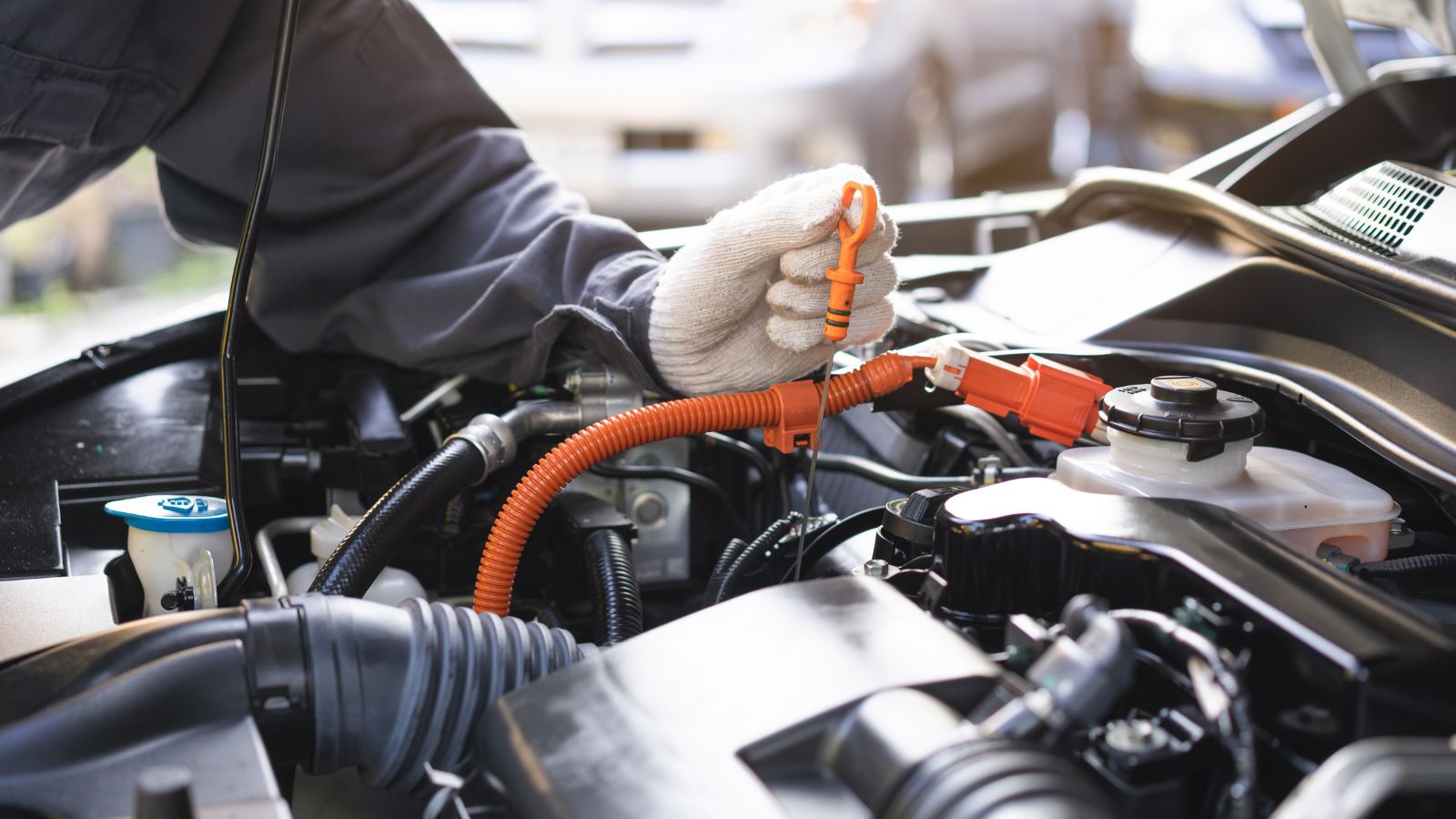
An older Toyota may have accumulated recalls or manufacturer service campaigns during its life, and not every previous owner necessarily responded to them. The VIN should therefore be checked rather than assuming that age means every relevant repair has already been completed. Toyota maintains a VIN lookup for open safety recalls and service campaigns, while the National Highway Traffic Safety Administration provides a separate federal recall database.
Using both is worthwhile because the systems do not provide exactly the same information. NHTSA notes that its VIN search generally identifies unrepaired safety recalls but may not show repairs already completed, certain very old recalls, international campaigns, or manufacturer customer-service programs. Toyota’s database also covers its own service campaigns. Some recall remedies can represent substantial work performed at no charge to the owner. Just as importantly, an unresolved safety recall can reveal that a supposedly meticulously maintained car has not received every important update. VIN research should happen before money changes hands, not after the vehicle is already in the driveway.
Check Which Big Maintenance Milestones Are Coming Next
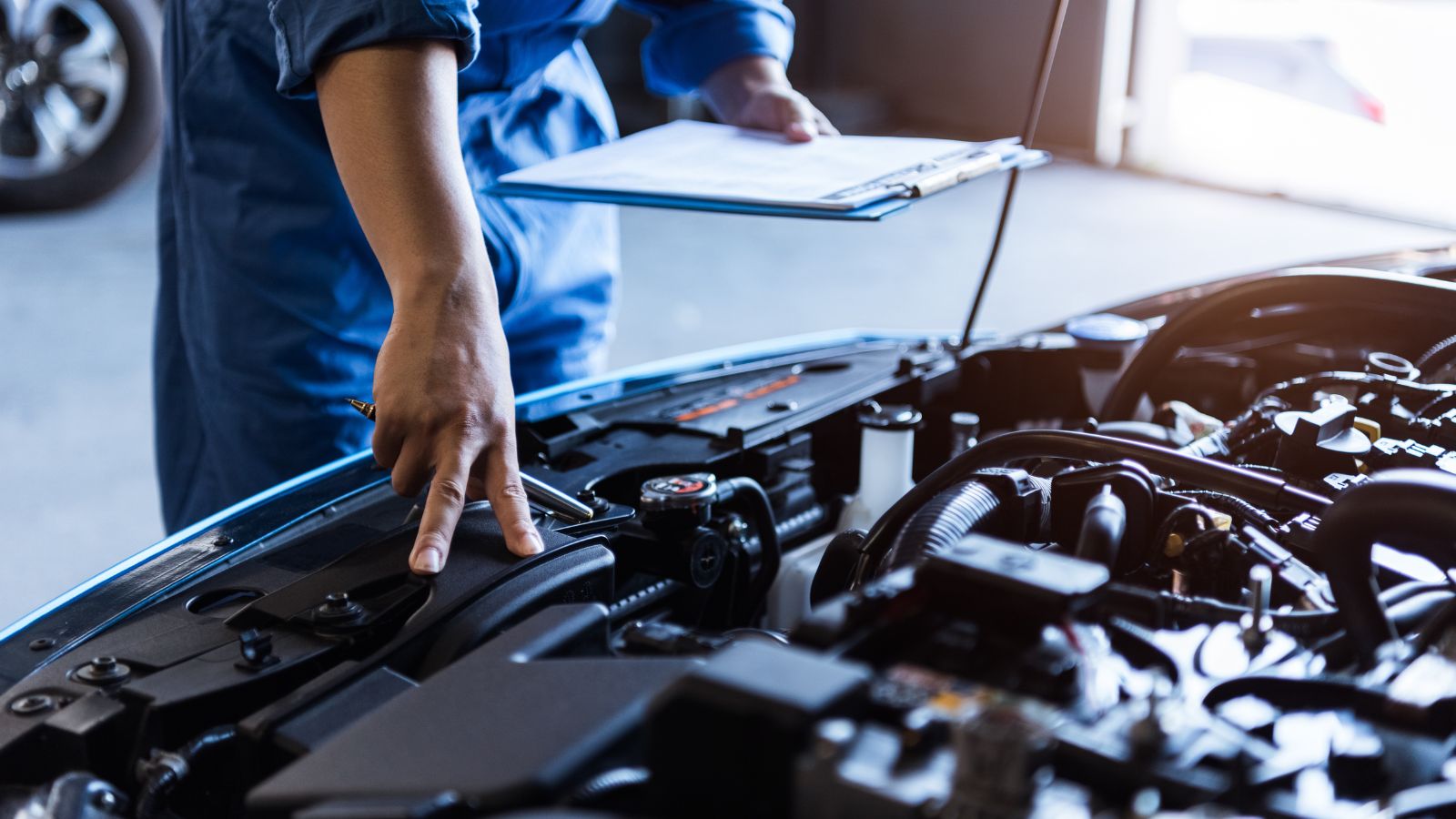
A Toyota reaching 100,000 or 150,000 miles may still have years of useful service ahead, but those miles can coincide with expensive maintenance clusters. The buyer should find the factory maintenance guide for the specific model and calculate which jobs have already been completed and which will become due shortly after purchase. Paying a fair price for a 118,000-mile vehicle feels less attractive when several scheduled services are waiting at 120,000.
The exact requirements vary significantly by Toyota. For example, some Toyota maintenance guides specify spark-plug replacement around 120,000 miles while also calling for inspections of cooling systems, brakes, steering components, drive-shaft boots, fuel-system components, transmission leakage, and other items. Different powertrains can have different intervals, so those figures should not be treated as universal. What matters is the principle: purchase mileage should be viewed in relation to the maintenance calendar. A vehicle priced $1,000 below comparable listings can quickly lose that advantage when overdue tires, plugs, coolant, brakes, filters, and fluid services arrive together.
Certain Toyota Engines Deserve an Oil-Consumption Check

Toyota has built many durable engines, but buyers should research the exact engine rather than assuming every powertrain has the same record. A notable historical example involves certain Toyota vehicles equipped with the 2AZ engine. Toyota issued a warranty-enhancement program addressing customer complaints about excessive oil consumption in specified model years, including certain Camry, Camry Hybrid, RAV4, Corolla, Matrix, Solara, and Scion vehicles.
That history makes oil level especially important during a pre-purchase inspection of an affected model. The engine should be checked for low oil, leaks, exhaust smoke, deposits around the tailpipe, and evidence that the owner regularly monitored consumption between changes. Service records showing repeated oil top-offs can also be revealing. None of this means every 2AZ-equipped Toyota is defective; Toyota’s program itself applied to specified vehicles and required testing. It does demonstrate why engine codes matter. A buyer researching only “Toyota Camry reliability” may miss a problem associated with one particular engine generation. High-mileage buying becomes safer when research narrows from brand to model, year, engine, and production details.
Find Out Whether the Engine Uses a Timing Belt or Timing Chain
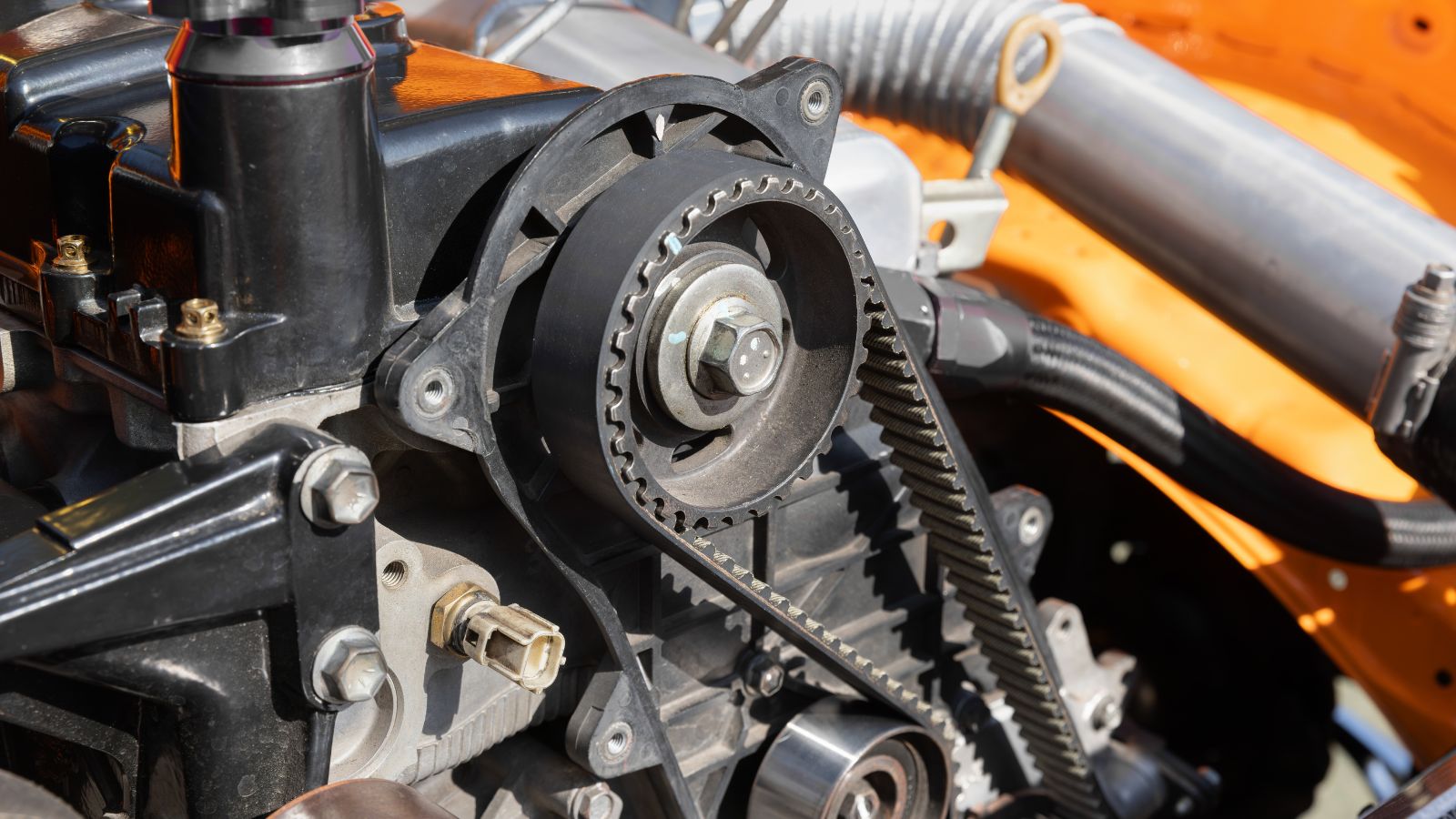
Older Toyotas span several generations of engine design, which means the familiar question about timing-belt replacement does not have one answer. Some engines use timing belts that require scheduled replacement, while many later Toyota engines use timing chains. Toyota’s historical maintenance schedules show 90,000-mile timing-belt replacement intervals for a number of older models and engines, although the requirements differed by year and application.
That distinction becomes financially important on a high-mileage vehicle. If a belt-equipped engine is supposed to have received a replacement and there is no invoice, sticker, or other credible evidence, the buyer should treat the job as potentially outstanding. A seller simply saying “the previous owner probably did it” is not documentation. Chain-equipped engines eliminate the routine belt-replacement question, but they still depend on proper lubrication and can develop problems of their own. The safest approach is to identify the actual engine, open its factory maintenance guide, and verify the required work. Assumptions based on what another Camry, Highlander, or 4Runner used can be wrong.
Transmission Behaviour Should Be Evaluated Before and After Warm-Up
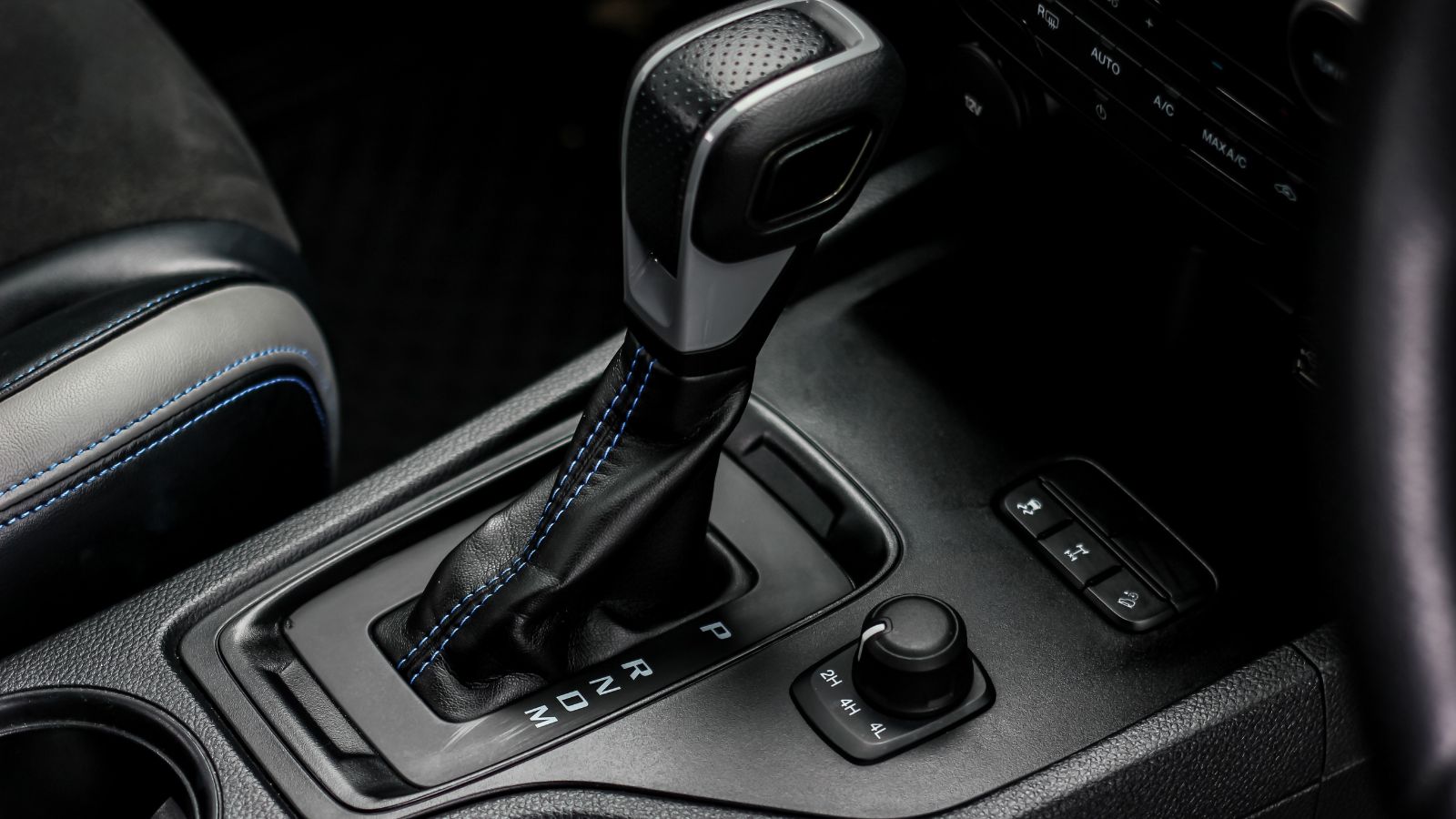
High-mileage buyers often focus heavily on the engine while giving the transmission a five-minute test drive. That is risky. Automatic transmissions should engage smoothly, shift consistently, and behave properly once the vehicle reaches operating temperature. Delayed engagement, excessive vibration, grinding noises, gear slippage, unusual flares between shifts, or harsh changes deserve investigation rather than being dismissed as normal behaviour for an old Toyota.
Maintenance history matters here as well. Toyota advises owners to follow model-specific transmission-fluid recommendations and notes that some operating conditions can require additional service. Factory guides for certain models specify transmission-fluid replacement under conditions such as towing, heavy loading, prolonged low-speed driving, or taxi and delivery-type operation. Many newer Toyota transmissions are sealed and lack the traditional dipstick, making a professional inspection more useful. A seller’s claim that transmission fluid is “lifetime” should not end the discussion. The buyer needs to know what Toyota specified for that particular powertrain and how the vehicle was used. Transmission repairs can overwhelm the savings achieved by buying a cheaper high-mileage example.
A High-Mileage Toyota Hybrid Needs Its Own Inspection Strategy
A Prius, Camry Hybrid, Highlander Hybrid, RAV4 Hybrid, or other electrified Toyota should not be evaluated exactly like a conventional gasoline vehicle. The gasoline engine still matters, but so do the high-voltage battery, inverter, cooling system, and hybrid control electronics. Battery condition should ideally be assessed with appropriate diagnostic equipment rather than judged only by whether the vehicle starts and drives around the block.
Warranty coverage also varies by model year. In the United States, Toyota extended the hybrid-battery warranty beginning with model-year 2020 vehicles to 10 years or 150,000 miles from the original in-service date, whichever occurs first. Earlier models generally had different coverage terms. Maintenance cannot be ignored either. Toyota schedules inspection and cleaning of hybrid-battery cooling intake filters on applicable vehicles because airflow is important to battery cooling. A high-mileage hybrid with documented maintenance and healthy diagnostic data can be appealing, but assuming every expensive hybrid component will still be under warranty is a mistake. Age, mileage, model year, condition, and remaining coverage all need verification.
Cooling-System Neglect Can Turn an Otherwise Good Toyota Into a Risk

Cooling systems become increasingly important as mileage climbs because overheating can transform a manageable maintenance problem into serious engine damage. The inspection should include coolant condition and level, hoses, radiator surfaces, connections, evidence of dried coolant residue, and any sign that the vehicle has recently been losing fluid. A cooling fan that fails to operate properly or a vehicle that begins creeping above normal temperature during an extended test deserves immediate attention.
Factory maintenance guides provide useful context. On several modern Toyotas, Toyota specifies an initial engine-coolant replacement at approximately 100,000 miles or 120 months, followed by shorter subsequent intervals. Hybrid models can have a separate inverter-coolant circuit with its own schedule; some guides place the first inverter-coolant replacement considerably later than the engine-coolant service. Those examples illustrate why a generic “coolant was changed sometime” answer is insufficient. The exact maintenance guide should be checked. At high mileage, evidence of correct coolant servicing is reassuring because it shows that a previous owner paid attention to a system whose failure can have consequences far beyond the price of coolant.
Rust Can Matter More Than Mechanical Mileage on Trucks and SUVs
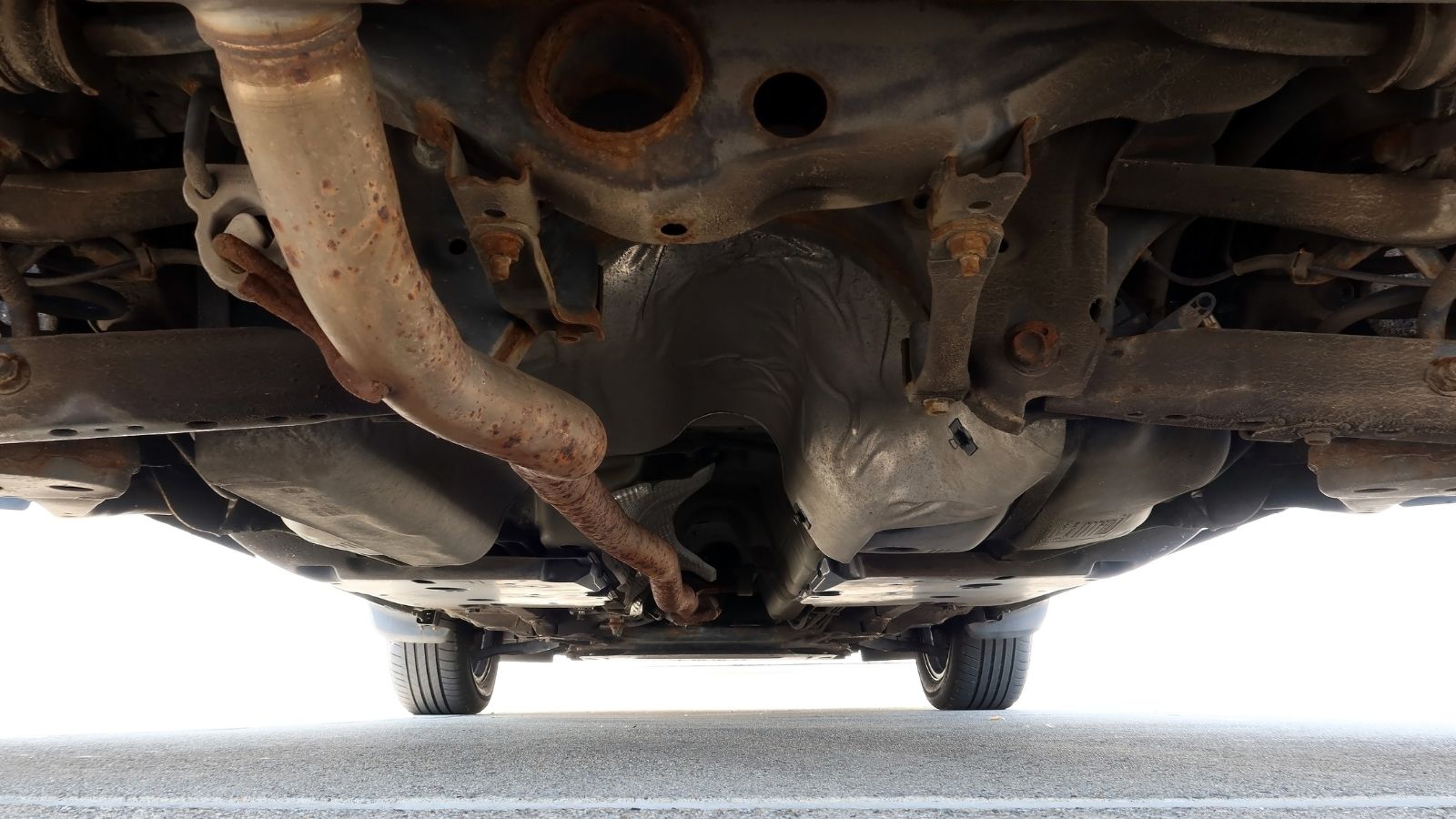
A Toyota truck that runs beautifully can still be a poor purchase if corrosion has seriously weakened the structure underneath. This deserves particular attention in regions where winter road salt is common. Surface discoloration is not the same as structural corrosion, so the frame, mounting points, brake and fuel lines, suspension attachment areas, and other underbody structures should be inspected by someone familiar with rust damage.
Toyota’s own history provides a strong reason for caution. The company established programs involving frame corrosion on certain Tacoma model years, including a warranty-enhancement program for certain 2005-2010 trucks and later corrosion-related programs involving certain 2011-2017 Tacomas. Toyota specifically noted reports of more-than-normal frame corrosion associated with cold-climate areas and high road-salt use. That does not mean every Tacoma from those years has severe rust, but it makes geographical history extremely relevant. A 180,000-mile truck from a dry climate can therefore present a very different structural picture from a lower-mileage example that spent 15 winters driving on salted roads.
Accident History Should Trigger a Better Inspection, Not an Automatic Rejection

An accident in a vehicle-history report does not necessarily mean a used Toyota should be rejected. Cars can receive competent repairs after minor or even substantial damage. The real questions are where the damage occurred, how extensive it was, whether structural components were affected, and whether the repair restored the vehicle correctly. Uneven panel gaps, mismatched paint, overspray, poorly fitting lights, abnormal tire wear, wind noise, or different manufacturing dates on lamps and glass can justify a closer look.
Government consumer guidance recommends obtaining a vehicle-history report but also makes an important distinction: the report is not a substitute for an independent mechanical inspection. Some incidents never reach the databases, while a report may say little about repair quality. A high-mileage Toyota already contains years of normal wear, so poorly repaired collision damage can make troubleshooting future steering, alignment, water-leak, electrical, or tire problems harder. Accident history should therefore change the depth of the inspection and potentially the price. What matters is documented repair quality and present condition rather than the simple presence of an accident entry.
Flood Damage Can Hide Behind a Surprisingly Clean Interior

Water-damaged vehicles can be professionally cleaned and moved far from the region where the flooding occurred. That makes flood history especially dangerous for used-car buyers who assume a freshly detailed cabin means the car was well cared for. Warning signs include unusual odors, heavy use of cleaning products, silt or sand in hidden spaces, staining beneath carpets, rust where moisture normally would not collect, mismatched upholstery, and unexplained corrosion on electrical connectors or fasteners.
The concern goes beyond cosmetics. Federal consumer guidance warns that water exposure can gradually damage electrical and mechanical systems and accelerate corrosion. The National Insurance Crime Bureau provides VINCheck, which can identify certain vehicles reported by participating insurers as salvage or flood damaged. However, databases are not perfect, particularly if damage was never insured or reported. That is why physical inspection remains essential. A Toyota known for surviving hundreds of thousands of miles can still become an electrical nightmare after immersion. For high-mileage vehicles, unexplained electrical quirks combined with suspicious interior evidence should be treated seriously.
Make Sure the Odometer Tells a Story That Matches the Car
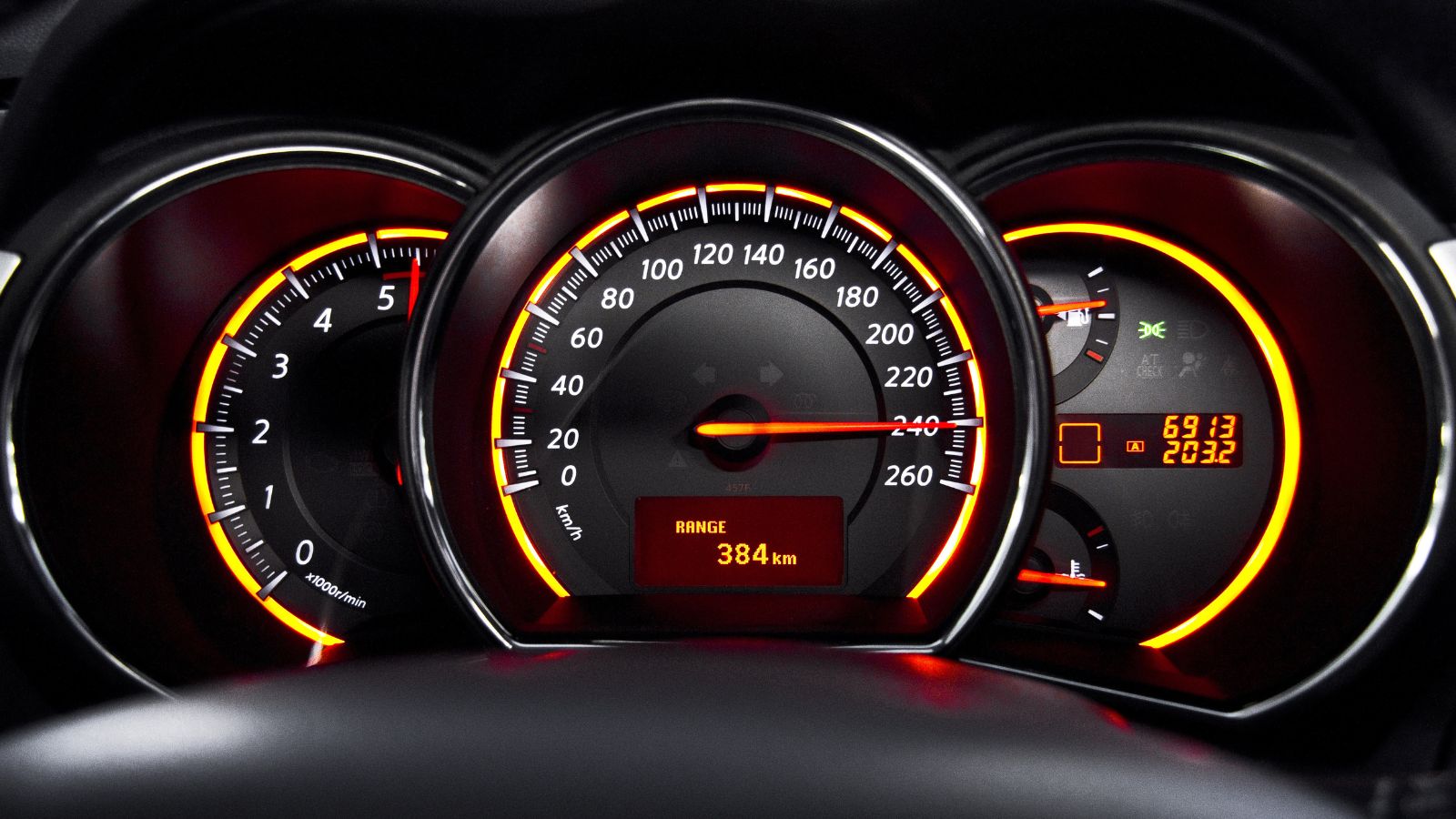
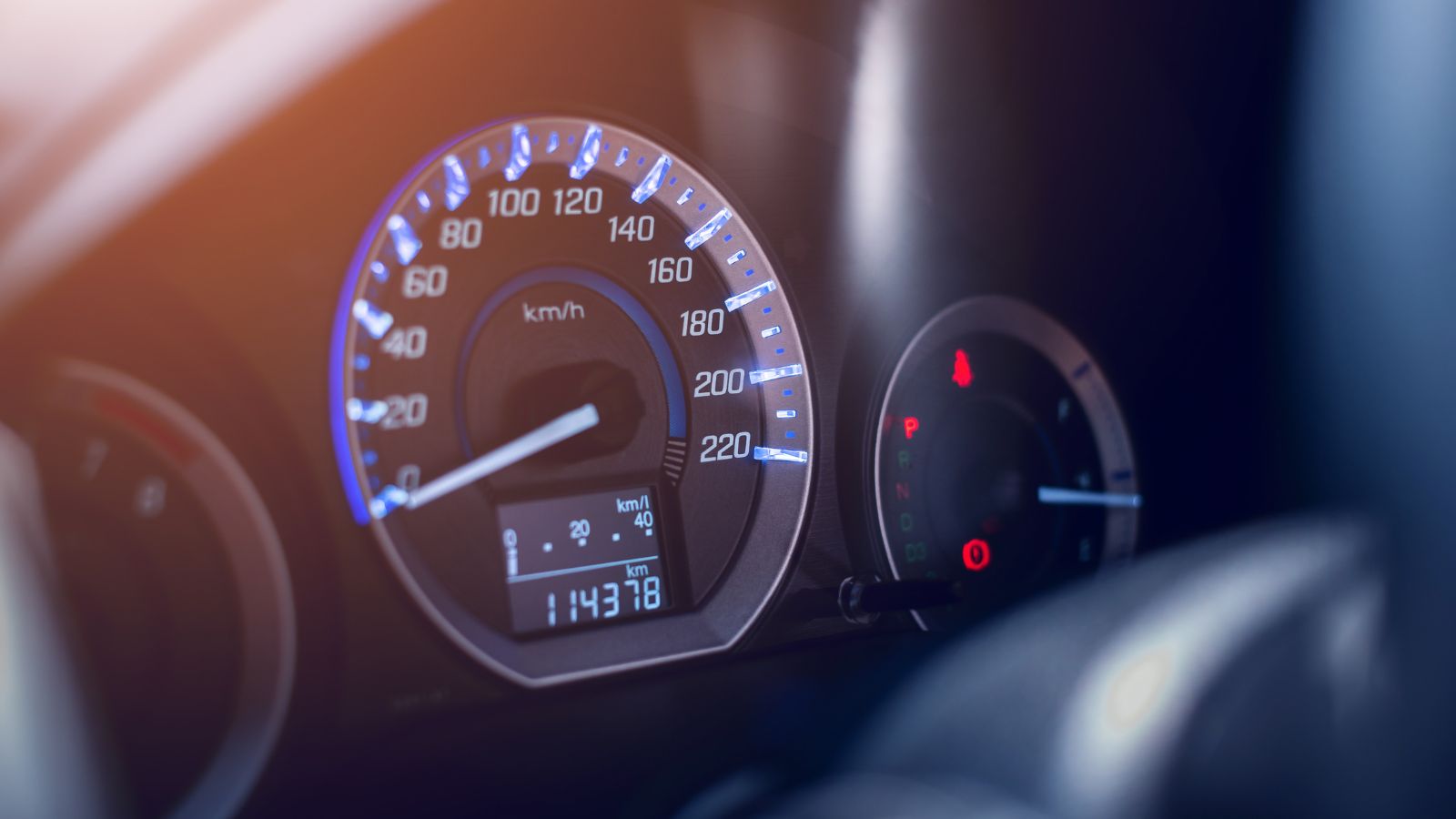
A buyer shopping specifically for a high-mileage Toyota may seem like an unlikely target for mileage fraud, but rollback can still materially change a vehicle’s perceived value. An older car advertised with 115,000 miles can command more money than the same car showing its true 190,000-mile history. NHTSA estimates that hundreds of thousands of vehicles are sold annually in the United States with false odometer readings.
The displayed mileage should therefore be compared with title records, maintenance invoices, inspection records, oil-change stickers, and vehicle-history information. NHTSA specifically advises buyers to compare odometer mileage with service documentation and examine whether physical wear appears consistent with the reading. NMVTIS history reports can also contain previous odometer information and title brands. Digital dashboards have not eliminated manipulation; they can make alteration less visually obvious. One isolated mileage discrepancy may have an innocent explanation, but a sequence moving backward deserves investigation. High mileage itself is not necessarily the danger. Unknown mileage is considerably harder to evaluate because the maintenance timeline becomes uncertain as well.
Worn Suspension Components Can Make a Reliable Car Feel Tired
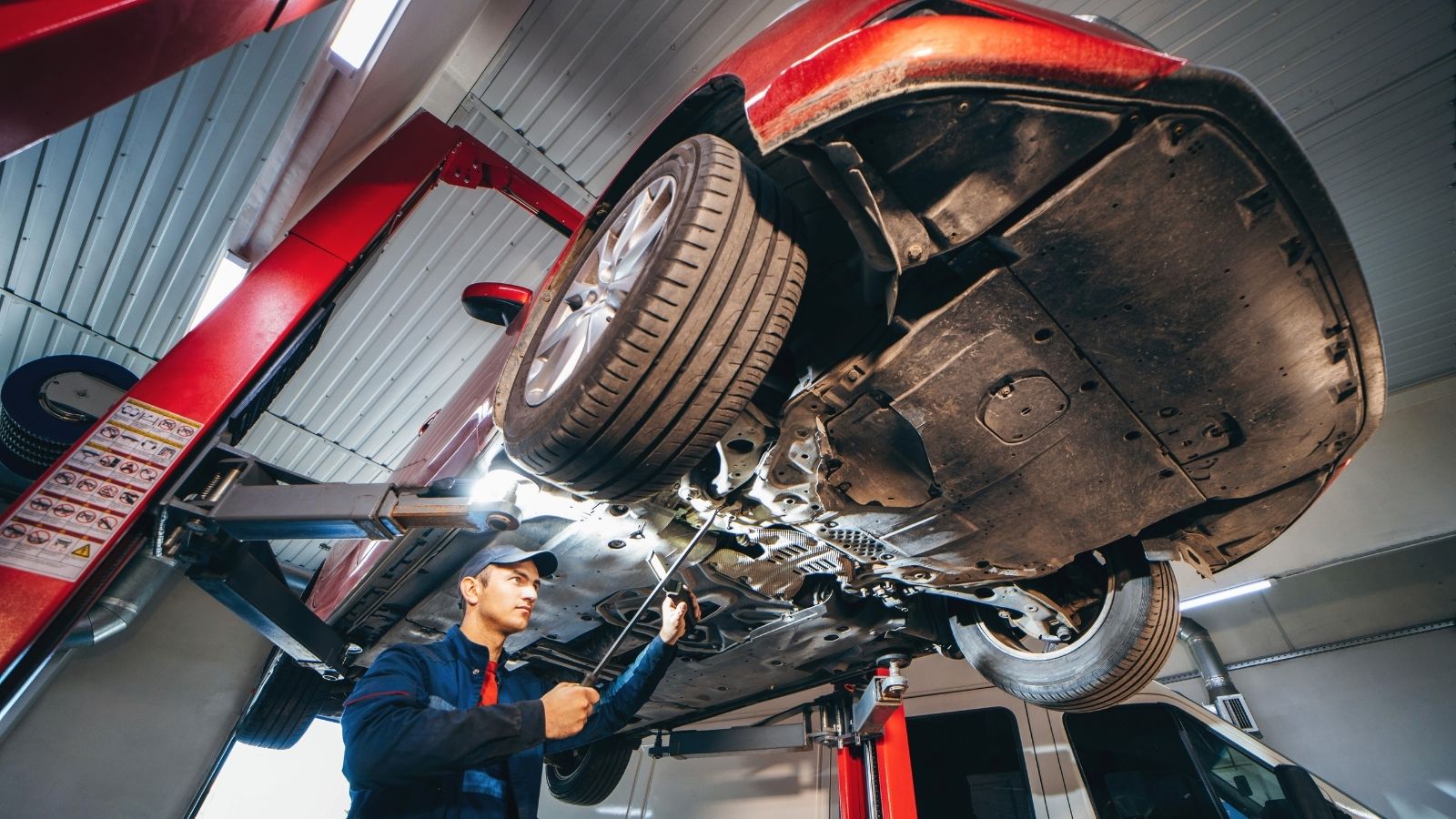
Engines and transmissions receive most of the attention in high-mileage discussions, yet suspension and steering wear often determines whether an older Toyota feels tight or exhausted. During the test drive, the buyer should pay attention to clunks over rough pavement, wandering, vague steering, uneven ride height, excessive bouncing, steering-wheel play, or noises when turning slowly. Uneven tire wear can provide another clue.
Toyota’s own maintenance material calls for inspection of components such as ball joints, dust covers, steering linkage, steering boots, and related hardware under specified conditions and intervals. The manufacturer advises checking ball joints for looseness or damage and inspecting protective boots for deterioration. These are wear-oriented components, making accumulated mileage and road conditions relevant even when the powertrain is excellent. A high-mileage vehicle that has already received quality struts, control-arm components, bushings, or steering repairs may actually be preferable to one with fewer miles still riding on exhausted original parts. The goal is not finding a Toyota with no replaced components; it is determining whether worn components have been addressed properly.
Brake Condition Is About More Than the Remaining Pad Thickness
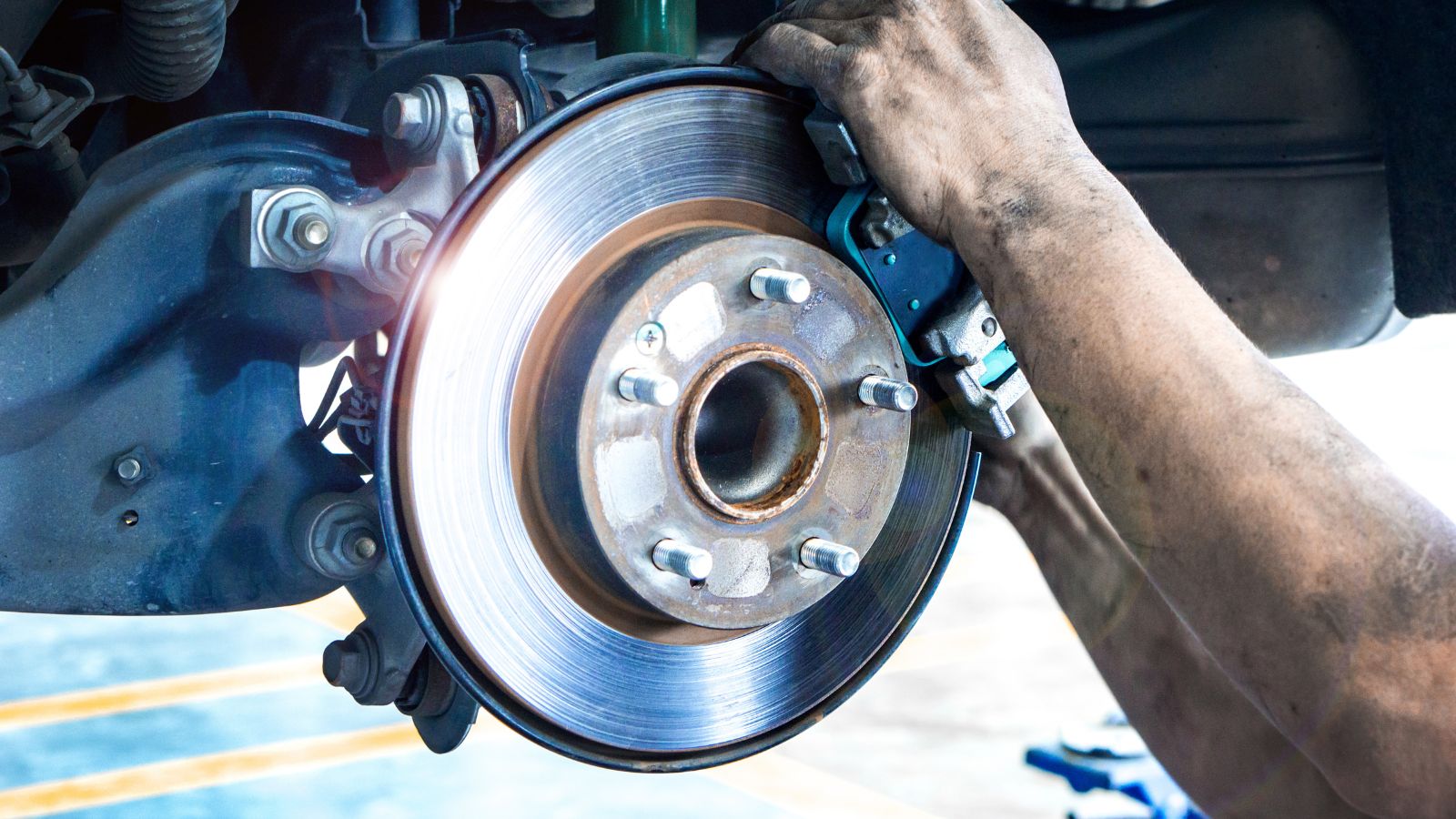
A seller may proudly point out that the car has “new brakes,” but that phrase can describe anything from inexpensive pads installed yesterday to a thorough brake-system overhaul. A meaningful inspection should consider pad or shoe wear, rotor or drum condition, brake hoses, lines, fluid leakage, caliper operation, pedal feel, vibration, and whether the vehicle tracks straight during braking.
Toyota’s maintenance guidance calls for checking pads and linings for excessive wear, inspecting discs for runout and wear, and examining brake hoses and lines for deterioration, cracks, chafing, and leakage. That is particularly relevant on an older vehicle because age affects rubber and metal components even when they are not obvious from the driver’s seat. Pulsation through the pedal or steering wheel can indicate rotor-related problems, while unusual noises deserve inspection rather than a promise that “all Toyotas sound like that when old.” High mileage does not automatically make a braking system unsafe, but deferred brake maintenance is a strong clue about the standard of care the rest of the vehicle may have received.
Read the Tires Like a Maintenance Record
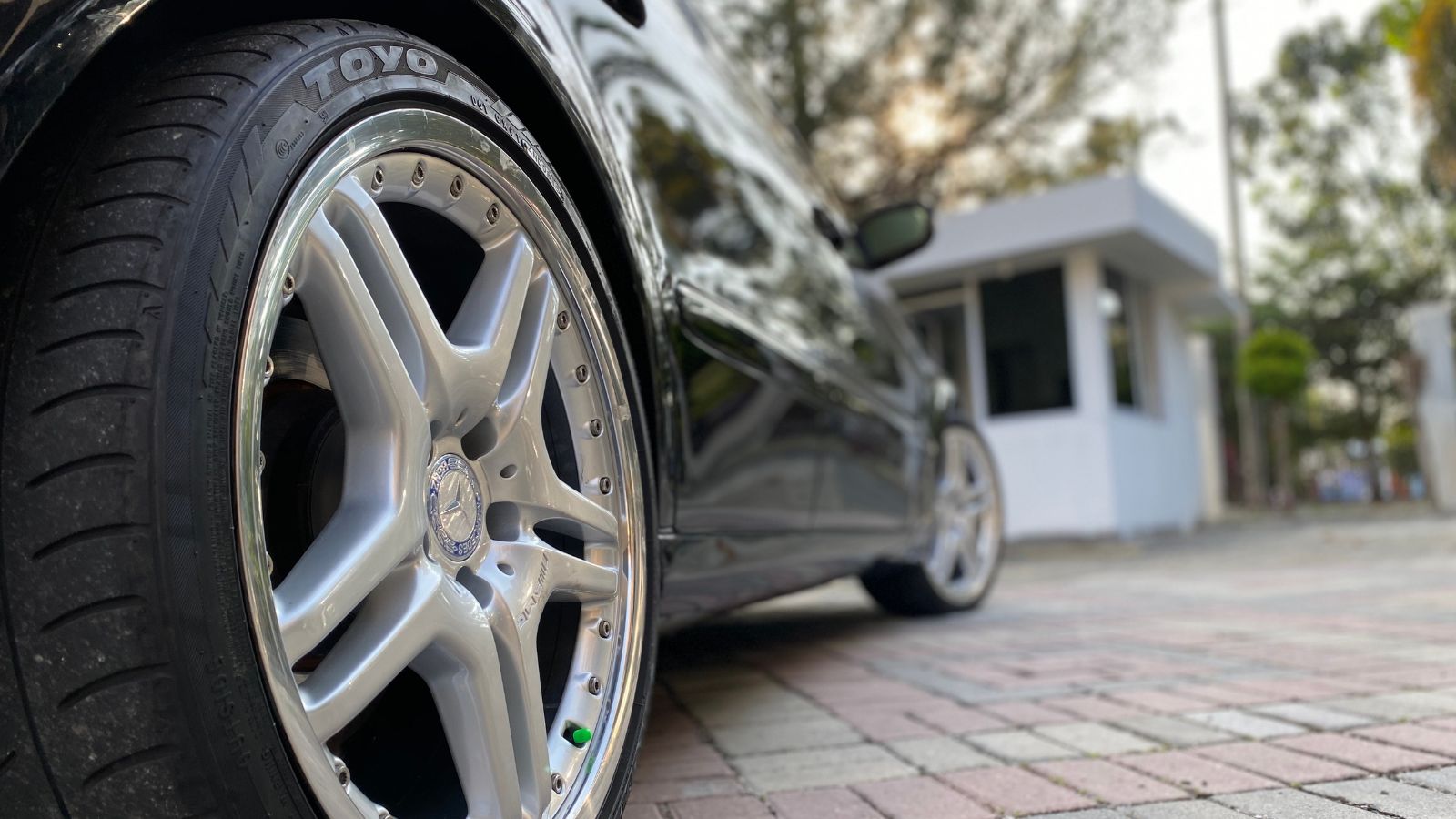
Tires provide a surprisingly useful snapshot of how a used Toyota has been maintained. Uneven wear across one edge can suggest alignment or suspension problems. Different tire brands or dramatically different tread depths can indicate piecemeal replacement. Vibration can point toward balance, wheel, tire, or suspension concerns. Even a car with four matching tires deserves inspection for cracking, bulges, previous repairs, and manufacturing dates.
Age matters independently from tread depth. NHTSA notes that tires deteriorate over time and that some vehicle and tire manufacturers recommend replacement in the six-to-10-year range regardless of remaining tread. The DOT identification code on the sidewall reveals the week and year of manufacture. Toyota also emphasizes rotation, balance, alignment, and inspection for uneven wear. This becomes especially relevant with high-mileage AWD and 4WD models, where mismatched tires may create additional drivability considerations depending on the system. A recently installed set of quality tires is real added value; four worn or aging tires represent an immediate expense that belongs in the purchase calculation.
Inspect CV Boots, Differentials and Other Driveline Hardware
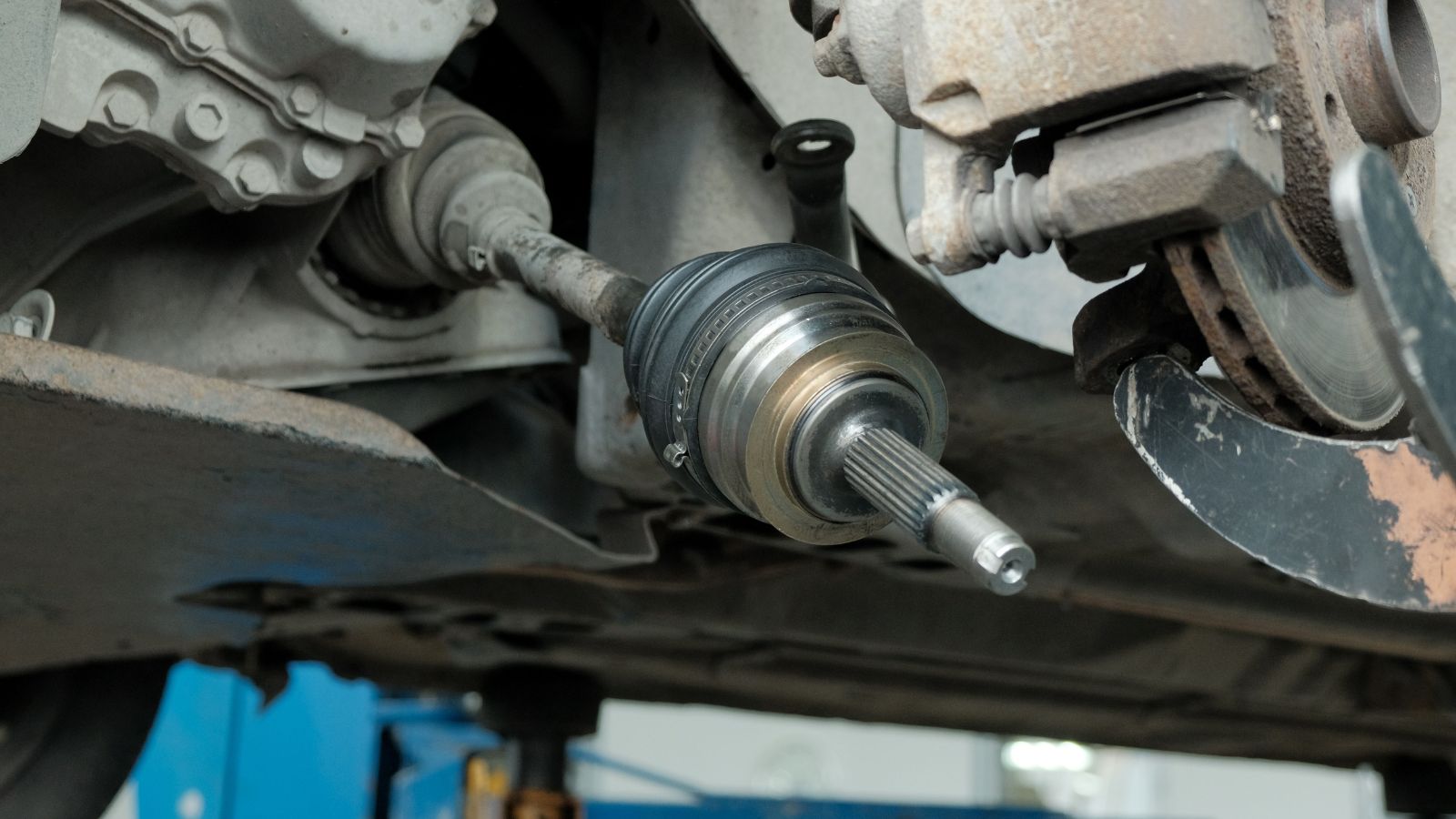
High-mileage Toyota SUVs, trucks, crossovers, and front-wheel-drive cars contain driveline components that can receive less attention than the engine despite being exposed to heat, road debris, movement, and age. CV or drive-shaft boots should be examined for cracking, deterioration, torn rubber, or escaping grease. Once a protective boot fails, contamination can enter the joint and lubricant can escape, turning an inexpensive warning sign into a more involved repair.
Four-wheel-drive and truck models add further inspection points. Toyota maintenance schedules for relevant vehicles include checks of front and rear differential oil, transfer-case oil, propeller shafts, boots, and related hardware. Certain operating conditions call for more frequent servicing or replacement of driveline fluids. Clicking during tight turns, vibration under acceleration, humming that changes with road speed, or clunks when transitioning between acceleration and deceleration deserve diagnosis. A vehicle can have an exceptionally healthy engine while accumulating significant neglected wear elsewhere in the drivetrain. On a 150,000-mile Toyota, the question is not whether components have aged; it is whether their condition matches the asking price.
Test the 12-Volt Battery and Every Electrical Convenience Feature
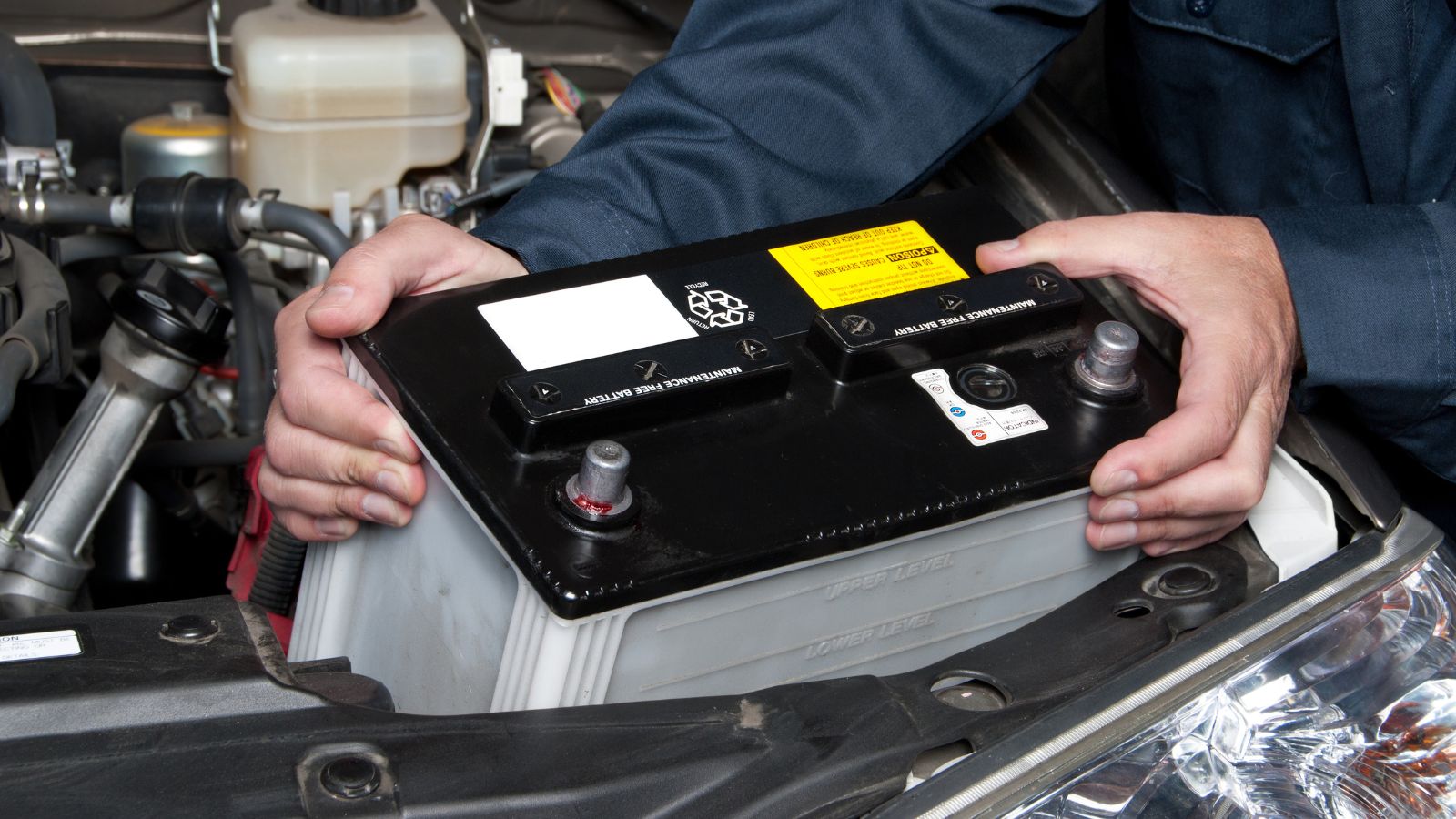
The engine may start normally during the sales appointment and still hide a weak 12-volt battery. Toyota lists hard starting, dim lighting, electrical irregularities, and other symptoms among possible signs of battery deterioration. On hybrids, the small 12-volt battery remains important even though the vehicle also carries a large high-voltage traction battery, so the two should not be confused during inspection.
Then test everything that depends on electricity: power windows, locks, mirrors, seat motors, lights, cameras, infotainment controls, charging ports, wipers, rear defroster, sunroof, keyless entry, and climate-control functions. Older cars commonly accumulate small failures that are easy to overlook individually but expensive when several require attention. Air conditioning should be given enough time to demonstrate that it can produce stable cooling rather than merely a brief burst of cool air. Toyota notes that restricted cabin-air filtration can reduce climate-system performance, while refrigerant leaks or component wear can create larger problems. A high-mileage Toyota should be evaluated as a complete machine, not simply as a durable engine surrounded by disposable accessories.
Exhaust and Emissions Problems Can Be Expensive Even When the Car Runs Well
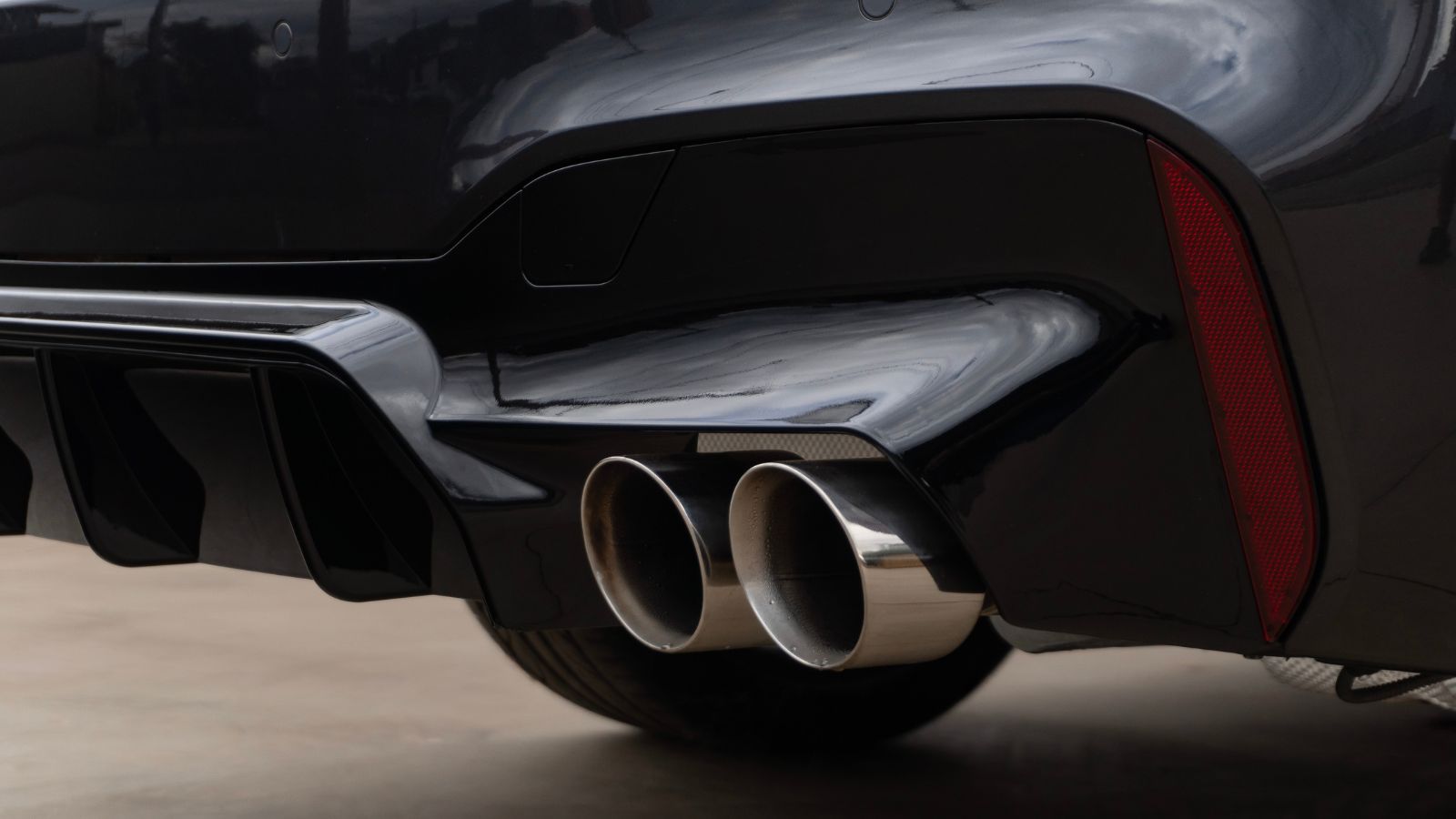
A high-mileage Toyota can feel perfectly acceptable during normal acceleration while carrying an emissions or exhaust issue that has not yet become obvious. Listen for ticking, hissing, rattling, or unusually loud exhaust noise, particularly during a cold start and under load. Inspect accessible exhaust components for severe corrosion, poor repairs, damaged hangers, or evidence that components have recently been replaced.
Toyota’s scheduled maintenance guides routinely include inspection of exhaust pipes and mountings alongside other high-mileage checks. Modern vehicles also rely on onboard diagnostics to monitor systems connected with emissions performance, including catalyst and oxygen-sensor functions where applicable. A glowing check-engine light should therefore never be dismissed simply because the vehicle “still drives fine.” Diagnostic codes identify where the computer detected a problem; they do not automatically prove which component requires replacement, so proper diagnosis matters. Likewise, a recently cleared dashboard deserves scrutiny. Exhaust and emissions repairs range from simple to substantial, making diagnostic information useful when deciding whether an inexpensive older Toyota is actually inexpensive.
Insist on a Cold Start, a Long Test Drive and a Diagnostic Scan
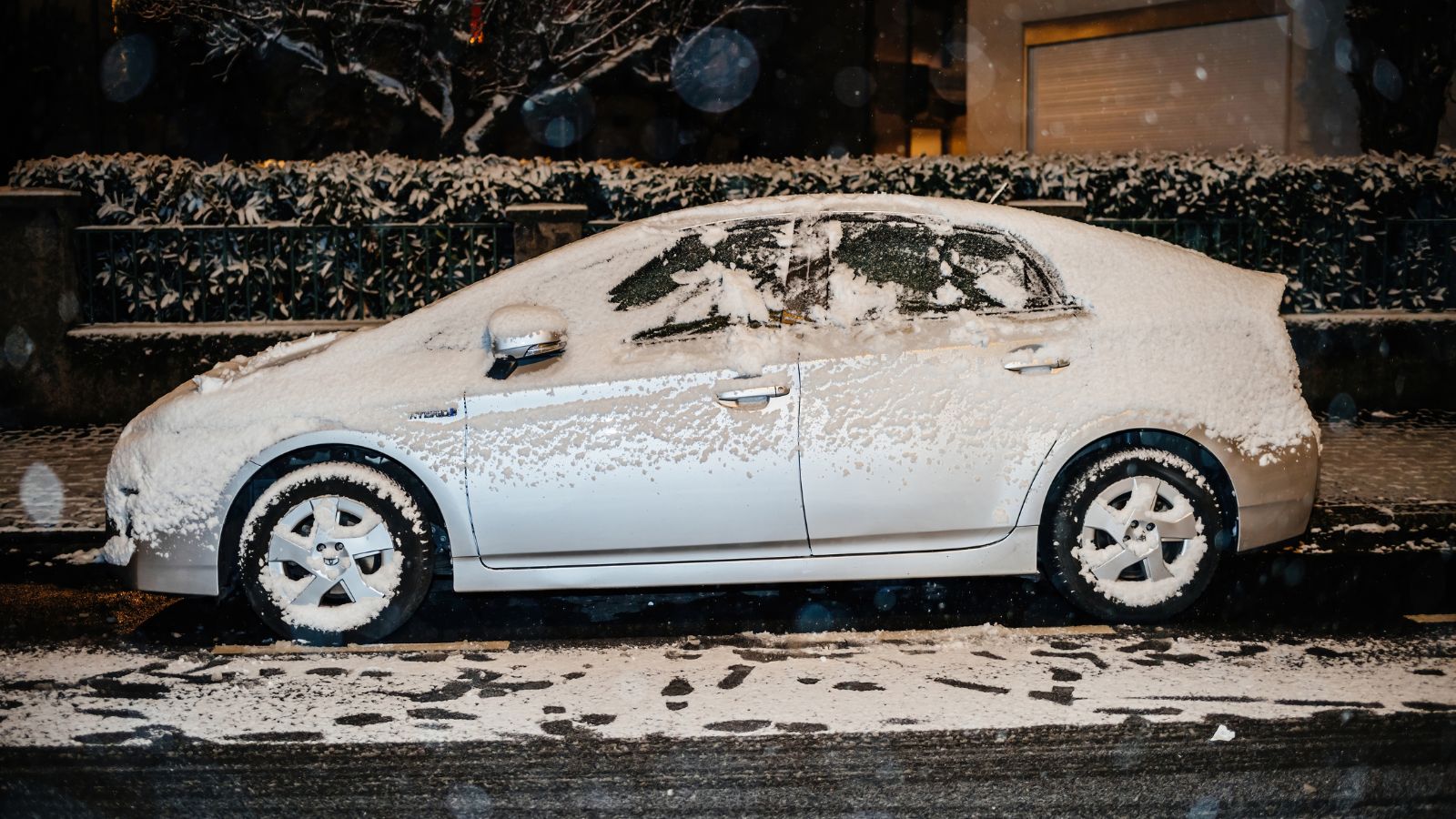
A vehicle already warmed before the buyer arrives removes one of the most informative moments in a used-car inspection. Starting the Toyota from cold can reveal startup rattles, smoke, weak cranking, unstable idle, warning lights, exhaust noises, or other symptoms that diminish as components warm. Afterward, the test drive should include low-speed manoeuvres, ordinary city driving, stronger acceleration, cruising speed, braking, rough pavement, and enough time for the engine and transmission to reach normal temperature.
A diagnostic scan adds another layer. OBD systems store diagnostic information when monitored faults occur, while readiness monitors indicate whether certain emissions self-tests have completed. EPA guidance notes that monitors can remain “not ready” after events such as battery disconnection or clearing of diagnostic information. That does not automatically prove deception, but multiple incomplete monitors on a vehicle offered for sale can justify asking why the system was recently reset. Federal consumer guidance separately recommends an independent mechanical inspection. Combined with a genuine cold start and meaningful drive, these checks reveal far more than a polished parking-lot presentation.
Ask What Kind of Miles the Toyota Accumulated
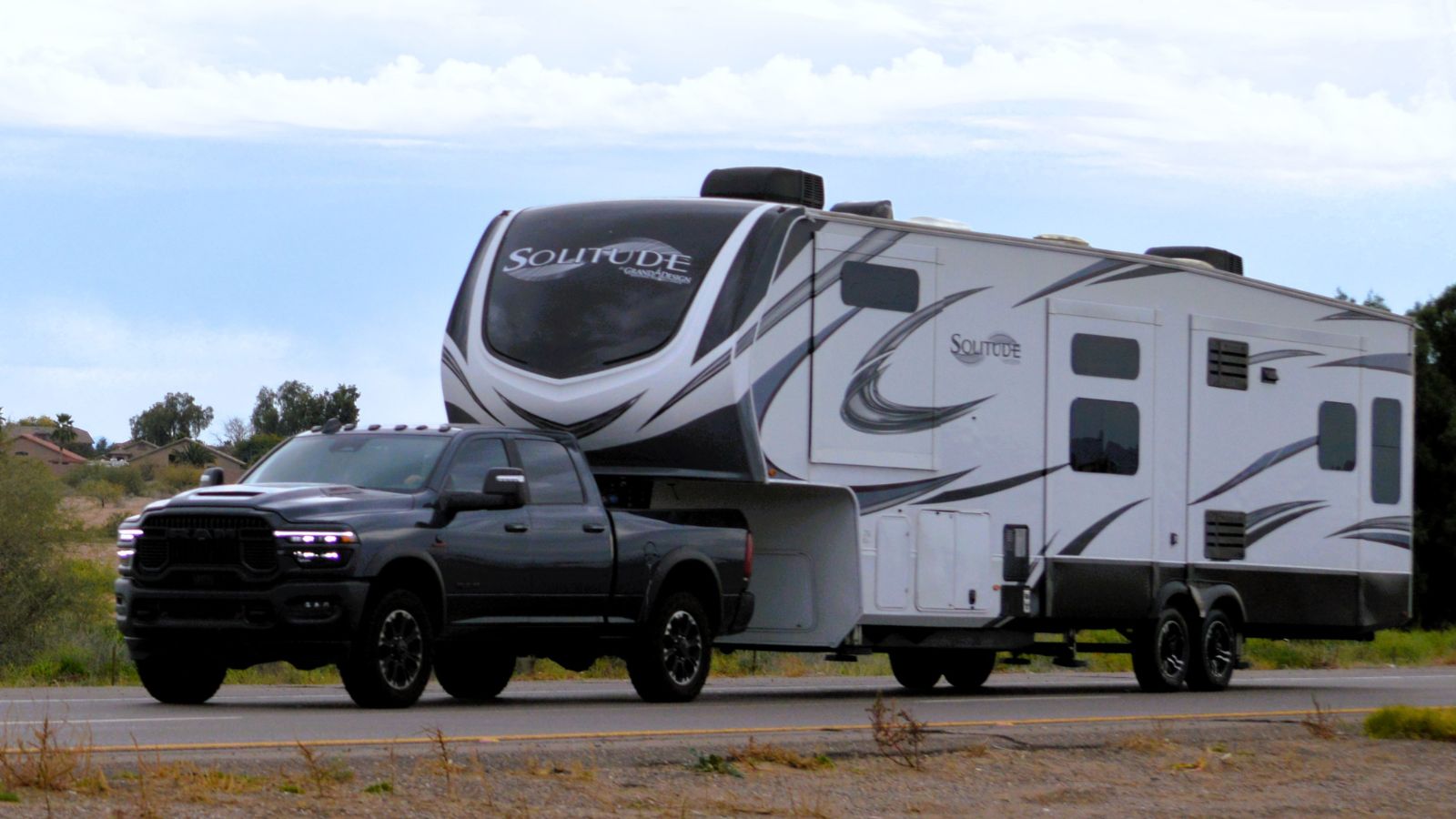
Two Toyotas showing 150,000 miles can have lived remarkably different lives. One may have spent years covering long highway distances at steady speed. Another may have accumulated those miles towing trailers, carrying heavy loads, travelling on dusty roads, making constant short trips, or idling through delivery and taxi work. The odometer treats every mile equally; the maintenance schedule does not.
Toyota specifically identifies several operating patterns as special or severe conditions in its maintenance literature. Depending on model and application, dirt or dusty-road use can trigger additional inspection, while towing and heavy loading can require more frequent servicing of components such as transmission or differential fluids. Extensive idling and low-speed professional use can also change maintenance requirements. Some schedules treat repeated short cold-weather trips differently because the engine may not spend enough time at full operating temperature. That makes previous use an important part of the purchase conversation. A high-mileage vehicle with documented highway use and appropriate service may present a more attractive history than a lower-mileage example that endured years of demanding commercial duty without adjusted maintenance.
Toyota’s Longevity Reputation Has Evidence, but It Is Not a Guarantee
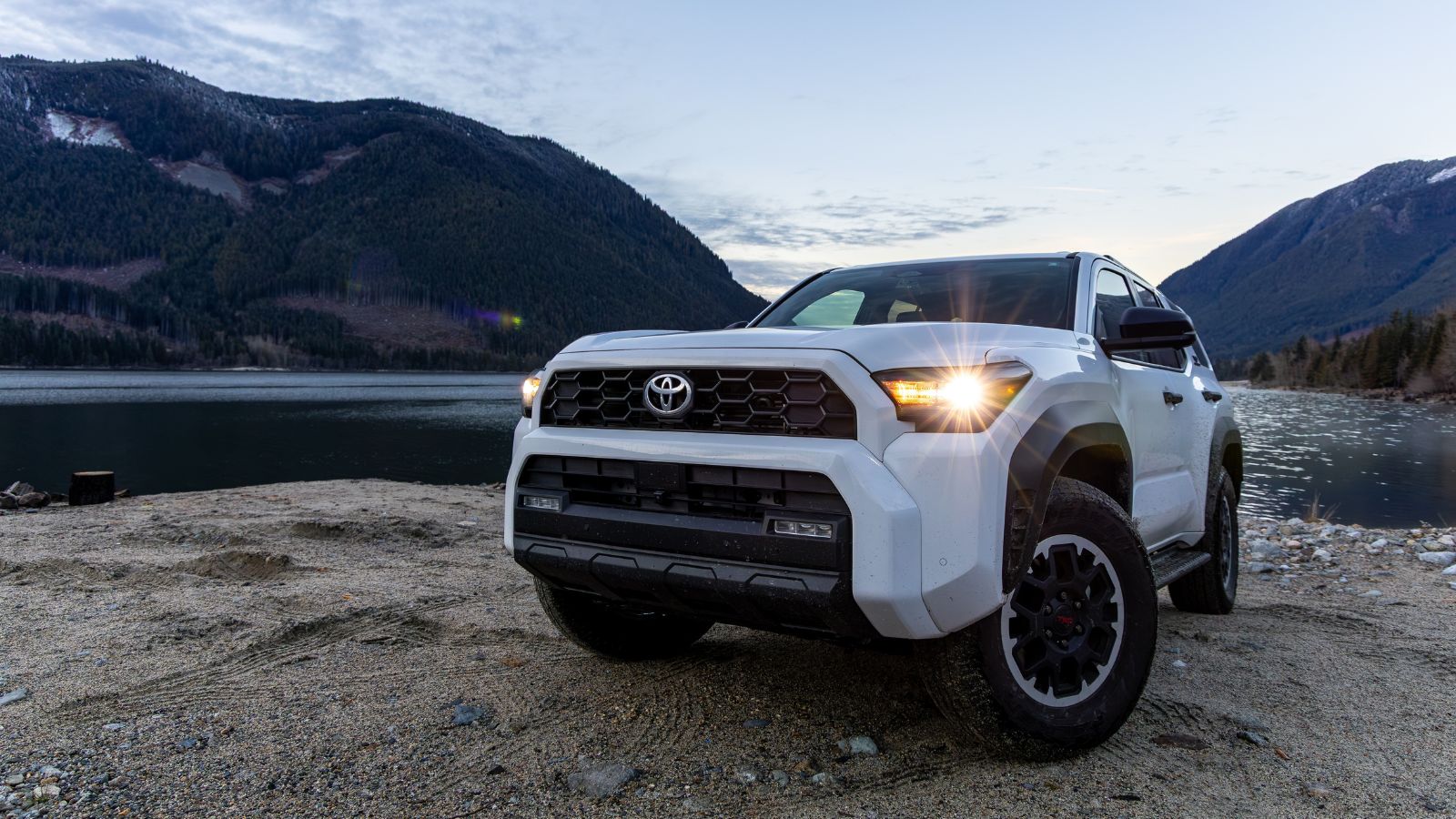
There is a reason buyers continue searching for high-mileage Toyotas. A 2025 iSeeCars longevity study analyzing hundreds of millions of vehicles ranked Toyota as the brand with the highest predicted likelihood of reaching 250,000 miles. Toyota placed 10 models among the study’s top 25 longest-lasting vehicles, while models including the Sequoia, 4Runner, Highlander Hybrid, Tundra, and Tacoma ranked particularly strongly.
Those numbers should encourage research, not replace it. The study estimated Toyota’s brand-level chance of reaching 250,000 miles at 17.8 percent compared with a 4.8 percent overall vehicle average in its analysis. That still means longevity is a probability rather than a promise. A neglected example can fail early, while a well-maintained individual vehicle can outperform expectations. Long-term durability data also combine vehicles with different owners, climates, maintenance histories, engines, and workloads. Toyota’s reputation is therefore best treated as a useful starting advantage. The individual car still has to earn the buyer’s confidence through records, condition, inspection results, and a price that reflects what will need replacing next.
Never Skip the Independent Pre-Purchase Inspection

The final decision should not depend on the seller’s mechanic, a dealership’s certification checklist, or the buyer’s ability to spot obvious problems. The Federal Trade Commission recommends having used vehicles inspected by an independent mechanic even when a car has already been “certified,” inspected by the selling dealer, or offered with a warranty. The mechanic should ideally provide a written report and estimated cost for necessary repairs.
That report changes the purchase from a guess into a budget. A $9,000 Toyota needing $2,500 in tires, suspension work, leaks, brakes, and overdue maintenance is effectively a different proposition from a $10,000 example requiring little immediate work. Ownership costs continue after the purchase as well; AAA’s cost methodology explicitly includes routine maintenance, unexpected repairs, and tires when calculating vehicle expenses. High-mileage Toyotas can deliver exceptional value when purchased carefully, but the strongest examples are usually not simply the cheapest ones advertised. The winning combination is a proven model, documented maintenance, acceptable inspection results, sensible upcoming expenses, and enough financial reserve to deal with age-related repairs without turning every warning light into a crisis.
19 Used Cars Canadians Should Avoid in 2026 (Based on Owner Complaints)

Buying a used car in Canada can feel safe until repair bills start stacking up. Owner complaints tell a different story than glossy listings. Transmission failures, electrical problems, and weak winter reliability show up again and again in consumer reports. Many of these issues appear after warranties expire, when owners least expect them. Some vehicles look affordable upfront, but become expensive to keep on the road. Others struggle in cold weather, urban driving, or long highway commutes. Here are 19 used cars Canadians should avoid in 2026 (based on owner complaints).
19 Used Cars Canadians Should Avoid in 2026 (Based on Owner Complaints)

Alanna Rosen is an experienced content writer that focuses on many EV and educational content. Her articles are regularly published on Get CyberTrucked and syndicated on large publications.