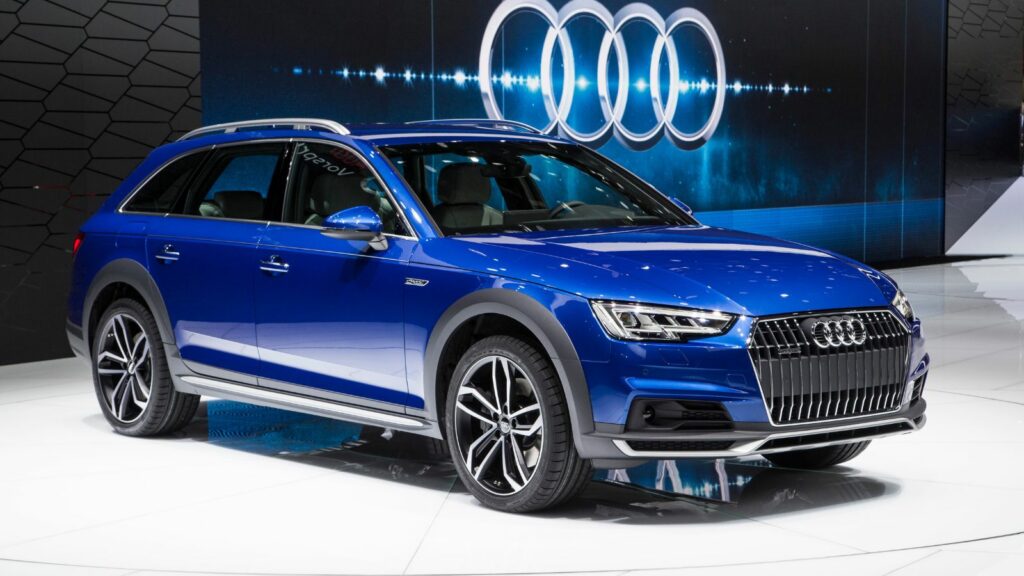
A luxury SUV stretching more than five metres should have enough room for everyone, but Audi’s newest flagship is raising questions about whether bigger really means better. The all-new 2027 Audi Q9 arrives in Canada with a starting price of $123,300, three rows of seating, powerful turbocharged engines, and technology designed to challenge the industry’s most established premium SUVs.
Canadian first-drive evaluations published on October 27 and 28, 2026, highlight impressive performance, sophisticated road manners, and upscale features. However, reviewers also identify some unexpected compromises, particularly limited third-row legroom and the absence of a hybrid powertrain for North American buyers. For families considering a six-figure vehicle, those shortcomings could prove just as important as the Q9’s considerable strengths.
Why Audi Went Bigger Than the Q7
For years, the Q7 carried Audi’s three-row ambitions, but it occupied a different part of the luxury-SUV market from the biggest American-oriented family haulers. The 2027 Q9 changes that positioning. At approximately 5.31 metres long, with a 3.14-metre wheelbase and a width of 2.21 metres including its mirrors, it is Audi’s largest vehicle yet. Compared with the newly redesigned Q7, the Q9 adds about 25 centimetres of overall length and 14 centimetres between the axles. Its broad grille, upright rear section, and substantial rear doors make those extra dimensions visible before anyone climbs inside.
Audi says the model was developed specifically with the needs of American customers in mind, and Canadian reviewers report that the company expects the United States and Canada to account for about 65 percent of Q9-family sales. Built in Bratislava, Slovakia, the SUV enters territory already occupied by the BMW X7, Mercedes-Benz GLS, and Cadillac Escalade. That gives the Q9 a purpose beyond simply replacing the Q7 for existing owners: it is meant to attract buyers who previously needed to leave an Audi showroom to find a full-size luxury SUV. The question is whether the extra size delivers the everyday usefulness those buyers expect.
The $123,300 Price Is Only the Starting Point
Audi’s Canadian price list opens with the 2027 Q9 Progressiv at $123,300 before additional charges. The better-equipped Technik starts at $133,500, according to an October 27 Canadian first-drive report, while the 591-horsepower SQ9 begins at $152,850. Auto123 lists a further $3,060 for delivery and preparation, with other levies and taxes to consider. Audi is accepting Canadian orders, but a showroom quote can look considerably different from the advertised base price once the exact configuration, fees, and applicable taxes are included. Buyers comparing competing SUVs need to use the same all-in basis, not simply the headline manufacturer’s suggested retail price.
The federal luxury tax is particularly relevant. Under Canadian rules, qualifying new vehicles priced above $100,000 generally attract a tax calculated as the lesser of 10 percent of the taxable amount or 20 percent of the amount above the threshold. The Q9’s starting MSRP already crosses that line. Audi Canada lists the new Q7 from $94,400, making the Q9’s basic price nearly $29,000 higher before accounting for the consequences of the luxury-tax threshold. That premium makes sense only if the added passenger space, technology, and flagship experience provide something the smaller Audi cannot.
A Third Row That Has Not Won Over Every Reviewer
This is where Audi’s biggest SUV faces its most awkward criticism. Both Canadian outlets Auto123 and The Car Guide identified the third row as cramped during their Utah first drives. Auto123 praised the generous second-row legroom and comfortable captain’s chairs but found the rearmost seats tight for adults. The Car Guide similarly reported that passengers in the back would benefit from more legroom, especially given the vehicle’s exterior dimensions. Those observations are striking because Audi markets the Q9’s larger body as a solution for customers who found the Q7 too restrictive.
Not every reviewer came away with the same verdict. MotorTrend found reasonable headroom and hip room and considered the last row usable for adults, although taller occupants might not enjoy sitting there for more than a couple of hours. The Drive was more positive about the accommodations. Such differences underline how strongly comfort depends on passenger height, second-row seat positioning, and trip length. A short journey to dinner is one test; carrying six or seven people through a long holiday drive is another. Anyone planning to use every seat regularly should assess the third row with the actual passengers it will carry.
Six or Seven Seats Change the Family Equation
The standard Q9 seats seven, placing three people on a second-row bench and two in the third row. Audi says that bench accommodates three child-seat mounting positions, a practical detail for households juggling boosters, infant seats and an older child. Families prioritizing personal space can instead choose a six-passenger layout with two electrically adjustable captain’s chairs in the middle. The outer second-row seats can slide and tilt forward to create access to the third row without removing a fitted child seat. That feature could make the difference between a smooth school pickup and another frustrating round of moving seats around.
The convenience comes with qualifications. The Canadian Auto123 drive featured vehicles equipped with the six-seat layout, so its impressions of the captain’s chairs do not substitute for testing the standard bench. Audi also offers power-operated doors with obstacle detection, but both Auto123 and The Car Guide found the opening and closing process slower than expected. The heavy feel when moving a door manually was another complaint. Power operation sounds particularly luxurious on a specification sheet; in a crowded parking lot, adults and children may appreciate controls that respond predictably more than an elaborate mechanism. The seating choice deserves attention before optional equipment is added.
Cargo Space Is More Convincing Than the Back Seats
The Q9 makes a stronger case for itself when luggage replaces passengers. Canadian first-drive figures put cargo capacity at 547 litres behind the upright third row, meaning there is still a useful compartment when every seat is occupied. Audi Canada advertises a maximum of 2,483 litres with both rear rows folded in the seven-seat configuration. That creates possibilities ranging from loading several large suitcases to carrying sports equipment or supplies for a home project. The manufacturer has also included an aluminium rail system in the cargo area, designed to help secure smaller loads rather than leave them sliding across the floor.
There is an important configuration trade-off. The Drive reported that the six-seat captain’s chairs slide and tilt but do not fold flat like the second-row bench, reducing the ability to create one continuous loading area. Families drawn to the more luxurious six-seat cabin should therefore look at the cargo space with the actual chairs installed. Beyond luggage, both Q9 models are rated to tow as much as 7,700 pounds when properly equipped, potentially appealing to owners of recreational trailers or boats. Those numbers add genuine utility, but neither a large luggage compartment nor a strong tow rating automatically fixes limited legroom in the third row.
A 429-Horsepower V6 and an Even Stronger SQ9
The regular Q9 is not short on performance. Its 2.9-litre twin-turbocharged V6 develops 429 horsepower and 442 lb-ft of torque, sending power through an eight-speed automatic transmission to Audi’s quattro all-wheel-drive system. Audi Canada quotes 5.2 seconds for acceleration from zero to 100 km/h, a brisk result for a large family SUV. Canadian and American journalists driving the model around Utah found it responsive enough for climbing grades and passing traffic. MotorTrend described the regular version as the more relaxed family choice, with plenty of usable power rather than an overtly sporting personality.
The SQ9 turns that character up considerably. Its 4.0-litre twin-turbo V8 produces 591 horsepower and 590 lb-ft, and Audi claims a four-second run to 100 km/h. A rear-biased quattro setup and an electronically controlled rear differential emphasize cornering performance, while the deeper V8 soundtrack gives the higher-priced model a distinct personality. Canadian reviewers were particularly enthusiastic about the SQ9’s acceleration and handling. Still, the $152,850 starting MSRP is a substantial commitment for performance that many family drivers may rarely need. The less expensive Q9 already delivers more than enough output for daily errands, motorway merging and long-distance travel.
No Hybrid Is a Surprising Gap for 2027
Powerful turbocharged engines do not replace an electrified option for every luxury-SUV shopper. The Canadian Q9 and SQ9 arrive with conventional gasoline powertrains, without even a 48-volt mild-hybrid system. That contrasts with Audi’s European-market Q9, which uses a 3.0-litre diesel engine equipped with the company’s MHEV plus technology. The European setup includes an electrically powered compressor and a generator capable of contributing up to 18 kilowatts of assistance. It is not a plug-in hybrid, but it demonstrates that Audi has already developed an electrified powertrain for its largest SUV.
The competitive landscape makes the omission more noticeable. BMW Canada lists a 48-volt mild-hybrid system for the X7, while the 2027 Mercedes-Benz GLS uses an integrated starter-generator to assist its gasoline engines. These systems cannot be treated as substitutes for a plug-in hybrid, and their presence does not automatically guarantee superior fuel economy. However, they can help recover energy and smooth engine response. The Drive noticed some turbo lag in the Q9, something electrical assistance can sometimes reduce. Without comparable Canadian fuel-consumption testing, it would be premature to rank the Q9 against its rivals on efficiency alone. What is clear is that buyers seeking any degree of electrification have no Canadian Q9 option at launch.
Why the Q9 Drives Smaller Than It Looks
The Q9 may weigh roughly 2.4 to 2.5 metric tonnes, but reviewers found that the driving experience rarely feels as cumbersome as those numbers suggest. During testing around St. George and the roads near Utah’s Zion National Park, journalists praised the SUV’s composed body control, responsive steering, and confidence through corners. Its standard adaptive air suspension automatically adjusts damping and ride height to suit changing conditions. Audi specifies a total suspension-height adjustment range of 90 millimetres, giving drivers additional flexibility for uneven roads, loading, and highway travel.
Rear-wheel steering adds another layer of sophistication. Where fitted, the system can turn the rear wheels by as much as five degrees, opposite the front wheels at lower speeds to tighten the turning circle and in the same direction at higher speeds to improve stability. The SQ9 delivers especially athletic handling, although performance-oriented equipment can affect comfort. Edmunds found noticeable suspension jitter in an SQ9 equipped with optional 23-inch wheels, while the regular Q9 on smaller wheels rode more smoothly. That distinction matters for buyers prioritizing long-distance comfort. Audi has clearly invested in making its biggest SUV enjoyable to drive, but the sportiest configuration is not necessarily the most comfortable one for everyday family use.
The Digital Cabin Looks Expensive but Takes Getting Used To
Inside, the Q9 presents a technology-focused interpretation of luxury. The central infotainment display measures 14.5 inches, accompanied by a digital instrument panel and a standard 12.3-inch passenger screen with a privacy function designed to prevent video from distracting the driver. Audi’s largest panoramic sunroof, with more than 1.5 square metres of glass, is another major feature. Depending on the configuration, occupants can enjoy five-zone climate control, ventilated and massaging seats, and an upgraded Bang & Olufsen 4D audio system with 22 speakers and bass actuators built into the front seats. Canadian reviewers also praised the quiet cabin, helped by sound-insulating glass.
Yet the interior has not convinced everyone. Some everyday functions, including climate settings and the direction of airflow, rely heavily on the central touchscreen instead of traditional buttons and dials. Auto123 described that arrangement as an ergonomic weakness, particularly when adjustments are needed while driving. The Car Guide also felt that the cabin’s minimalist presentation could appear too basic for such an expensive vehicle. Even the combined steering-column controls for the wipers and other functions require familiarization. None of this diminishes the impressive equipment list, but a luxury interior should make routine tasks effortless. An attractive screen becomes less appealing when adjusting a vent demands more attention than turning a simple physical control.
Brilliant Lighting and Ambitious Driver Assistance Cannot Hide the Trade-Offs
Some of the Q9’s most distinctive innovations appear after dark. Available Digital Matrix LED headlights can selectively adjust their illumination to reduce glare for other road users. Audi also offers curved OLED taillights featuring 512 individually controlled segments across six panels, allowing distinctive lighting patterns and warning signals. Compatible lighting equipment can even project a turn-indicator symbol onto the pavement. On appropriate highways in Canada, the Q9’s adaptive driving assistant plus can provide hands-free steering, acceleration, and braking at speeds up to 130 km/h. It remains a Level 2 driver-assistance system, meaning the driver must stay attentive and ready to take control.
The first drives suggest that some of this technology still needs refinement. Auto123 experienced unexplained interruptions in hands-free operation and occasional wandering within the lane, although other journalists reported smoother results. Such observations deserve attention, especially in a vehicle intended for long family journeys. Ultimately, Audi has produced a credible luxury flagship with excellent performance, an accommodating second row, useful cargo space, and impressive engineering. But the cramped third row reported by Canadian reviewers, the complete absence of hybrid assistance, and the substantial purchase price create real compromises. The Q9 looks strongest as a luxurious six- or seven-seat SUV for buyers who value driving refinement. Families who regularly need generous adult seating in all three rows should make a thorough seating test part of the buying decision.
