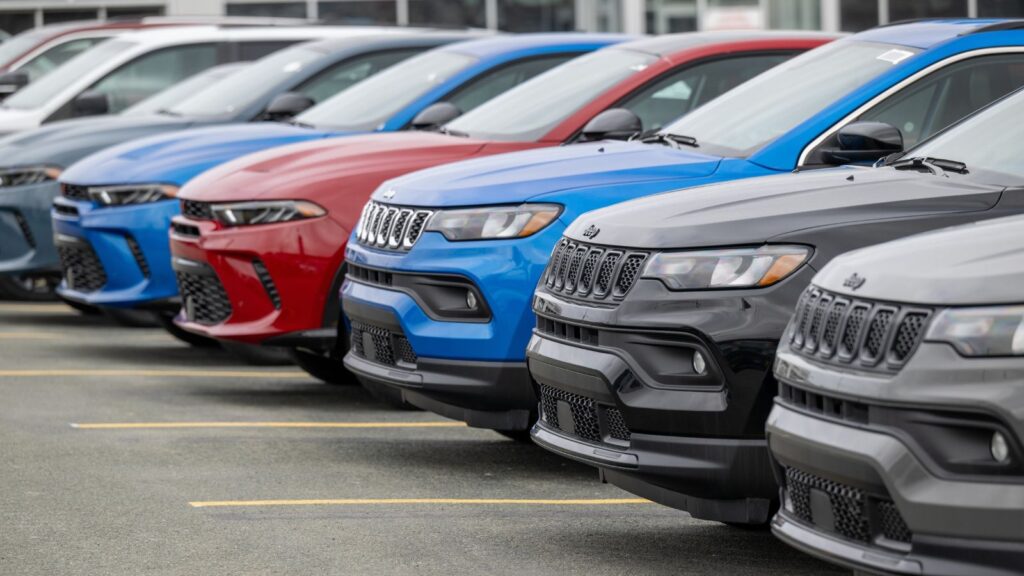
For Canadian drivers, a vehicle’s value matters long after the excitement of leaving the dealership fades. It shapes the next trade-in, the cost of replacing a family car and, sometimes, how much debt remains when an owner wants to sell. Canadian Black Book’s 2026 Best Retained Value Awards, announced October 19, deliver a sobering update: vehicles in its four-year assessment retained an average of 57% of their original manufacturer’s suggested retail price, down from 67.5% in the previous awards.
The decline is substantial, but the winners also reveal which brands and models have resisted the pressure. Together, the results show a resale market that is becoming harder to navigate by reputation alone.
A 10.5-Point Drop Changes the Ownership Equation
The difference between 57% and 67.5% is 10.5 percentage points, not a small rounding adjustment. Canadian Black Book’s latest awards examine 2023 model-year vehicles using a four-year retained-value measure tied to original MSRP. At the new average, 43% of the original sticker value has been lost; the previous awards implied depreciation of 32.5%. That matters because depreciation can become one of the biggest expenses of vehicle ownership, even though it never appears as a separate monthly bill.
Consider a hypothetical vehicle with an original MSRP of $40,000. At 67.5% retention, its calculated value is $27,000; at 57%, that falls to $22,800. The $4,200 gap illustrates the scale of the change, but it is not a quote for any particular car. Taxes, financing and the original negotiated price are outside the calculation, while mileage, condition and local demand influence actual offers. Crucially, these percentages compare successive annual award benchmarks. They do not mean every Canadian vehicle suddenly lost 10.5% of its value in one year.
The Pandemic-Era Resale Boom Is Fading Into History
The new figure looks especially stark against the market’s recent past. In 2022, Canadian Black Book recorded an unprecedented 80% average retained value for 2019 model-year vehicles. Amid scarce vehicle supply and intense demand, some award categories even showed used vehicles worth more than their original MSRP. The average eased to 77% in 2023. Against those extraordinary readings, the latest 57% benchmark describes a less forgiving environment for owners who still expect the unusually strong trade-in offers of earlier years.
The retreat has not been perfectly straight. The 2025 awards showed a modest improvement to 67.5%, from 67% a year earlier, before the latest reversal. Canadian Black Book’s 2026 outlook describes a market moving toward more predictable depreciation while facing affordability problems, trade uncertainty and shifting demand for different powertrains. Those overlapping pressures make the headline decline difficult to attribute to one cause. A lower used-car valuation may help a buyer negotiate, but it can also disappoint a household planning to sell its current vehicle to finance the next one.
Toyota Remains the Name to Beat in Mainstream Resale Value
Even as the overall benchmark weakens, Toyota fills much of the winners’ list. It earned Canadian Black Book’s Overall Mainstream Brand honour for a tenth consecutive year. The Corolla led mainstream cars ahead of the Camry and Prius, while the Corolla Cross won among smaller mainstream SUVs. The RAV4 Prime topped mainstream plug-in hybrids. For shoppers choosing between a practical sedan and a family crossover, those results show retained-value strength across several Toyota body styles rather than one exceptional model.
Toyota Canada reported eight wins across its Toyota and Lexus portfolio, including the Lexus LX in the larger premium-SUV category. Toyota vehicles also took every podium position in three mainstream categories. The Canadian-built RAV4 placed second to the Corolla Cross in the smaller-SUV grouping. These awards do not guarantee that a particular Toyota with heavy mileage or a collision history will command an exceptional offer. They do suggest the company’s resale performance is more than a short-lived success attached to a single nameplate.
Pickups and Family Vehicles Still Produce Strong Performers
Trucks provide some of the clearest examples of lasting resale appeal. The Toyota Tacoma claimed the small and mid-size pickup award for an eighteenth consecutive year, while the Tundra led full-size pickups. The GMC Canyon and Chevrolet Colorado followed the Tacoma; the Ford Super Duty and Chevrolet Silverado HD followed the Tundra. For owners who use pickups for work and commuting, these rankings suggest that similarly useful trucks can deliver different outcomes when it is time to trade them in.
The results extend beyond pickups. The Toyota Sienna led the awards’ mainstream mid/full-size utility grouping, with the 4Runner and Sequoia behind it. The Acura RDX won the smaller premium-SUV grouping, while the Lexus LX topped larger premium SUVs ahead of the Mercedes-Benz G-Class and Cadillac Escalade. These categories span very different budgets and needs. A family shopping for passenger space and a contractor shopping for towing capability are solving different problems; both benefit from comparing resale performance within the appropriate class instead of assuming every SUV or truck holds value equally well.
Electric Winners Show That EV Resale Value Is Not One-Size-Fits-All
Battery-electric vehicles remain an uneven part of the resale picture. Canadian Black Book says electric models generally trail the broader market on four-year retention. Yet Kia moved ahead of BMW to win Overall Electric Brand, while the Kia EV6 repeated as the mainstream electric-SUV winner. The Chevrolet Bolt EV retained the mainstream electric-car title. Tesla also reached a milestone: the Model X won the premium electric-SUV category, the brand’s first individual category victory in these awards.
The Porsche Taycan led premium electric cars ahead of the BMW i4 and Tesla Model 3. Those individual successes coexist with wider pricing pressure. CARFAX Canada’s October 2026 market update found that used-EV listing prices in August were 5.4% lower than a year earlier, with EV inventory reaching a new high for 2026. That can complicate a planned trade-in while creating more choice for used-EV shoppers. Neither trend means every electric model loses value equally; the awards highlight exceptions within a segment undergoing rapid change.
Plug-In Hybrids and Premium Brands Find Their Own Bright Spots
Plug-in hybrids produced different winners from fully electric vehicles. The Toyota RAV4 Prime repeated as the top mainstream plug-in hybrid, followed by the Subaru Crosstrek PHEV and Kia Sorento PHEV. In the premium category, the Porsche Panamera E-Hybrid placed first, ahead of the Lexus NX plug-in hybrid and BMW X3 plug-in hybrid. The pattern shows that electrification does not carry a single, uniform resale outcome. Households interested in driving on electricity for shorter trips still need to compare individual models rather than assume all plug-ins depreciate alike.
Porsche again won Overall Premium Brand, with category honours for the 911, Taycan and Panamera E-Hybrid. Cadillac was named Most Improved Brand and claimed the premium-car category with the CT5, which had finished behind the BMW 3 Series in 2025. Acura’s RDX and the Lexus LX also earned SUV honours. None of that makes luxury vehicles inexpensive to own: purchase price, insurance and maintenance remain separate costs. It does demonstrate how a declining national average can coexist with strength in particular models.
Falling Retention Does Not Mean Used Cars Are Suddenly Cheap
The awards are not a live survey of dealer asking prices. Canadian Black Book’s separate Used Vehicle Retention Index stood at 127.5 in September 2026, unchanged from August but 7.6% lower than a year earlier. That index uses wholesale values for vehicles two to six years old and accounts for age, mileage and condition. The awards’ 57% figure instead describes retained MSRP value over a defined ownership period. Both show market pressure, but the measures should not be treated as interchangeable.
Retail figures tell a more gradual story. CARFAX Canada reported an average used-vehicle listing price of $30,776 in August, down only 2.7% from a year earlier. Inventory rose 18.9% from July to 228,788 listings, while transactions fell 6.6% year over year. Buyers may find greater choice without a sudden collapse in advertised prices. Sellers may discover that old assumptions about trade-in values are too optimistic. And because an advertised listing price is not necessarily the amount a seller receives, comparing actual offers remains essential.
The Trade-In Risk Is Greater When a Loan Outlasts the Car
Declining retained value matters most when a vehicle owner still owes money. The Financial Consumer Agency of Canada defines negative equity as owing more on a car loan than the vehicle is worth. In its illustrative example, a $31,300 vehicle is financed with a $35,000 loan over eight years. After two years, the borrower owes $8,520 more than the car’s estimated value. This is not a claim about the typical borrower today, but it shows why depreciation and financing must be considered together.
Someone trading in a vehicle with negative equity may be offered another loan that includes the shortfall. That can make a replacement purchase possible without immediate cash, while increasing the new balance and interest costs. The federal agency advises examining total borrowing costs, comparing loan offers and considering a shorter term or down payment where affordable. Against a 57% resale benchmark, the important question is not simply whether a dealer will accept a trade-in. It is how much equity remains after the old loan is paid off.
What the Awards Mean for the Next Vehicle Purchase
An award is a starting point for research, not a personal resale guarantee. Canadian Black Book says its trade-in valuations consider make, model, year, trim, mileage, condition, equipment and local market conditions. Canada’s Office of Consumer Affairs also recommends reviewing a used vehicle’s history by VIN, checking recalls and arranging an independent inspection. A high-mileage award winner with an incomplete service record can be a worse purchase than a well-maintained model without an award.
It also matters which award is being discussed. October’s Best Retained Value Awards assess past performance, while Canadian Black Book’s separate Best Residual Value Awards forecast what newer vehicles may be worth. The February 2026 residual awards looked ahead to 2030, and the next round is scheduled for February 2027. Forecasts offer guidance, not certainty. The broader lesson is that depreciation has re-emerged as a significant ownership cost. Comparing financing, running expenses and realistic resale expectations is more useful than assuming the unusually high used-car prices of the pandemic will return.
