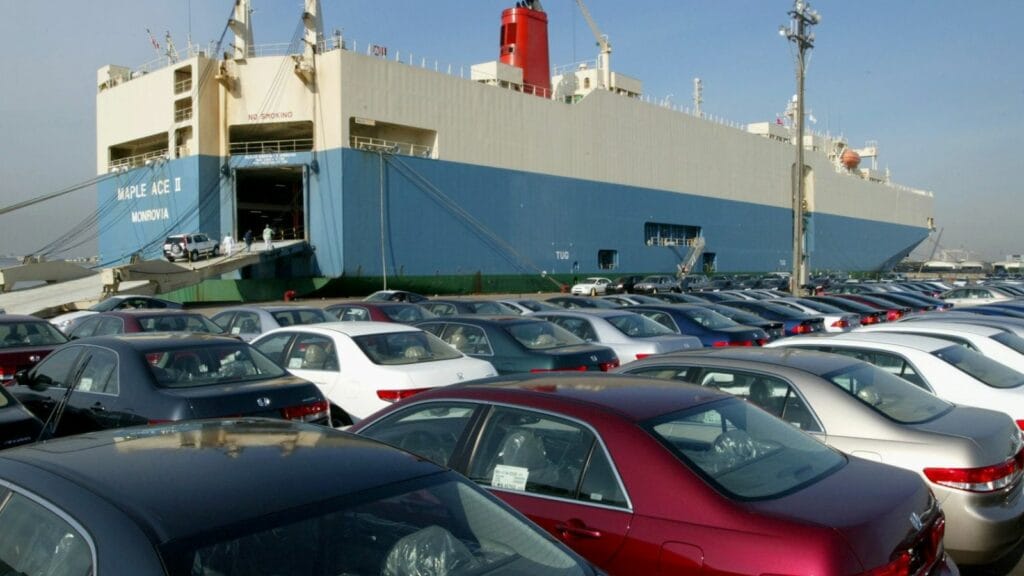
Canada’s automotive market is proving more resilient than expected. Canadians purchased an estimated 162,000 new light vehicles in October 2026, giving the industry its fifth consecutive month of year-over-year sales growth despite ongoing tariffs, rising inflation and higher borrowing costs.
According to DesRosiers Automotive Consultants, October sales increased 1.8 per cent compared with the same month last year, bringing the market close to one of its strongest October performances on record.
However, the recovery comes with important qualifications. Year-to-date sales remain slightly below 2025 levels, American-built vehicles are losing market share, and household affordability remains a significant concern.
For dealerships, manufacturers and Canadian consumers, the latest results offer encouraging signs that demand is recovering, even as economic uncertainty continues to shape purchasing decisions.
October’s 162,000 Sales Show Demand Has Not Disappeared
DesRosiers Automotive Consultants estimated that Canadian dealerships delivered roughly 162,000 new light vehicles in October, compared with about 159,000 in October 2025. That translates to a 1.8 per cent year-over-year increase, a relatively small percentage that represents thousands of additional purchases across the country. For a business facing a tariff dispute and uneven household confidence, simply holding sales near last year’s levels is meaningful. The total is an estimate, not yet the final official monthly count.
A dealer would welcome that hard-won stability, but not every Canadian showroom necessarily enjoyed a better sales month. October 2026 included one more selling day than October 2025, which helped the unadjusted comparison. The five-month run also describes increases from the corresponding months a year earlier, not consecutive increases in actual monthly volumes. September’s estimate was about 168,000 vehicles, higher than October’s. That distinction keeps the recovery from sounding stronger than the numbers support.
The Turnaround Began With June’s Modest Breakthrough
The reversal did not start with a dramatic boom. After eight straight months of year-over-year declines, June finally moved into positive territory, with an estimated 182,000 new light vehicles sold, up 1.9 per cent from June 2025. July added another modest gain: approximately 173,000 vehicles, just 0.5 per cent higher than a year earlier. In both months, the significance lay more in ending the slide than in setting new records.
Momentum became clearer in summer. August delivered an estimated 168,000 sales, a 5.4 per cent rise against weak August 2025 sales. September matched roughly 168,000 units and advanced 3.4 per cent year over year. October then completed the fifth consecutive increase. The irregular pattern matters because vehicle shopping depends on replacement needs, inventory, model launches and financing offers. A family whose aging SUV finally needs replacing may act despite economic anxiety; that does not necessarily signal a broad spending spree.
A Near-Record October Comes With an Important Caveat
October was only about 3,000 sales below Canada’s strongest October result, established in 2017, according to DesRosiers. It is particularly striking given the prolonged period of trade tensions, elevated fuel costs and changing consumer preferences. At the same time, the comparison requires care: a calendar with an extra selling day can lift raw totals without a matching improvement in purchases per business day.
A more useful gauge for underlying momentum is the seasonally adjusted annualized rate, or SAAR, which accounts for normal calendar and seasonal patterns. DesRosiers put October’s SAAR at 1.98 million vehicles, its strongest reading since February and above September’s 1.91 million pace. That figure is not a prediction that 1.98 million vehicles will be sold this year; it expresses the month’s adjusted pace over twelve months. Read together, the measurements suggest meaningful resilience, while cautioning against treating one strong October as a return to an all-time peak.
The Year-to-Date Deficit Is Almost Gone, But Not Quite
The running total also reveals progress. At the end of May, Canadian new light-vehicle sales were 3.7 per cent below the comparable period in 2025. By the end of September, the shortfall had narrowed to 0.7 per cent. After October, DesRosiers put the year-to-date gap at 0.5 per cent. That does not constitute annual growth, but it does show how summer and early-autumn demand made up lost ground.
For manufacturers, a shrinking deficit affects production planning, dealer allocations and how aggressively promotions may be needed. For shoppers, it is a reminder that an improving market does not necessarily produce cheaper vehicles. Sales can reflect better availability, deliveries postponed from earlier months or stronger demand for particular models. None of those explanations can be proved from the national total alone. The important point is that the Canadian market is approaching last year’s pace after entering the summer at a greater disadvantage.
Tariffs Are Reshaping the Supply of Vehicles
Trade policy still complicates the rebound. Since April 2025, Canada has imposed a 25 per cent tariff on U.S.-imported vehicles that do not comply with CUSMA, as well as on the non-Canadian and non-Mexican content of compliant vehicles imported from the United States. The rules are more nuanced than a blanket 25 per cent charge on every American vehicle, but they create costly decisions for manufacturers managing cross-border production and sourcing.
The shift appears in Canadian vehicle assembly origins. J.D. Power Canada data showed the share built in the United States falling to 28.4 per cent in the first half of 2026, from 35.4 per cent a year earlier. Mexico’s share rose to 22.2 per cent from 18.3 per cent. That movement does not establish the motivation behind every purchase, but it illustrates how tariffs can alter supply choices and shopping options even while overall Canadian sales continue to recover.
Inflation and Interest Rates Make Every Payment Count
Affordability remains a major obstacle to recovery. Statistics Canada reported that consumer prices increased 3.1 per cent year over year in September 2026, up from 3.0 per cent in August. Transportation costs rose 8.4 per cent, while gasoline prices were 27.8 per cent higher than a year earlier. Those increases matter well beyond a dealership’s advertised sticker price. Fuel, insurance, maintenance and everyday bills all compete for money that could otherwise go toward a vehicle payment.
Financing also became harder in late October. On October 28, the Bank of Canada lifted its overnight policy rate by a quarter percentage point to 2.5 per cent, its first increase since July 2023. That move does not instantly reset every auto loan, but higher benchmark rates can feed into future borrowing costs. A household’s decision extends beyond choosing a sedan or SUV: it involves the down payment, term, monthly obligation and total ownership cost.
SUVs Dominate, But Passenger Cars Have Bright Spots
Canadian buyers continue to favour vehicles classified as light trucks, a category that includes SUVs, crossovers and pickups. During the first half of 2026, they accounted for 87.8 per cent of new light-vehicle sales, according to DesRosiers, leaving passenger cars with 12.2 per cent. That makes crossover lineups vital to an automaker’s overall sales. It also reflects buyers’ interest in space, versatility and all-weather practicality.
Passenger cars are not uniformly weak. DesRosiers reported that intermediate passenger cars posted a 24.0 per cent first-half sales increase, helped by models such as the Toyota Prius and Camry. Large SUVs gained 11.5 per cent, while compact SUVs declined 4.3 per cent and large pickups fell 5.8 per cent. These figures describe the first half, not October alone, but they show why broad labels can hide very different outcomes. Consumers seek value; the segment and vehicle offering often determine where they find it.
Hybrids and EVs Are Growing Along Different Paths
Electric vehicles are part of the market’s recovery, but the distinctions between technologies matter. Statistics Canada reported that second-quarter 2026 registrations of conventional hybrids increased 39.5 per cent year over year, while battery-electric registrations rose 37.4 per cent and plug-in hybrids climbed 8.0 per cent. Conventional hybrids do not need plugging in, which may appeal to households concerned about charging access. Each technology is growing at a different pace.
In August, a Statistics Canada monthly sales release counted 22,716 zero-emission vehicles, representing 13.0 per cent of new motor vehicles sold, compared with 8.8 per cent a year earlier. By that definition, zero-emission vehicles include battery-electric and plug-in hybrid models, not conventional hybrids. DesRosiers also described October’s zero-emission demand as holding up without clear evidence of widespread purchases being accelerated ahead of incentive reductions. Taken together, these findings suggest an evolving market rather than a shift from gasoline to battery power.
The Gains Look Different Across Brands and Provinces
A positive national result can conceal winners and losers. Through September, DesRosiers found Volkswagen sales up 15.1 per cent year to date, to 74,000 vehicles. Toyota was ahead 6.8 per cent and Stellantis 3.9 per cent, even as most vehicle companies remained below their 2025 results. Availability, prices and buyer preferences can influence individual brand results. Neighbouring dealerships can experience the same month very differently.
Geography tells a similar story. All ten provinces posted year-over-year gains in September, but year-to-date performance was uneven. Nova Scotia led with a 2.1 per cent gain through September, while Ontario accounted for more than half the national cumulative decline, according to DesRosiers. The largest province can heavily influence the overall national result. Dealers elsewhere may report lively demand for particular models while an Ontario slowdown weighs on the overall figures. October’s national rebound therefore should not be mistaken for identical conditions in every region.
The Final Two Months Will Test the Recovery
Sustaining growth against late-2025’s strong comparison will be difficult. DesRosiers warned that last year’s fourth quarter was relatively robust, making additional year-over-year gains harder to achieve. October’s gain does not guarantee a positive annual finish. Trade policy remains unsettled, inflation is elevated and the Bank of Canada’s next scheduled rate decision is December 9. These factors could significantly influence Canadian showroom traffic through December.
Electric-vehicle incentives add another deadline. Under Canada’s Electric Vehicle Affordability Program, eligible battery-electric vehicles can receive up to $5,000 in 2026, falling to $4,000 for 2027; qualifying plug-in hybrids drop from up to $2,500 to $2,000. The applicable year depends on when a dealership submits its eligibility assessment, not simply when the vehicle arrives. That could influence buying schedules, although October data did not show clear evidence of widespread advance purchasing. For now, five straight gains indicate resilience, not immunity from the pressures surrounding the industry.
