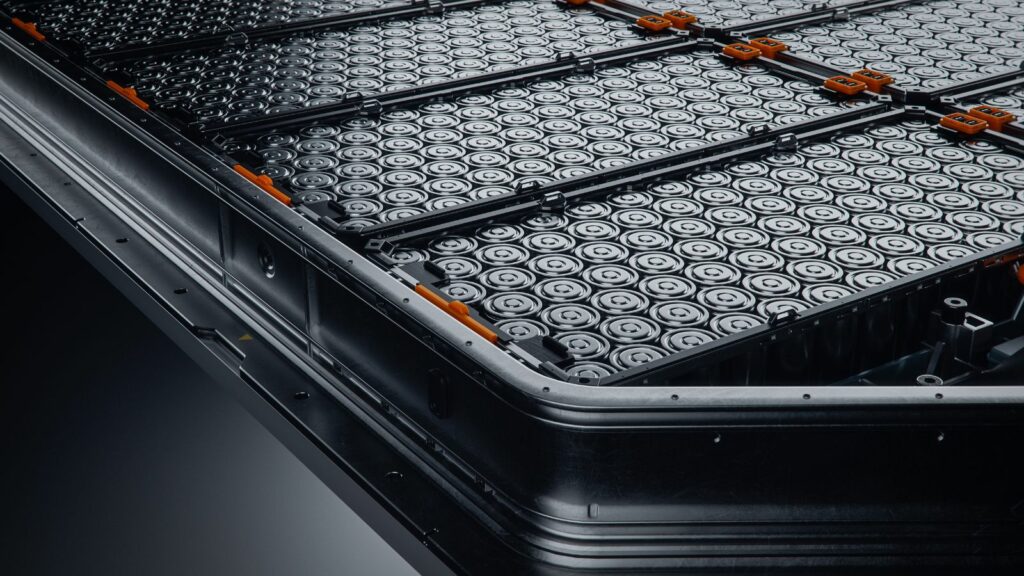
China has placed another marker in the global battery race, setting a 2030 goal for the initial large-scale application of all-solid-state batteries as part of its next five-year industrial strategy. The September 2026 plan reaches far beyond experimental cells, calling for advances in electrodes, electrolytes, manufacturing quality and other parts of the battery supply chain.
For Canada, the timing matters. Billions of dollars have already been committed to building a domestic EV battery ecosystem, yet projects have faced delays, cancellations and shifting demand. China, meanwhile, already controls an enormous share of global battery production. If solid-state technology begins moving from laboratories to commercial factories by the end of the decade, the competition for battery capital, suppliers and advanced manufacturing expertise could become considerably tougher.
China Has Put 2030 on the Calendar
China’s Ministry of Industry and Information Technology and six other government agencies released the country’s new battery-industry development plan on September 28, covering the 2026–2030 period. Among its headline goals is for all-solid-state batteries to achieve what Chinese authorities describe as initial large-scale application by 2030. The plan also calls for breakthroughs involving advanced electrode materials, new electrolytes and high-end supporting materials, while pushing development of other technologies including sodium-ion and flow batteries.
The targets extend into manufacturing quality as well. China wants long-life lithium batteries to reach 15,000 charge-discharge cycles and leading manufacturers to reduce product defect rates to parts-per-billion levels. That combination is important. Commercializing a new battery chemistry is not simply about creating a laboratory cell with impressive energy density. Manufacturers must repeatedly produce millions of cells with tightly controlled performance and safety. China’s roadmap therefore connects the solid-state ambition with materials, production equipment, quality control, recycling and supply-chain development rather than treating it as an isolated scientific project.
Why Solid-State Batteries Attract So Much Attention
Conventional lithium-ion batteries typically move lithium ions through a liquid or gel electrolyte between the electrodes. All-solid-state designs replace that liquid component with a solid electrolyte. Researchers have spent years pursuing the technology because it offers the potential for higher energy density and improved safety, particularly when paired with high-capacity lithium-metal anodes. Academic research has repeatedly identified those characteristics as major reasons solid-state systems are viewed as one of the leading candidates for next-generation EV batteries.
For automakers, the attraction is straightforward even if the engineering is complicated. More usable energy for a given battery weight could eventually translate into longer driving range, smaller packs or some combination of the two. Replacing flammable liquid electrolytes may also reduce certain thermal and fire risks. Those benefits should not be interpreted as automatic outcomes, however. Battery performance depends on electrolyte chemistry, electrodes, cell architecture, thermal management and manufacturing conditions. Solid-state technology therefore represents a potentially important step forward rather than a guaranteed replacement for today’s lithium-ion batteries.
The Manufacturing Gap Is Still Enormous
The biggest obstacle is turning impressive laboratory results into cells that factories can make cheaply and reliably. Solid materials do not naturally maintain the same intimate contact that liquids create around battery electrodes. Researchers continue to study problems involving poor electrode-electrolyte contact, unwanted chemical reactions, lithium dendrites and resistance to lithium-ion movement across interfaces. Manufacturing processes also have to accommodate pressure, changes in material volume and extremely thin layers without introducing defects.
Those issues help explain why even China’s largest battery companies remain cautious about timelines. CATL chairman Robin Zeng said in June 2026 that solid-state technology was only around level four on a nine-level development scale used by the company, with level nine representing mass-production readiness. Academic work has similarly highlighted low-throughput manufacturing and high processing costs as remaining obstacles. China’s 2030 goal therefore should not be confused with an immediate replacement of conventional batteries. The next several years are more likely to involve pilot production, expensive early applications and gradual improvements in manufacturing yield before truly high-volume vehicles become realistic.
China Already Owns the Scale Advantage
The solid-state push is especially significant because China is not starting from scratch. International Energy Agency data show global lithium-ion battery manufacturing capacity exceeded 4 terawatt-hours by the end of 2025, with China accounting for more than 80% of that capacity. China also produced more than 80% of the world’s battery cells in 2025, while Chinese-headquartered manufacturers supplied almost three-quarters of the batteries deployed in electric cars globally.
China’s position is even stronger in some upstream portions of the industry. The IEA estimates the country accounted for roughly 85% of global cathode active material production and more than 90% of anode active material production used in electric-car batteries in 2025. That concentration creates an advantage that extends beyond factory floor space. Battery makers operate alongside specialist equipment manufacturers, chemical suppliers, materials processors, engineers and automakers that already produce at enormous scale. If solid-state manufacturing requires new electrolytes, presses, coating equipment or quality-control systems, many of those industrial relationships can be developed within an ecosystem that already serves the world’s largest battery market.
Pilot Lines Are Becoming the New Battleground
Several major Chinese companies are already preparing for the stage between laboratory research and full commercialization. BYD has discussed demonstration use of sulfide-based all-solid-state batteries around 2027 before broader adoption later in the decade. CATL has also been associated with small-scale pilot production around 2027 while publicly cautioning that true mass adoption remains much farther away. GAC, meanwhile, built a pilot line capable of producing vehicle-grade all-solid-state cells exceeding 60 amp-hours, providing another example of Chinese automakers moving toward manufacturing validation.
These programs matter because a pilot line tests problems that laboratory cells can hide. Manufacturers have to determine whether materials can be mixed, formed and assembled quickly; whether thousands of cells remain consistent; and whether production equipment can operate economically. China’s national 2030 goal effectively gives those separate corporate programs a wider industrial destination. Material suppliers, machinery manufacturers, research institutes and automakers now have a clearer timeline around which to plan. Even if individual technologies fail or change, the accumulated manufacturing experience could strengthen the country’s ability to commercialize whichever solid-state approaches eventually prove viable.
Canada Does Have a Working Battery Anchor
Canada’s battery strategy is not composed entirely of projects still waiting to open. NextStar Energy’s massive Windsor, Ontario, facility began commercial battery-cell production in November 2025 and celebrated the production of its one-millionth cell in February 2026. The 4.23-million-square-foot complex represents more than C$5 billion in investment and is designed for annual capacity of up to 49.5 gigawatt-hours. More than 1,300 employees had already joined the operation by early 2026, with employment expected to expand as output increases.
NextStar has also shown how rapidly the market can force battery factories to broaden their purpose. In June 2026, the company began production on a battery-pack line serving growing demand for energy-storage systems, adding pack assembly to existing cell and module operations. That allows the Windsor facility to serve markets beyond passenger EVs, including stationary storage. Such flexibility matters in an industry where vehicle forecasts, battery chemistries and customer strategies can change before a factory has even finished ramping up. Canada now has commercial-scale battery manufacturing experience, but the challenge is keeping that capacity technologically relevant as the industry evolves.
The St. Thomas Delay Shows the Technology-Timing Risk
One of Canada’s largest planned battery investments illustrates that uncertainty. Volkswagen’s PowerCo has pushed the expected production start at its C$7-billion St. Thomas, Ontario, gigafactory from 2027 to 2029. The company has said the revised schedule allows it to align the plant with changing market demand, technological advances and Volkswagen’s longer-term battery strategy. PowerCo has continued construction activity and selected EllisDon to lead the next phase, meaning the project is delayed rather than abandoned.
The new timing is particularly notable because 2029 places St. Thomas much closer to China’s 2030 solid-state commercialization objective. PowerCo has said the later opening creates room to incorporate next-generation battery technology while preserving the ability to scale production as demand changes. That could ultimately strengthen the factory if its equipment and product strategy arrive at the right moment. It also illustrates the difficult calculations facing governments and investors. A battery plant planned years in advance must remain competitive against technologies that may change substantially between the original investment announcement and the first full year of commercial production.
Canada Has Already Seen How Quickly Battery Plans Can Change
Other projects have experienced more severe disruption. In September 2025, Quebec formally ended its financial involvement in Northvolt Batteries North America after the planned Northvolt Six battery factory project in the Montreal region came to an end. The project had originally been promoted as an integrated cell-manufacturing complex capable of turning Quebec’s low-carbon electricity and industrial base into a major North American battery hub. Its collapse demonstrated how quickly financial difficulties at a global battery company can affect regional industrial plans.
Umicore’s proposed battery-materials facility in Loyalist Township, Ontario, provides another example of shifting conditions. The company paused construction amid slower-than-expected EV growth and a review of its battery-materials business. The facility had been envisioned as a multibillion-dollar source of cathode and precursor materials for North American customers. Neither case means Canada’s battery strategy has stopped progressing, but they underline the risks attached to huge factories with long construction schedules. Demand forecasts, financing costs, customer contracts and battery technologies can all move faster than industrial megaprojects.
Canada Is Also Reopening the Door to Chinese EV Investment
The relationship between Canada and China’s EV industry has itself changed significantly. Under a January 2026 Canada-China arrangement, Canada established an initial annual quota of 49,000 Chinese-made EVs that can enter at the 6.1% most-favoured-nation tariff rate. The quota is scheduled to increase by 6.5% annually, and Ottawa has said it expects the arrangement to encourage Chinese joint-venture investment in Canada’s automotive and EV supply chain. Current import rules continued administering that quota in the second half of 2026.
That creates an unusual dynamic. Chinese manufacturers are simultaneously competitors, potential investors and possible technology partners for Canada’s automotive sector. A company developing advanced batteries in China could eventually participate in Canadian manufacturing through a joint venture, a materials investment, licensing or another commercial arrangement. However, Ottawa’s expectation of new investment is still an expectation rather than a guaranteed outcome. The economic effect will depend on what companies actually build in Canada and how much manufacturing, engineering, intellectual property development and supply-chain activity accompanies any future vehicle sales.
The Investment Race Is Moving Beyond the Cell Factory
Canada is still attracting projects elsewhere in the battery chain. Ottawa announced support in July for Volta Energy Solutions Canada’s C$760.9-million copper-foil expansion in Granby, Quebec, targeting initial annual capacity of 25,000 tonnes beginning in 2027 and potentially 63,000 tonnes later. In British Columbia, Mangrove Lithium opened a commercial electrochemical lithium-refining facility in 2026 that the federal government says can produce enough battery-grade lithium for roughly 25,000 EVs annually. Ontario is also supporting major investments in separators and synthetic graphite.
China’s solid-state plan raises the competitive bar because the next investment cycle may increasingly revolve around advanced materials, specialist equipment, pilot manufacturing and research capability rather than simply attracting another conventional cell factory. Canada’s mineral resources, established auto sector, electricity system and newly operating battery capacity remain meaningful assets. At the same time, the technology itself is still uncertain enough that today’s lithium-ion facilities are unlikely to become obsolete overnight. The more immediate challenge is adaptability: by 2030, successful battery hubs may be those capable of supporting several chemistries, new materials and changing end markets while moving innovations from laboratories into reliable industrial production.
