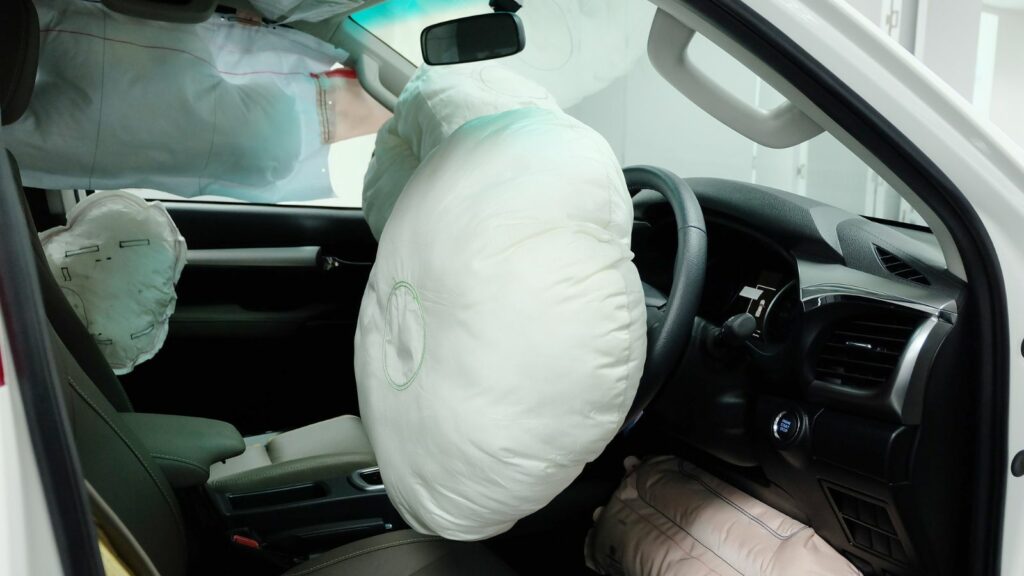
A long-standing online route for buying and selling replacement airbags closes on September 24, 2026, as eBay implements a broad prohibition on standalone airbags and airbag inflators. The change reaches Canadian sellers as well as their counterparts elsewhere, removing a marketplace that professional automotive recyclers had been able to use under tightly controlled conditions.
The decision arrives as safety regulators intensify scrutiny of dangerous replacement inflators entering the North American repair market. For Canadian recyclers, however, the consequences are more complicated than a simple safety crackdown. Recycled airbags remain treated differently across jurisdictions, and some regulated Canadian programs continue to permit their use. What changes today is primarily where those parts can be sold—and how easily buyers can find them.
The Ban Takes Effect Across eBay Today
Effective September 24, eBay no longer permits any seller to list standalone airbags, airbag inflators—also known as gas generators—or steering-wheel airbag covers. The company’s Canadian policy pages make the effective date explicit, and sellers were instructed to remove affected active, scheduled and draft listings before the deadline. Listings that remained were subject to removal by eBay, while attempts to relist prohibited products could lead to selling restrictions.
The policy is broad, but it does not eliminate every Supplemental Restraint System component from eBay in Canada. Outside the United States, eBay says sellers may continue listing permitted components that do not contain an airbag or inflator, including airbag control units, crash or impact sensors, diagnostic modules and passenger sensors. That distinction matters to recycling operations because a dismantled vehicle can supply numerous components connected to the restraint system. The pyrotechnic part that actually creates the rapid inflation is at the centre of the new restriction, while several electronic components remain marketable.
eBay’s Previous System Was Already Highly Restricted
Airbags were not an unrestricted product category before today’s change. The Automotive Recyclers Association and eBay had developed a program intended to limit sales to professional recycling facilities that met specific requirements. Under ARA’s published standards, only Recall Certified locations were eligible, and certification was tied to the individual facility harvesting and shipping the component rather than automatically extending to every branch of a recycling company.
Employees dealing with airbags were also expected to receive training in airbag protocols, recall procedures and hazardous-material shipping. Recall compliance was particularly important because the donor vehicle’s VIN could be checked to determine whether a component was subject to an outstanding safety campaign. Recalled safety parts were supposed to be removed from sale rather than passed into another vehicle. When eBay announced that the program was ending, ARA said it was disappointed but acknowledged eBay’s safety concerns and pointed to the training, certification and recall-verification standards developed during their partnership. The change therefore closes a controlled professional sales route, not simply an open marketplace with no safeguards.
Dangerous Replacement Inflators Have Raised the Stakes
The wider safety environment surrounding replacement airbags has become considerably more serious. U.S. regulators spent much of 2025 and 2026 investigating replacement driver-airbag inflators marked DTN60DB. By September 3, 2026, the National Highway Traffic Safety Administration said the defective inflators had been linked to 11 deaths in the United States, with earlier agency information also documenting three severe injuries. The parts could rupture during deployment and propel metal fragments into a vehicle’s cabin instead of safely inflating the airbag.
Those cases require an important distinction. NHTSA’s warnings concern defective replacement inflators believed to have entered the United States outside normal original-equipment channels. They do not establish that properly documented recycled OEM airbags sold by professional recyclers through eBay caused those crashes, and eBay has not publicly said that the fatal DTN incidents came from its marketplace. The company instead says its prohibition followed a comprehensive review of the risks these products could present. Still, the fatalities illustrate why online platforms face unusually high consequences when the authenticity and history of a safety-critical component cannot be established.
Canada Does Not Have One Simple Rule for Recycled Airbags
The Canadian situation is more complicated because the treatment of recycled airbags can depend on the jurisdiction and program involved. Quebec, for example, generally prohibits the sale or installation of rebuilt airbags and restricts recycled units as well. An important exception exists for certain undeployed airbags supplied through members of the Association des recycleurs de pièces d’autos et de camions. Quebec’s SAAQ says ARPAC demonstrated through a pilot project conducted from 2010 through 2015 that participating recyclers could safely recover undeployed front airbag modules.
Saskatchewan provides another example of a regulated recycled-airbag channel. SGI says a damage estimate may call for a recycled airbag and that the insurer uses qualifying undeployed units supplied through SGI Salvage. Older national guidance published through Automotive Recyclers of Canada similarly stressed inspection, donor-vehicle identification, storage, documentation and proper installation when jurisdictions accept recycled OEM airbags. Crucially, those guidelines also acknowledged that individual jurisdictions were not required to permit recycled airbags. eBay’s policy now creates a single platform-wide prohibition even where a particular Canadian regulatory system may allow carefully controlled reuse.
Auto Recyclers Are Losing an Online Sales Channel, Not Their Entire Business
Automotive recycling is a substantial parts-supply business in Canada. Automotive Recyclers of Canada says its provincial affiliates represent roughly 350 end-of-life vehicle recyclers and dismantlers. These businesses acquire vehicles that may no longer be economical to repair but can still contain usable original equipment. Engines, transmissions, body panels, lamps, electronics and countless smaller components can be catalogued and returned to service instead of immediately entering the scrap stream.
For recyclers that participated in online airbag sales, eBay offered something particularly valuable: access to buyers beyond the recycler’s immediate geographic market. A relatively uncommon airbag from a particular model, trim or production year might have limited demand locally but be valuable to a repairer elsewhere. Eliminating eBay does not automatically make every eligible recycled airbag unsellable under Canadian law. Depending on the jurisdiction, recycler and customer, other direct or business-to-business channels may still exist. What disappears is a large, searchable marketplace. That can make matching specialized inventory with an appropriate buyer slower and potentially leave more usable components sitting in inventory while recyclers develop alternative sales routes.
The Cost Effect Is Likely to Be Uneven
Recycled and alternative parts have become increasingly important as repair businesses and insurers try to contain vehicle repair costs. Mitchell reported earlier in 2026 that utilization of aftermarket, recycled and remanufactured parts had increased by almost two percentage points in Canada year over year. Automotive Recyclers of Canada, meanwhile, says its recycled “green” parts generally sell for roughly half the price of new OEM replacement parts, although actual savings vary widely by component, condition, vehicle and availability.
Those broad savings figures should not simply be applied to airbags. Supplemental restraint components face special safety requirements, manufacturer repair recommendations and jurisdiction-specific restrictions that do not apply to a used fender or alternator. Nevertheless, removing a major marketplace can reduce the number of sourcing options available to repairers where recycled airbags are permitted. A shop unable to locate an acceptable recycled unit may have to source a new OEM component instead, potentially changing the economics of repairing an older collision-damaged vehicle. There is not yet credible Canadian data showing how much eBay’s September 24 ban will change repair bills, however, so any national price increase would be premature to quantify.
Shipping an Airbag Was Already a Specialized Job
An undeployed airbag may resemble an ordinary automotive component sitting on a parts shelf, but transportation rules treat its inflator very differently. Transport Canada’s dangerous-goods framework includes electrically initiated safety devices under UN3268, Class 9. Canadian dangerous-goods requirements can involve trained personnel, proper documentation, approved means of containment and required safety markings depending on how the product is classified and transported. Transport Canada states more broadly that people who handle, offer for transport or transport dangerous goods must have appropriate training or work under direct supervision where the regulations apply.
That complexity was built into the professional recycling system that existed before the eBay prohibition. ARA’s airbag protocols included hazardous-material shipping training, and its certification materials emphasize special handling and shipping procedures for undeployed airbags and related restraint components. The end of eBay sales does not remove those obligations when airbags move through other lawful channels. In practical terms, a recycler switching from an eBay transaction to a direct sale cannot simply treat the part like a mirror or headlamp. The same underlying questions about classification, packaging, documentation, recall status and trained handling personnel remain.
Repairers and Vehicle Owners Still Need to Check the History
The eBay change does not mean that every used airbag currently installed in a Canadian vehicle is defective, nor does it amount to a recall of recycled OEM airbags. What it does reinforce is the importance of traceability. Professional recyclers have traditionally relied on donor VINs, inventory records and recall checks to establish where a component came from. Repairers must also consider the vehicle manufacturer’s procedures. Nissan Canada, for example, recommends new genuine Nissan replacement parts for Supplemental Restraint System repairs and warns that the history, condition and compatibility of a salvaged airbag component may be uncertain.
Vehicle owners with questions about an airbag should start with the vehicle itself rather than the eBay policy. Transport Canada maintains a national safety-recall database, and manufacturers increasingly provide VIN-based recall searches. A used vehicle with an unknown collision history deserves particular attention if its airbags were previously deployed or replaced. The safest repair decision can depend on the vehicle, the replacement component, provincial requirements and manufacturer guidance. Beginning September 24, one thing is much simpler: regardless of whether a particular recycled airbag could legally be used in a Canadian jurisdiction, eBay is no longer the place to buy or sell it.
