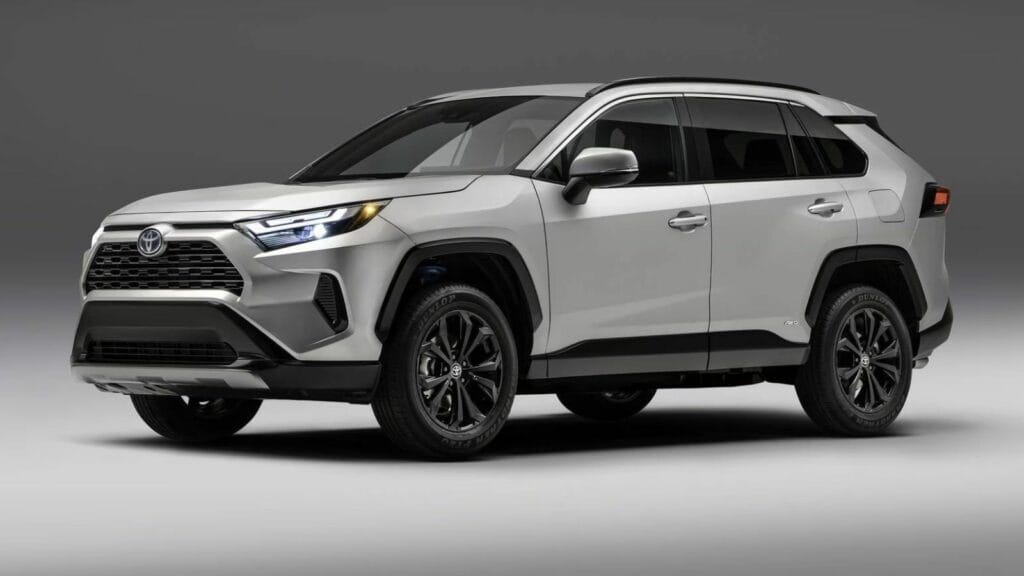
An unexpected loss of acceleration is more than an inconvenience when traffic is moving at highway speed. Toyota is recalling nearly 7,900 RAV4 Plug-in Hybrid SUVs in Canada because a software problem could shut down the plug-in hybrid system while driving, increasing the risk of a crash.
The campaign concerns certain 2026 models, not the entire RAV4 lineup. Toyota announced the recall on October 7, 2026, and says affected owners will receive a free software update through its dealerships. Notifications are planned by early December. For households depending on the SUV for commuting, school runs or longer trips, the immediate questions are practical: which vehicles are affected, what the fault involves, and how to arrange the repair.
The Canadian Recall Covers Certain 2026 Plug-in Hybrids
Toyota’s original Canadian announcement identified approximately 7,846 affected vehicles. Transport Canada’s recall database, updated October 15, lists 7,847. Both figures put the campaign just below 7,900 SUVs; neither represents a tally of vehicles that have already lost power on the road. The campaign is listed as Transport Canada recall 2026-484, with Toyota’s Canadian manufacturer reference SRC RN4. Those identifiers can help owners distinguish this notice from other recalls involving the same model name.
There is another detail worth checking carefully. Transport Canada’s vehicle table labels the affected model “RAV4 HYBRID,” but the accompanying explanation explicitly limits the recall to plug-in hybrid models. It should not be read as a blanket recall of conventional RAV4 hybrids or every earlier RAV4. For an owner comparing paperwork with a news headline, the model year and powertrain are useful starting points. A vehicle-specific recall check, rather than the badge alone, is what establishes whether an individual SUV needs attention under this campaign.
A Startup Software Error Can Surface at Higher Speeds
The problem involves the motor generator electronic control unit, usually shortened to MG-ECU. Toyota’s filing with the U.S. National Highway Traffic Safety Administration explains that the controller may fail to complete a motor initialization process correctly. In plain language, part of the system’s startup preparation can go wrong, leaving a control mode needed at higher speeds unavailable. The difficulty may therefore become apparent after the vehicle has already begun its journey.
When that mode is requested, warning lights can illuminate and the hybrid system may enter a restricted driving mode or shut down. This is not simply an infotainment screen freezing or a navigation feature becoming unavailable: the affected software is involved in delivering propulsion. The distinction helps explain why an electronic problem warrants a safety recall. It also means that an uneventful drive around the block is not a meaningful way for an owner to rule out the defect. Diagnosis and correction belong with Toyota’s service network, not an improvised road test.
Highway Power Loss Leaves Little Room for Error
Transport Canada identifies the central danger as a sudden loss of power to the wheels, which can increase crash risk. Consider a hypothetical driver joining a busy highway: the vehicle may need to keep accelerating to match surrounding traffic. An unexpected interruption in propulsion can make that manoeuvre much harder. At 100 km/h, a vehicle covers approximately 28 metres each second, illustrating how quickly a situation can develop. That speed is an example, not a published trigger threshold for this recall.
The warning should not be exaggerated into a claim that every affected SUV will stop without warning or that steering and braking necessarily fail. The Canadian notices describe a propulsion problem; they do not establish those additional outcomes. They also do not provide a Canadian crash or injury total. That absence should not be presented as confirmation that no incidents have occurred. The useful conclusion is narrower: the identified defect is serious enough to require corrective action before a driver encounters it.
U.S. Records Add Detail About the Investigation
The issue extends beyond Canada. Toyota has also recalled about 31,000 RAV4 Plug-in Hybrids in the United States. Its regulatory filing describes an investigation that included a report from Japan involving warning lights and restricted vehicle operation, followed by testing. Toyota decided to launch a voluntary safety recall on October 1. That sequence provides a more concrete account of the problem than a general warning about a possible software malfunction.
By September 30, Toyota had identified 38 U.S. field technical reports and 58 warranty claims that related, or potentially related, to the condition. These figures are not a count of crashes, injuries or Canadian incidents. Nor should the two categories automatically be added together and described as separate vehicle failures: the filing does not establish that interpretation. For Canadian owners, the overseas information helps explain the investigation, but the Canadian campaign remains the reference for local eligibility and repair arrangements. A larger American vehicle count does not enlarge the number recalled in Canada.
The Repair Is a Free Dealer Software Update
Toyota’s announced remedy is to update the affected electronic control unit’s software at no charge. The Canadian notice does not call for a blanket battery replacement or an engine replacement. That is an important distinction for owners worried about the scope of the work. A software-based repair can still address a significant safety problem; the seriousness of the risk and the physical size of the repair are not the same thing.
Toyota says affected owners will be notified by early December 2026. That is a notification timetable, not a promise that every vehicle will have been repaired by then. The announcement does not specify appointment length, immediate availability at every dealership, or guaranteed rental-car coverage. A household arranging school pickups or relying on one vehicle should ask the dealer about those details before booking. Requesting written confirmation of the completed recall work is also sensible, so the service visit leaves a clear record rather than only a verbal assurance.
Having a Gasoline Engine Does Not Remove the Risk
A plug-in hybrid offers two energy sources: electricity stored in a rechargeable battery and fuel for an internal-combustion engine. Under normal operation, that arrangement can support electric driving for some journeys and gasoline-powered travel when needed. The U.S. Department of Energy describes plug-in hybrids as vehicles that combine these technologies, with operating behaviour depending on the model and driving conditions. That flexibility can be useful for a commuter who charges at home but also makes longer trips.
It would nevertheless be a mistake to treat the gasoline engine as a guaranteed escape from this particular defect. The recall concerns the vehicle’s hybrid control system, not simply the battery reaching the end of its normal electric range. Neither Canadian notice identifies keeping the fuel tank full, avoiding charging, or selecting a different driving mode as a verified workaround. Owners should not invent one from the fact that the SUV has an engine. The relevant question is whether the defective control software has been corrected, not which energy source the driver prefers.
A VIN Check Can Identify an Affected Vehicle
Toyota Canada’s recall lookup uses the vehicle identification number, or VIN, a unique 17-character combination of letters and numbers. Toyota explains that it can be found on insurance and registration documents, on the driver-side dashboard near the windshield, or on the label at the driver’s door pillar. Using that identifier avoids relying on a broad model description, an online photograph or another owner’s experience. Two similar-looking SUVs need not have the same recall status.
Owners can enter the number in Toyota Canada’s recall tool or ask an authorized dealer to check it. Toyota’s Canadian customer assistance number is 1-888-869-6828. A useful conversation should establish whether the campaign applies, whether the required work remains outstanding, and what the next available step is. Keeping the result with the vehicle’s service documents can make later discussions easier. There is no benefit in waiting for a dashboard warning to perform this administrative check; the purpose is to identify required work before a driving problem develops.
Owners Should Seek Guidance Before Continuing Normal Use
The Canadian recall notices do not include a blanket instruction to stop driving every affected vehicle. That should not be mistaken for a guarantee that an unrepaired SUV is risk-free. Transport Canada’s general advice is to follow any interim instructions from the manufacturer and complete recall work promptly when directed. An owner awaiting an appointment should ask Toyota for current, vehicle-specific guidance, especially if warning lights or abnormal driving behaviour have already appeared.
If power drops on the road, the immediate priority is avoiding a collision, not diagnosing the software. CAA advises signalling and moving out of traffic when it is safe, making the vehicle visible with hazard lights, and seeking assistance. A driver unable to reach a safe location should not try to push the vehicle through traffic. Call 911 when safety is at risk, then arrange roadside help. Whether occupants should remain inside or move away depends on the surroundings; getting out is appropriate only when there is a safer place away from traffic.
Used Buyers and Owners Who Have Moved Need to Check
A change of ownership does not resolve an outstanding safety recall. Transport Canada recommends checking recall status before buying a used vehicle and asking an authorized dealer whether the necessary repairs have already been completed. If work remains outstanding, buyers can ask the seller to arrange it before delivery. For someone considering a nearly new RAV4 Plug-in Hybrid, a clean appearance and a satisfactory test drive are not substitutes for that check.
Contact information matters after the purchase, too. Transport Canada advises used-vehicle buyers to register with the manufacturer and owners who move to update their mailing address. Toyota accepts address updates online but requires a call to its customer assistance centre to change vehicle ownership information. Consider a family that has recently relocated: a recall letter sent to the previous address may not reach the person now driving the SUV. Confirming ownership details and keeping the repair record together can close that gap. The same paperwork is useful when the vehicle is eventually sold again, giving the next owner something more reliable than a recollection that it once visited a dealership.
Reporting Symptoms Helps Build a Clearer Safety Record
Owners who experience an unexpected loss of power can report it to Toyota and to Transport Canada’s Defect Investigations and Recalls Division. The federal department accepts reports through an online complaint form or at 1-800-333-0510. It says complaints are documented and analyzed, with investigations undertaken when necessary. Reporting a suspected defect does not require an owner to prove which electronic component failed; the useful contribution is an accurate account of what happened.
After reaching safety, it is sensible to record the date, location, approximate speed, warning messages and any subsequent dealer findings. Photographs should be taken only when safely stopped, never while trying to control a malfunctioning vehicle. Those details can support both a service discussion and a safety report, particularly if symptoms return after a repair. For families affected by this campaign, the practical endpoint is not simply receiving a letter. It is confirming eligibility, getting the prescribed work completed, and retaining a record that the outstanding recall has been addressed.
