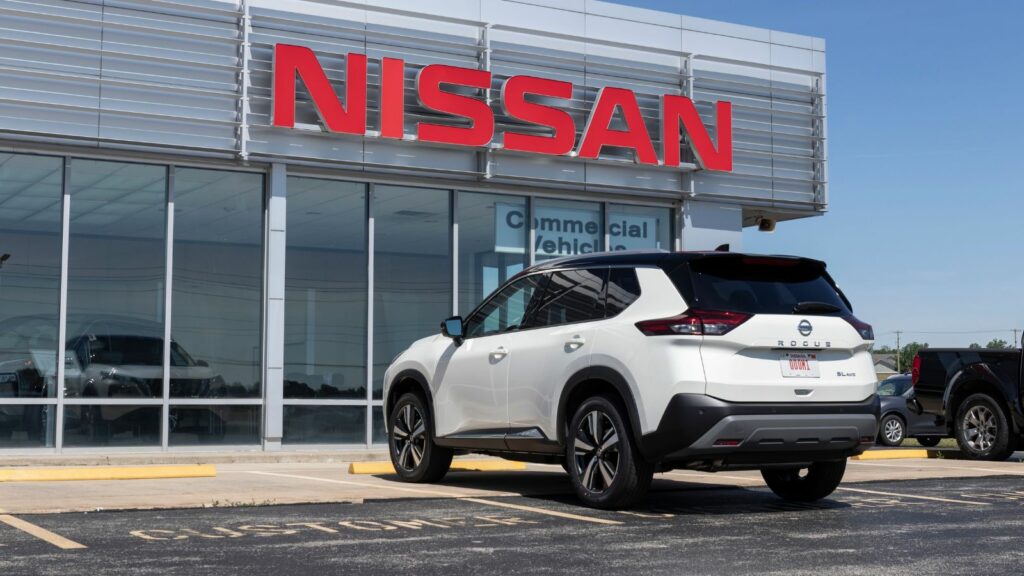
An automotive award in Japan is giving Nissan’s hybrid strategy a timely boost as one of its most important SUVs prepares for a different kind of electric driving. On November 12, 2026, Nissan announced that its third-generation e-POWER system had won the 2027 RJC Technology of the Year award. The technology uses a gasoline engine to generate electricity, but electric motors alone turn the wheels.
That distinction is central to the redesigned 2027 Rogue Hybrid, which is being introduced in Canada and the United States. With Canadian pricing already announced and hybrid demand growing, the launch could help Nissan appeal to drivers who want electric-motor responsiveness without having to find a charging station.
A Japanese Award With Implications Beyond Japan
Nissan’s latest recognition comes from the Automotive Researchers’ and Journalists’ Conference of Japan, the organization behind the annual RJC awards. The third-generation e-POWER system took the 2027 Technology of the Year honour during the program’s 36th edition. In voting reported by Japanese automotive publication Car Watch, Nissan’s technology earned 118 points, ahead of the next two contenders at 83 points each. That margin suggests the judges saw more than a routine update to an existing hybrid system. Their stated reasons included better engine efficiency, stronger electrical performance and reduced noise.
There is an important distinction behind the headline: the Japanese award specifically recognized the technology used in the new Kicks and Elgrand, not the North American Rogue itself. Those Japanese models use different generator engines, including a 1.4-litre unit in the Kicks and a 1.5-litre turbocharged engine in the Elgrand. However, the Rogue Hybrid is built around the same third-generation e-POWER concept. The recognition therefore arrives as Nissan prepares to introduce a related system to a much larger North American audience.
Electric Motors Drive the Wheels, but Gasoline Supplies the Energy
The defining feature of e-POWER is the separation between generating energy and moving the vehicle. In the new Rogue Hybrid, a gasoline engine produces electricity for a compact battery and two electric drive motors. One motor powers the front wheels and another drives the rear wheels, creating standard electric all-wheel drive. The engine has no mechanical connection to the wheels, so the vehicle responds to the electric motors rather than relying on the engine to turn a traditional transmission. Regenerative braking also recovers energy when the vehicle slows down.
This is known as a series hybrid, and it differs from many conventional hybrids, where the gasoline engine can directly help propel the vehicle. For a driver leaving a traffic light or joining a busy highway, the practical appeal is immediate motor torque and smooth acceleration without conventional gear changes. Yet the system is not a battery-electric vehicle. Owners still buy gasoline, and the engine still produces tailpipe emissions. The advantage is that a charging cable or a stop at a public charger is unnecessary: the electricity is produced onboard.
Five Components Are Brought Together in One Unit
One of the award-winning system’s biggest engineering changes is a component Nissan calls the 5-in-1 electric powertrain unit. It combines the drive motor, inverter, reducer, generator and increaser in a compact assembly. Each part has a different job, from converting electrical energy into wheel-driving power to generating and managing the electricity supplied by the engine. Bringing the components together can reduce packaging complexity and vibration while improving the way energy moves through the system. That matters because a series hybrid converts fuel energy into electricity before using it to turn the wheels.
Nissan has also redesigned the motor windings and inverter cooling to reduce energy losses, particularly at higher speeds. Some versions use silicon-carbide power semiconductors, although the company does not say that every application has them. This modular strategy shares components and expertise with Nissan’s battery-electric powertrains. Nissan previously targeted a 30% reduction in development and manufacturing costs compared with 2019 through its broader X-in-1 approach. That remains a company target rather than a demonstrated saving on every Rogue sold, but it shows how engineering efficiency is intended to support affordability.
A Gasoline Engine Designed for Generating Power
The gasoline engine is not an afterthought in Nissan’s system. Because it does not have to follow wheel speed mechanically, engineers can choose operating conditions that favour efficient electricity generation. The Rogue Hybrid uses a dedicated 1.5-litre turbocharged three-cylinder engine, which can shut down entirely when the battery has enough charge. Nissan reports 42% thermal efficiency for the engine, an engineering measure of how effectively fuel energy is converted into useful work. That figure is not the same thing as a vehicle’s overall fuel-economy rating, but it helps explain the focus on reducing waste.
The broader third-generation e-POWER family uses specially developed combustion techniques, including Nissan’s STARC concept on its turbocharged generator engine. This approach manages airflow inside the cylinder to stabilize ignition and combustion under demanding efficiency settings. The Japanese award committee specifically highlighted the new engines as well as the electrical hardware, noting that the Kicks and Elgrand use different engine configurations. In ordinary driving, the intended payoff is less unnecessary engine revving and fewer intrusive bursts of sound. Achieving that consistently on highways and hills is especially important for North American families accustomed to long-distance travel.
Fuel Economy and Performance Tell a More Complete Story
Nissan rates the 2027 Rogue Hybrid at a combined 225 horsepower, delivered through its two electric drive motors. Every trim has electric all-wheel drive as standard. In the United States, the SR version carries an EPA-estimated 41 miles per gallon in the city, 36 on the highway and 38 combined. Other versions have slightly lower combined ratings. Those figures are attractive for an all-wheel-drive family SUV, especially one designed to accelerate smoothly rather than deliver a sudden change between gas and electric propulsion. For drivers comparing vehicles, the exact trim and test cycle matter.
Canadian figures use a different measurement system. Nissan Canada has published a company-estimated city consumption figure of 5.9 litres per 100 kilometres, which should not be presented as an independently certified rating for every version. Nor does the Rogue automatically lead the hybrid segment on economy. Independent reviews have noted that some all-wheel-drive Toyota RAV4 Hybrid versions return better fuel-consumption figures. Nissan’s argument is therefore broader than winning a single efficiency comparison: it combines electric-only wheel propulsion, standard all-wheel drive, competitive economy and a more refined driving experience.
North American Roads Shaped the Rogue’s Development
Although e-POWER may feel new to Canadian and American shoppers, Nissan introduced the technology in Japan’s Note in 2016. The company says nearly two million e-POWER-equipped vehicles have since been sold across 68 countries. That experience gave engineers a foundation, but the 2027 Rogue was calibrated specifically for North American speeds, road surfaces and driving habits. Sustained highway cruising, frequent overtaking and long trips place different demands on a generator-based hybrid than short urban journeys. The system must keep supplying enough electricity while remaining quiet and predictable.
An October 2026 MotorTrend drive offered a useful real-world example. On a route through California that included suburban streets, highways and the climb toward San Marcos Pass, the reviewer reported that the gasoline engine could be heard as a faint background sound even when the SUV was accelerating hard. The magazine also found the Rogue composed and comfortable, although acceleration became less urgent as speed rose. Those are driving impressions rather than guarantees for every road or climate. Still, they suggest Nissan has addressed a central challenge: making a generator-based powertrain feel natural beyond low-speed city traffic.
Canadian Pricing and Launch Dates Are Already Taking Shape
For Canadian buyers, Nissan has outlined a staged introduction rather than a single nationwide arrival for every version. The 2027 Rogue Hybrid SR AWD is listed for fall 2026 with a manufacturer’s suggested retail price of CA$47,998 and a published selling price of CA$50,845. More affordable versions are scheduled for early 2027. The SV AWD starts at CA$39,998 MSRP, with a published selling price of CA$42,845, while the SV Premium AWD starts at CA$42,998. The range-topping Platinum AWD is listed at CA$50,998 MSRP. All four Canadian grades include all-wheel drive, making the differences largely about equipment and comfort.
Nissan’s quoted Canadian selling prices are higher than the MSRPs because they incorporate freight, pre-delivery inspection and specified fees; applicable sales taxes and some other expenses remain extra. Dealer prices and availability may also vary. The United States has its own pricing structure, with the SV starting at US$35,490 before destination charges, so American figures should not be mistaken for Canadian offers. The first U.S. arrivals centre on a limited run of the SR with Technology Package, with additional trims expected in January 2027. For shoppers, the practical question will be which version is actually on a local dealer’s lot and at what final price.
Technology Tries to Make Family Driving Less Demanding
Nissan has made the Rogue Hybrid’s everyday driving features part of the pitch. Its e-Pedal function allows the vehicle to slow and, in suitable conditions, come to a complete stop when the driver lifts off the accelerator. Smooth Stop is a separate feature designed to soften the last moments of a conventional stop, reducing the forward-and-back movement passengers can feel in stop-and-go traffic. Enhanced ProPILOT Assist and available lane-changing and traffic-jam features add assistance on certain roads. They do not remove the need for attentive driving, and their operation depends on road markings, conditions and equipment.
Inside, the Rogue Hybrid retains the familiar five-seat SUV format while adding practical changes. Rear doors that open close to 90 degrees make it easier to position a child seat or help a passenger climb aboard. Nissan lists five LATCH anchors in the rear seating area, giving families more flexibility when choosing a child-seat position. A 12.3-inch infotainment screen is standard, while larger 14.3-inch displays and Google-based services are available on selected grades. These details matter because a smoother commute or simpler school pickup can be more persuasive than a complicated explanation of the powertrain beneath the hood.
The New Rogue Sits Between Plug-In Hybrids and Full EVs
The Rogue Hybrid arrives in a Nissan lineup that already offers different approaches to electrification. The 2026 Rogue Plug-in Hybrid requires external charging to make fuller use of its battery-electric capability, while the third-generation e-POWER Rogue never plugs in. Nissan also sells a fully electric LEAF in Canada. For the 2027 model year, the entry LEAF S has a published starting MSRP of CA$34,998 and a Nissan-estimated range of 341 kilometres from its 53-kWh battery. Those prices and specifications highlight why the cheapest electric vehicle is not necessarily the best fit for every household: access to convenient charging and daily driving patterns also matter.
Nissan’s April 2026 long-term strategy explicitly emphasized offering different powertrains for different markets rather than relying on one technology. That makes the e-POWER Rogue an expansion of choice, not evidence that Nissan has abandoned battery-electric vehicles. A household with reliable home charging may still prefer a fully electric model that does not burn gasoline. Another household making frequent intercity journeys may value the familiar refuelling routine of a hybrid. The new Rogue is designed to occupy that middle ground, providing electric-motor acceleration without asking owners to change how they refuel.
Hybrid Demand Gives the Award Added Significance
Market figures explain why the timing matters. Statistics Canada reported that new registrations of conventional hybrid-electric vehicles rose 39.5% in the second quarter of 2026 compared with the same quarter in 2025. Battery-electric registrations also grew, rising 37.4%, while vehicles classified as zero-emission accounted for 10.7% of new registrations. Ordinary non-plug-in hybrids such as e-POWER are not counted as zero-emission vehicles. In the United States, Energy Information Administration data put conventional hybrids at 16% of new light-duty vehicle sales in the third quarter of 2026, compared with 6% for battery-electric vehicles.
The Japanese award is also not Nissan’s only recent technical recognition. The Rogue Hybrid’s e-POWER system appeared on the 2026 Wards 10 Best Engines and Propulsion Systems list, whose winners were all electrified powertrains for the first time. Together, the awards show that hybrid innovation remains an active engineering contest, even as fully electric models continue to develop. Whether the Rogue succeeds commercially will depend on more than trophies: real-world fuel use, long-term reliability, affordability and dealership availability will all matter. Nissan has made a distinctive technical case; North American owners will now determine how well it works in everyday life.
