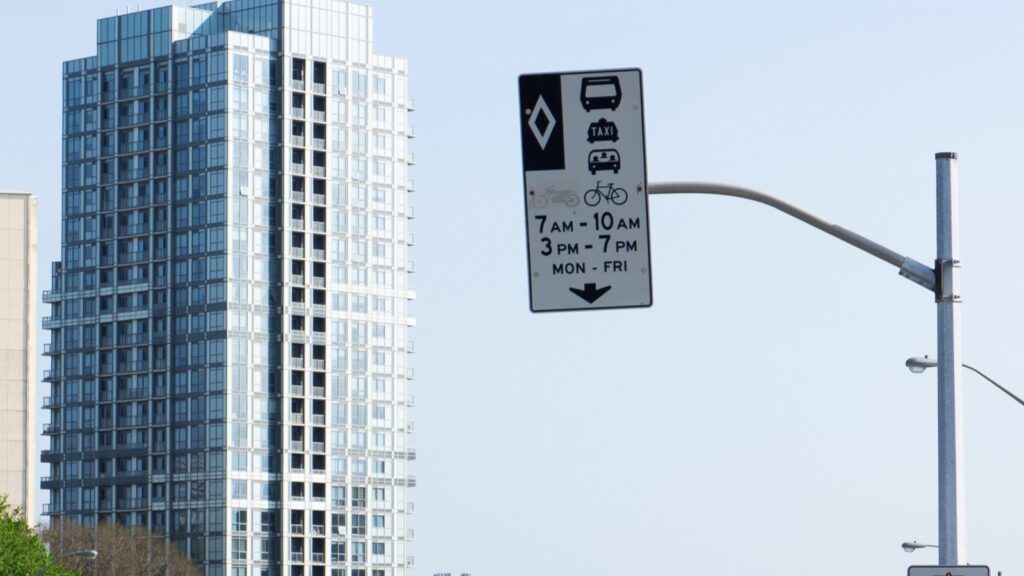
Ontario’s high-occupancy vehicle lanes are about to become available to far more motorists, but only at certain times. Beginning January 1, 2027, people driving alone will be allowed to use designated HOV lanes during specified off-peak periods, without buying a permit or carrying a passenger. The provincial government says the change is intended to make better use of existing highway infrastructure, ease congestion and help traffic move more efficiently.
For Ontario commuters, the important detail is the clock. Weekday and weekend access will follow different schedules, and restrictions will remain in place during busier periods. The decision represents a significant adjustment to how some of the province’s busiest highways operate, raising questions about travel times, carpooling incentives, enforcement and whether opening additional lanes to solo drivers will deliver the congestion relief the government expects.
The New Rules Take Effect on January 1, 2027
The change begins on January 1, 2027, rather than immediately after the province’s November 25 announcement. That timing matters for motorists who have watched nearly empty diamond-marked lanes while traffic crawls beside them. Until the new rules take effect, drivers travelling alone must still qualify under existing HOV exemptions or hold an appropriate toll-lane permit on eligible stretches. The announcement does not give motorists permission to enter restricted lanes early.
The decision also follows a proposal Ontario first announced in March 2026, when the government outlined plans to expand HOV access during quieter periods. At the time, the province reported having 237 kilometres of HOV lanes, with another 146 kilometres planned. Government figures also showed that single-occupant vehicles accounted for 72% of traffic on provincial highways in 2022. Those numbers help explain the government’s approach. Rather than constructing an entirely new lane, the province wants to make existing highway capacity available to the type of vehicle already representing most highway traffic.
Solo Drivers Will Have Two Access Windows on Weekdays
Under the new schedule, motorists travelling alone will be allowed to use HOV lanes Monday through Friday between 10 a.m. and 2 p.m., followed by another window running from 8 p.m. to 6 a.m. These periods are designed to avoid the busiest commuting hours while giving drivers more flexibility during the middle of the day and overnight.
For example, someone travelling between Mississauga and Toronto for a midday appointment could legally enter a designated HOV lane during the permitted period without carrying a passenger. A worker leaving an evening shift could have the same opportunity after 8 p.m. However, the restrictions will still apply between 6 a.m. and 10 a.m. and between 2 p.m. and 8 p.m. A commuter leaving work at 7:30 p.m. cannot simply enter an HOV lane because traffic appears relatively light. The new eligibility rules depend on the time of day, not a driver’s assessment of congestion.
Weekend Drivers Will Face a Different Schedule
Weekend access will operate differently from the weekday schedule. Ontario has established a 9 p.m. to 9 a.m. window for Saturdays and Sundays, allowing solo motorists to use HOV lanes during designated overnight and early-morning periods. That could help people returning from late-night events, travelling for shift work or starting long-distance journeys early in the morning.
However, the announcement does not introduce unrestricted HOV access throughout the weekend. A driver heading to a Saturday afternoon sporting event, shopping centre or family gathering will generally still need to satisfy the existing occupancy requirements or another exemption to use the lane. This distinction could become particularly important because weekend traffic does not always follow the predictable patterns of weekday rush hours. Shopping trips, sporting events and recreational travel can create considerable congestion throughout the day. Motorists will therefore need to distinguish between the new permitted hours and the periods when HOV restrictions remain in force. The change offers greater flexibility, but it does not turn carpool lanes into ordinary highway lanes every Saturday and Sunday.
Carpoolers Will Keep Their Priority During Busy Hours
Despite the expanded access, Ontario is not abandoning the original purpose of HOV lanes. These lanes were introduced to encourage carpooling, improve the movement of people rather than simply vehicles, and reduce pressure on conventional highway lanes. Under the existing rules, most passenger vehicles need at least two occupants, including the driver, to qualify during restricted periods. A parent travelling with a child, for example, meets that basic occupancy requirement, while someone making the same trip alone generally does not.
The provincial government has emphasized that carpoolers will retain priority during weekday rush hours and restricted weekend periods. That distinction matters for people who regularly share rides to workplaces, universities or other destinations. Carpools can offer cost savings by dividing fuel and parking expenses, while access to HOV lanes can make journeys more predictable. The new policy aims to retain those benefits during busy periods while allowing other drivers to use available space when demand is lower. Whether that balance works as intended will become clearer after implementation.
Electric Vehicles, Motorcycles and Other Exempt Vehicles Keep Their Access
Some Ontario motorists already have permission to use HOV lanes without carrying passengers. Existing exemptions include buses, licensed taxis, airport limousines, motorcycles, emergency vehicles and qualifying vehicles displaying Ontario green licence plates. These categories are not being eliminated by the January 1 changes. Instead, the province is extending limited access to additional single-occupant passenger vehicles during specified hours.
The green-plate exemption is particularly relevant to Ontario’s electric vehicle owners. Eligible battery-electric vehicles, plug-in hybrids and hydrogen fuel-cell vehicles can qualify for green licence plates, which allow their occupants to use HOV lanes without meeting the standard carpool requirement. Conventional hybrids without plug-in capability do not qualify for the green-plate program simply because they use less fuel. The distinction can influence how motorists view the benefits of owning different types of vehicles. For drivers who already have legitimate HOV access, the biggest practical change may be increased traffic in the lane during off-peak periods, rather than any change to their personal eligibility.
Drivers With HOT Permits Will Still Have an Advantage
Ontario’s high-occupancy toll program will continue operating alongside the new rules. Unlike ordinary HOV lanes, designated HOT lanes allow qualifying single-occupant vehicles to use the restricted lane by purchasing a permit. The program operates on specific stretches of the Queen Elizabeth Way, Highway 403 and Highway 410. On the QEW, for example, approximately 16.5 kilometres of lanes in each direction are covered between Trafalgar Road in Oakville and Guelph Line in Burlington.
The province currently charges $180 for a three-month HOT permit, equivalent to $60 per month, with up to 1,350 permits available per term through a draw. Under the January changes, solo passenger-vehicle drivers will not need these permits during the designated off-peak windows. However, HOT permit holders will retain access to eligible lanes during restricted periods, when most other solo drivers remain excluded. This makes the paid program relevant to commuters who need HOV access at peak times. Importantly, a HOT permit is not a universal authorization to use every Ontario HOV lane whenever traffic becomes congested.
The Change Will Affect Several Major Ontario Highways
The new access rules will be relevant across Ontario’s network of designated provincial HOV lanes, although the lanes are not available on every highway. Existing HOV sections can be found on portions of Highways 400, 401, 403, 404, 410, 417 and 427, as well as the Queen Elizabeth Way. These lanes are usually positioned on the far-left side of the highway and identified by overhead signs, diamond-shaped pavement markings and striped separation zones.
The province’s March 2026 announcement described an existing network of 237 kilometres, alongside plans to add approximately 146 kilometres. That planned expansion is important because the benefits of the policy could eventually extend to more communities as new HOV infrastructure becomes available. However, drivers should not assume that an entire highway has a designated lane simply because one section does. Lane availability varies by corridor and direction, making the Ontario 511 highway information service a useful reference. For regular commuters, understanding exactly where an HOV lane begins and ends will remain just as important as knowing when it can be used.
Drivers Must Still Follow HOV Lane Entry and Exit Rules
Although Ontario is expanding access, the physical rules governing HOV lanes will remain important. Unlike ordinary highway lanes, HOV lanes often have restricted entry and exit points. Drivers are expected to enter or leave through designated openings identified by broken white lines and diamond pavement markings. According to the Ministry of Transportation, these access points are generally spaced approximately two to four kilometres apart.
Crossing the striped buffer separating an HOV lane from regular traffic remains prohibited for ordinary motorists, even during periods when solo drivers are allowed to use the lane. This means someone approaching a highway exit cannot simply move across several lanes at the last moment. In some cases, motorists need to leave the HOV lane several kilometres before reaching their destination’s exit. Ontario has also introduced dedicated transfer lanes on part of Highway 400 between Major Mackenzie Drive and King Road to make merging easier. For drivers unfamiliar with HOV infrastructure, the January changes will require attention to road markings as well as the clock.
Fines and Demerit Points Will Still Apply to Unauthorized Drivers
Ontario has not removed enforcement simply because it is introducing more flexible access. The Ontario Provincial Police will continue enforcing HOV lane regulations, and the Ministry of Transportation warns that unauthorized use can result in a $110 fine and three demerit points. A motorist entering an HOV lane before the permitted period begins, or remaining there after the access window closes, could therefore face penalties even when the surrounding highway appears relatively empty.
The policy also does not mean every vehicle is suddenly eligible. Ontario has confirmed that commercial motor vehicles longer than 6.5 metres will remain prohibited from HOV lanes during off-peak periods, subject to existing exemptions for certain authorized vehicles. Consequently, the changes should not be interpreted as permission for large transport trucks to use these lanes. Smaller commercial vehicles have their own eligibility requirements, while buses and other qualifying vehicles retain their existing exemptions. For ordinary drivers, understanding the new schedule is essential, but obeying lane markings, entry restrictions and other traffic laws remains equally important.
Ontario Expects Less Gridlock, but the Real Results Remain to Be Seen
The provincial government is presenting the policy as a way to improve traffic flow without immediately requiring more highway construction. Ministry of Transportation modelling suggests that opening HOV lanes to additional vehicles during off-peak periods could improve average speeds in both HOV and regular traffic lanes. However, the November announcement did not provide a specific estimate of how many minutes an average commuter might save. Those improvements remain government projections rather than measured results of the new rules.
The policy also raises broader questions about the future of carpooling. HOV lanes were designed partly to encourage people to share vehicles, potentially reducing the number of cars needed to transport the same number of commuters. A peer-reviewed study published in 2022 examined three HOV lane projects in Israel and found significant increases in carpooling on two routes, demonstrating that lane design and travel patterns influence outcomes. Ontario’s approach attempts to balance those competing priorities by preserving carpool advantages during busier periods while expanding access when traffic volumes are lower. Whether the change ultimately reduces congestion without weakening carpooling incentives will require evidence gathered after implementation.
