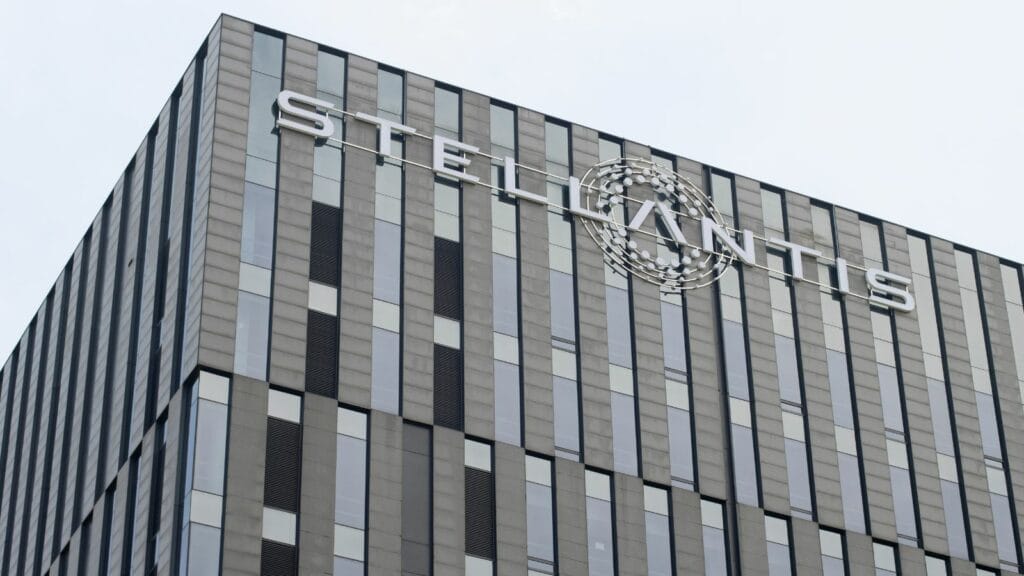
A factory that once represented one of Ontario’s most recognizable auto-manufacturing operations has become a major test of how far governments can go when publicly funded investment commitments unravel. Ottawa is warning Stellantis that substantial government support could be recovered unless automotive production returns to the company’s idled Brampton Assembly Plant.
The confrontation has been building since Stellantis abandoned plans to assemble the Jeep Compass in Brampton and shifted the program to Illinois. Now, with the automaker pursuing a possible sale of the factory to Canadian armoured-vehicle manufacturer Roshel, the dispute is touching everything from taxpayer protections and U.S. tariffs to thousands of jobs and Canada’s long-term ability to keep large-scale vehicle assembly at home.
Ottawa’s Message Is Becoming Increasingly Direct
Federal Industry Minister Mélanie Joly has made Ottawa’s position unusually clear: the Brampton factory needs another Stellantis vehicle program or the government intends to pursue repayment. On September 18, Joly reiterated that the plant needs to reopen with a new model, adding that otherwise Ottawa would seek its money back. Recent reporting says Stellantis could potentially face hundreds of millions of dollars in repayments if its commitments are not fulfilled.
That does not mean a predetermined cheque for a specific amount is immediately due. The eventual recovery would depend on the terms of government agreements, the enforcement process and the outcome of discussions with Stellantis. Ottawa has already established, however, that it considers keeping the company’s Canadian manufacturing footprint—including Brampton—a condition attached to public support. That distinction matters. The dispute is no longer simply about whether Brampton would be economically attractive for another vehicle; it is also about whether Stellantis delivered what governments say taxpayers helped finance.
The Public Funding Was Part of a Much Larger Investment Deal
The origins of the dispute stretch back to May 2022, when Stellantis announced a roughly $3.6-billion investment to modernize its Windsor and Brampton operations and prepare them for electrified vehicle production. The federal government committed up to $529 million to the project, while Ontario announced support of up to $513 million. The investment was promoted at the time as a way of securing Canadian assembly operations during the auto industry’s transition toward electric and hybrid vehicles.
Those headline commitments should not be confused with the amount Ottawa actually paid. Federal records released in late 2025 showed that $222,358,464 had been disbursed under the relevant project by that point, covering eligible expenditures incurred over several fiscal years. Ottawa subsequently paused future payments while its dispute with Stellantis proceeded. The precise amount that could ultimately be recovered has not been publicly established. That is why references to a potential clawback of “hundreds of millions” require context: maximum funding commitments, disbursed federal money and amounts legally recoverable under contractual provisions are not necessarily the same figure.
Brampton Went From Retooling Site to Factory Without a Product
Brampton Assembly stopped producing vehicles at the end of 2023 after years of building well-known Chrysler and Dodge products, including the Chrysler 300 and Dodge Charger and Challenger. The shutdown was initially supposed to mark the beginning of a transformation rather than the end of vehicle production. Retooling started in early 2024, with the plant expected to become part of Stellantis’s next generation of flexible manufacturing operations and eventually produce the Jeep Compass.
The timetable began falling apart in 2025. Stellantis paused the Brampton retooling program early that year, creating uncertainty for more than 2,000 workers who had expected to return once the conversion was finished. Then, in October 2025, the company confirmed that Compass production planned for Brampton would instead be allocated to its Belvidere Assembly Plant in Illinois. What had originally looked like a temporary shutdown for investment and modernization consequently became an indefinite production stoppage. For workers who had spent years watching vehicles leave Brampton’s assembly lines, the distinction was profound.
U.S. Auto Tariffs Altered the Economics of Building in Canada
The changing Canada-U.S. trade environment provides essential context. In April 2025, the United States imposed a 25 per cent tariff on imported automobiles. Vehicles qualifying under the Canada-U.S.-Mexico Agreement can receive different treatment: manufacturers may document their U.S. content so the 25 per cent levy applies only to the vehicle’s non-U.S. value. Even with that provision, the policy created an additional cost disadvantage for Canadian assembly compared with putting final production inside the United States.
Stellantis’s American investment strategy soon moved decisively in that direction. In October 2025, the company announced a US$13-billion U.S. expansion plan. It said more than US$600 million would be invested to reopen Belvidere, with the Jeep Compass and Cherokee planned there and roughly 3,300 jobs expected. Stellantis has cited market and trade conditions while explaining its changing manufacturing plans. Ottawa’s response, however, is that difficult economics do not automatically erase contractual commitments accepted when government support was provided. That tension sits at the centre of the Brampton dispute.
Ottawa Began the Enforcement Process Months Ago
The current clawback warning is not Ottawa’s first reaction to the loss of Brampton’s vehicle mandate. On October 15, 2025, Joly wrote directly to Stellantis chief executive Antonio Filosa, saying the automaker had agreed to maintain its full Canadian footprint, including Brampton, in exchange for substantial financial assistance. The letter said failure to honour that commitment would be treated as a default and warned that the government was prepared to exercise legal options.
Further measures followed quickly. On October 23, Ottawa cut Stellantis’s annual quota under Canada’s auto tariff-remission framework by 50 per cent after the company cancelled its Brampton production plans. Federal officials formally triggered a dispute-resolution process on November 3 and paused future payments under the relevant agreement. Government briefing documents later confirmed that Stellantis received a notice of default on December 4. Those steps do not by themselves determine how much Stellantis ultimately owes, but they demonstrate that Ottawa had already moved the disagreement into a formal enforcement process well before the latest proposed plant sale.
A Roshel Sale Could Bring Jobs Back—But Not the Auto Plan Ottawa Expected
The situation became more complicated in September 2026 when Stellantis signed a memorandum of understanding with Roshel covering a possible sale of Brampton Assembly. The agreement is preliminary rather than a completed transaction. Stellantis says it examined several ways to restore automotive production but concluded that none offered a sustainable long-term business case. It argues that Roshel provides a credible way to return the sprawling property to productive use instead of leaving it dormant.
Roshel has outlined ambitious plans of its own. Chief executive Roman Shimonov has said the Brampton operation could become a Canadian centre of excellence for defence manufacturing alongside automotive-related production, with plans involving more than 2,000 jobs. Roshel has also said laid-off Unifor members could receive first consideration for positions, potentially beginning in 2026 as procurement and other opportunities develop. Those remain prospective commitments tied to a transaction that has not closed. Ottawa has meanwhile said it was not responsible for bringing Stellantis and Roshel together, leaving unresolved whether such a sale could satisfy Stellantis’s existing obligations to government.
More Than 2,000 Brampton Workers Remain at the Centre of the Fight
For employees, the debate is less abstract. More than 2,000 Brampton workers were laid off when vehicle production stopped, while Unifor represents more than 9,000 Stellantis employees across Canada. The union began a new round of Stellantis bargaining on September 1, 2026, but negotiations reached an impasse ten days later. Unifor says the future of Brampton is the principal obstacle to a settlement and has argued that selling the factory cannot simply replace the promised return of mass-market automotive assembly.
The existing collective agreement is scheduled to expire at 11:59 p.m. Eastern Time on September 20. That deadline does not automatically mean workers can strike immediately. Unifor has clarified that the parties remain in the legally required conciliation process and that a legal strike or lockout position would come later. The union has nevertheless described strike action as a real possibility. Stellantis, for its part, has encouraged Unifor to speak with Roshel and says the proposed transaction could put employees back to work while creating long-term economic activity.
What Happens in Brampton Could Shape Future Auto Deals
Brampton matters beyond one factory because vehicle assembly carries an unusually large economic footprint. Federal data show Canada’s automotive sector contributed about $16.8 billion to national GDP in 2024, directly employed more than 125,000 people and supported more than 427,000 indirect jobs. Roughly 80 per cent of direct automotive employment was located in Ontario. Canada produced approximately 1.3 million light-duty vehicles that year, with about 1.1 million exported to the United States.
That makes the Stellantis dispute an important test of how governments protect industrial commitments after providing major subsidies. Several unanswered questions now matter: whether Stellantis assigns another vehicle to Brampton, whether the Roshel transaction advances, what Ottawa ultimately determines is recoverable and whether a different type of manufacturing operation can satisfy any of the company’s contractual obligations. The immediate confrontation is about one idled Ontario plant, but the outcome could influence how future governments structure funding agreements when automakers seek public money in exchange for investment, production and jobs.
