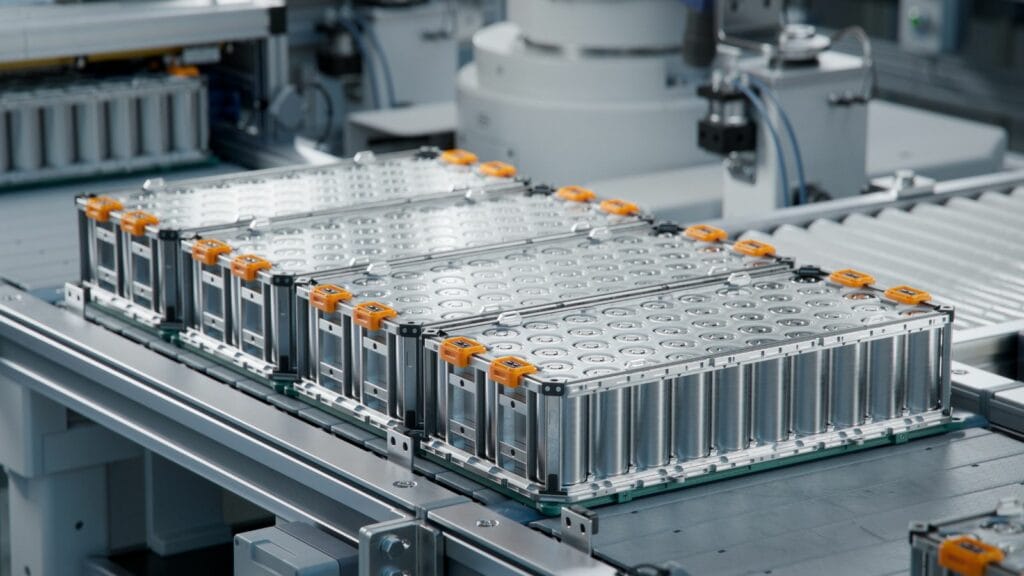
Quebec’s push to build a homegrown battery supply chain is approaching another important decision point. Nouveau Monde Graphite has placed an estimated C$374 million capital cost on its planned 13,000-tonne-per-year battery-material plant in Bécancour, giving investors, customers and lenders a much clearer picture of what the first commercial processing stage could require. The estimate arrives as construction advances at the company’s Matawinie graphite mine, which is intended to supply the raw material for Bécancour.
The two projects are deliberately connected but remain at different stages. Matawinie has received its final investment decision and moved into construction, while the Bécancour plant is still targeting approval in the second half of 2026. That distinction makes the new price tag particularly significant: it turns an industrial plan into a more concrete financing decision.
The C$374 Million Figure Brings Bécancour Closer to a Go-or-No-Go Moment
Nouveau Monde Graphite, or NMG, disclosed the C$374 million estimate with its second-quarter 2026 update. The figure covers the development of a Bécancour Battery Material Plant designed for 13,000 tonnes of annual production. In U.S.-dollar terms, the company put the estimate at approximately US$267 million. NMG said engineering work is continuing alongside accelerated due diligence by stakeholders as it works toward a final investment decision, or FID, during the second half of 2026. Until that decision is made, the project should be viewed as advanced development rather than committed construction.
The wording around the estimate matters. NMG describes it as an AACE Class 3 estimate, a level of project definition commonly associated with investment and funding decisions. AACE International cautions, however, that an estimate’s class should not be treated as a guarantee of its eventual accuracy or final construction cost. Individual project risks still matter. For Bécancour, that leaves financing structure, engineering completion, commercial conditions and execution risk between today’s C$374 million estimate and a fully sanctioned project.
A Brownfield Purchase Changed How the First Plant Will Be Built
The current Bécancour plan is notably different from the larger processing concept NMG had been developing in earlier years. In February 2026, the company completed the acquisition of a 143,000-square-metre brownfield industrial property beside its existing greenfield land in Bécancour. The acquired property includes a roughly 22,000-square-metre industrial building, storage and logistics areas and connections to existing infrastructure. It sits beside NMG’s approximately 200,000-square-metre greenfield property, giving the company room for a staged expansion rather than requiring the entire processing complex to be built at once.
That existing building is important because NMG intends to retrofit it for its first 13,000-tonne production stage. The strategy is meant to reduce the amount of new infrastructure required, shorten development timelines and better synchronize processing capacity with customer commitments. Bécancour also offers highway, rail and port access within an established industrial zone. Instead of beginning with the maximum plant NMG might eventually want, the company is effectively matching its first commercial processing unit to demand that is already contracted, while keeping the neighbouring greenfield property available for a much larger second stage.
Panasonic Is Shaping the Size of the First Commercial Stage
The 13,000-tonne figure was not selected in isolation. It corresponds directly with NMG’s revised binding offtake agreement with Panasonic Energy. Under the commercial arrangement announced in October 2025, Panasonic is expected to purchase 13,000 tonnes of NMG active anode material annually for an initial seven-year term once Phase 2 production begins and the agreement’s conditions are satisfied. NMG estimates that roughly 25,000 tonnes of graphite concentrate from Matawinie will be needed each year to produce that amount of finished active anode material.
That relationship provides Bécancour with something many proposed battery-material projects spend years trying to secure: a large anchor customer. Panasonic Energy has also reiterated its intention to support development of the facility, potentially through another equity investment when Bécancour reaches its investment decision. There are still conditions attached, including commercial operation and final product qualification, so the offtake should not be treated as unconditional revenue. But the relationship gives the first processing stage a clearly defined purpose. NMG says the resulting material is intended to support Panasonic Energy’s North American battery manufacturing, including operations in Nevada and Kansas.
Matawinie Is Already Under Construction While Bécancour Waits
The industrial sequence can be seen clearly on the ground. NMG formally moved the Phase-2 Matawinie Mine into construction after completing a C$427 million equity financing package in May 2026 and securing a US$335 million senior project-debt commitment involving Export Development Canada and the Canada Infrastructure Bank. The mine received its positive FID before the Bécancour processing plant, allowing excavation, civil works, procurement and other construction activities to advance while financing arrangements for the downstream facility continue.
By June 30, NMG reported that about C$33 million in Matawinie project expenditures had been incurred and approximately C$167 million had been committed. First concrete pours followed in July. Construction and commissioning are expected to take roughly 31 months, with full commercial production targeted by the end of 2028. The mine is designed for approximately 106,000 tonnes of annual graphite concentrate production over a 25-year operating life. That creates an unusual but deliberate picture: the upstream source is being physically built while the downstream plant intended to turn part of its output into battery material approaches a separate financing gate.
Matawinie’s Output Is Intended for More Than One Battery Customer
The Bécancour plant will consume only part of Matawinie’s planned output. NMG has built a broader commercialization strategy around the mine’s roughly 106,000-tonne annual production capacity, allowing some graphite to be transformed into active anode material while other volumes can be marketed as concentrate. The Government of Canada has entered a seven-year arrangement covering 30,000 tonnes of graphite concentrate annually, structured on a take-or-pay basis. Federal project information describes the agreement as both a way to secure strategic domestic supply and a mechanism that offers the project protection against market fluctuations.
NMG has also been pursuing additional customers. Eni, which became a strategic investor in the company’s 2026 financing, signed a letter of intent covering discussions for a potential 15,000 tonnes per year of graphite concentrate or an equivalent quantity of active anode material. Commercial arrangements with Panasonic Energy and Traxys add further diversification. For the company, that structure reduces its dependence on a single end market. For Bécancour, however, Panasonic remains the defining customer for the initial 13,000-tonne plant, while future processing expansions can be adjusted to match additional contracts and market conditions.
Graphite Has Become a Supply-Chain Issue, Not Just a Mining Commodity
The urgency around projects such as Matawinie and Bécancour becomes clearer when the global graphite market is considered. Natural Resources Canada reported that worldwide graphite mine production reached about 1.6 million tonnes in 2024, with China remaining the leading producer. The International Energy Agency has highlighted an even greater concentration farther down the battery supply chain: China has accounted for roughly 80% of graphite mining and more than 90% of graphite refining, leaving manufacturers outside China heavily dependent on a limited geographic supply base.
That concentration has taken on additional significance as trade restrictions have expanded. The IEA reported that Chinese measures announced in October 2025 extended export controls into battery supply-chain areas including graphite anode materials and related technologies. Its 2026 critical-minerals analysis estimated that a complete disruption to battery-grade graphite trade could put more than US$300 billion of annual downstream production outside China at risk. Academic research has similarly identified the extraordinary concentration of global anode production in China. Bécancour therefore represents more than another Quebec processing facility; it is part of a wider attempt to build alternative refining capacity.
Financing and Execution Now Matter More Than the Resource Question
The next major milestone is not the discovery of more graphite. Matawinie already has a defined resource base, a 25-year mine plan, financing for mine construction and substantial commercial commitments. Bécancour’s immediate challenge is converting its engineering work, brownfield strategy and Panasonic agreement into an acceptable financing structure. NMG says it is advancing stakeholder due diligence and optimizing the plant’s capital structure ahead of its targeted H2 2026 FID. Panasonic’s potential participation at that stage could become important, but the company has described that additional investment as a possibility rather than a completed financing commitment.
The C$374 million estimate consequently gives the market a benchmark without eliminating the remaining risk. Cost estimates can change, financing terms can affect project economics, product qualification must be completed and graphite prices remain exposed to a highly competitive global market. Research into Western graphite supply chains has found that higher capital intensity and operating costs can make new projects difficult to compete with established Chinese production. For NMG, the coming decision will test whether customer backing, existing infrastructure, Quebec hydropower and an integrated mine-to-material strategy are enough to turn Bécancour from an advanced plan into a financed industrial project.
