RBC is offering Canadians more opportunities to earn cash back on everyday transportation expenses, including gasoline and electric vehicle charging. In an announcement on November 2, 2026, the bank highlighted an expanded rewards program offering unlimited 3% cash back on several spending categories through its RBC Cash Back Preferred World Elite Mastercard.
However, the enhanced rewards come with a financial consideration. The premium card now carries a $120 annual fee, while additional cardholders cost another $50 each per year. For households already facing expensive groceries, transportation costs and other recurring bills, the changes raise an important question about whether the higher rewards justify the additional expense. The answer depends largely on spending habits, eligibility requirements and how frequently cardholders use the benefits.
RBC Expands Cash Back Rewards Across Everyday Purchases
RBC’s November 2 announcement brought renewed attention to changes that had already taken effect on October 1, 2026. The bank confirmed that both its RBC Cash Back Mastercard and RBC Cash Back Preferred World Elite Mastercard now offer revised earning rates designed around common household expenses. The changes apply to existing and new cardholders, meaning customers did not have to apply for a replacement product simply to receive the updated rewards structure. RBC has positioned the enhancements as a way to make everyday spending more rewarding, covering everything from grocery shopping and transportation to restaurant visits and digital entertainment purchases.
One of the more significant changes is the removal of previous limits on cash-back earnings. Under the updated program, qualifying purchases can continue earning rewards at their applicable rates without an annual spending cap. This is particularly relevant for households that use one credit card for most recurring expenses rather than switching between several rewards programs. RBC also clarified that the earning rate is determined by when a transaction posts to the account, not necessarily when the purchase occurred. Purchases made shortly before October 1 but posted afterward can therefore qualify for the new rates, provided the merchant meets the applicable eligibility requirements.
Gas and EV Charging Purchases Now Earn 3% Cash Back
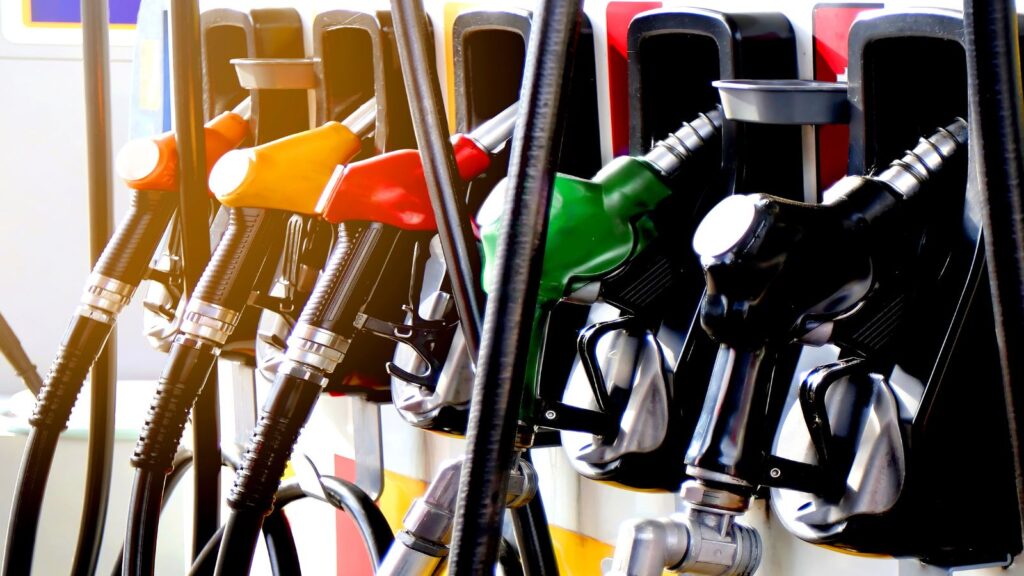
Transportation expenses are among the most prominent features of RBC’s enhanced premium card. The Cash Back Preferred World Elite Mastercard now provides unlimited 3% cash back on eligible gasoline purchases and electric vehicle charging transactions. This means a qualifying $100 fuel purchase generates $3 in rewards, while an eligible $60 public charging transaction produces $1.80. Although individual rewards may appear modest, regular commuting and longer-distance driving can create meaningful accumulated cash back throughout the year. The same 3% rate also extends to eligible rideshare and public transit purchases, broadening the potential benefits beyond households that own gasoline-powered or electric vehicles.
The financial return becomes clearer when annual spending is considered. A driver spending an average of $300 monthly on eligible gasoline or charging purchases would generate approximately $108 in annual cash back from that category. At $500 per month, the annual reward increases to $180. These figures represent gross rewards before accounting for the card’s $120 annual fee, making the distinction between earning cash back and actually saving money especially important. The updated structure may be attractive to drivers with substantial transportation expenses, but lower-mileage motorists and EV owners who primarily charge at home may need to consider other spending categories to justify the premium card.
Grocery Shopping, Restaurants and Entertainment Add More Opportunities
The higher cash-back rate is not limited to driving expenses. RBC has extended the premium card’s 3% earning structure to eligible grocery purchases, restaurant dining, takeout, food delivery, streaming services and digital gaming. Purchases outside the accelerated categories generally receive 1% cash back. By covering several different types of spending, RBC has created a rewards structure that could appeal to households looking for one primary credit card. A family that regularly purchases groceries, pays for streaming subscriptions and occasionally orders restaurant meals can accumulate rewards across multiple categories instead of depending entirely on transportation expenses.
Consider a hypothetical household spending $500 per month on qualifying groceries, $200 on eligible dining and another $50 on qualifying streaming services. Those purchases would total $9,000 annually and generate $270 in cash back at the 3% rate. After subtracting the $120 annual fee, the household would retain $150 in rewards attributable to those expenses, before considering other purchases or benefits. However, that figure is not the same as the savings compared with a competing credit card, which might also offer rewards without an annual charge. The strongest financial case for RBC’s premium product therefore depends on several spending categories working together, rather than one headline earning rate.
The $120 Annual Fee Changes the Financial Calculation
The biggest trade-off accompanying RBC’s enhanced rewards is the premium card’s higher annual cost. The primary cardholder fee increased from $99 to $120, representing a $21 annual increase. RBC also introduced a $50 annual charge for each additional cardholder, replacing the previous arrangement that carried no additional-card fee. A household with one primary cardholder and one additional cardholder could therefore pay $170 annually before any applicable rebates. For existing customers, RBC says the new $120 primary fee is charged on the account anniversary after October 1, 2026. New accounts opened from that date are charged the fee in the month after opening.
There are circumstances in which the annual fee can be reduced or offset. Eligible RBC VIP Banking customers can receive a rebate of up to $120 on the premium card’s annual fee. However, the VIP chequing account itself normally carries a $30 monthly charge, with reductions available under certain conditions. Opening that account solely to eliminate the credit card fee would therefore require a separate cost comparison. The premium card also has an income requirement of at least $80,000 in personal annual income or $150,000 in household annual income. These conditions make the product more suitable for some households than others, regardless of how attractive the advertised rewards appear.
RBC’s No-Annual-Fee Mastercard Offers an Alternative
RBC’s standard Cash Back Mastercard provides an important comparison because it delivers rewards without a yearly cardholder fee. Under the updated structure, eligible grocery purchases earn unlimited 2% cash back, while gasoline, EV charging, rideshare and public transit purchases earn 1%. Other qualifying purchases generally receive 0.5%. The standard card also carries no fee for additional cardholders. These earning rates are lower than those offered by the premium product, but the absence of an annual charge means every dollar of cash back contributes to the cardholder’s financial return before considering any interest or other transaction costs.
For example, a household spending $400 monthly on eligible groceries would earn $96 annually with the standard card, compared with $144 before fees on the premium version. Adding $250 per month in qualifying gasoline purchases would generate another $30 on the standard card or $90 on the premium card. Across those two categories, the premium card would earn $234 before its annual fee, leaving $114. The no-fee version would generate $126 without an annual deduction. In that simplified scenario, the standard card comes out $12 ahead. Additional qualifying restaurant purchases or other spending could reverse the result, illustrating why comparing complete household budgets is more useful than focusing on one rewards category.
How Much Spending Is Needed to Recover the Annual Fee?
The financial break-even point depends on which purchases generate the additional rewards. Compared with RBC’s no-fee Mastercard, the premium product offers two extra percentage points on eligible gas and EV charging transactions. That means approximately $6,000 in annual transportation spending, or $500 monthly, would produce $120 in additional rewards and offset the primary annual fee. Groceries tell a different story because the standard card already pays 2% rather than 1%. With only a one-percentage-point advantage, the premium card would require $12,000 in eligible annual grocery spending to recover the same $120 fee through that category alone. For purchases earning 1% instead of 0.5%, the equivalent spending requirement would be $24,000.
A more realistic comparison involves several types of purchases together. Consider a household spending $250 monthly on qualifying fuel or charging, $300 on groceries and $150 on eligible dining. Over a year, those purchases would generate $252 in premium-card rewards, leaving $132 after the annual fee. RBC’s no-fee Mastercard would produce approximately $111 across the same purchases, giving the premium card a $21 advantage. These are illustrative calculations rather than actual household spending statistics. They assume all purchases qualify, balances are paid in full, and there are no supplementary card fees or introductory bonuses. The example also demonstrates how a relatively small change in spending habits could determine which card delivers more value.
Merchant Categories Determine Which Purchases Qualify
One of the most important details in RBC’s updated rewards program involves how merchants are classified when transactions are processed. The bank uses Mastercard merchant category codes to determine whether purchases qualify for accelerated cash back. Eligible gasoline purchases generally fall under service-station or automated-fuel-dispenser classifications, while EV charging has its own designated category, identified by code 5552. A charging transaction that is processed under a different merchant category may not receive the advertised 3% rate. Similarly, electricity used for charging an EV at home does not automatically qualify for the special rate simply because part of the household electricity bill relates to vehicle charging.
These distinctions extend beyond transportation expenses. RBC specifically states that purchases at Costco and Walmart are classified as warehouse-club transactions rather than eligible grocery-store purchases. Under the published rules, those purchases earn 1% cash back on the premium card instead of the accelerated 3% grocery rate. Businesses operating inside larger retail locations may also have different merchant classifications. Additionally, rewards are calculated on eligible net purchases, meaning returns and adjustments can reduce accumulated cash back. For households calculating the potential value of the card, understanding these exclusions is essential. A budget that assumes every grocery purchase or EV-related expense earns 3% could significantly overestimate the actual annual return.
Additional Insurance Coverage and Fuel Discounts Increase the Benefits
RBC has also expanded the premium Mastercard’s insurance benefits, introducing out-of-province and out-of-country emergency medical insurance, flight-delay coverage, delayed-baggage protection and mobile-device insurance. Emergency medical coverage applies to eligible trips departing on or after October 1, 2026, and provides protection for up to 10 consecutive days for cardholders under age 65 or three consecutive days for those aged 65 and older. The card retains existing purchase security, extended warranty and rental-car collision or loss damage protection. As with other credit card insurance products, eligibility requirements, payment conditions, exclusions and coverage limits determine whether a particular claim qualifies. These protections may be valuable for frequent travellers, although they should not automatically be treated as replacements for other insurance.
Fuel-related partnerships offer additional opportunities to reduce transportation expenses. Eligible RBC cards linked to Petro-Points can provide savings of three cents per litre on gasoline or diesel purchased at Petro-Canada, alongside 20% more Petro-Points on qualifying purchases. For a 50-litre fill-up, the fuel discount alone represents $1.50 in immediate savings before considering any eligible credit card cash back. RBC also offers partner benefits involving Canadian Tire, Rexall and DoorDash. Premium cardholders receive a DragonPass airport-lounge membership, although participating lounge visits generally carry a US$32 charge per person. These additional benefits may strengthen the premium card’s overall value, but their financial importance depends on how regularly cardholders use them.
Higher Interest Rates and Upcoming Redemption Changes Deserve Attention
While the rewards have improved, RBC also increased the annual purchase interest rate on both cash-back Mastercards from 20.99% to 21.99%, effective from the applicable statement period beginning on or after October 1, 2026. The premium card’s advertised cash-advance interest rate is 22.99%. These borrowing costs can quickly outweigh the advantages of earning 3% on purchases. The Financial Consumer Agency of Canada emphasizes that consumers who regularly carry credit card balances should consider interest rates and fees before rewards. Paying the full statement balance by the due date generally prevents interest charges on regular purchases, while cash advances are treated differently and do not qualify for the same interest-free grace period.
Another important change is scheduled for December 2, 2026, when RBC will introduce more flexible cash-back redemption options. Until then, cardholders can request redemption by telephone once they accumulate at least $25. Beginning December 2, the minimum will fall to $1, with redemptions available through online banking, the RBC Mobile app or by phone. The existing automatic annual redemption arrangement will also end, giving customers greater control over when rewards are credited. RBC says customers who do not accept the changes can notify the bank before December 30, 2026, to cancel without a penalty or cancellation indemnity, provided their outstanding balance is paid. Ultimately, the premium card offers stronger rewards and additional protections, but whether it provides better value than a no-fee alternative depends on actual spending, borrowing habits and the benefits each household uses.
