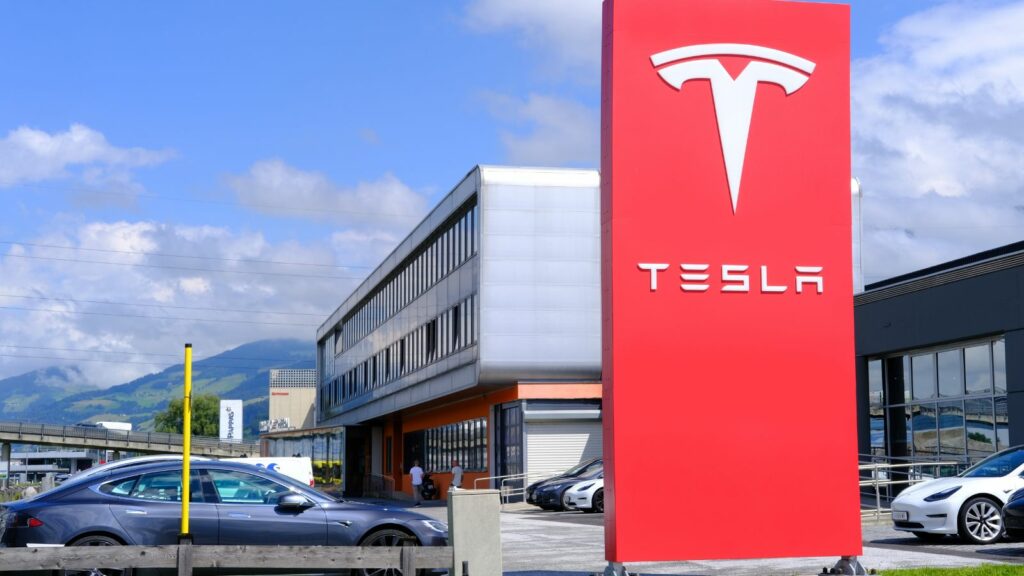
Tesla has reopened reservations for its long-delayed Roadster in Canada, but joining the queue requires a commitment more commonly associated with buying an entire vehicle. Canadian customers are being asked to pay C$6,000 by credit card and then send another C$58,000 by wire transfer within 10 days, bringing the total reservation payment to C$64,000.
The timing is notable. Tesla has scheduled another Roadster unveiling for October 1, nearly nine years after first showing the second-generation sports car in 2017. Yet several important details remain unresolved. Tesla has not published a final Canadian purchase price or guaranteed a delivery date, and its reservation terms make clear that holding a place in line is not the same thing as completing a vehicle order. For prospective Canadian buyers, the Roadster is therefore back on sale in one sense — but still very much a vehicle under development.
The $64,000 Commitment Is Bigger Than the Price of Some Teslas
The sheer size of the Roadster reservation makes it unusual even within Tesla’s own Canadian lineup. The process starts with a C$6,000 credit-card payment that Tesla describes as fully refundable. Customers then have 10 days to complete a C$58,000 wire transfer. Tesla says the reservation is not finalized until that second payment has been received, making the effective commitment C$64,000.
For perspective, Tesla currently lists the Canadian MSRP of its rear-wheel-drive Model Y at C$49,990. Even the C$64,990 Model Y Premium AWD sits only C$990 above the entire Roadster reservation requirement. That comparison helps illustrate what Tesla is asking from Roadster customers: instead of putting down a conventional few-hundred-dollar vehicle deposit, a buyer is temporarily committing an amount capable of purchasing another new Tesla outright. The deposit may be refundable, but C$64,000 remains a substantial amount of money to tie up while the car’s final price and delivery schedule remain unsettled.
A Reservation Is Not the Same as an Order
There is an important distinction hidden behind the excitement surrounding reopened reservations. Tesla’s Roadster reservation agreement describes the payment as securing an approximate priority for eventually configuring and ordering the car. It specifically says the reservation itself does not constitute the purchase or order of a vehicle. A formal order agreement comes later, as production approaches and customers are invited to configure their cars.
That distinction matters because Tesla has not yet committed to a final purchase price. Its reservation terms say the company is still determining the options, features and hardware that will be offered, with the actual price established when the customer configures the vehicle. The reservation payment can eventually be applied toward the purchase price. Tesla’s current agreement also provides for cancellation and a full refund before the customer enters into the motor-vehicle purchase agreement. In other words, Canadians paying C$64,000 are securing their position in a future buying process rather than purchasing a finished Roadster today.
The October 1 Reveal Gives the Reopening Extra Significance
Tesla’s decision to restart reservations comes less than two weeks before the Roadster is scheduled to return to the spotlight. Tesla CEO Elon Musk announced an October 1, 2026 unveiling for the vehicle, while Tesla promoted the event with a “Go for launch” teaser. The timing suggests the company is preparing to show a substantially updated version of a car that has spent most of the past decade existing as a prototype and an ambitious set of performance targets.
What the October event does not automatically provide is a production date. Reuters reported that the second-generation Roadster was originally unveiled in November 2017 and was initially supposed to reach customers in 2020. Tesla’s current reservation agreement still states that the Roadster remains under development and that the company cannot guarantee when a reserved vehicle will actually be delivered. That leaves October 1 as an important milestone, but not necessarily the end of the waiting period for customers entering the queue now.
Canadians Have Already Watched Several Roadster Deadlines Pass
Few upcoming vehicles have carried expectations for as long as the second-generation Roadster. Tesla introduced the prototype in 2017 with plans to begin deliveries in 2020. That target came and went. The project was subsequently pushed back repeatedly as Tesla devoted resources to higher-volume vehicles, dealt with supply-chain disruptions and revised what it wanted its flagship sports car to become.
The shifting timeline continued well into the current decade. In February 2024, Musk said Tesla aimed to complete the production design that year and begin shipping Roadsters in 2025. That schedule was not achieved either. The planned October 2026 unveiling therefore arrives against nearly nine years of changing deadlines. That history does not determine what happens next, but it makes the lack of a guaranteed delivery date particularly relevant for anyone committing C$64,000 today. Longtime reservation holders have effectively watched several generations of Tesla vehicles reach customers while the Roadster remained in development.
Tesla Is Still Advertising Extraordinary Performance Targets
Although the final production specifications remain unsettled, Tesla’s Roadster website continues to display the headline numbers that helped make the vehicle famous. The Canadian site advertises a 0-to-100-km/h time of 2.1 seconds, a top speed exceeding 400 km/h and approximately 1,000 kilometres of range. The U.S. presentation lists corresponding claims of 1.9 seconds from zero to 60 mph, more than 250 mph and 620 miles of range.
Tesla also describes the Roadster as having seating for four and a lightweight removable glass roof that can be stored in the trunk. Those numbers remain manufacturer targets rather than independently verified specifications for a customer-production vehicle, an important qualification after years of development changes. Tesla’s own reservation agreement acknowledges that the company is still determining the car’s hardware and features. The October unveiling will consequently be watched not just for styling, but for evidence of which of those long-advertised performance figures have survived the transition toward production.
The Roadster Project Has Changed Far Beyond the 2017 Prototype
The Roadster that eventually reaches customers may be considerably different from the sleek red prototype Tesla drove onto a stage in 2017. Reuters reported in September that the project has evolved toward what was described as a carbon-fibre hypercar after Tesla moved away from an alternative approach involving Model S Plaid components. Tesla’s own reservation agreement reinforces the idea that important hardware details have yet to be finalized publicly.
One of the most unusual possibilities involves SpaceX technology. Musk has discussed using cold-gas thrusters on a special Roadster configuration, and Reuters reported that the October event could include a demonstration of a limited-edition version using thrusters developed with SpaceX. Until Tesla reveals production specifications, however, those concepts should be treated separately from the performance figures published on the company’s normal Roadster page. For buyers, the excitement surrounding radical technology comes with an equally important reality: the precise vehicle attached to a C$64,000 reservation is still being defined.
The Roadster Name Carries More History Than Any Other Tesla
The Roadster is more than another model name in Tesla’s catalogue. The original Roadster was the company’s first production vehicle, entering regular production in March 2008 at a time when highway-capable electric cars were still extremely uncommon. Tesla initially used the sports car to demonstrate that battery-powered vehicles could combine serious acceleration with meaningful driving range rather than being limited to low-speed urban transportation.
By the end of 2011, Tesla reported delivering roughly 2,150 original Roadsters in more than 31 countries. Production of the first-generation car concluded in January 2012 as Tesla shifted its attention toward the Model S and, eventually, much higher-volume products. The company later reported total Roadster sales of approximately 2,500 vehicles. That history helps explain why Tesla has continued pursuing another Roadster despite its limited sales potential. A flagship sports car can showcase technology and attract attention in ways that are different from the Model 3 or Model Y, even if it never becomes a major contributor to overall vehicle volume.
The Biggest Questions Still Have No Answers
The reopened Canadian reservation page provides clarity about one thing: getting into the Roadster queue now costs C$64,000. Many of the details that normally accompany a vehicle purchase remain absent. Tesla has not announced a final Canadian purchase price, has not guaranteed a production date and has not provided customers with a firm delivery schedule. Even the hardware and options that will determine the eventual transaction price are still subject to development.
That makes the October 1 unveiling particularly important for prospective buyers. The key questions extend well beyond whether the production car looks dramatic on stage. Canadians will be watching for a manufacturing timeline, final or near-final performance specifications, information about available variants and evidence of when customer vehicles might actually begin arriving. Until those details emerge, reopening reservations represents meaningful movement for a program that has been delayed for years — but the C$64,000 payment remains a refundable place in line for a vehicle whose final cost and delivery date are still unknown.
