
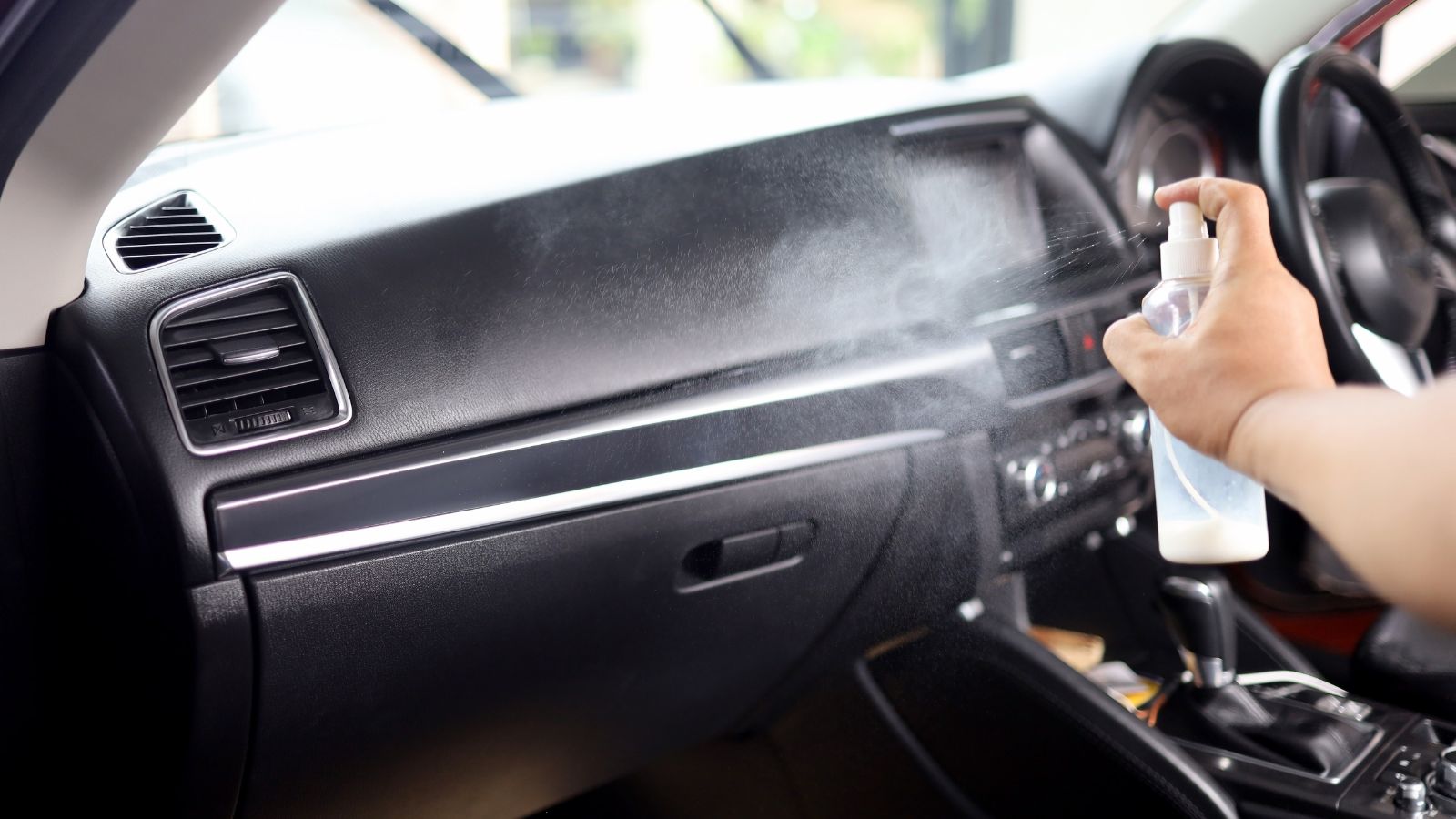
A bottle marked “interior cleaner” can look harmless beside a vehicle whose cabin contains coated leather, synthetic upholstery, touchscreens, piano-black trim, anodized metal and delicate microsuede. The expensive mistake is assuming all of those surfaces tolerate the same chemistry. Modern finishes are engineered for appearance, feel and durability, but manufacturers often specify surprisingly narrow cleaning methods.
These 12 cleaning-product mistakes show how the wrong solvent, polish, dressing or abrasive can turn a quick tidy-up into permanent haze, discoloration, scratches or stripped coatings. The safest approach is usually less dramatic than the product shelf suggests: identify the material, follow the vehicle or surface maker’s instructions, test unfamiliar products discreetly and use the gentlest method that actually removes the contamination.
A Cleaner That Claims to Work Everywhere

The biggest mistake often begins with convenience: one bottle for the dashboard, seats, screens, trim and doors. Modern cabins combine materials with very different coatings and chemical tolerances. Tesla, for example, warns that solvents, bleach, citrus, naphtha and silicone-based products can damage interior components, while Volvo advises using recommended products and warns against strong stain removers on interior trim.
That matters because “all-purpose” describes a product category, not guaranteed compatibility with a particular vehicle. A cleaner that removes greasy fingerprints from hard plastic may be unnecessarily aggressive on coated leather, gloss trim or a display. Owners can reduce risk by checking the manual before treating an unfamiliar surface and testing any new cleaner in a concealed area. The few minutes spent identifying the material are cheaper than replacing a trim panel whose sheen, colour or protective coating has been permanently altered by the wrong chemical choice during routine cleaning today.
Using Ordinary Glass Cleaner on a Touchscreen
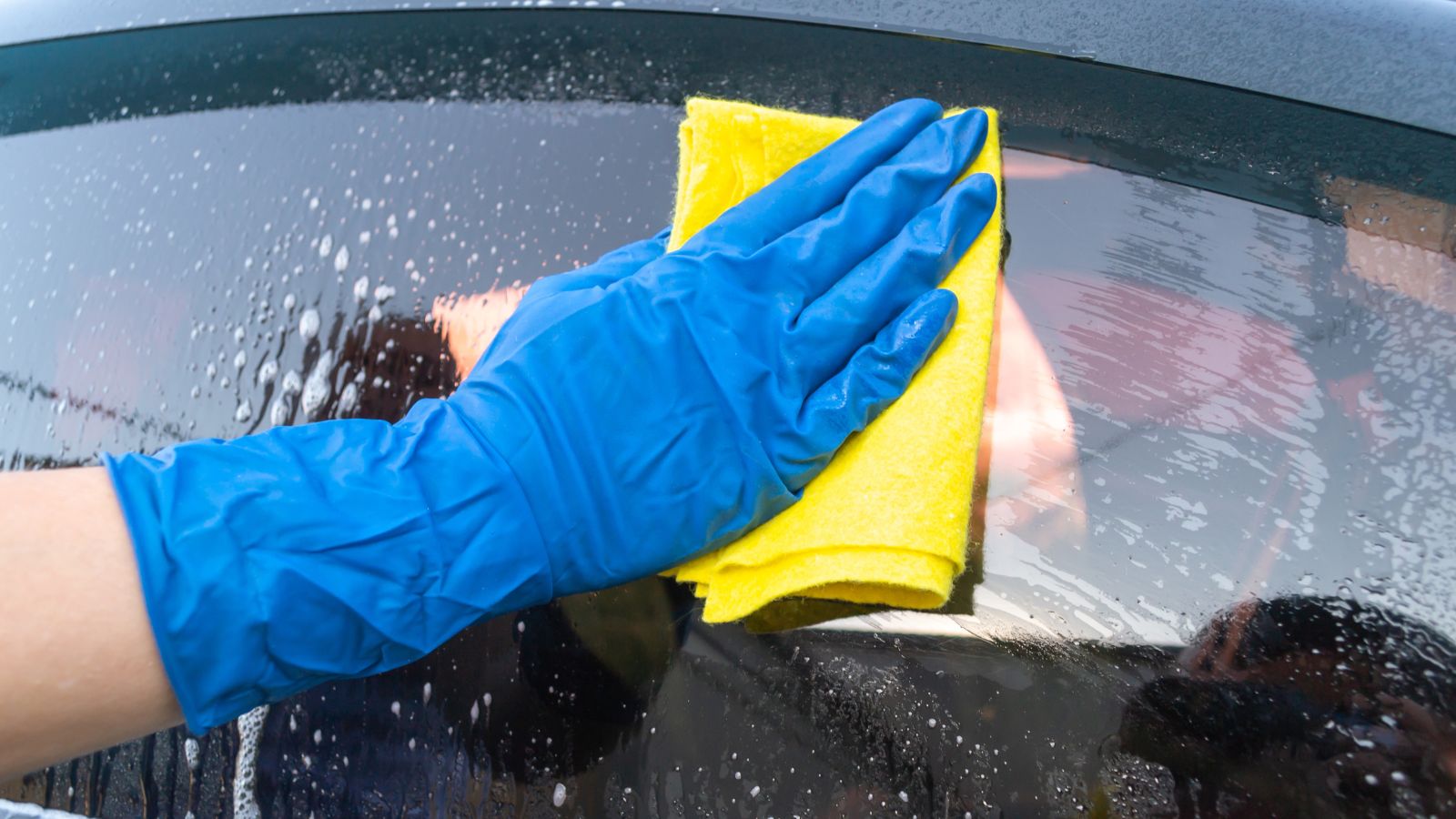
A fingerprint-covered infotainment display invites the same spray used on the windshield, but many screens are not simply exposed glass. They may carry anti-glare, anti-fingerprint or other surface treatments. Tesla specifically tells owners not to use glass cleaner or alcohol-based gel products on its touchscreens, recommending a soft lint-free cloth designed for displays instead. Toyota has likewise warned against chemical cleaners on certain touchscreens.
The danger is rarely dramatic on the first wipe. Repeated exposure can leave haze, uneven gloss or coating damage that becomes obvious when sunlight hits the panel. Large integrated displays can also be expensive assemblies rather than inexpensive replaceable covers. A safer routine is to start dry with a clean screen-safe microfiber cloth, then use only the method the manufacturer approves for stubborn marks. Spraying familiar glass cleaner across every shiny surface can turn a cosmetic annoyance into a costly one over years of daily use.
Treating Leather Like a Household Sofa
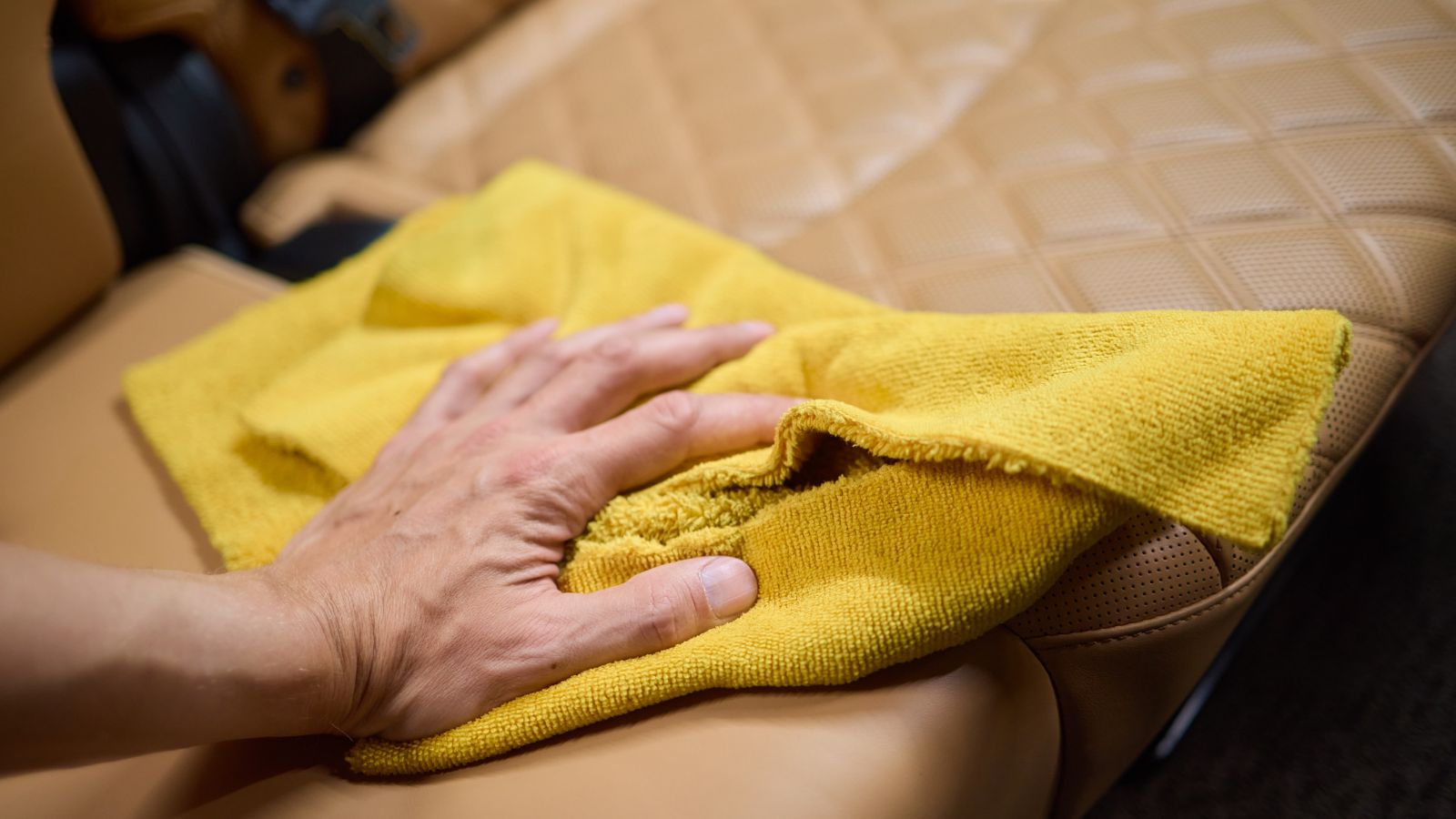
Leather seats can look robust, yet automotive leather is commonly finished with protective coatings that affect colour, feel and stain resistance. Strong solvents, high-alcohol solutions and harsh acidic or alkaline cleaners can attack those finishes. Hyundai warns that high-alcohol, acidic and alkaline cleaners may fade leather or strip its surface, while Volvo cautions against gasoline, naphtha and similar cleaning agents on leather and plastic trim.
The same restraint applies to premium steering wheels and leather-trimmed panels. More conditioner is not automatically better, and a product intended for unfinished furniture leather may not suit coated automotive upholstery. Owners should first remove loose grit, then use the cleaner and method specified for the exact material. Immediate attention to spills also reduces the temptation to escalate to aggressive chemistry later. A dark stain is frustrating; a permanently shiny patch, colour change or damaged topcoat is far harder to reverse once permanently chemically altered.
Assuming Synthetic or Vegan Leather Needs Leather Conditioner
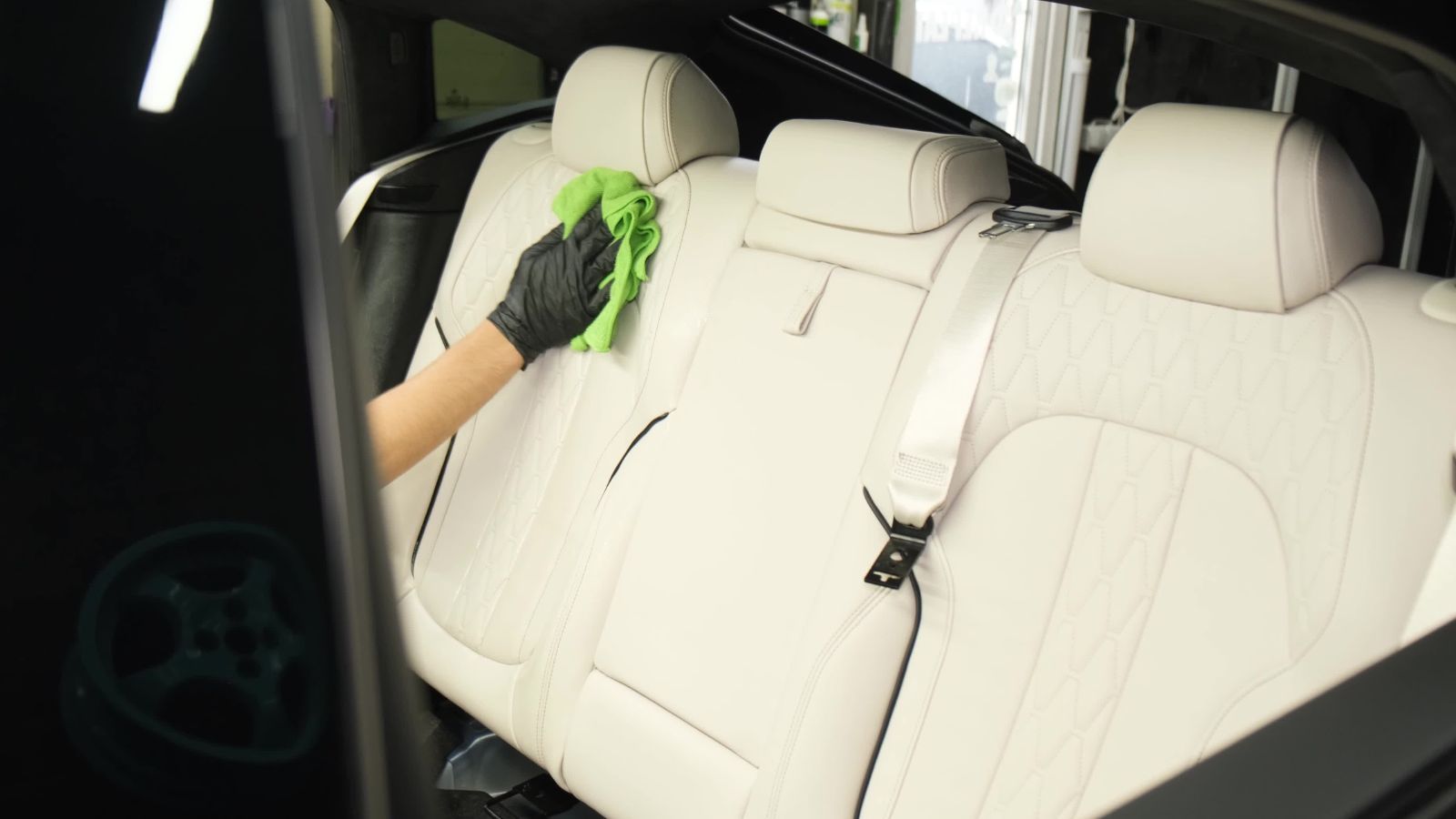
Synthetic upholstery can imitate leather closely enough that owners reach automatically for traditional leather creams and conditioners. That can be the wrong approach. Tesla says its synthetic seat material should generally be cleaned with warm water and mild soap and specifically discourages conditioners, protectants and many stronger cleaning agents. It also warns that prolonged or aggressive use of isopropyl alcohol can damage the material’s topcoat.
This is a good example of why appearance does not identify chemistry. A product marketed to “feed” natural leather may serve no useful purpose on a coated synthetic surface and could leave residue, change gloss or conflict with manufacturer guidance. Before applying conditioner, confirm whether the seat is natural leather, coated leather, vinyl or another synthetic material. That distinction matters when automakers introduce new upholstery blends. The safest product is one designed for the actual material, not the one whose label merely matches its appearance.
Scrubbing Alcantara Like Ordinary Fabric
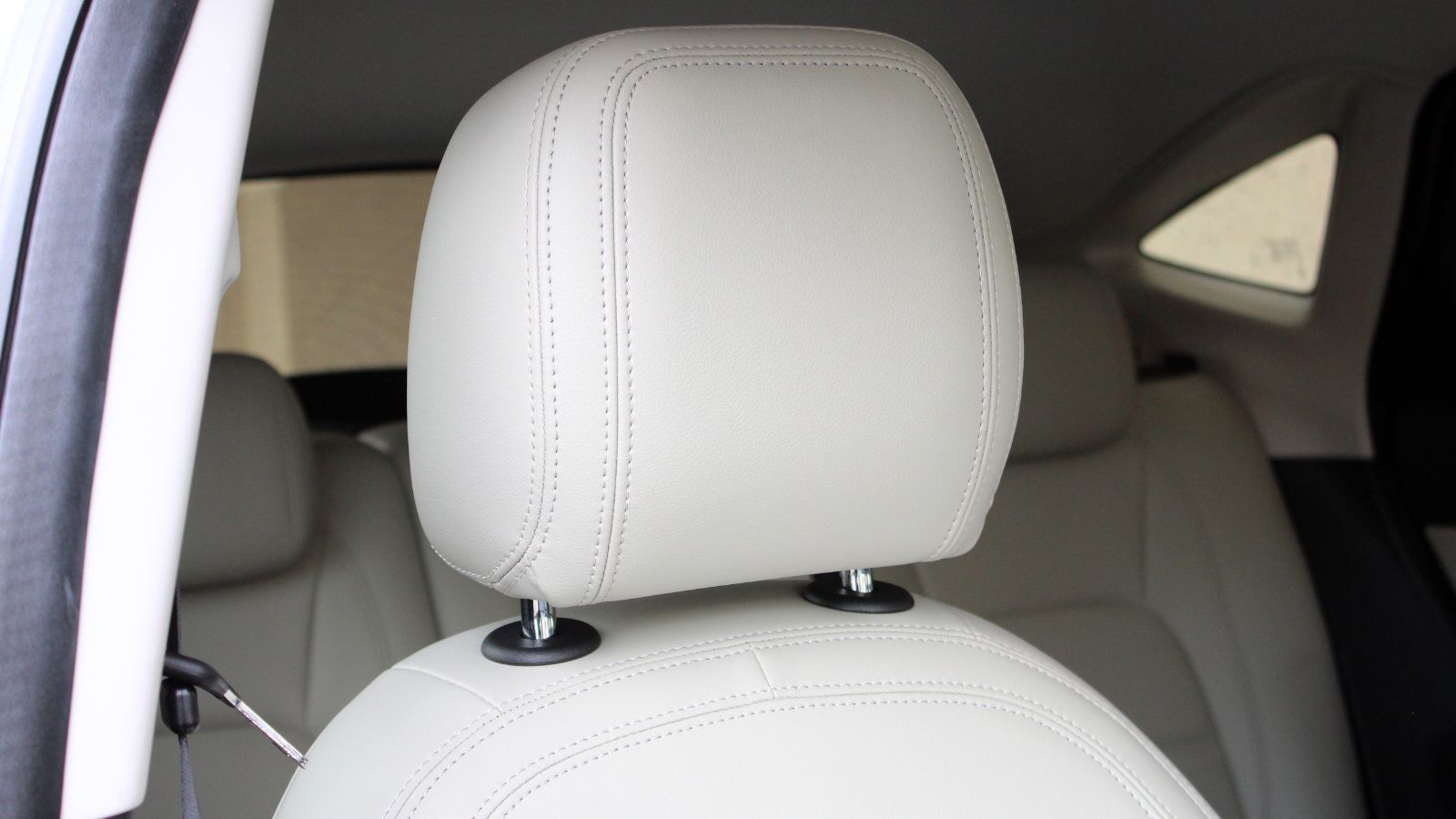
Alcantara has a soft, suede-like texture, which can make a stained seat or steering-wheel insert look as though it needs vigorous scrubbing. The manufacturer recommends the opposite approach. Alcantara’s official care guidance calls for regular gentle cleaning, warns against rubbing too vigorously and advises against direct steam. For many stains, it recommends dabbing with a white cloth or well-wrung sponge rather than pouring cleaner directly onto the material.
Aggressive cleaning can disturb the surface and make a small problem look larger. Even the choice of cloth matters: Alcantara cautions against printed absorbent paper because ink can transfer. When deeper cleaning is needed, the company lists specific procedures based on the stain type and recommends suitable specialist products for non-removable upholstery. The lesson is simple: microsuede-like trim should not be treated like a durable floor mat. Gentle technique and controlled moisture protect the texture that made the material expensive originally anyway.
Polishing Piano-Black and High-Gloss Trim
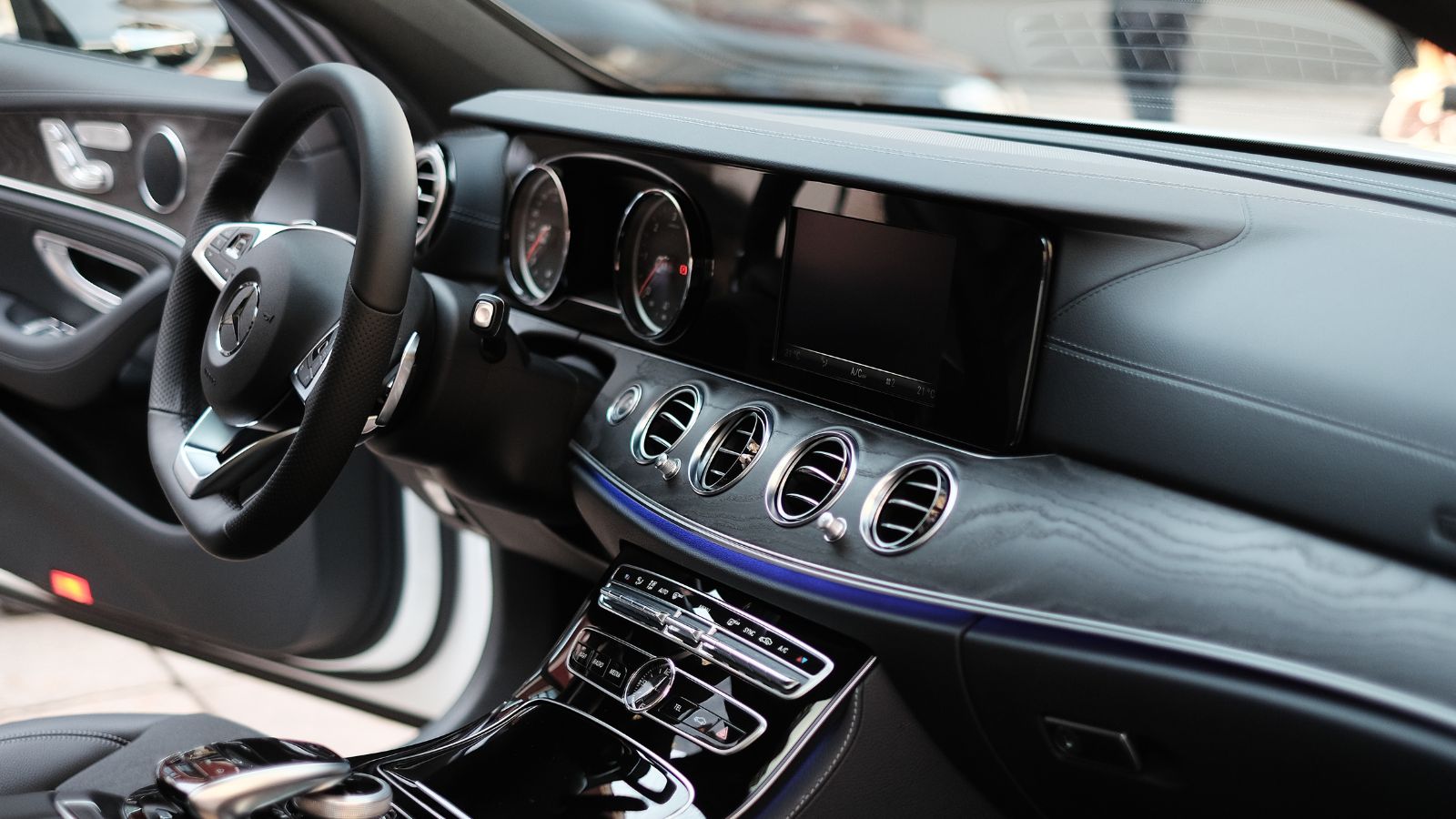
Few cabin finishes reveal bad cleaning technique faster than piano-black trim. The deep glossy surface highlights dust, fingerprints and, unfortunately, fine scratches. Volvo warns that high-gloss interior surfaces are easily scratched and recommends a clean, dry microfiber cloth, with only a little water if necessary. It also tells owners not to scrape or rub stains aggressively and to avoid strong stain removers on interior trim.
The mistake is reaching for polish or an abrasive cleaner because the surface resembles painted bodywork. Interior gloss trim may have a thin decorative or protective layer that differs from exterior clearcoat. Even a mildly abrasive product can trade fingerprints for swirls that appear under every shaft of sunlight. Clean dust away gently before wiping, because trapped grit can become the abrasive. If a mark will not release with the approved method, escalating chemistry or pressure without checking the manual can make the blemish permanent.
Using Metal Polish on Anodized or Coated Trim
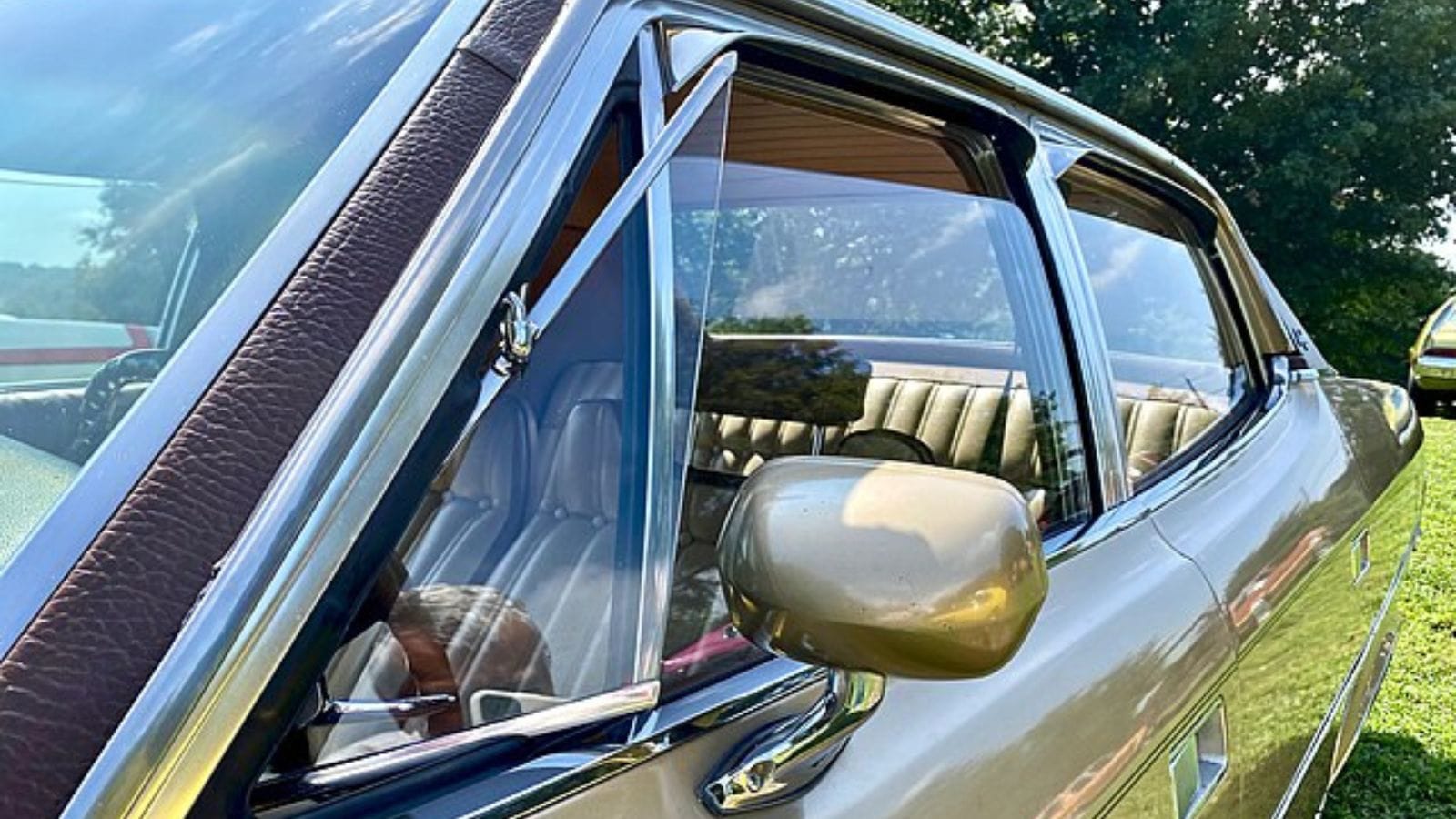
Bright window surrounds, roof rails and cabin accents may look like bare metal, but their finish can be anodized, plated or coated. Volvo specifically warns never to use metal polishing agent on anodized aluminum exterior parts because it can cause discoloration and destroy the surface treatment. The company also specifies a limited pH range for cleaners used on certain anodized aluminum components.
That distinction is easy to miss when a product promises to restore shine to “metal.” Traditional metal polishes often work by chemical action, abrasion or both, which is exactly what a protected decorative finish may not tolerate. The safer move is to identify whether the part is bare, polished, anodized, painted or plated before choosing a product. If the finish is unknown, a manufacturer-approved cleaner is preferable to experimenting with polish. A trim strip that has lost its factory surface treatment usually cannot be restored by more polishing.
Waxing or Polishing Matte Paint
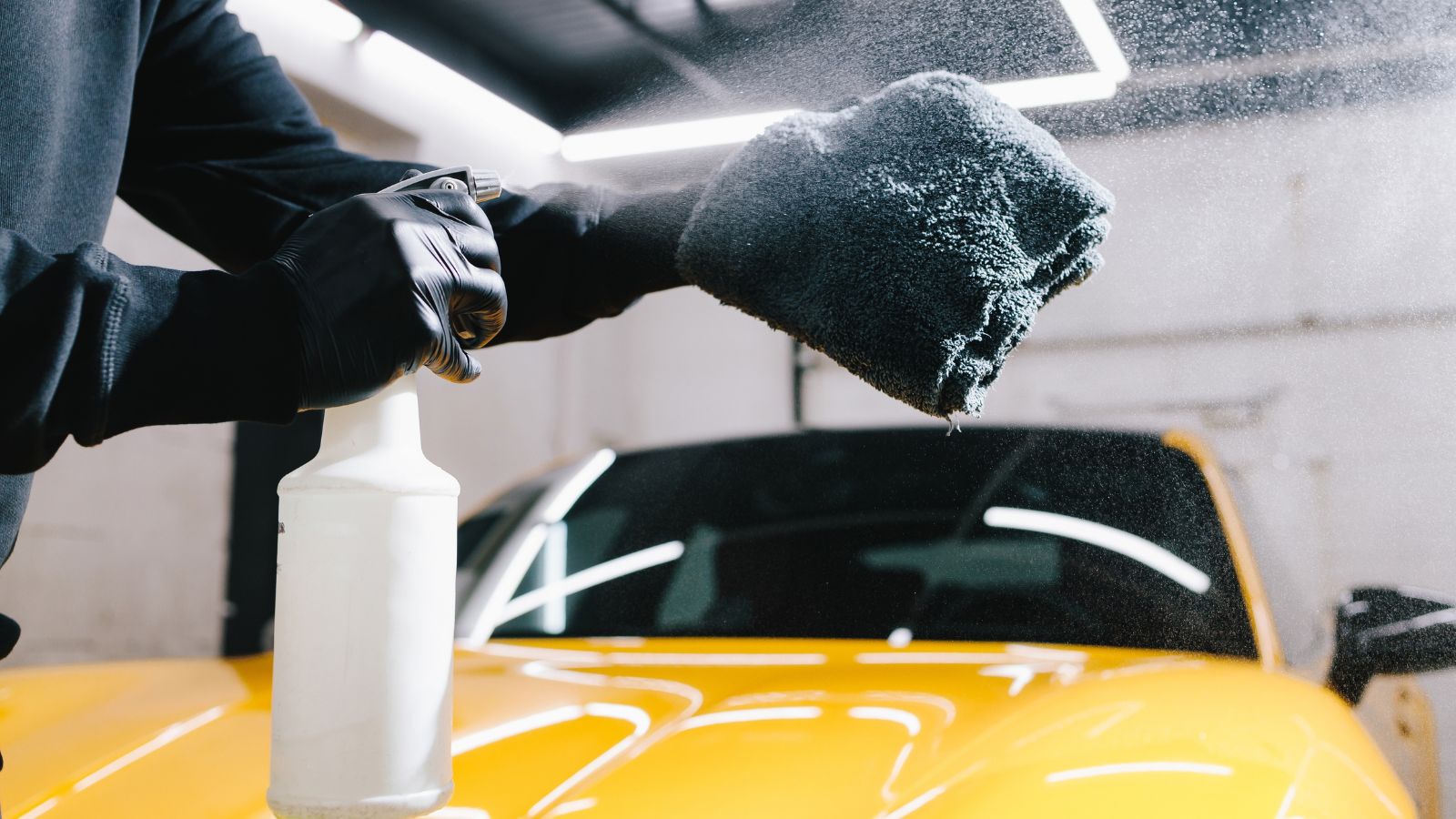
Matte paint creates its appearance by controlling how light reflects from the surface, so products designed to increase gloss can change the finish. BMW says matte paint needs different care, calling polishing a no-go because polish abrasives remove the finish’s distinctive rough surface. BMW also warns that car-wash brushes can smooth matte paint over time and that wax sealants can damage it.
That makes a standard detailing instinct—polish out the mark—particularly risky. Localized rubbing can create a glossy patch that stands out more than the original blemish because matte finishes do not respond like conventional clearcoat. The same caution can apply to matte-finished wheels and decorative films, depending on the manufacturer. Owners should use products specifically approved for the finish and avoid automatic wash programs that add hot wax when the manual prohibits it. On expensive matte paint, making one small area “shiny again” can be damage rather than improvement.
Using Abrasive Products on Paint-Protection Film
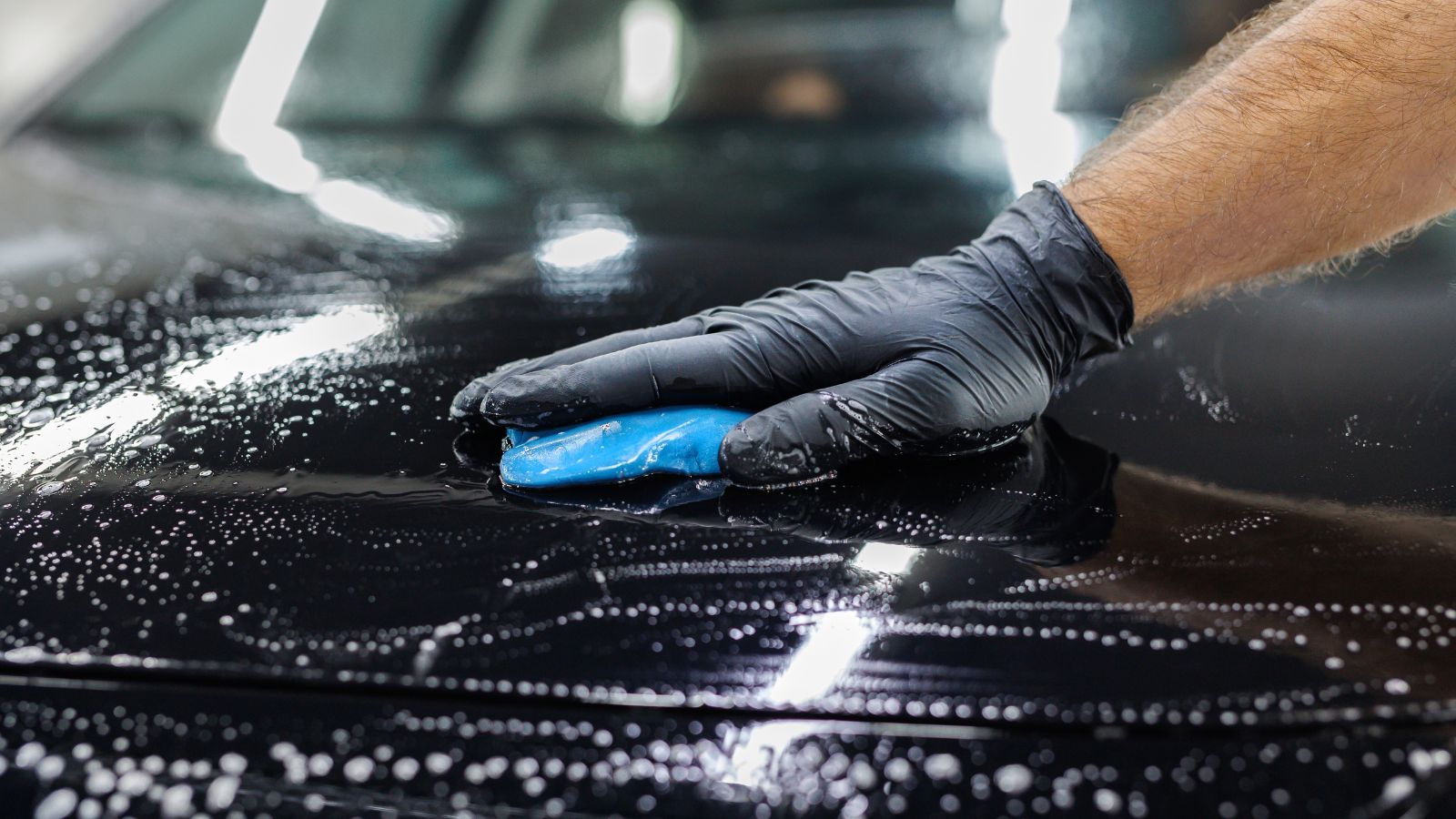
Paint-protection film is designed to shield expensive paint, but the film itself remains a surface that can be scratched or chemically damaged. 3M advises using neutral shampoo on its Protection Wrap Film and warns against strongly alkaline, acidic or alcoholic cleaners. It also says abrasive pads, brushes, abrasive polishes and rubbing compounds can permanently damage the film or reduce its surface quality.
The trap is assuming that anything safe for conventional paint is automatically safe for the film covering it. A compound intended to correct clearcoat defects can abrade a polymer layer instead. Harsh spot-cleaning of bugs, tar or tree sap can create a different patch. 3M recommends softening stubborn contamination and using gentle cleaning rather than rough scrubbing. Because films differ in topcoat and finish, owners should follow the specific brand’s care instructions. Protecting the paint is pointless if the protective layer is dulled, scratched or lifted by misuse.
Treating Every Window Tint the Same
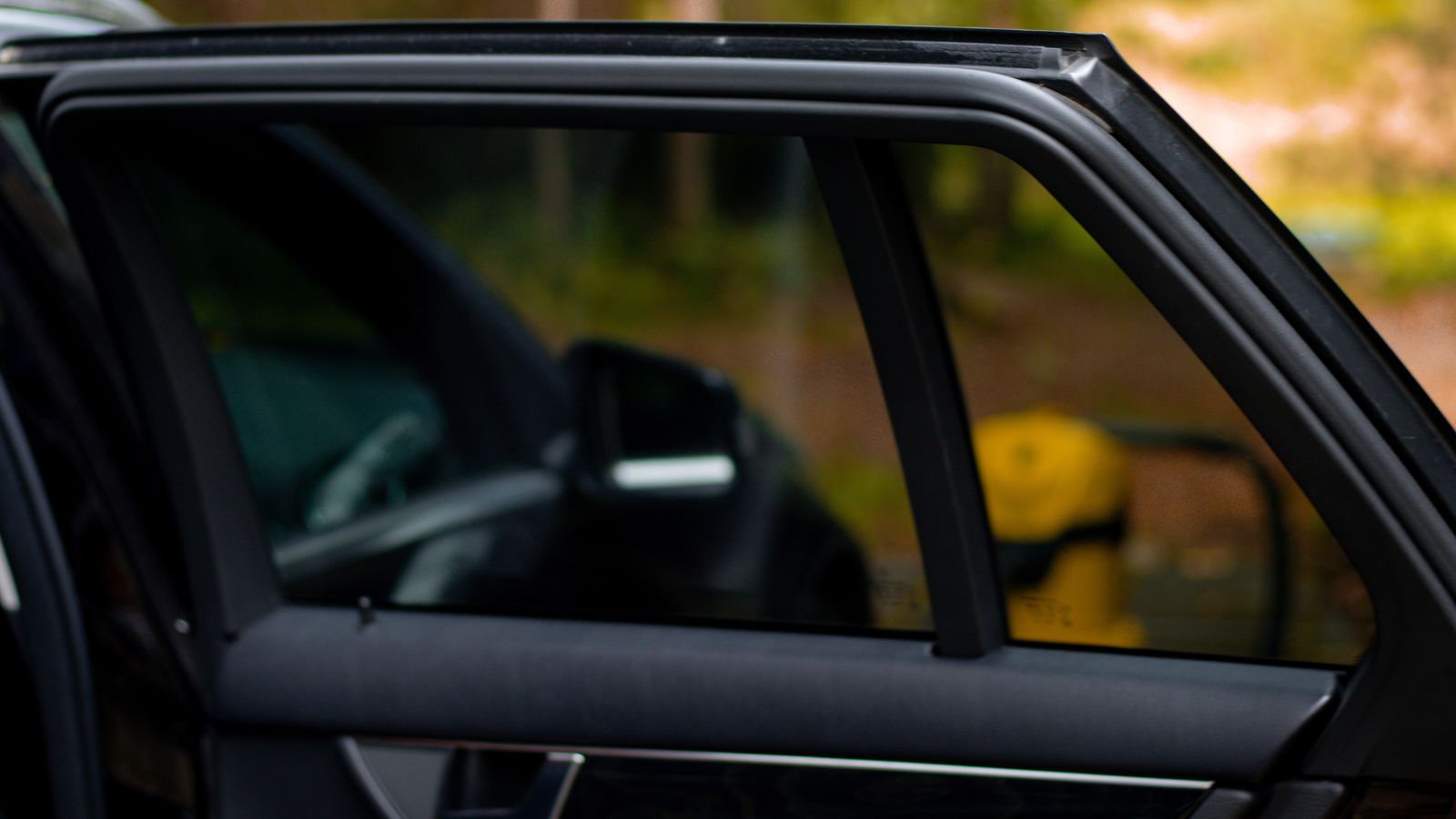
Window tint advice is full of absolute rules, but film care can vary by product. Some 3M automotive films allow certain common glass cleaners after the film has fully cured, while other 3M care guidance recommends pH-neutral cleaners and warns against strong acidic or alkaline solvents. Across its guidance, however, 3M consistently cautions against abrasive tools or cleaners that can scratch the film.
That variation is precisely why grabbing whatever glass cleaner is nearby can be a mistake. The correct product depends on the installed film, its age and the manufacturer’s instructions. Newly installed tint may also require a waiting period before cleaning while adhesion develops. Owners who do not know the brand can ask the installer before using aggressive chemistry. A soft cloth and a compatible, non-abrasive cleaner are safer than relying on folklore. The film may be nearly invisible, but replacing damaged tint across several windows is not.
Putting Shine on the Dashboard and Steering Wheel
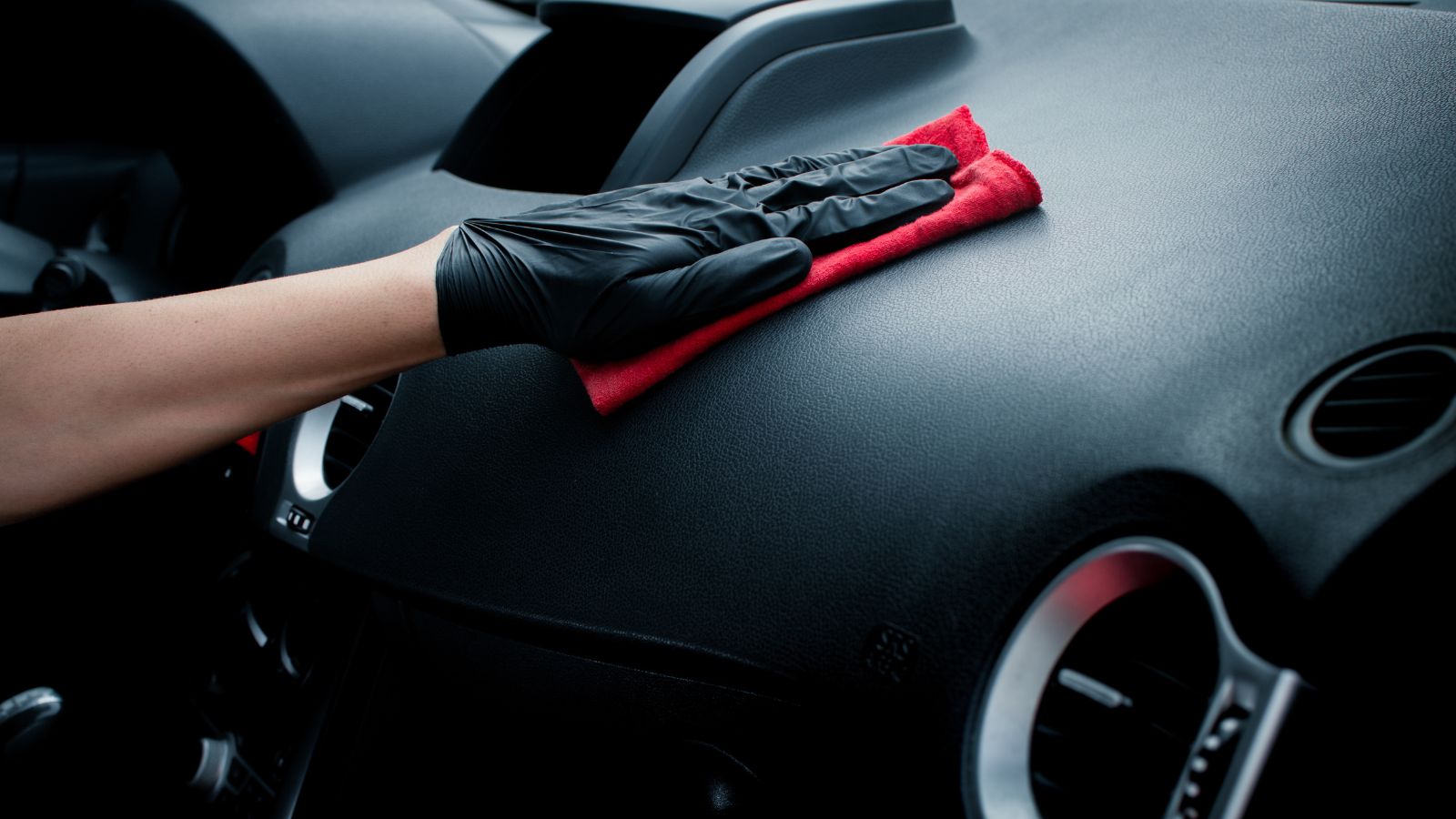
A glossy dashboard can look freshly detailed in the driveway and become distracting once sunlight pours through the windshield. Tesla explicitly advises owners not to polish upper dashboard surfaces because reflective finishes can interfere with the driver’s view. The same manual warns against several solvent and silicone-based products on interior components and recommends mild cleaning methods instead.
The steering wheel creates a different concern: it is a control surface, not a display shelf. Products that leave a slick, greasy or heavily dressed finish can be undesirable where the driver needs consistent grip, even when they make the material look darker. Manufacturer guidance for leather steering wheels commonly emphasizes suitable cleaners rather than indiscriminate gloss products. The better goal is clean and residue-free, not artificially shiny. A detailing product should never make a driving control feel slippery or turn the top of the dashboard into a bright reflection during low-angle sun.
Spraying Chemicals on Cameras, Sensors and Delicate Lenses
Modern cars place cameras and sensors around the body, often behind small exposed lenses that look easy to wipe with ordinary cleaner. Tesla’s current care guidance says camera lenses should be cleaned without chemical-based or abrasive cleaners because those products can damage the lens surface. It also warns against sharp or abrasive objects and recommends water-based cleaning procedures for debris.
Similar caution applies to delicate lighting lenses and other coated components. Tesla notes that some cleaners containing highly alkaline or caustic ingredients can damage exterior plastic trim, lights or camera lenses, and it warns that interior lighting components can also be degraded by common chemical cleaning solutions. The repair consequences can exceed the price of a cosmetic trim piece because a damaged camera may affect driver-assistance visibility. Before spraying bug remover, degreaser or glass cleaner on a small lens, confirm that the product is approved for that specific component first.
16 Costco Canada Habits That Could Be Costing Shoppers More Than They Save
The Executive Membership can feel like an obvious upgrade because the 2% annual reward sounds straightforward. For households that spend heavily at Costco Canada, the extra fee may be easy to justify. But the habit becomes costly when shoppers upgrade first and calculate later. A Gold Star Membership costs less, while Executive costs more and only pays off if eligible annual spending is high enough to offset the difference.
16 Costco Canada Habits That Could Be Costing Shoppers More Than They Save

Alanna Rosen is an experienced content writer that focuses on many EV and educational content. Her articles are regularly published on Get CyberTrucked and syndicated on large publications.