Tailgating can turn an ordinary drive into a tense contest in seconds. One vehicle appears too close in the mirror, the driver ahead responds by speeding up, then traffic changes and the speed drops again. That seemingly harmless reaction can make an already unsafe situation more unpredictable.
The simple habit at the centre of the problem is constantly changing speed in response to the vehicle behind. Rather than creating lasting space, it can encourage the tailgater to keep chasing the gap while reducing the time everyone has to react. The safer approach is usually much less dramatic: remain predictable, build more room ahead and create an opportunity for the aggressive driver to move on. These 12 points explain why reactive speed changes can worsen tailgating and what defensive-driving guidance recommends instead.
Speed Chasing Can Turn One Bad Gap Into a Pattern
A tailgater often creates an immediate urge to press harder on the accelerator. The reasoning feels straightforward: if the lead vehicle pulls away, the dangerously small gap should become larger. In practice, the extra room may last only seconds. A driver who was already following too closely can simply accelerate as well, restoring nearly the same gap at a higher speed. Now both vehicles are moving faster while the original problem remains. That is why repeatedly adjusting speed according to the car behind can become a self-defeating habit.
The scale of the issue is not trivial. An Ipsos survey released by ICBC in 2025 found that 77% of surveyed B.C. drivers admitted following too closely on occasion, while 86% said being tailgated made them frustrated, scared, angry or intimidated. ICBC also reported more than 57,000 rear-end collisions in the previous year. Those figures illustrate why predictability matters. When emotions are already elevated and spacing is poor, adding unnecessary acceleration and deceleration introduces another moving variable into a situation that needs fewer surprises, not more.
Speeding Up Rarely Solves the Real Problem
Speeding up can feel like the quickest escape from a vehicle sitting uncomfortably close to the rear bumper. Yet it does not control what the other driver does next. If the tailgater wants to travel faster, the vehicle behind may simply match the higher speed. A driver who was uncomfortable at 80 km/h can suddenly find the same short gap at 90 or 100 km/h, with less time available if traffic ahead slows. The attempt to create safety has effectively raised the stakes without removing the unsafe follower.
ICBC’s 2025 survey found that 7% of respondents said they speed up to create space when being tailgated, a response the insurer warned can increase risk. Ontario guidance similarly cautions drivers against speeding up merely to get away from someone following too closely. There is also a behavioural reason not to play along: half of the B.C. drivers who admitted tailgating said a slower driver was one reason they did it. Accelerating under pressure can therefore teach an impatient follower that crowding the car ahead produces the result they wanted.
Small Speed Changes Can Ripple Through Traffic
What feels like a private interaction between two drivers can affect considerably more vehicles. Traffic researchers use the concept of “string instability” to describe situations in which a small disturbance in speed or spacing becomes larger as it travels through a line of vehicles. One driver eases off, the next brakes a little harder, another reacts later and more sharply, and a minor speed adjustment can develop into the familiar stop-and-go wave that seems to appear without an obvious crash or obstruction.
Experiments and modelling studies have repeatedly examined these oscillations in car-following traffic. Research published in Transportation Research Part B has connected instability in following behaviour with the growth and propagation of speed fluctuations through vehicle platoons. That does not mean every touch of the accelerator creates congestion. It does show why smoothness matters, particularly when vehicles are packed closely together. A tailgater already reduces the margin for error. Repeatedly surging forward and then backing off can add exactly the sort of disturbance that tightly spaced traffic is poorly equipped to absorb.
Sudden Slowdowns Give the Tailgater Even Less Margin
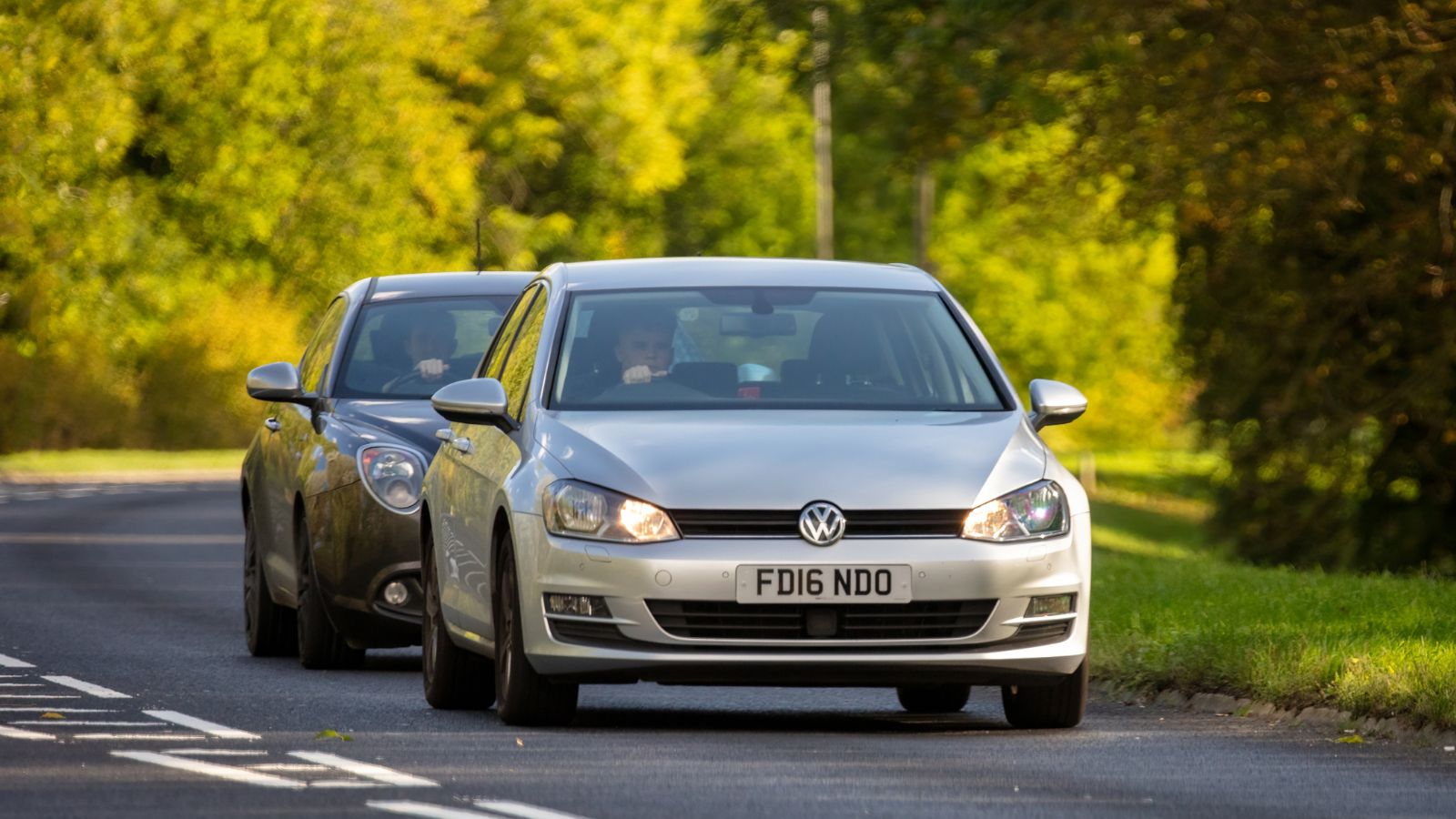
The opposite reaction can be just as problematic. A driver who becomes irritated may lift off the accelerator abruptly or brake harder than traffic conditions require. That immediately closes the already-short distance available to the vehicle behind. Alberta’s road-safety guidance specifically tells motorists being followed too closely not to slam on their brakes. Instead, it recommends reducing speed only slightly when appropriate, increasing the space ahead and giving the other vehicle an opportunity to pass.
Consider an everyday example: traffic is travelling steadily when a car moves within an uncomfortable distance of the rear bumper. If the lead driver suddenly loses 15 or 20 km/h to make a point, the tailgater must recognize the slowdown, react and brake within a gap that was unsafe to begin with. A gradual adjustment gives everyone more time. The principle is simple even when the other driver is behaving badly: defensive driving tries to compensate for another person’s mistake rather than adding a second abrupt manoeuvre to the situation.
Brake-Checking Turns a Safety Problem Into a Confrontation

Few reactions escalate tailgating faster than deliberately touching the brakes to frighten the driver behind. Brake-checking may feel like a warning, but the message is being delivered through the controls of a moving vehicle. Ontario’s official guidance on aggressive driving specifically warns drivers not to retaliate or attempt to “educate” another motorist. Provincial road-safety material also identifies tailgating, cutting drivers off and cutting in front before slowing down as aggressive behaviours that can contribute to dangerous conflicts.
There is a legal dimension as well. In Ontario, following too closely carries four demerit points upon conviction. That penalty, however, does not transfer responsibility for traffic enforcement to the person being tailgated. Trying to punish the offending driver with a sudden brake application introduces another hazard and can trigger anger rather than cooperation. A driver who is already impatient may respond by moving even closer, aggressively passing or continuing the confrontation. The safer objective is not to win the encounter. It is to separate the vehicles with as little drama and uncertainty as possible.
More Space Ahead Is More Useful Than More Speed

One of the most counterintuitive responses to tailgating is to pay more attention to the space in front rather than obsessing over the small gap behind. Ontario and Alberta driving guidance both recommend creating additional following distance ahead when another vehicle is too close behind. The logic is practical: if traffic ahead slows, a larger cushion allows the lead driver to reduce speed gradually instead of braking sharply. That gentler slowdown also gives the tailgater more time to react.
Ontario’s handbook describes two seconds as a minimum following interval in ideal conditions, with additional space required when conditions are worse. The exact appropriate gap varies with speed, weather, visibility and vehicle type, but the defensive-driving principle remains the same. Imagine approaching a line of slowing traffic with a pickup close behind. With only a small space to the car ahead, hard braking may become unavoidable. With a larger cushion, the driver can begin slowing earlier and more progressively. The extra room cannot force the tailgater backward, but it can make the consequences of that driver’s bad spacing easier to manage.
Steady Speed Makes the Lead Vehicle Easier to Read
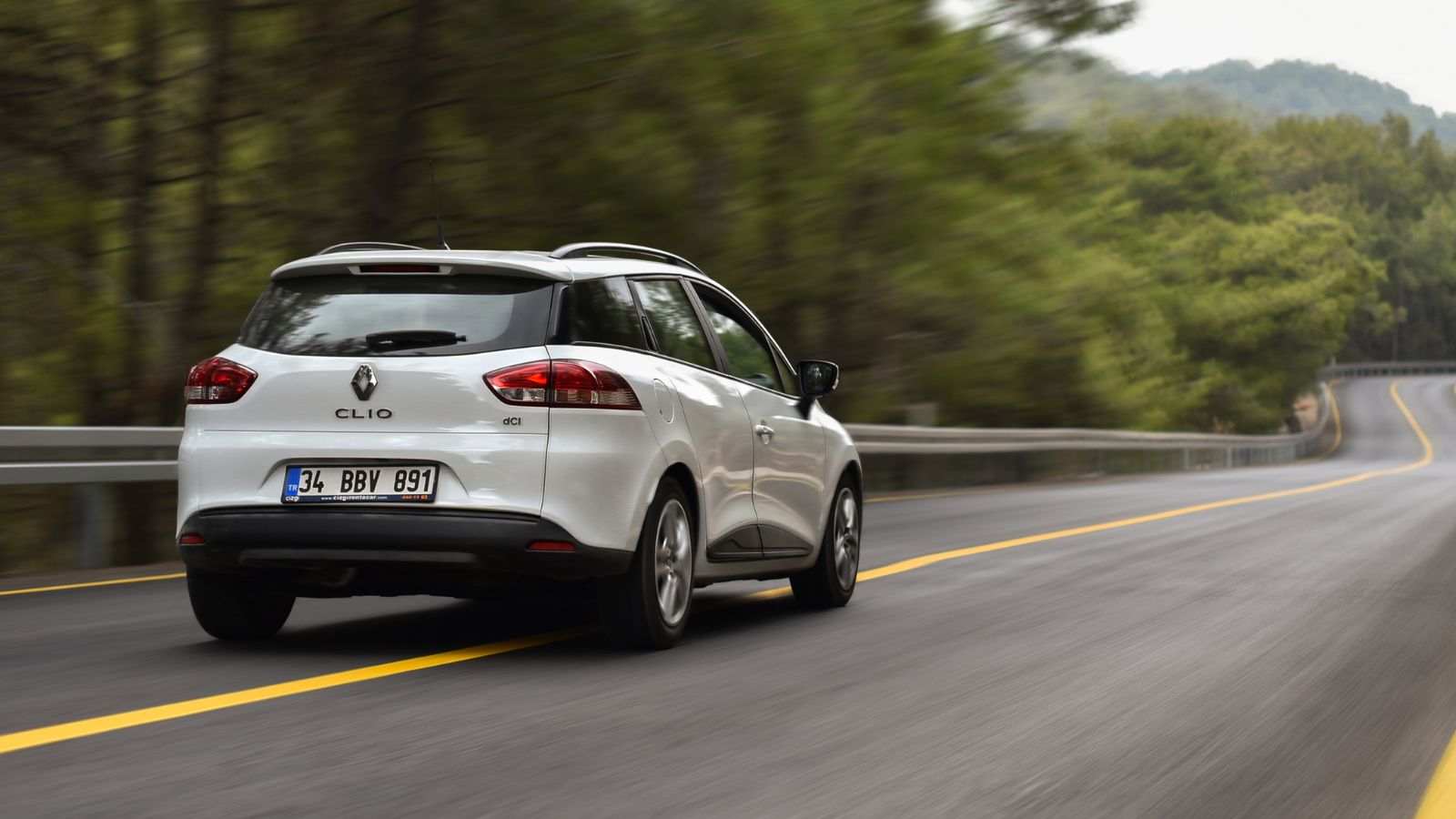
Predictability is one of the quieter skills that keeps traffic safe. Ontario’s driver handbook explicitly describes predictable behaviour as part of responsible driving and advises maintaining a steady speed whenever possible. When a vehicle accelerates, coasts and accelerates again simply because another driver is hovering behind, the follower has to continually interpret what is happening. The tailgater may be at fault for the poor gap, but unpredictable speed can still make the situation more difficult for everyone.
Looking farther ahead helps break that cycle. Ontario training material encourages drivers to scan roughly 12 to 15 seconds ahead in many ordinary driving situations, and even farther on a freeway. That changes the driver’s reference point. Instead of staring into the rear-view mirror and responding to every movement of the tailgater, speed adjustments can be based on traffic lights, curves, congestion and other hazards that actually matter. A car travelling at a calm, lawful and relatively consistent pace gives the impatient driver behind fewer unexpected changes to chase and gives the person ahead more mental capacity to manage the road itself.
Moving Aside Works Better Than Managing the Tailgater
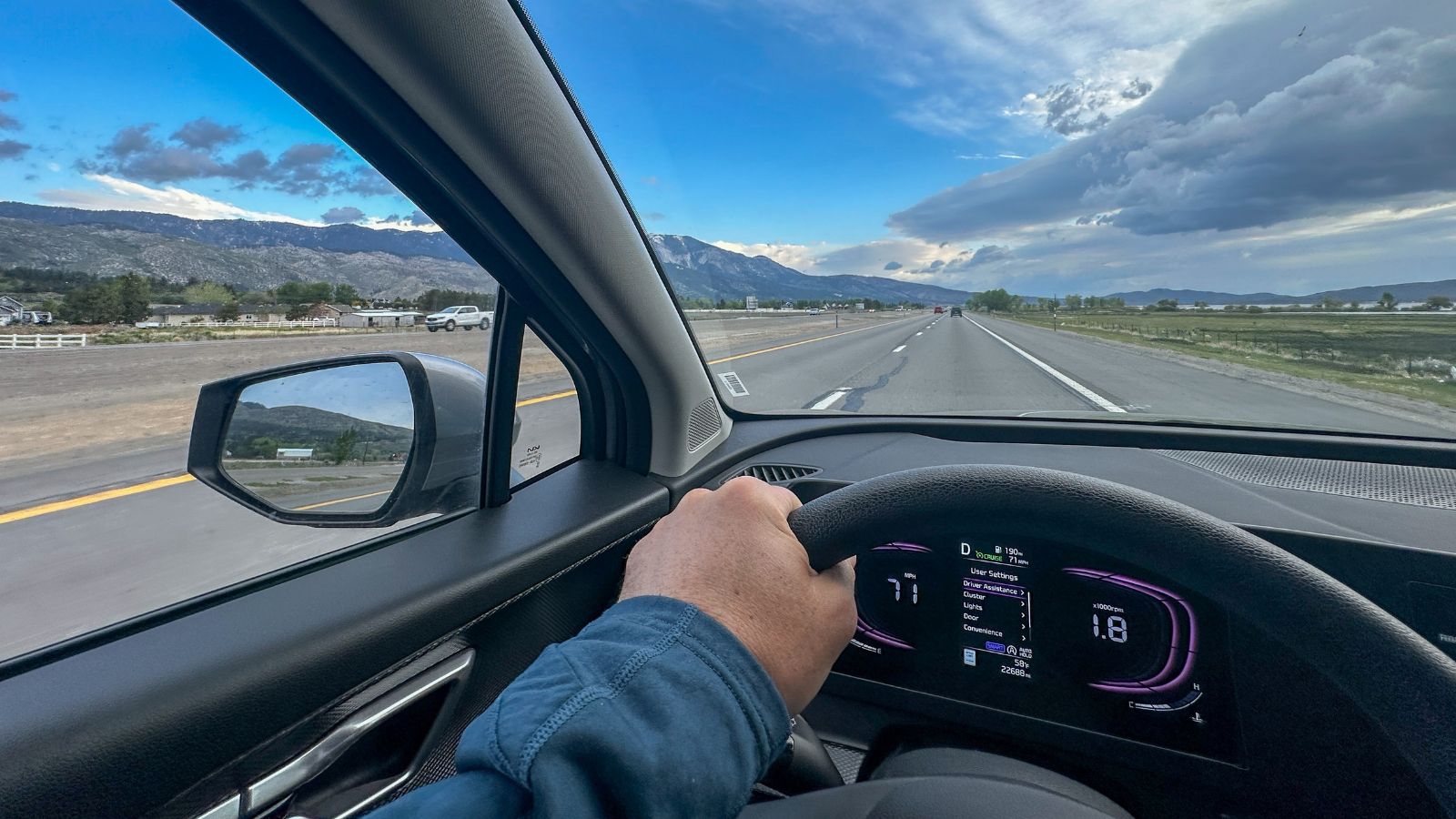
A driver being followed too closely cannot control the other person’s attitude, but often can remove themselves from the interaction. Ontario guidance advises allowing a tailgater to pass when that can be done safely. NHTSA similarly recommends moving over when someone wants to pass and using judgment to steer safely away from an aggressive driver. The goal is separation. Once the impatient vehicle is no longer directly behind, the dangerous following-distance problem effectively ends.
Many drivers already recognize that strategy. In ICBC’s 2025 survey, 41% of respondents said they move to another lane when safe while being tailgated, and another 11% said they pull over to let the vehicle pass. Those responses require patience because an immediate lane change is not always available. A vehicle may be beside the car, an exit may be approaching or the shoulder may be unsafe. Waiting for a genuine opening is better than making an abrupt escape. Signal early, check mirrors and blind spots and make the move smoothly when conditions allow.
Staying in the Passing Lane Can Add Friction
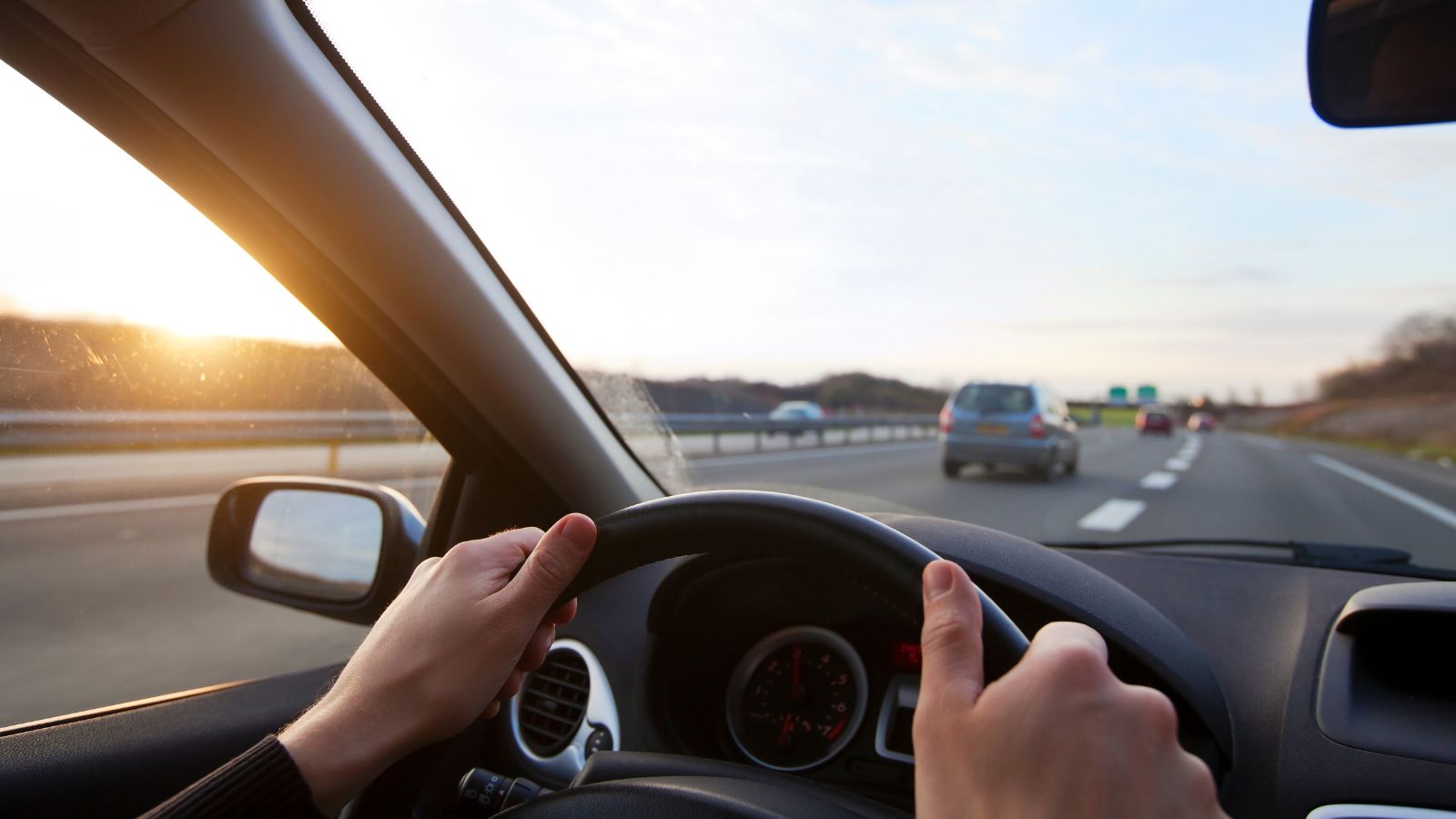
Tailgating can occur anywhere, but highway lane positioning can make the interaction more contentious. Ontario’s freeway guidance says traffic should generally keep right and use left lanes for passing. It also advises drivers not to remain unnecessarily in the far-left lane after completing a pass. The rule is not an invitation for another motorist to tailgate, speed or intimidate anyone. Following too closely remains unsafe regardless of what the vehicle ahead is doing.
Still, lane choice can provide an easy way to end the encounter. Suppose a driver is travelling legally in the left lane after passing a truck and notices a faster vehicle rapidly closing from behind. If the right lane becomes safely available, returning to it removes the conflict without accelerating beyond the driver’s chosen lawful speed. Remaining beside other traffic simply to prevent the impatient vehicle from passing can prolong the situation. Defensive driving is less about deciding who deserves the road position and more about recognizing when a small, lawful adjustment can create useful distance from someone driving aggressively.
Bad Weather Makes Reactive Speed Changes More Dangerous
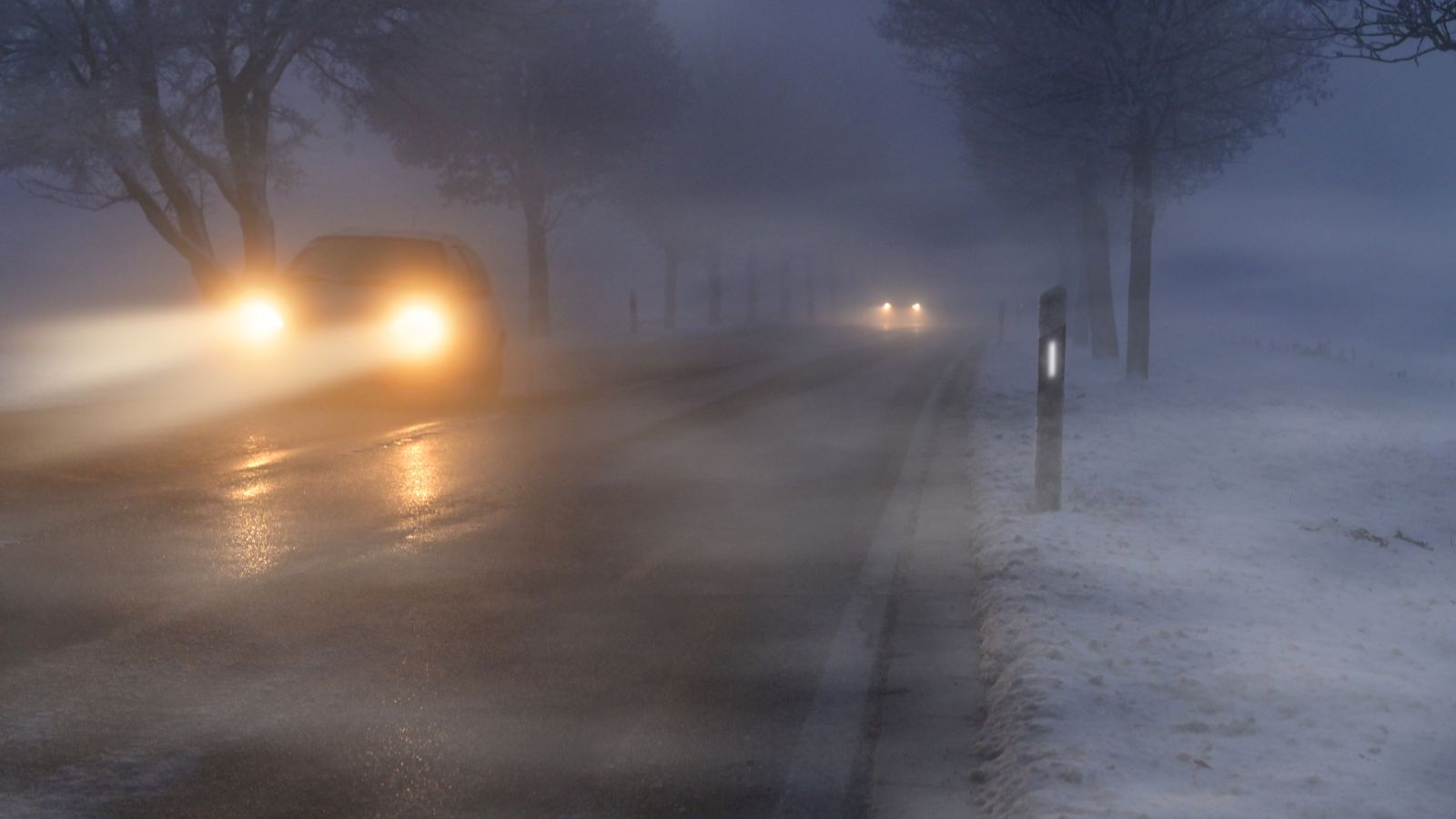
Rain, snow, fog and ice reduce the amount of grip and visibility available to correct a mistake. Ontario’s handbook advises drivers in poor conditions to increase following distance, look well ahead and use smooth steering, braking and acceleration. It specifically warns against suddenly speeding up to get away from a vehicle that is following too closely. When traction is limited, an unnecessary burst of acceleration followed by braking can make an already uncomfortable encounter harder to manage.
ICBC recommends increasing following distance to four seconds in bad weather, compared with smaller minimum gaps in good conditions. The important lesson is not the number alone but the extra margin it represents. Picture a snowy highway where a tailgater appears behind a driver travelling cautiously. Speeding up because of pressure from the mirror may put the lead vehicle above a speed appropriate for the road. Braking sharply to punish the follower is no better. Bad conditions are precisely when gradual inputs and extra space matter most, even if another motorist seems impatient with that approach.
Watching the Mirror Too Much Can Distract From the Bigger Threat
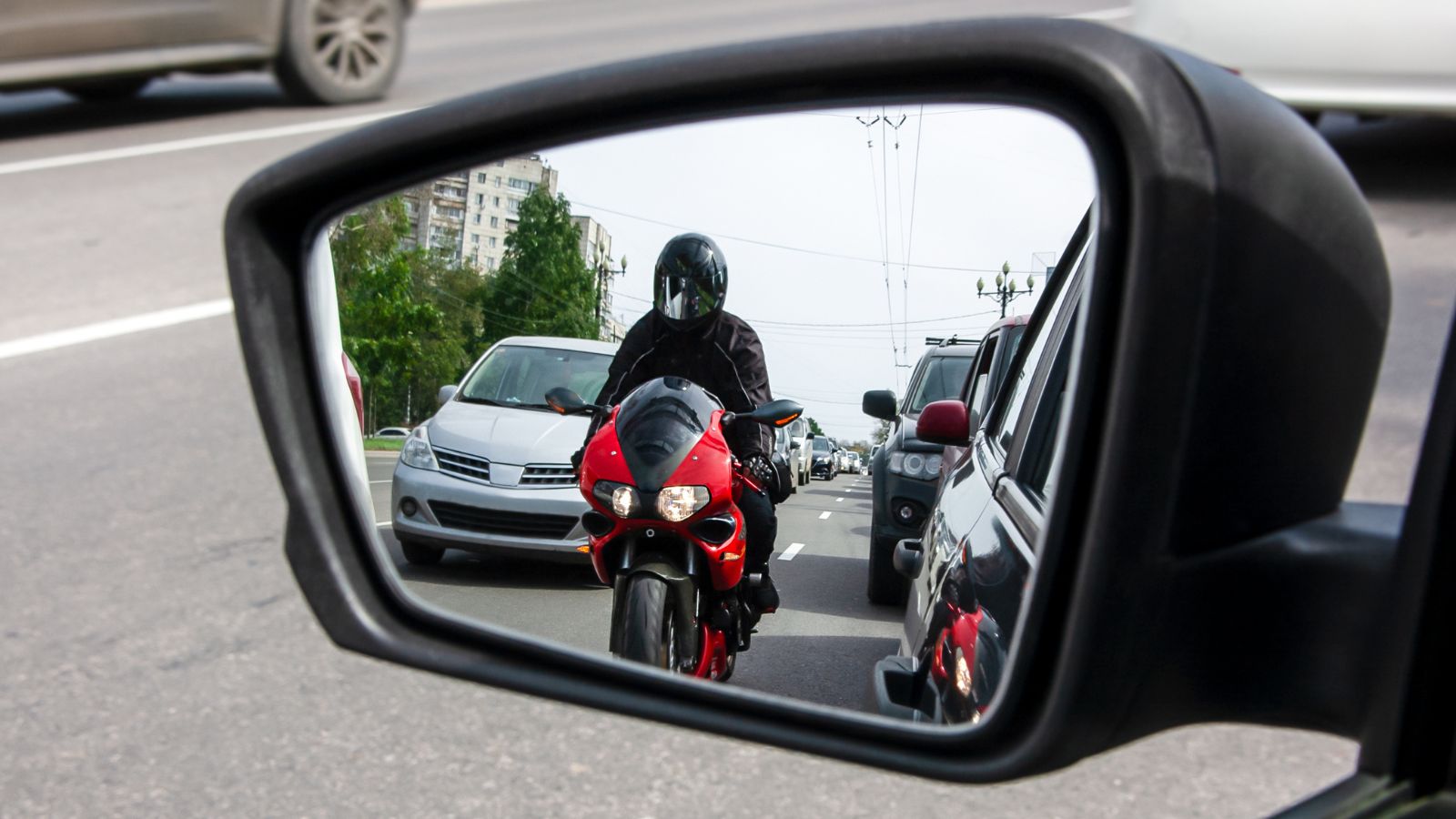
A tailgater naturally draws attention. Drivers may start checking the mirror every few seconds, wondering whether the vehicle has moved even closer. Awareness of rear traffic is important, but fixation can become its own problem. Ontario’s driving guidance recommends a broad visual routine: look ahead, scan to the sides and check mirrors regularly. Its handbook suggests mirror checks about every five seconds while also emphasizing the importance of looking well down the road for developing hazards.
That balance matters because the most urgent event may still happen in front. A pedestrian could enter a crosswalk, traffic could queue beyond a curve or a vehicle two cars ahead could begin braking. A driver whose attention has narrowed to the aggressive vehicle behind may recognize those changes later than necessary. The more useful habit is to register the tailgater, build extra space ahead and continue scanning the whole traffic environment. The rear-view mirror provides information; it should not become the steering wheel for the driver’s emotions or speed choices.
De-Escalation Is the Habit That Actually Ends the Risk
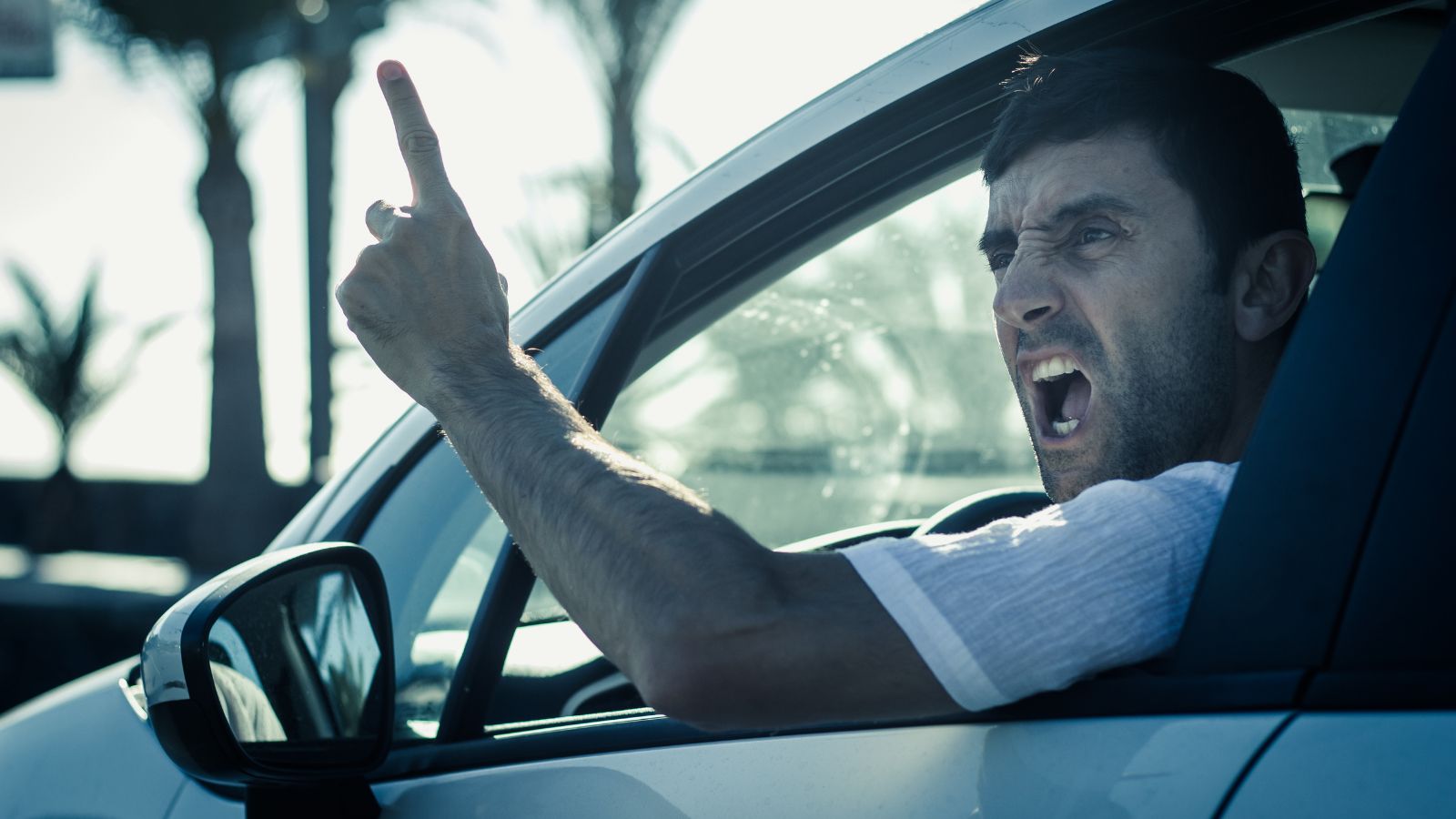
Tailgating easily becomes personal even though the two drivers may never exchange a word. ICBC’s survey helps explain why: 31% of respondents said being tailgated made them frustrated, 23% said scared, 21% angry and 11% intimidated. Those emotions can tempt an otherwise cautious driver into accelerating, deliberately slowing, blocking a pass or gesturing. Once that happens, an unsafe following distance can become a genuine road-rage encounter.
Official Ontario guidance takes the opposite approach. Drivers are advised not to compete, retaliate, make gestures or try to teach another motorist a lesson. If an aggressive driver continues following and the situation feels threatening, the handbook recommends staying in the vehicle, contacting police and going to a police station or busy public place rather than driving home. Most encounters never reach that level. The everyday lesson is simpler: keep speed changes smooth, increase the cushion ahead and let the aggressive vehicle go when safely possible. Losing a few seconds is far cheaper than turning a tailgater into an opponent.
19 Used Cars Canadians Should Avoid in 2026 (Based on Owner Complaints)

Buying a used car in Canada can feel safe until repair bills start stacking up. Owner complaints tell a different story than glossy listings. Transmission failures, electrical problems, and weak winter reliability show up again and again in consumer reports. Many of these issues appear after warranties expire, when owners least expect them. Some vehicles look affordable upfront, but become expensive to keep on the road. Others struggle in cold weather, urban driving, or long highway commutes. Here are 19 used cars Canadians should avoid in 2026 (based on owner complaints).
19 Used Cars Canadians Should Avoid in 2026 (Based on Owner Complaints)

Alanna Rosen is an experienced content writer that focuses on many EV and educational content. Her articles are regularly published on Get CyberTrucked and syndicated on large publications.