A used car can look immaculate, drive smoothly around the block, and still be hiding problems expensive enough to erase the savings that made it attractive in the first place. The costly mistake is often surprisingly simple: accepting a seller’s inspection, certification, history report, or quick visual check instead of arranging a truly independent pre-purchase inspection.
Mechanical condition, collision repairs, corrosion, computer diagnostics, brakes, tires, fluid leaks, and even battery health can reveal very different stories once a qualified technician starts looking. These 12 inspection blind spots show why a proper evaluation can matter far more than polished paint, low mileage, or a reassuring sales pitch—and why spending a relatively small amount before signing can prevent a much larger bill afterward.
The Real Mistake Is Trusting Someone Else’s Inspection

A dealer may say a vehicle has been inspected, reconditioned, certified, or checked by its service department. Those statements can provide useful information, but they are not the same thing as hiring an independent technician whose only job is to evaluate the car for the prospective buyer. The Federal Trade Commission specifically recommends independent mechanical inspections even when a vehicle has been certified by a dealer or is being sold with a warranty or service contract.
The difference can be financially significant. Consumer Reports estimates that a thorough pre-purchase diagnosis commonly costs around $100 to $150, depending on the shop and vehicle. That is relatively small compared with discovering major drivetrain, suspension, cooling-system, or collision-related problems after ownership has changed hands. A seller-funded inspection answers whether the seller is comfortable offering the car. An independent inspection answers a different question: what is this particular vehicle likely to need, and what risks would the new owner actually be accepting?
A Clean Dashboard Can Be Misleading

One of the easiest mistakes is assuming that no warning lights means no computer-detectable problems. Modern vehicles use onboard diagnostics to monitor numerous emissions-related systems, and a technician can inspect diagnostic trouble codes, pending faults, malfunction-indicator status, and readiness monitors. Simply looking at the dashboard leaves much of that information unseen.
Readiness status deserves particular attention. EPA guidance explains that monitors can show “not ready” after the diagnostic system has recently been reset, including after a battery disconnection or code clearing. That does not automatically prove wrongdoing or mechanical failure; legitimate repairs and battery replacement can produce the same result. However, several unset monitors mean the computer may not yet have completed the tests needed to identify certain faults. A professional inspection therefore looks beyond whether the check-engine light happens to be off. A scanner can provide context that a five-minute driveway inspection cannot, especially when a freshly cleared computer has not accumulated enough driving to expose a recurring problem.
Shiny Bodywork Can Hide Structural Repair

Fresh paint and straight-looking panels can create an impressive first impression, but repaired collision damage is sometimes easier to hide from a shopper than from a technician examining the car on a lift. Uneven panel gaps, inconsistent paint texture, overspray, non-factory-looking welds, distorted floor sections, or fresh undercoating can all justify a much closer investigation.
The concern goes beyond cosmetics. Consumer Reports notes that improperly repaired collision damage can affect structural integrity as well as steering and braking behaviour, potentially reducing the protection available in another crash. A history report may document a major collision, but it does not necessarily reveal every incident or determine whether repairs were performed correctly. Consider a vehicle whose bumper and fender have been beautifully refinished while damaged structure underneath was repaired poorly. From several metres away, the car may look nearly new. On a lift, evidence such as welding, creased structural sections, or unusual alignment can completely change the value proposition.
Flood Damage Often Lives Where Buyers Don’t Look

Flood-damaged vehicles can be remarkably convincing after carpets are cleaned, upholstery is detailed, and visible moisture disappears. The National Highway Traffic Safety Administration warns that flood vehicles can reappear for sale far from the disaster area and that water-related problems may not show themselves immediately. Hidden corrosion, contaminated mechanical components, and electrical faults can continue developing long after the interior feels dry.
The scale is not trivial. In August 2026, the National Insurance Crime Bureau cited a CARFAX estimate that as many as 530,000 flood-damaged vehicles were on U.S. roads as of August 2025. NICB recommends looking for silt, water staining, unusual corrosion, moisture in hidden areas, recently cleaned carpeting, mildew smells, and rust where it normally should not appear. Seat rails, spare-tire wells, dashboard areas, wiring connectors, and seatbelt retractors can tell more than freshly shampooed seats. An unusually strong air freshener is not proof of flooding, but combined with hidden rust or water residue, it deserves investigation before money changes hands.
Rust Matters Most Where It Can’t Be Seen
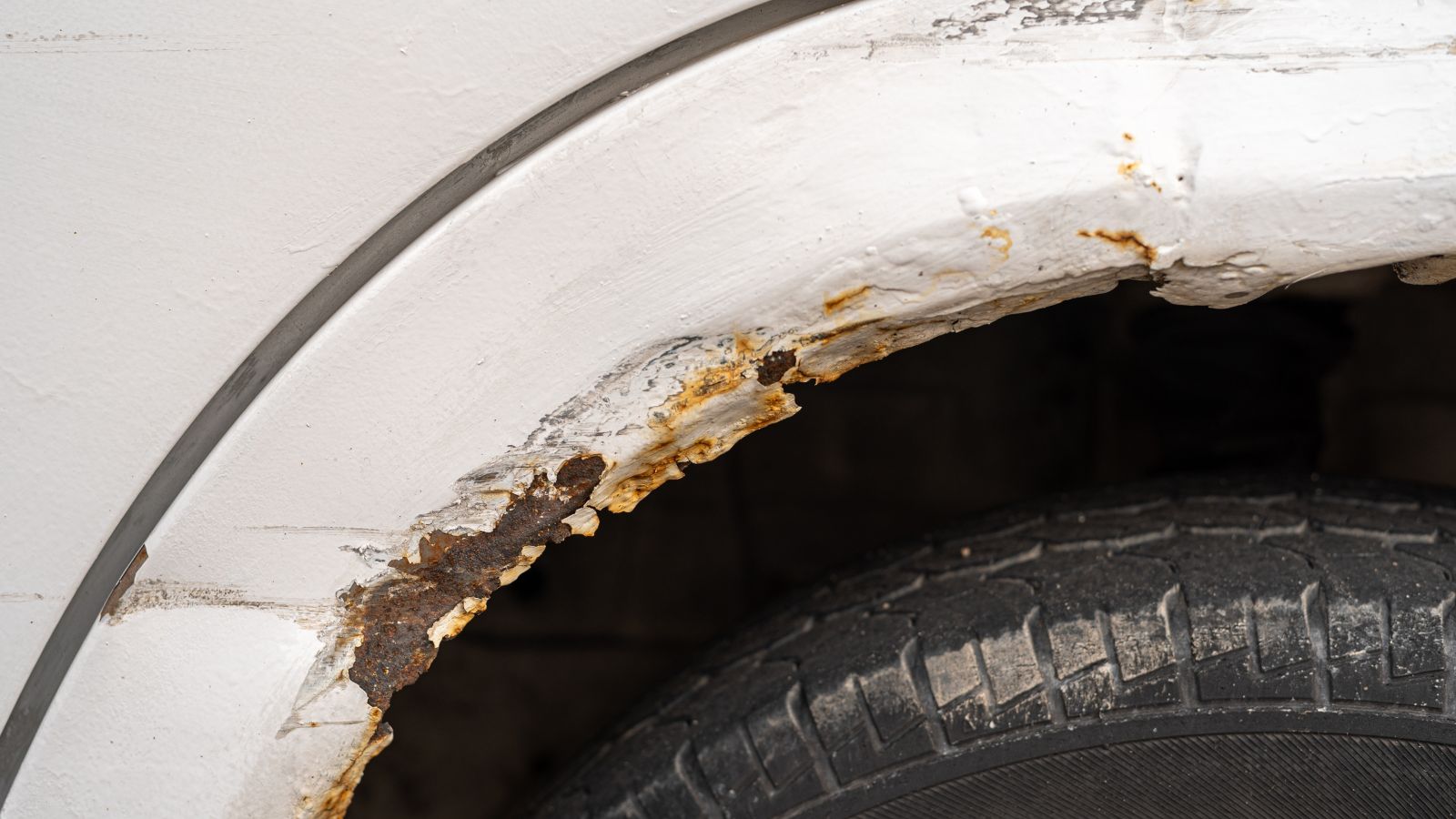
A few spots of surface rust on an older vehicle may look harmless. The real question is what is happening underneath. Road salt and other de-icing chemicals can attack chassis and suspension components, particularly on vehicles that have spent years in snowy climates. Manufacturer technical information filed with NHTSA has specifically warned that corrosion can progress from a cosmetic condition to structural deterioration capable of making suspension components unsafe.
That makes a lift inspection especially valuable. Rocker panels may look respectable while brake lines, mounting points, suspension components, subframes, exhaust sections, or other underside hardware have deteriorated considerably. Consumer Reports recommends examining wheel wells, lower body panels, door bottoms, exhaust components, and the underside for significant corrosion. Buyers sometimes assume fresh black undercoating is automatically good news, but heavy new coating can also make existing repairs or deterioration harder to see. A technician familiar with corrosion-prone vehicles can distinguish routine surface oxidation from deterioration that could trigger expensive repairs—or make the car a poor candidate regardless of its asking price.
Tires Can Tell the Story the Seller Doesn’t

Tires are consumable parts, but their wear patterns can provide clues about much more than the remaining tread. NHTSA states that tires should be replaced when tread reaches 2/32 of an inch and stresses proper alignment and balancing. During a used-car inspection, however, the pattern of wear across the tire can be just as informative as the depth itself.
Consumer Reports notes that cupping or irregular wear can be associated with problems involving steering, suspension, brakes, inflation, or alignment. Heavy wear on one edge may lead a technician to look more closely at suspension geometry or evidence of an impact. Four mismatched tires can also raise questions about maintenance history, particularly on vehicles where matched tires are important to predictable handling. Imagine a car wearing two almost-new front tires while its rears are old and unevenly worn. New rubber can make the vehicle photograph well, yet the inconsistency may invite questions about why only part of the set was replaced. Tires are therefore both an expense and a diagnostic clue.
A Warm Engine Can Hide Cold-Start Problems
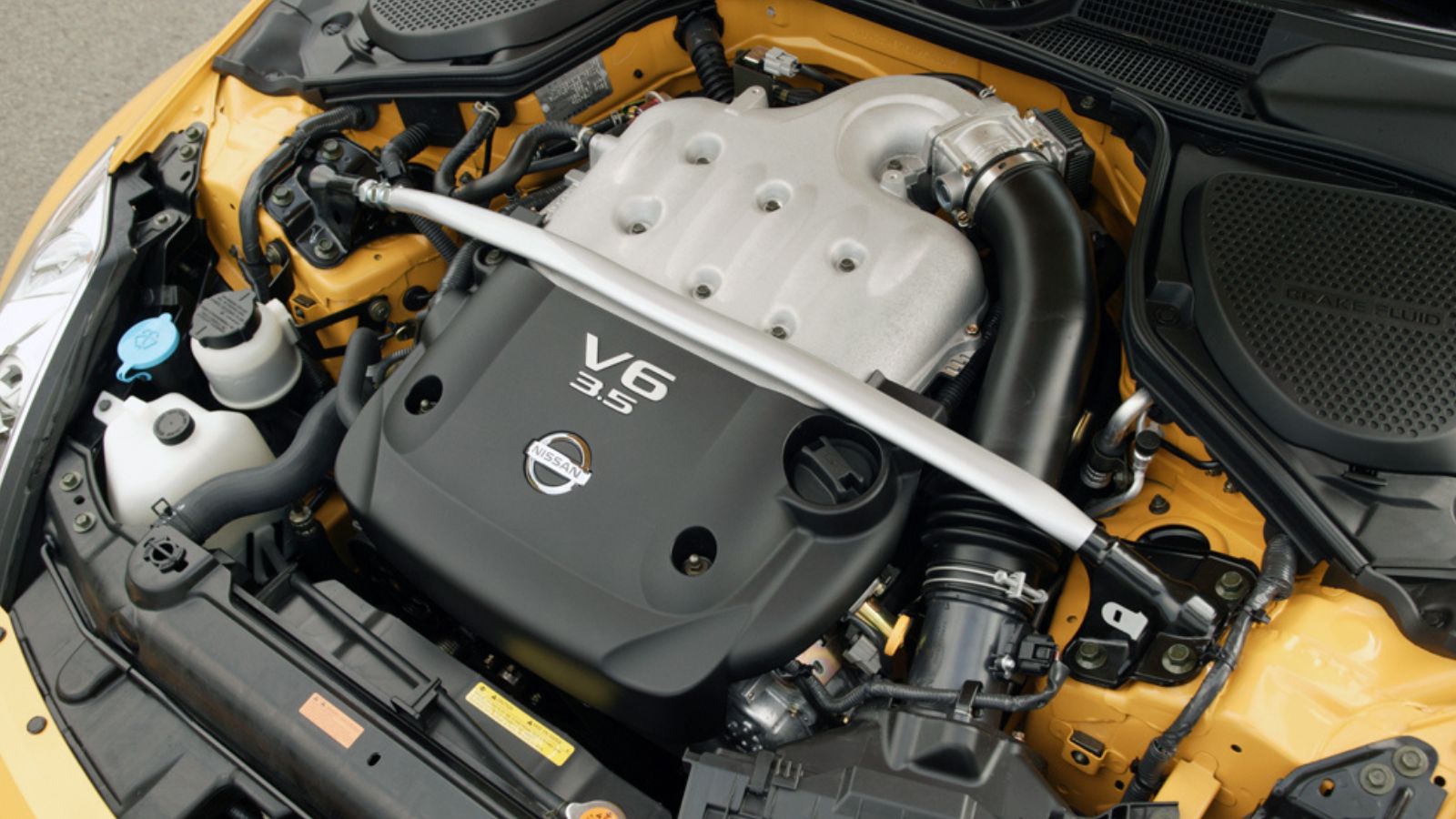
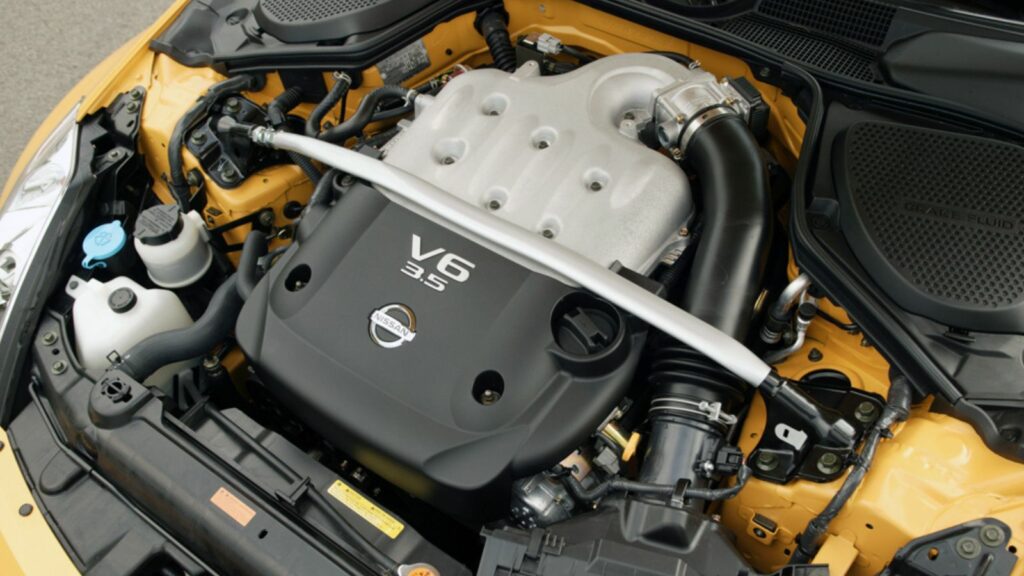
A vehicle that is already running when a buyer arrives has lost one of its most revealing moments. Consumer Reports recommends examining a used vehicle with the engine cool when possible and observing how easily it starts and how smoothly it settles into an idle. Warning lights should illuminate during the normal ignition check and then extinguish appropriately after startup.
The road test needs similar patience. A brief loop around a dealership can miss transmission hesitation, steering pull, vibration, brake pulsation, suspension noises, overheating tendencies, or symptoms that appear only after the drivetrain reaches operating temperature. Consumer Reports specifically recommends using the test drive to evaluate drivetrain, steering, suspension, brakes, and abnormal noises. For an automatic transmission, shifts should not be accompanied by obvious slipping or excessive hesitation. A buyer attracted by spotless upholstery can easily overlook a subtle shudder at highway speed or delayed engagement from Park to Drive. Those sensations may ultimately be harmless, but an independent technician can determine whether they warrant further diagnosis before the purchase becomes permanent.
EVs and Hybrids Need Battery-Specific Checks
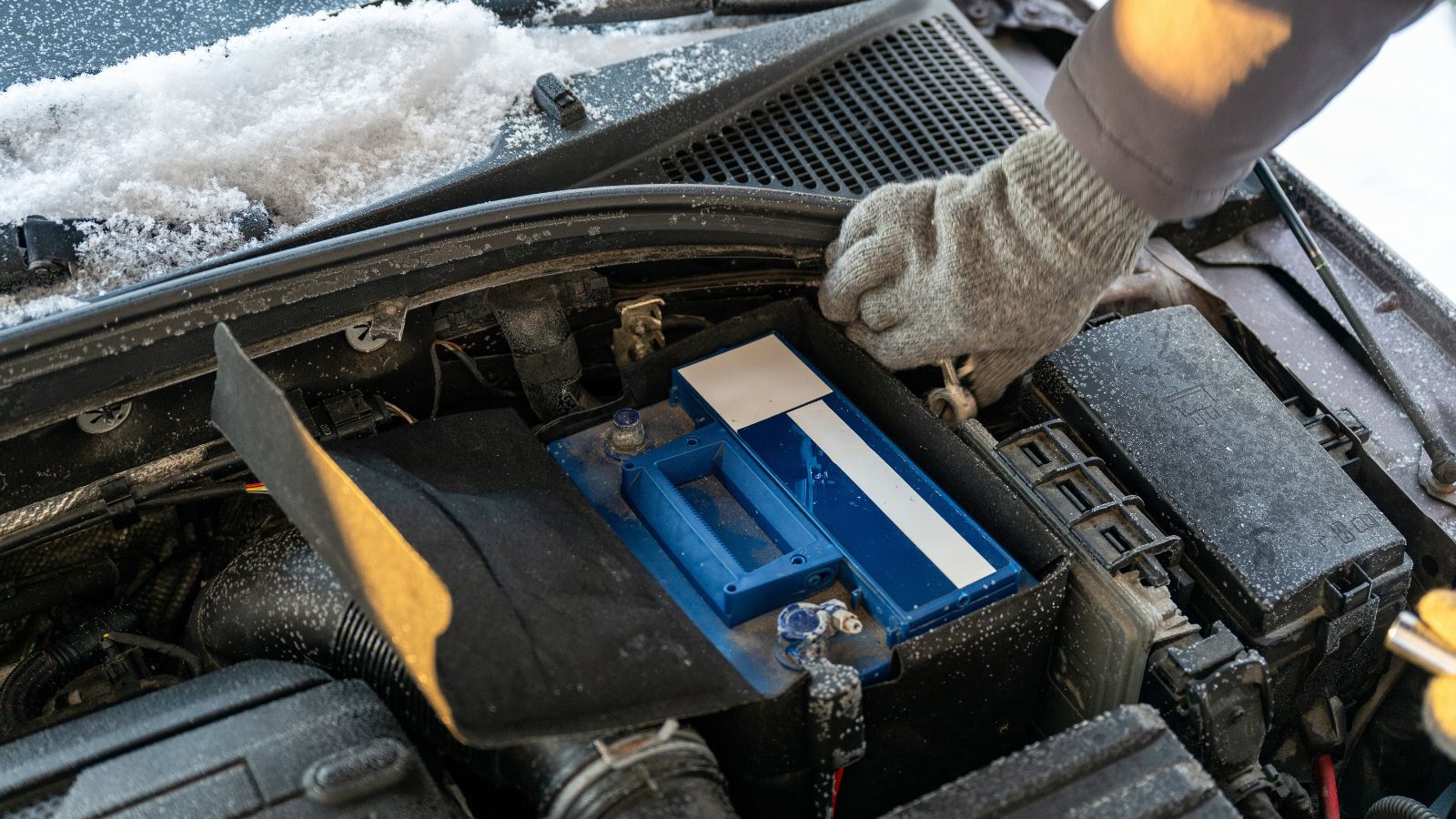
A conventional mechanical inspection is not automatically sufficient for an electric vehicle or hybrid. The high-voltage battery is central to the vehicle’s usefulness and value, so its condition deserves specific attention. Consumer Reports recommends checking battery health when purchasing a used EV and notes that diagnostic methods vary by manufacturer.
Battery degradation is especially important on older, shorter-range EVs because a loss of capacity can make an otherwise functional vehicle much less practical. Some models display battery-health information directly, while others require manufacturer-specific diagnostics, onboard tests, or specialized third-party tools. Consumer Reports also notes that many EV battery warranties extend around eight years or 100,000 miles, although exact terms, capacity guarantees, transfer rules, and exclusions differ by manufacturer. An inspector familiar only with gasoline vehicles may successfully check tires, brakes, and suspension while providing little insight into the car’s most valuable component. Used-EV shoppers therefore need a technician or service capable of evaluating battery condition, charging operation, fault codes, and remaining warranty coverage rather than relying only on the range number displayed during a short test drive.
Brakes Deserve More Than a Quick Pedal Test

A car that stops during a test drive does not necessarily have brakes in good condition. Brake pads can be close to their wear limit, rotors can be scored or uneven, calipers can bind, hoses can deteriorate, and hydraulic problems can produce a soft or unusually long pedal. Some faults create obvious noise or vibration; others become clear only once the wheels or brake components receive closer inspection.
Consumer Reports recommends having brake systems professionally checked and notes that grinding can mean pad replacement is already overdue and rotors may be suffering damage. Its maintenance guidance places typical pad-and-rotor service within a broad 25,000-to-50,000-mile range, though actual life varies substantially with driving style, vehicle weight, terrain, component design, and regenerative braking use. During a pre-purchase inspection, the useful question is not simply whether the brakes currently work. It is how much usable material remains and whether the system is wearing normally. Discovering that all four corners soon need substantial brake work can materially change what an otherwise attractive used car is worth.
Fluids and Leaks Reveal Deferred Maintenance
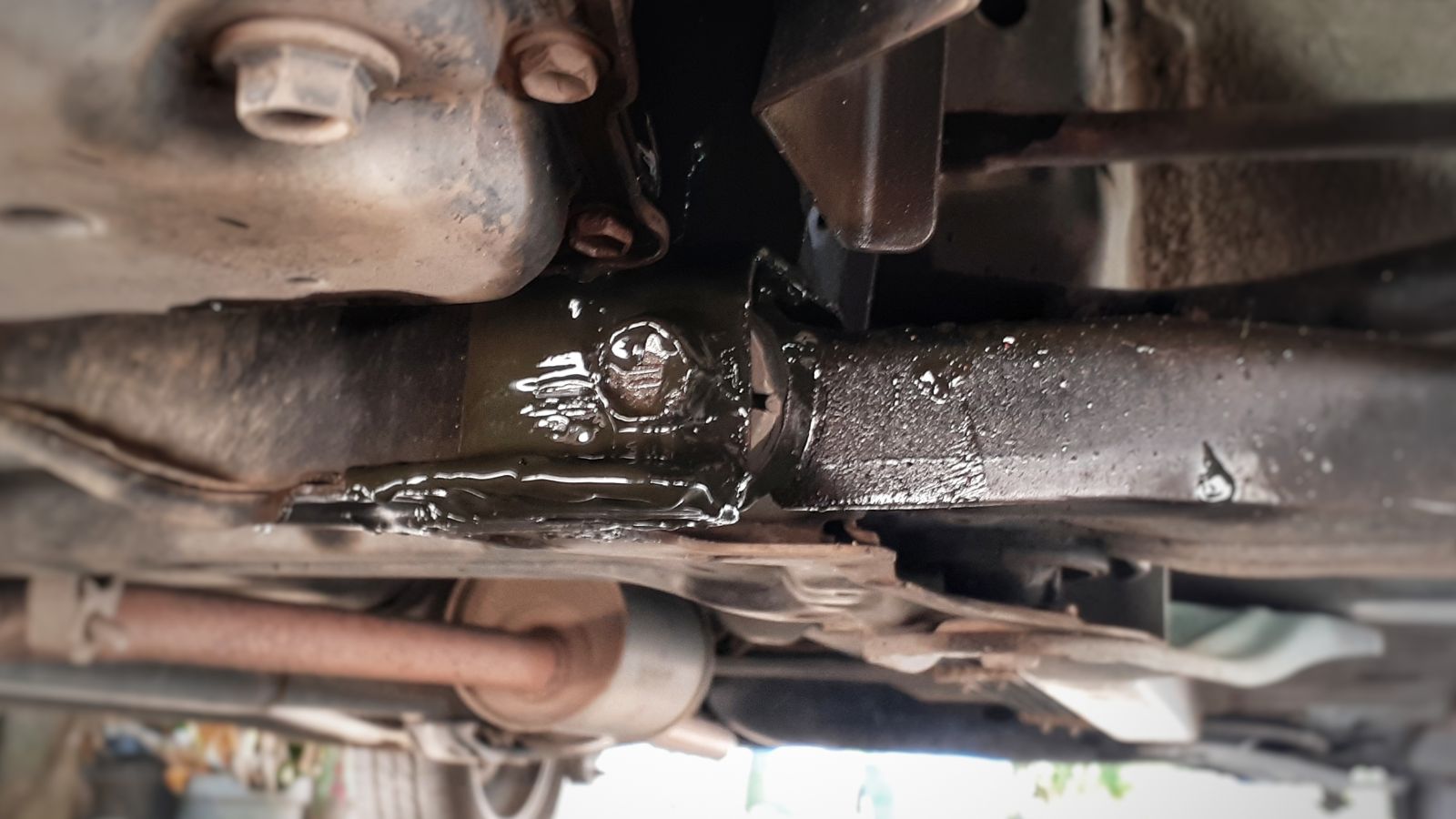
The underside of a used vehicle can reveal problems the polished engine cover never will. Oil, coolant, transmission fluid, brake fluid, and other leaks vary dramatically in seriousness, but unexplained wet areas deserve identification before purchase. AAA advises that a technician should determine what fluid is leaking, locate its source, and assess the severity rather than treating every puddle as the same problem.
Fluid condition can also expose maintenance concerns. Consumer Reports recommends checking appropriate fluid levels and watching for signs such as gritty engine oil, abnormal contamination, burned-smelling transmission fluid, or coolant that appears rusty or milky. Some newer cars use sealed transmissions and model-specific service procedures, making professional evaluation even more useful. A small seep from an inexpensive gasket is very different from coolant loss associated with internal engine trouble. Likewise, clear water dripping after air-conditioner use may simply be normal condensation. The purpose of inspection is not to panic over every stain; it is to identify what is normal, what requires routine service, and what could become a major repair obligation immediately after purchase.
History Reports and Recall Checks Are Only Half the Job

Vehicle-history reports are extremely useful, but treating one as a mechanical inspection creates another expensive blind spot. The FTC explicitly warns that a history report is not a substitute for an independent inspection because reports may identify events such as accidents, salvage branding, or flood history while typically providing far less information about the vehicle’s present mechanical condition.
VIN-based recall checks fill another piece of the puzzle. NHTSA allows shoppers to search a vehicle’s unique 17-character VIN for certain unrepaired safety recalls. Its database also has limitations: a VIN search does not display recalls already repaired, some newly announced recalls may take time to populate, and other categories of campaigns may not appear in the same way. The best buying process therefore layers evidence rather than relying on one document. The history report explains parts of the past, a recall search identifies certain outstanding safety actions, maintenance records show what owners say was serviced, and an independent inspection examines what actually exists on the vehicle today.
A Written Repair Estimate Changes the Deal

The strongest inspection does more than produce a verbal verdict of “good” or “bad.” The FTC recommends asking the mechanic for a written report identifying the vehicle and providing cost estimates for necessary repairs. Consumer Reports gives similar advice, recommending that inspection findings and estimated repair expenses be documented so they can be considered during negotiations.
That written estimate turns vague concerns into purchasing decisions. Suppose an inspection identifies worn tires, approaching brake replacement, a leaking component, and suspension work. None may justify rejecting the vehicle individually, but together they can represent a meaningful amount of near-term spending. The buyer can ask for a lower price, request repairs before completing the transaction, or decide that another vehicle offers better value. More serious discoveries—structural damage, major corrosion, severe drivetrain trouble, or significant battery degradation—may make walking away the sensible choice. That is why skipping an independent inspection can become the most expensive “saving” in the entire transaction: the fee avoided before purchase can be tiny compared with the obligations discovered afterward.
16 Costco Canada Habits That Could Be Costing Shoppers More Than They Save
The Executive Membership can feel like an obvious upgrade because the 2% annual reward sounds straightforward. For households that spend heavily at Costco Canada, the extra fee may be easy to justify. But the habit becomes costly when shoppers upgrade first and calculate later. A Gold Star Membership costs less, while Executive costs more and only pays off if eligible annual spending is high enough to offset the difference.
16 Costco Canada Habits That Could Be Costing Shoppers More Than They Save

Alanna Rosen is an experienced content writer that focuses on many EV and educational content. Her articles are regularly published on Get CyberTrucked and syndicated on large publications.