
A panoramic glass roof can transform an ordinary cabin. It brings in more daylight, gives rear passengers a better view and often makes a vehicle feel considerably more upscale. The financial side of that option receives far less attention. Unlike a small piece of conventional window glass, a modern panoramic roof may involve oversized safety glass, adhesives, seals, drainage channels, motors, tracks and interior trim that must be removed simply to reach it. On some vehicles, OEM parts alone run into thousands of dollars before labour is added. A small crack does not automatically mean the entire roof must be replaced, but the potential repair exposure is real. These 12 points explain why panoramic and full-glass roofs deserve a closer look before they become a must-have feature.
Panoramic Roofs Are Much More Than Oversized Sunroofs
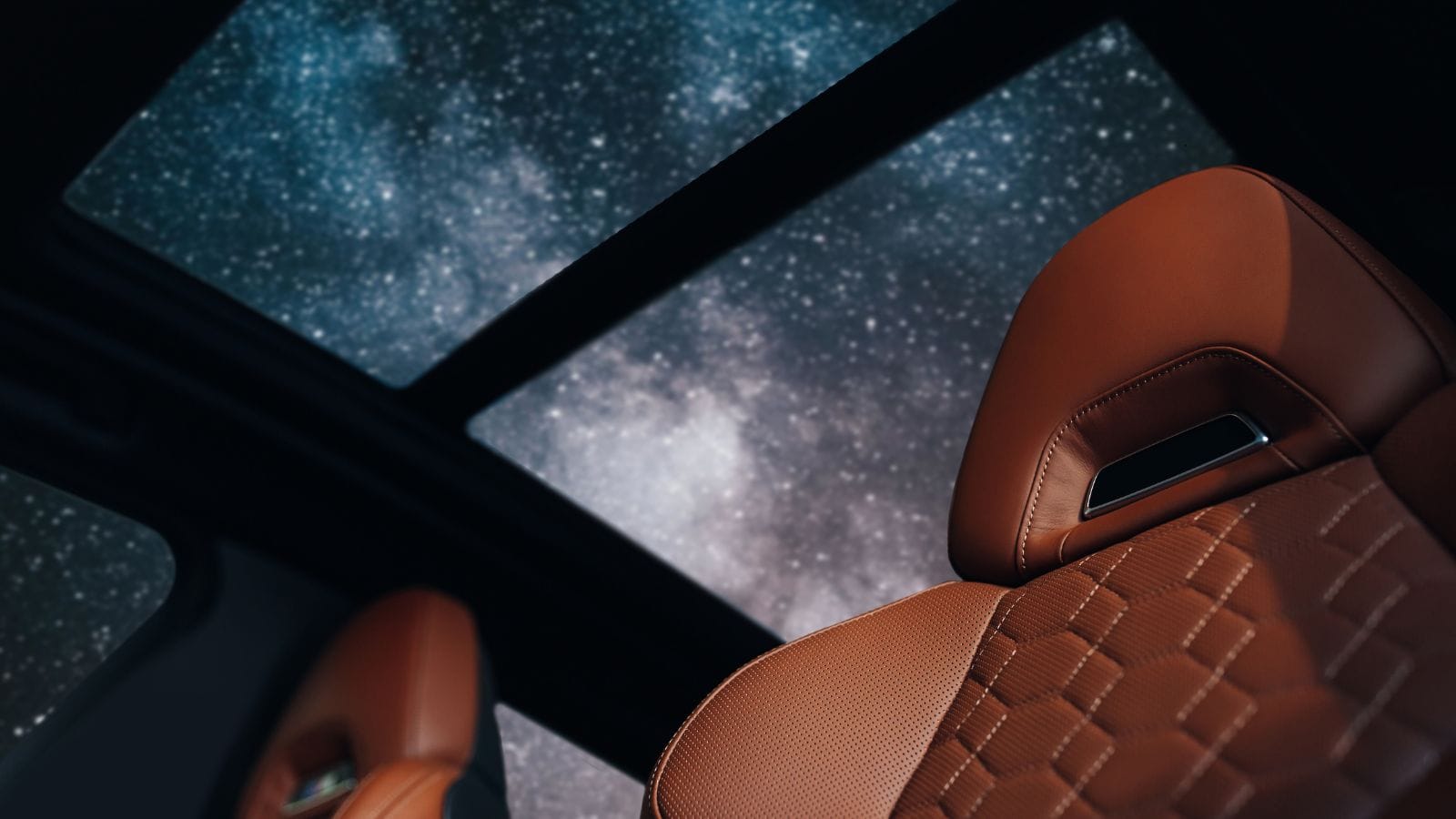
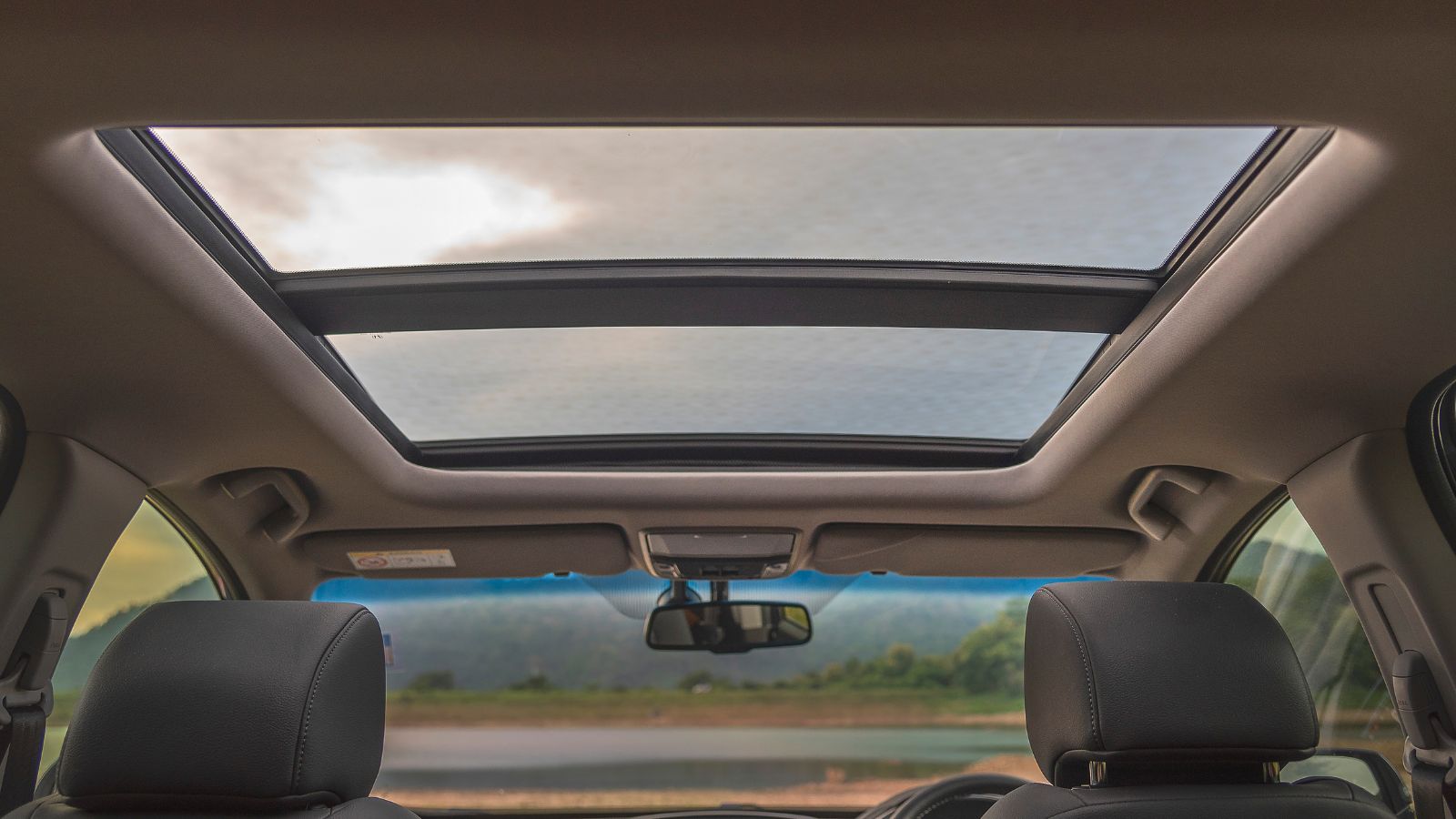
Traditional sunroofs generally create a relatively small opening above the front occupants. Panoramic designs are different. They can stretch from the front portion of the cabin toward the rear seats, while some modern fixed-glass roofs cover an even larger percentage of the vehicle. Manufacturers promote them for exactly the reasons buyers notice immediately: more natural light, a greater sense of openness and a premium-looking cabin that can make a compact crossover feel much more spacious.
The trade-off is the sheer amount of specialized glass sitting above the occupants. A conventional steel roof can collect scratches or small dents without becoming unusable. Large roof glass behaves differently once damage penetrates the surface. The system surrounding it can also be considerably more complicated than the glass suggests. Depending on the vehicle, the visible panel may sit inside a cassette containing tracks, drains, seals, shades and powered components. That is why the option that looks beautifully simple from the driver’s seat can become decidedly complicated once something goes wrong.
One Crack Does Not Always Mean a Simple Glass Repair
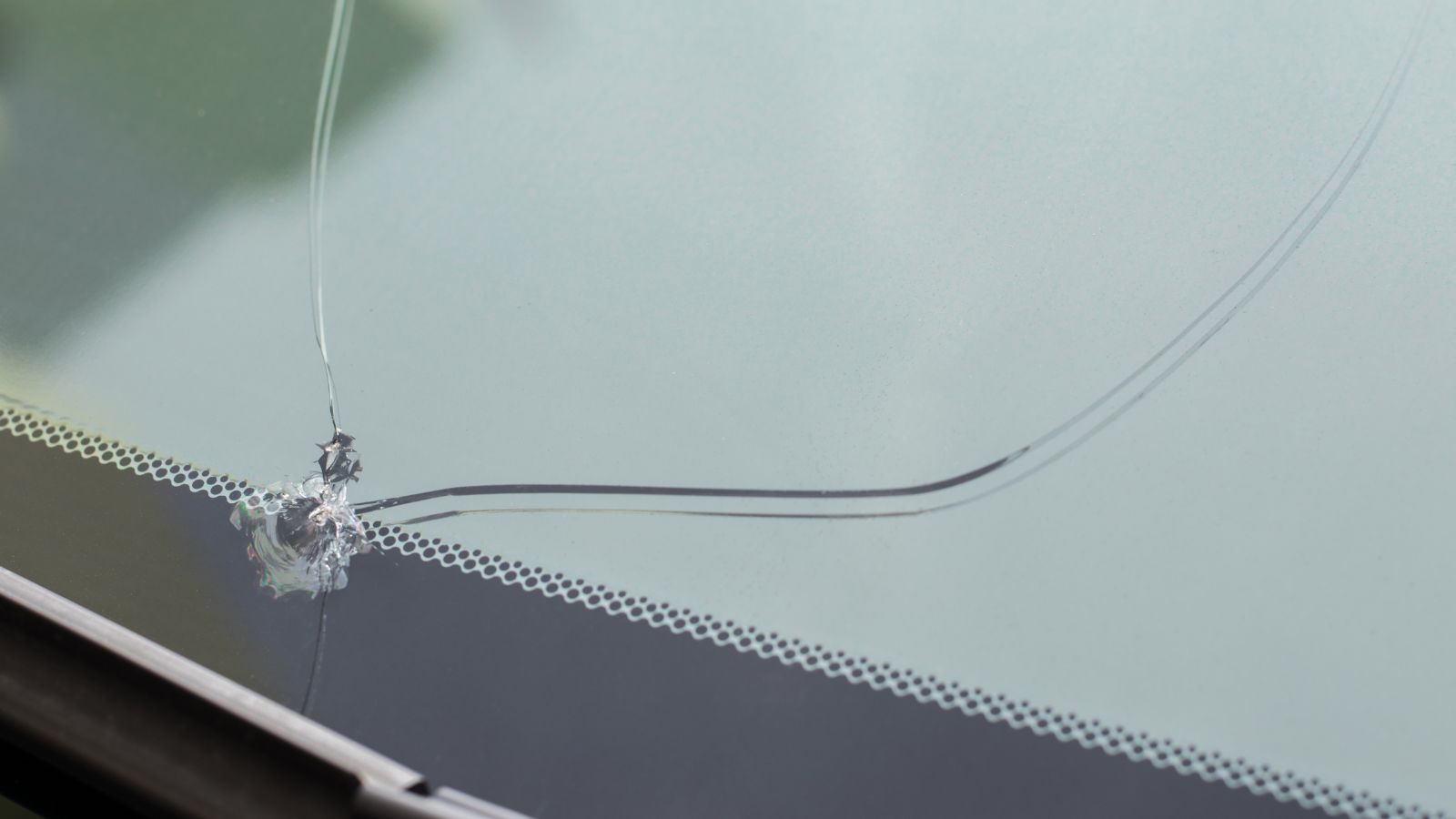
Drivers have become accustomed to windshield chips being filled with resin before they spread. That experience can create the impression that a small crack in any piece of automotive glass is equally straightforward. Roof glass does not necessarily work that way. Sunroofs can use different types of safety glazing, and repairability depends on the construction, location and extent of the damage. Tempered glass, for example, behaves very differently from the laminated windshield sitting a few feet ahead of it.
Even laminated roof panels are not automatically candidates for a quick repair. A crack reaching an edge, spreading through a large area or affecting the mounting region may lead a technician to recommend replacement rather than attempting to preserve the panel. A shattered tempered panel obviously cannot be patched back together. That distinction is important when budgeting for the feature: the inexpensive chip-repair experience familiar from windshields cannot simply be assumed. A professional assessment is needed before deciding whether a damaged panoramic panel is safely repairable or has effectively become a replacement part.
The Glass Panel Alone Can Already Be Expensive
The price escalation can begin before a technician removes a single trim panel. Mercedes-Benz’s current parts catalogue provides a useful real-world example. For the 2026 GLC300, the listed MSRP for a panoramic sliding-roof glass panel is US$2,300. That is one component, before dealer pricing differences, taxes, adhesives and installation are considered. Less expensive vehicles can have cheaper panels, but the broader point remains: roof glass does not necessarily occupy the same price category as an ordinary side window.
Canadian pricing demonstrates how widely costs can vary. Hyundai Canada’s parts catalogue, for example, lists a moving panoramic-roof glass assembly for an earlier-generation Santa Fe at about C$804 MSRP. That is far below the Mercedes example, but still substantial before labour. Vehicle design therefore matters enormously. Owners should resist generic estimates claiming that every panoramic roof costs a particular amount to replace. The correct part number, model year and exact damaged panel can turn what sounds like one type of repair into radically different invoices.
A Complete Roof Assembly Can Move the Bill Into Another League
The financial picture becomes more dramatic when damage or mechanical problems extend beyond an individually replaceable panel. Hyundai Canada’s OEM catalogue contains complete Santa Fe panorama-roof assemblies listed at approximately C$4,440 to C$5,226, depending on the specific configuration. Mercedes-Benz lists a panoramic sliding-roof frame for the 2026 GLC300 at US$6,550 MSRP. Those are parts prices, not complete customer repair bills.
That does not mean a hairline crack automatically condemns the entire cassette. Many vehicles allow individual glass panels to be replaced while leaving the frame and mechanism intact. The expensive scenario develops when the cassette, mounting system, tracks or associated structure is also damaged, or when a particular repair procedure requires a larger assembly. This distinction is why an accurate diagnosis matters so much. A customer hearing that a “sunroof is broken” needs to know whether the shop means the glass, a moving panel, a motor, a track or the complete roof module. The names sound similar; the prices can be thousands of dollars apart.
Labour Can Be Expensive Because the Roof Is Buried Above the Interior
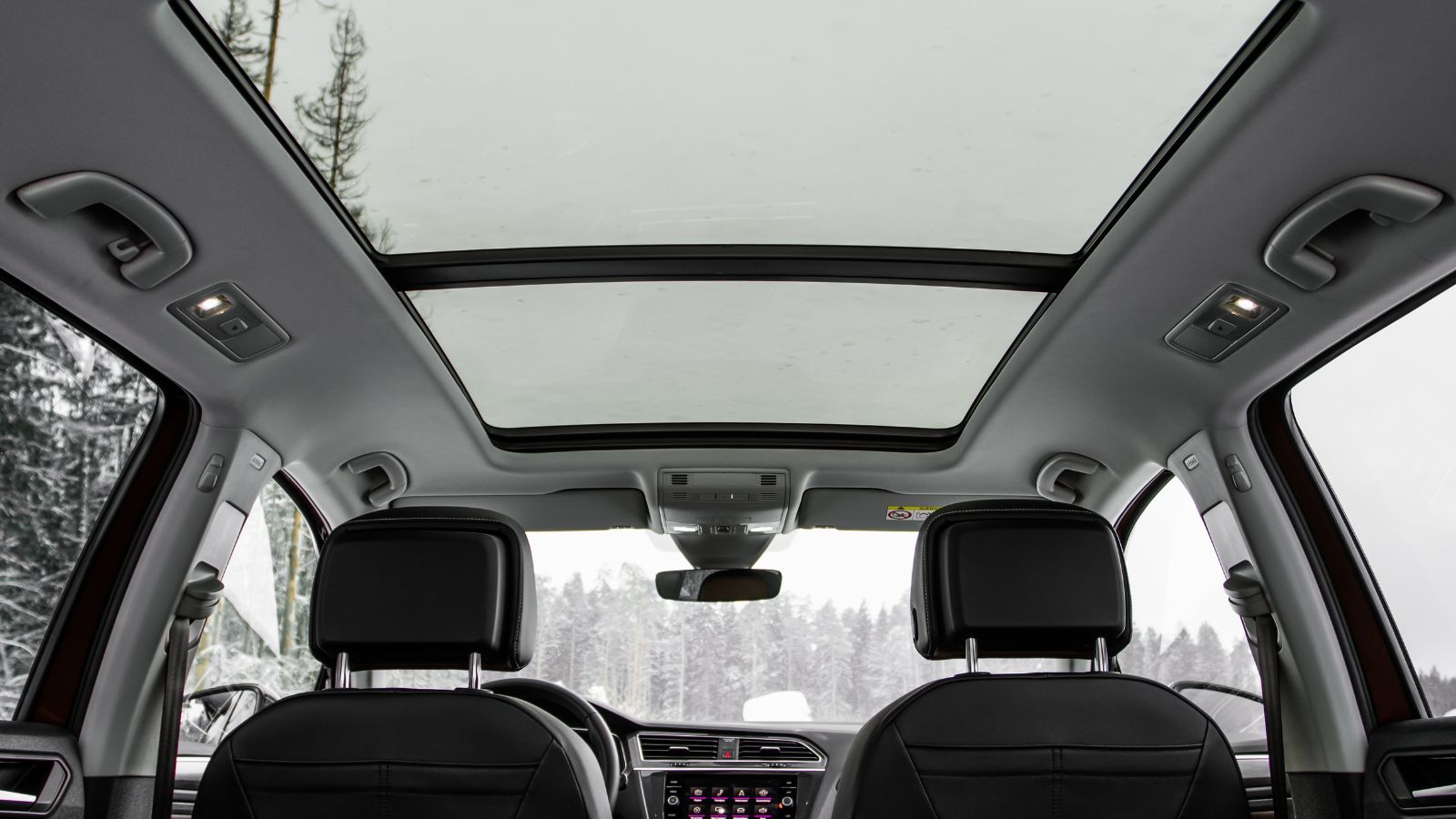
A panoramic roof appears immediately accessible from outside the vehicle, yet much of its hardware is reached from inside. Factory service information illustrates how involved that access can become. Tesla’s service procedure for removing a panoramic-roof headliner on an earlier Model S includes removing pillar trim, interior covers, the overhead console, electrical connectors and sun-visors before the technician can fully deal with components above the occupants’ heads.
Other panoramic systems require similar interior disassembly when the complete cassette is being replaced. Repair information for several vehicles describes removing multiple pillar trims, grab handles, consoles and the headliner before disconnecting drains and electrical connections. Care is needed because headliners are large, relatively delicate pieces that can crease or become stained during removal. Once the roof mechanism is accessible, technicians still have to remove, align and test the replacement components. The customer is therefore paying not only for a piece of glass but, in some cases, for hours of careful dismantling and reassembly throughout much of the cabin.
A Fixed Glass Roof Can Still Be Far From a Simple Job
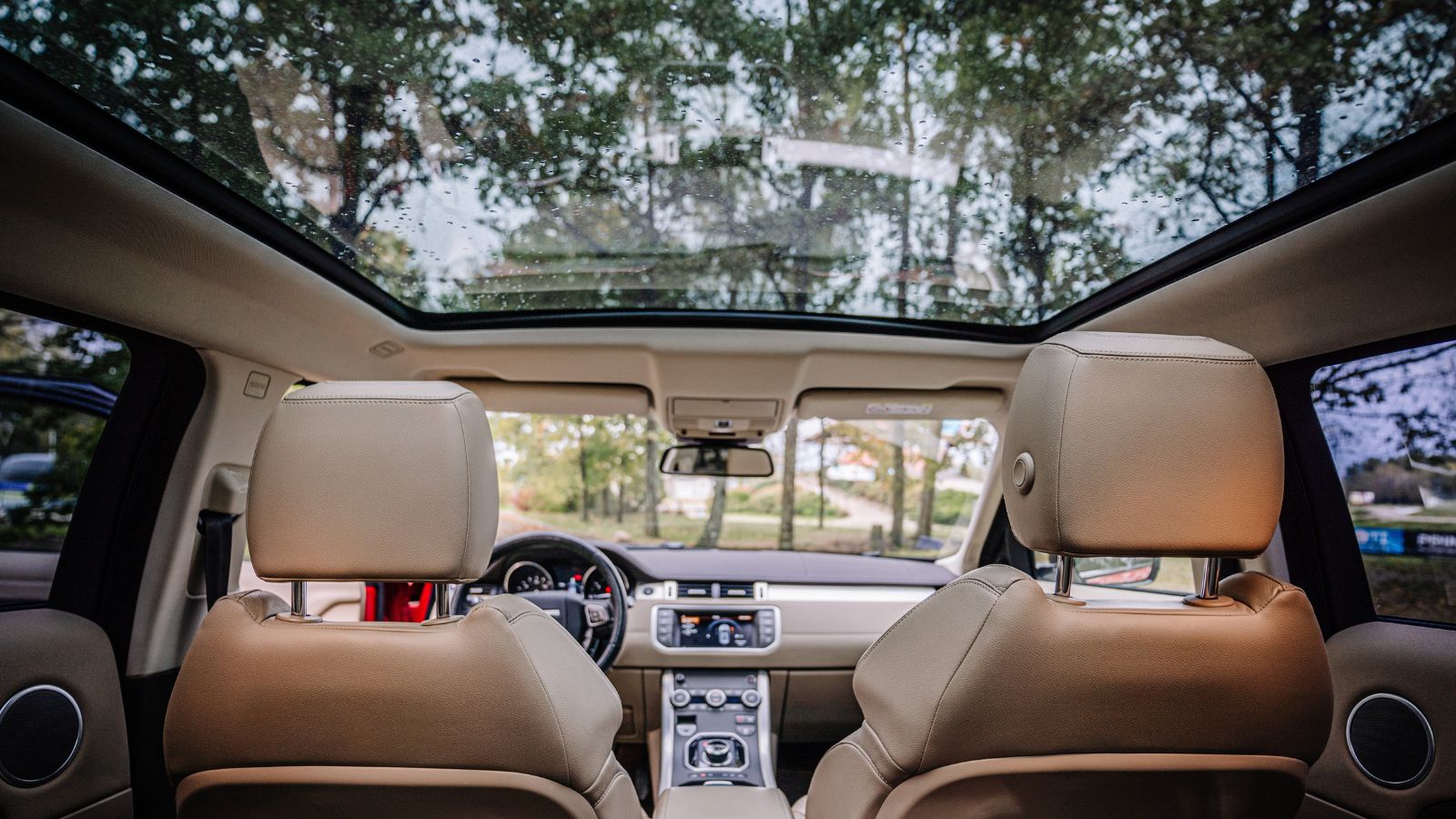
A non-opening glass roof eliminates motors and sliding tracks, so it may appear almost maintenance-free. Mechanically, it certainly has fewer moving parts. Replacement can still be a substantial operation because large fixed panels may be bonded directly to the body with automotive urethane. Tesla’s current Model Y service information, for example, specifies specialized glass-removal equipment, suction cups, preparation of the bonding surfaces, urethane primer, a precisely applied adhesive bead and careful alignment of the replacement panel.
Tesla’s 2026 Model Y Standard procedure also calls for removal of the headliner and recommends assistance when lifting the roof glass. That illustrates an important distinction: fewer moving parts do not necessarily mean an inexpensive glass replacement. A huge bonded panel has to be removed without damaging the surrounding body, prepared correctly and resealed so it remains weather-tight. The finished panel must also sit at the proper height and gap relative to adjacent bodywork. The job resembles structural automotive glazing more than swapping a conventional window.
Opening Panoramic Roofs Add an Entire Mechanical System
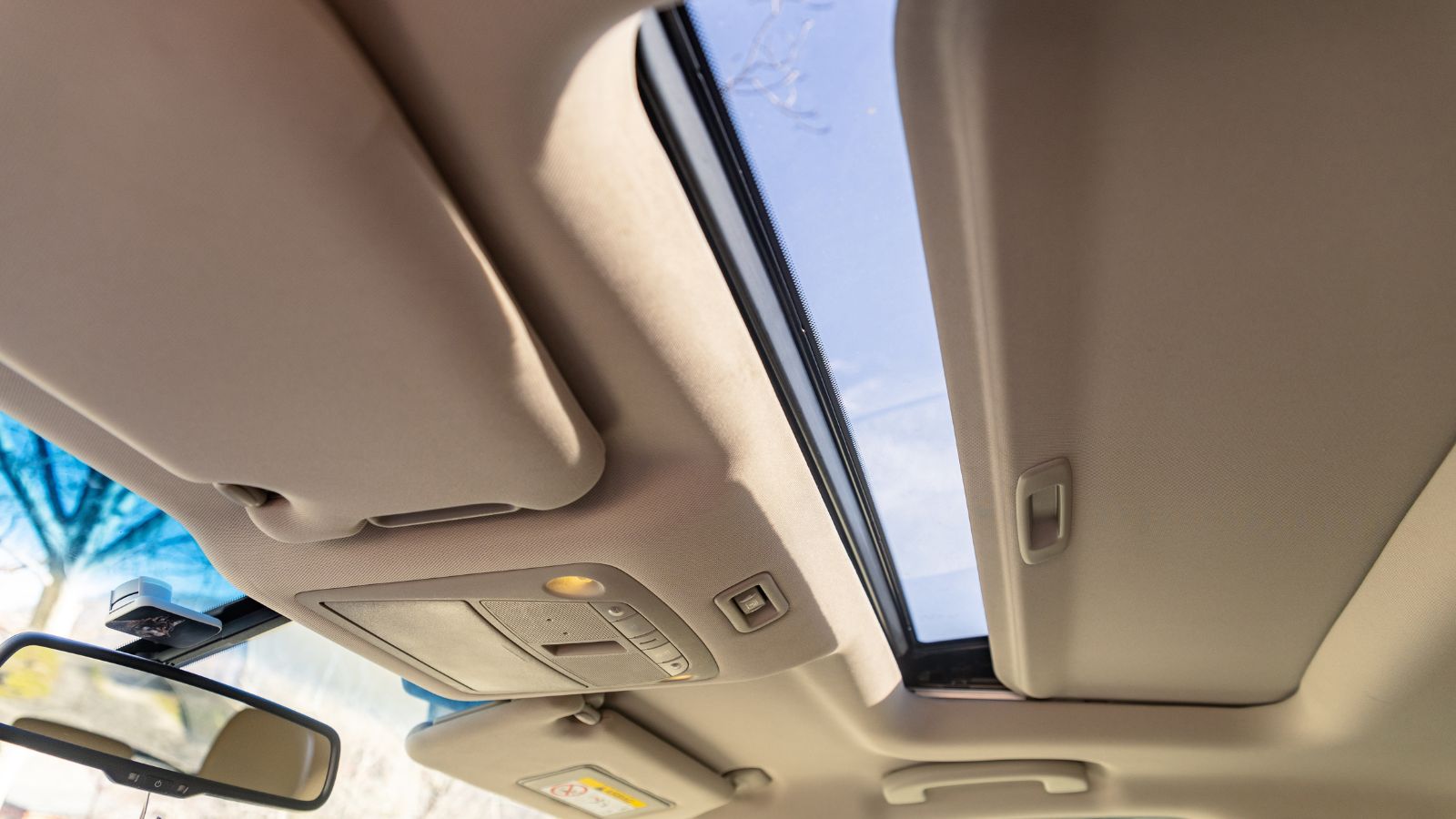
An opening panoramic roof introduces components that a fixed glass panel does not need. Depending on the design, there may be a motor, cables, sliding guides, rails, a shade, seals, wind deflectors, position stops and a large supporting cassette. Drain tubes are commonly routed from the roof frame down through the body so that water collected around the opening can exit rather than entering the cabin.
Each additional component creates another possible repair path. A roof that refuses to open may have perfectly intact glass but a failed motor or track. A panel that closes unevenly may need adjustment rather than replacement. A damaged cassette can be considerably more expensive than either problem. Kia service information for panoramic systems shows how deeply these mechanisms can be integrated into the vehicle, with some procedures requiring roof trim, pillar trim and other interior components to be removed before the assembly is accessible. The feature therefore needs to be viewed as a powered mechanical system mounted in the roof—not merely as a window that happens to open.
Tempered and Laminated Roof Glass Fail in Different Ways
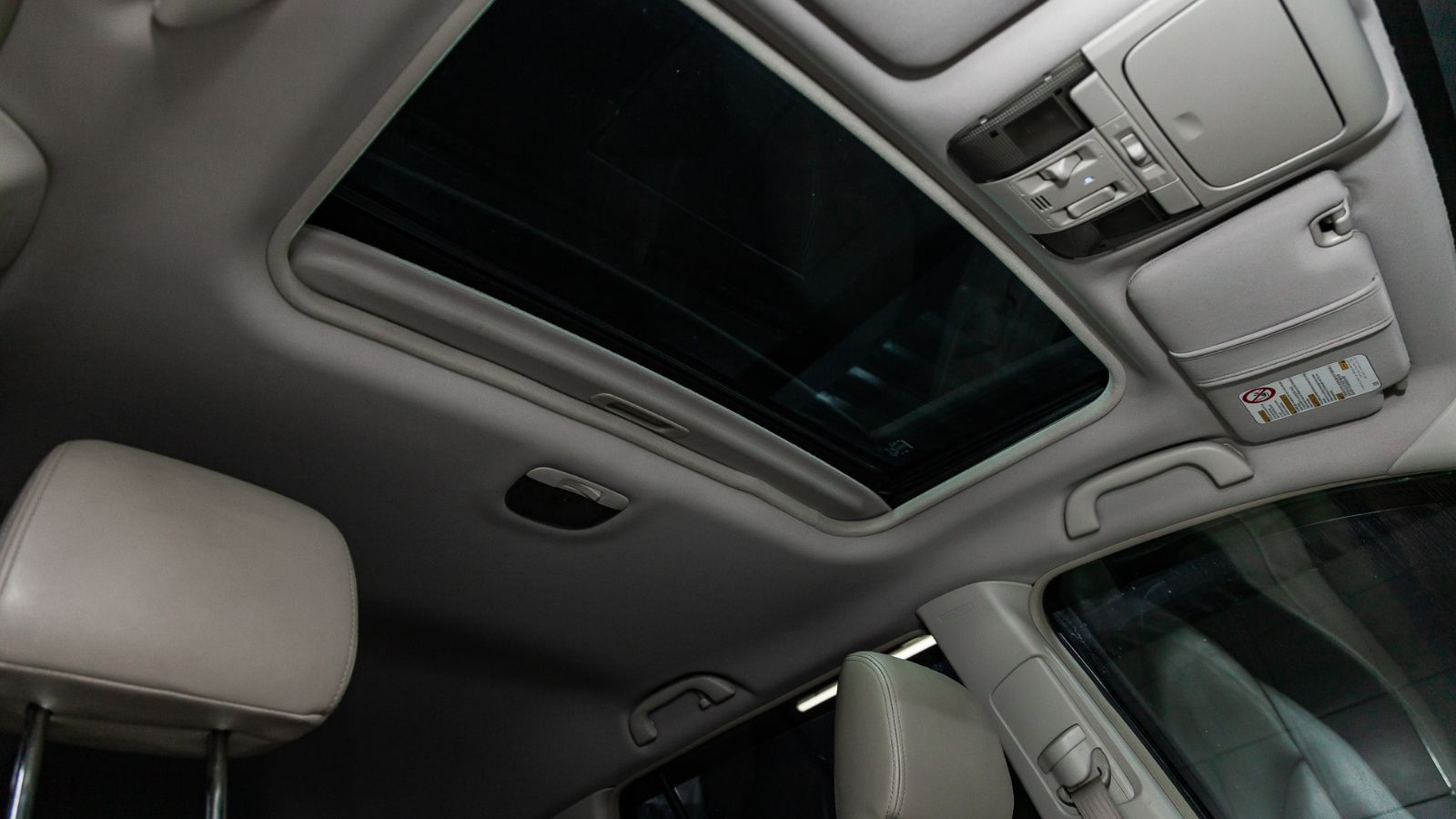
Canadian vehicle glazing must comply with safety-glazing requirements, but not every piece of automotive glass is built identically. Transport Canada specifically notes that tempered safety glass is used in vehicles and is engineered to crumble into relatively small particles when it breaks rather than producing the large jagged shards associated with ordinary household glass. Some panoramic roofs instead use laminated construction, in which layers of glass are bonded around an interlayer that helps the broken panel remain together.
That difference becomes very noticeable during failure. Tempered roof glass can fragment suddenly across the entire panel once its internal stress pattern is disrupted. Laminated glazing tends to remain held together by its interlayer even when cracks spread through the glass. Consumer Reports has documented manufacturers using laminated sunroof glass as one approach to reducing the hazard associated with glass falling into the passenger compartment. Buyers concerned about roof-glass behaviour can therefore ask what material a particular vehicle uses rather than assuming every panoramic roof is constructed the same way.
Sunroof Glass Really Can Shatter Without an Obvious Collision
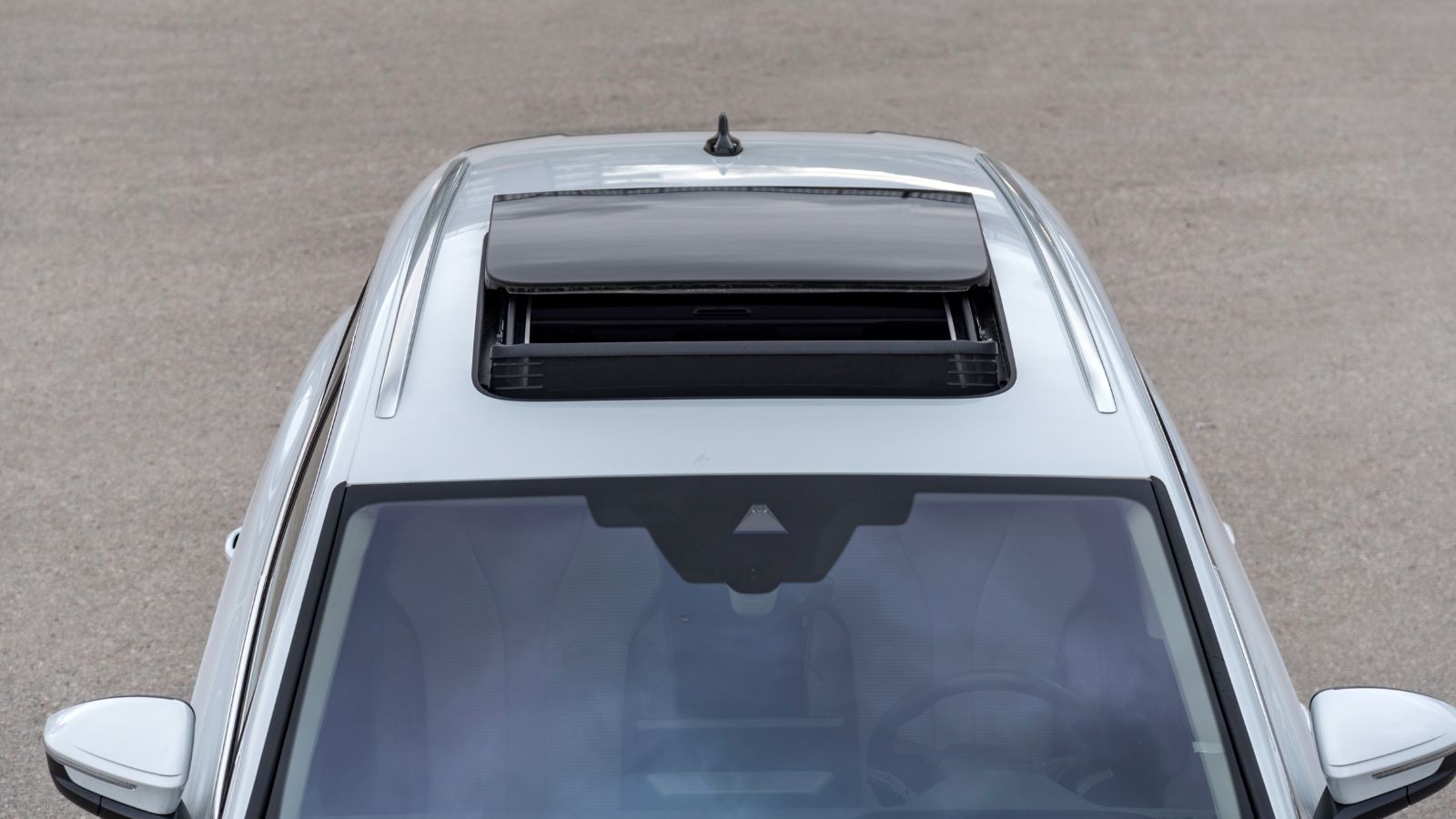
Reports of suddenly shattered sunroofs are not purely internet folklore. Transport Canada says it has received a growing number of complaints since 2012 involving sunroof glass that occupants reported shattering without an impact. The agency notes that the noise can be startling and that pieces of glass may fall into the passenger compartment. Consumer Reports has also examined hundreds of complaints involving vehicles from numerous brands and models.
There is an equally important piece of context. Transport Canada says its review found that most sunroof-glass breaks were caused by impact damage rather than a manufacturing defect. Rocks, other road debris or existing surface damage can therefore be more plausible explanations than spontaneous failure in many cases. The agency also warns that scratches can progress into cracks and potentially contribute to shattering. That nuance matters when dealing with a dealership or insurer. A true manufacturing defect, an external impact and previously damaged glass can lead to very different conversations about responsibility for the eventual repair bill.
The Drainage System Can Create Problems Even When the Glass Survives
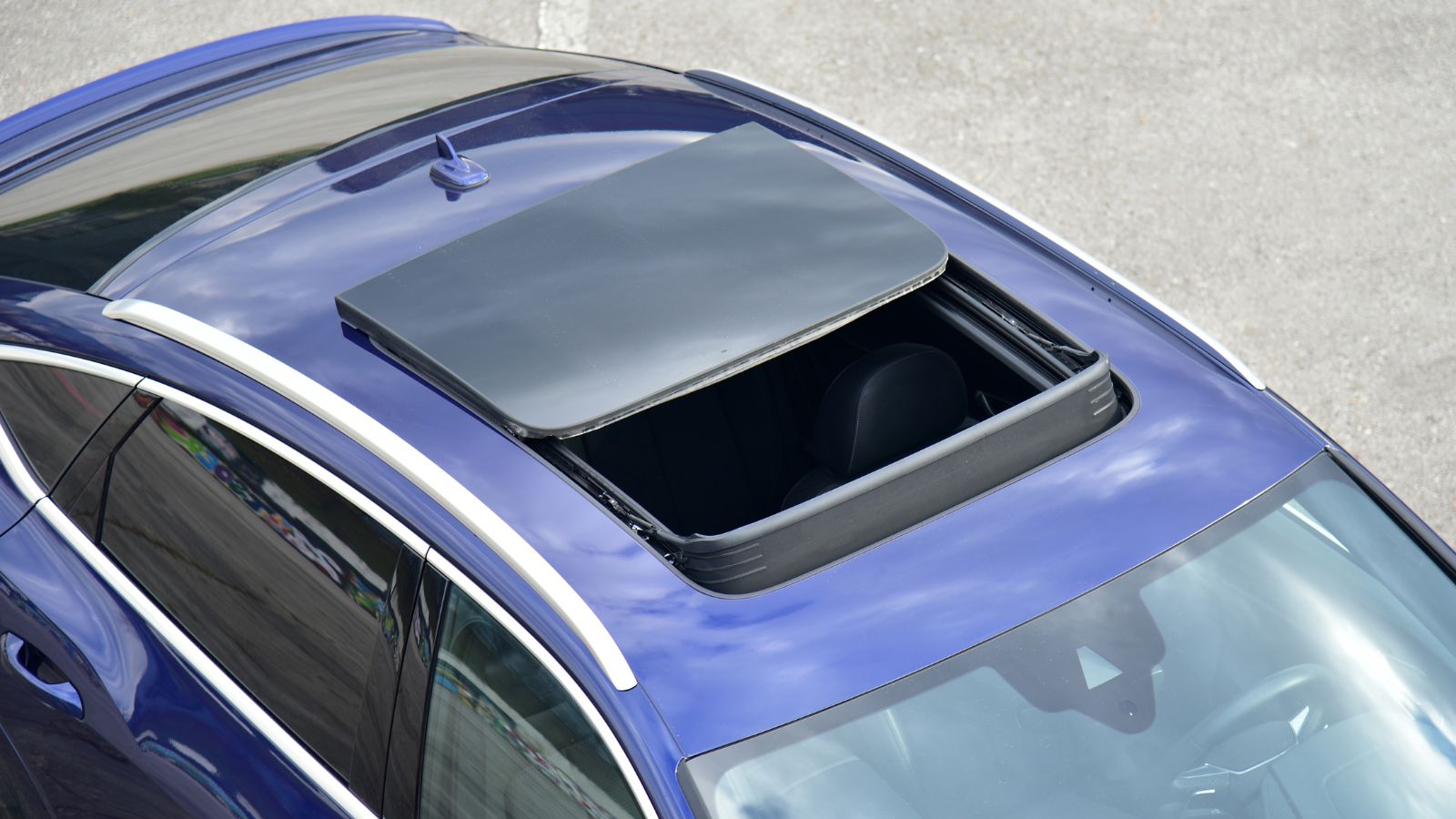
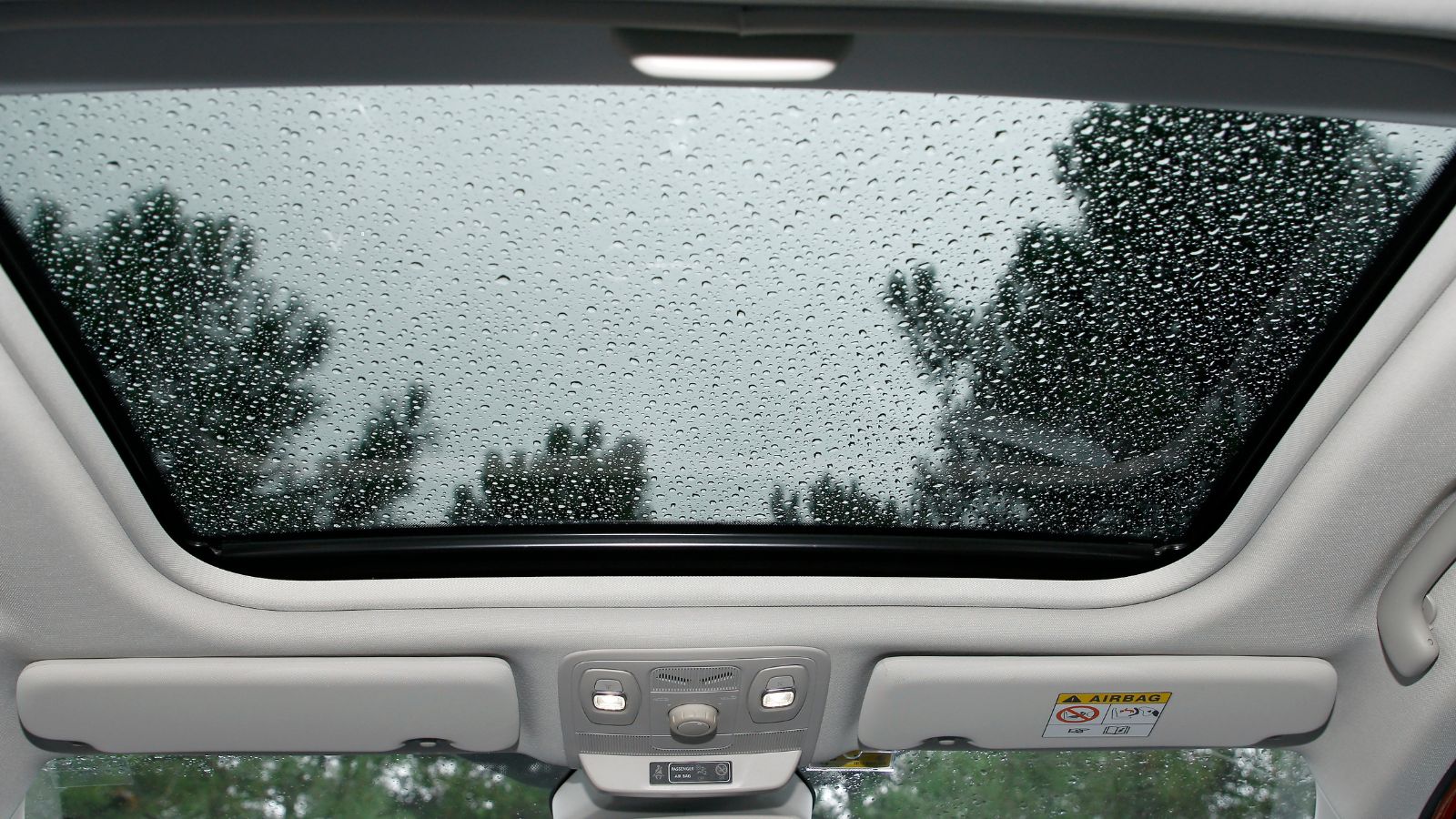
Opening sunroofs are designed around water management because their outer seals are not the only defence against rain. Water entering the roof channel is normally directed toward drains and carried through hoses down the vehicle. When those drains become obstructed, disconnected or incorrectly routed, moisture can end up inside the cabin instead. Manufacturer service communications show this is not merely theoretical.
Audi issued technical information concerning certain Q5 and SQ5 models in which blocked panoramic-roof drain hoses could allow water to back up and enter the interior, producing soaked carpets or other moisture damage. Similar service information has existed for vehicles from other manufacturers. A roof problem can therefore spread beyond the roof itself: the headliner may become stained, carpeting can become wet and connectors located near the leak path may be exposed to moisture. That is also why a leaking panoramic roof should not automatically be diagnosed as failed glass. Sometimes the less dramatic-looking drain system is actually the part demanding attention.
Insurance Can Reduce the Pain, but Coverage Needs to Be Checked Beforehand

For Canadians, the size of the owner’s eventual bill can depend as much on the insurance contract as the repair estimate. The Financial Consumer Agency of Canada explains that comprehensive automobile insurance can cover non-collision losses such as vandalism and windshield damage, although exact coverage depends on the policy. In British Columbia, ICBC’s comprehensive coverage includes damage caused by hazards such as flying objects and hail, subject to the applicable terms and deductible.
The important word is policy. A special windshield-repair program should not automatically be assumed to apply identically to a panoramic roof. The cause of loss can matter, and deductibles remain relevant when replacement rather than repair is required. Owners should ask specifically about sunroof or panoramic-roof glass instead of posing the broader question, “Do I have glass coverage?” Ideally, that conversation takes place before the vehicle is purchased. When an exposed glass panel can carry a four-figure replacement price, finding an exclusion after the crack has already appeared is an expensive way to learn what the policy actually says.
The Smartest Time to Price the Roof Is Before Buying the Vehicle
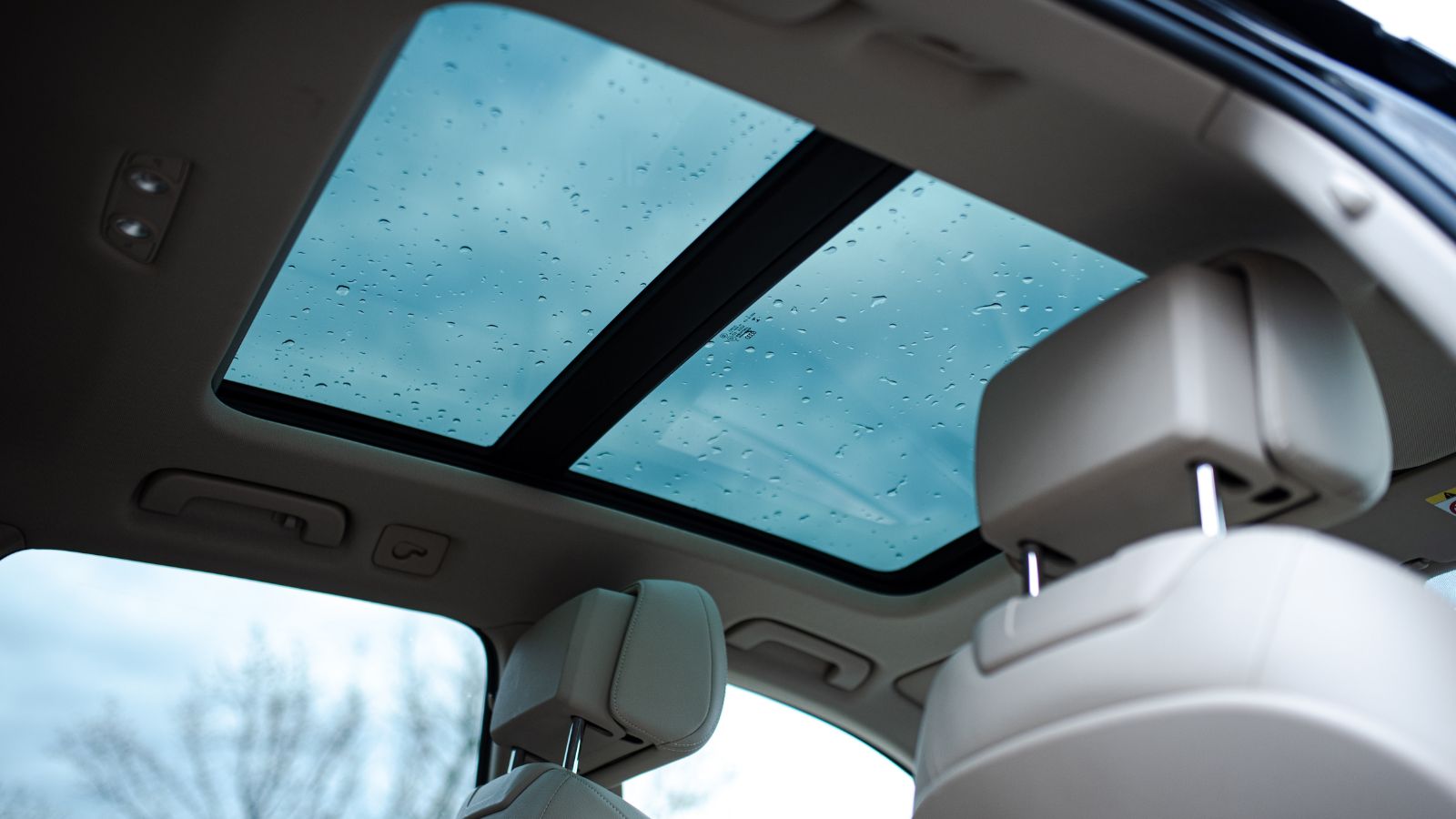
A panoramic roof can still be a worthwhile option. The problem is treating it as though the only cost is the amount printed beside the option package. Consumer Reports recommends checking the type of sunroof glass, warranty terms and insurance coverage before purchasing a vehicle equipped with one. For a used vehicle, its inspection guidance specifically recommends checking the headliner and roof trim for signs of water intrusion and making sure a sunroof opens, closes and seals properly. Canadian organizations including CAA and the Automobile Protection Association likewise emphasize independent pre-purchase inspections.
Parts availability deserves attention too. Ford’s official parts catalogue currently shows some roof-glass and panoramic-roof components on back order, demonstrating that availability can occasionally add downtime to an already inconvenient repair. The practical buying question is therefore broader than whether the cabin looks better with glass overhead. A quick call to an insurer, a replacement-part price check and a careful roof inspection can reveal what that attractive option might cost after its showroom appeal has worn off.
19 Used Cars Canadians Should Avoid in 2026 (Based on Owner Complaints)

Buying a used car in Canada can feel safe until repair bills start stacking up. Owner complaints tell a different story than glossy listings. Transmission failures, electrical problems, and weak winter reliability show up again and again in consumer reports. Many of these issues appear after warranties expire, when owners least expect them. Some vehicles look affordable upfront, but become expensive to keep on the road. Others struggle in cold weather, urban driving, or long highway commutes. Here are 19 used cars Canadians should avoid in 2026 (based on owner complaints).
19 Used Cars Canadians Should Avoid in 2026 (Based on Owner Complaints)

Alanna Rosen is an experienced content writer that focuses on many EV and educational content. Her articles are regularly published on Get CyberTrucked and syndicated on large publications.