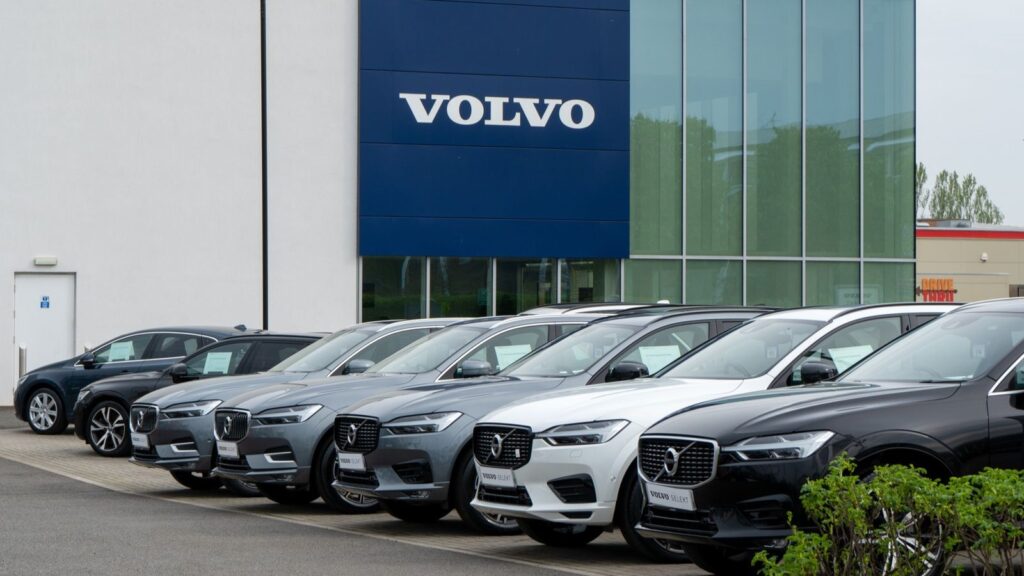
Volvo Group’s North American truck business delivered a sharp third-quarter rebound in 2026, with deliveries rising 42% from a year earlier to 13,683 vehicles. The increase came alongside stronger order intake, improving market share for both Volvo Trucks and Mack Trucks, and a broader recovery in the company’s truck operations. Yet the headline number needs context: North American deliveries for the first nine months of the year were still slightly below the same period in 2025, showing how concentrated the improvement was in the latest quarter.
The results arrive as Volvo renews its regional lineup, adds production capacity and opens order books for 2027. They also come against a heavy-duty market that remains uneven, with fleet replacement demand supporting orders while regulatory and pricing questions continue to shape purchasing decisions.
A 42% Quarterly Jump That Stands Out
Volvo Group delivered 13,683 trucks in North America during the third quarter of 2026, up from 9,622 a year earlier. The 42% increase was far stronger than the company’s global truck-delivery growth of 11%, making North America a source of volume acceleration. Worldwide, Volvo Group delivered 49,611 trucks across its brands in Q3, so North America accounted for more than one-quarter of total truck deliveries during the period. The regional gain therefore represented a share of the company’s truck activity.
The increase also matters because deliveries show when orders become completed vehicles handed to fleets and dealers. For a carrier replacing aging equipment, the practical question is not simply how many trucks were ordered, but how many actually arrived. Volvo’s Q3 figures show that its North American operations converted more demand into completed deliveries than they did a year earlier, giving the headline increase real operational weight.
The Nine-Month Picture Is More Cautious
The strongest reason not to read the 42% increase as a full-year boom is found in Volvo’s year-to-date numbers. Through the first nine months of 2026, the group delivered 35,392 trucks in North America, compared with 36,918 during the same period in 2025. That was a 4% decline. The third quarter narrowed weakness, but it was not enough to put the region ahead of last year on a nine-month basis.
That distinction matters in a cyclical commercial-truck market. A manufacturer can post a dramatic quarterly gain when production rates improve, delayed orders move through factories, or a weak comparison period falls out of the calculation. Volvo’s results suggest several moving parts were at work. The quarter showed momentum, while the year-to-date total still reflects softer conditions earlier in 2026. The more useful takeaway is acceleration rather than uninterrupted growth: North American deliveries improved sharply as the year progressed.
Orders Point to Demand Extending Into 2027
North American order intake gives the delivery increase more substance. Volvo Group booked 11,150 truck orders in the region during Q3, an 18% increase from 9,434 a year earlier. The nine-month comparison was stronger: 47,673 North American orders versus 27,894 in the same period of 2025, up 71%. Orders do not guarantee future deliveries, but they provide an indicator of manufacturer workload for coming quarters.
Volvo also reported that its 2026 production slots were almost sold out at the beginning of the third quarter and that order books for 2027 opened in early September. That helps explain why the company is discussing capacity as well as demand. A nearly filled production calendar improves visibility, but it also pressures factories and suppliers to execute without creating long lead times. The combination suggests Volvo entered Q4 with a substantial pipeline rather than relying only on trucks already delivered.
Volvo and Mack Are Both Gaining Heavy-Duty Share
The delivery rebound coincided with market-share gains for Volvo Group’s North American truck brands. Through September 2026, Volvo Trucks’ heavy-duty market share reached 9.1%, up from 8.3% a year earlier. Mack Trucks rose to 8.3% from 7.3%. Such gains can look modest, but in a market measured in hundreds of thousands of heavy trucks, incremental share can translate into meaningful volumes and long-term service relationships.
Volvo’s global brand-delivery figures add context. Volvo-branded truck deliveries increased 12% in Q3 to 31,266 vehicles, while Mack deliveries rose 24% to 6,976. Those totals are global, so they should not be treated as a breakdown of the 13,683 North American deliveries. Still, they show that both brands contributed to broader truck-volume growth. Volvo also said renewed product ranges supported its stronger North American market positions, making the share gains especially relevant during a major regional model overhaul.
The Wider Heavy-Duty Market Is Still Uneven
Volvo’s market data show that the North American heavy-duty sector had not fully returned to growth by September. Heavy-duty retail sales totaled 186,739 vehicles through the first nine months of 2026, down 6% from 199,706 a year earlier. Volvo kept its 2026 market forecast at 265,000 heavy-duty retail sales and projected 300,000 for 2027. That helps explain why manufacturers are preparing for a stronger market.
Independent estimates show the ordering environment remains unsettled. FTR put preliminary September North American Class 8 net orders at 21,300, up 18% from August and 3% from a year earlier. ACT Research produced a lower estimate of 18,700, down 9.5% year over year, according to Transport Topics. The numbers differ, but both point to a market in transition as fleets move into the 2027 model year. Volvo’s delivery surge therefore occurred inside an industry that is improving unevenly.
Three New Trucks Anchor Volvo’s Product Push
Volvo Trucks has overhauled its North American lineup rapidly. The company introduced the all-new VNL in 2024, followed by the VNR in 2025 and the VNX in October 2026. Volvo calls the VNX its third all-new North American truck in less than three years and the first designed for work on and off pavement, including construction, logging, agriculture, municipal and heavy-haul applications. Sales were scheduled to begin October 26, 2026.
The three models share a common platform that Volvo says stems from a $3 billion investment in product development and manufacturing. That gives the delivery increase a longer strategic frame overall. The VNL targets long-haul work, the VNR regional operations, and the VNX expands the push into tougher vocational segments. Product renewal does not guarantee higher sales, but Volvo says its renewed range has supported recent North American market-share gains, giving the model cycle direct relevance to the latest results.
Production Capacity Is Moving With the Order Book
Volvo Group says it is gradually increasing production capacity in North America after strong order intake during 2026. That matters because 2026 production slots were almost sold out near the beginning of the third quarter. Truck manufacturing depends on more than assembly-line speed: engines, transmissions, axles, electronics, cabs and, for many vocational vehicles, specialized bodies must arrive in the right sequence before a customer can take delivery.
Volvo Trucks identifies its New River Valley facility in Dublin, Virginia, as its primary North American assembly plant, while its uptime network includes nearly 400 authorized dealers across the region. Raising output while protecting quality and delivery timing is the operational challenge behind any sustained increase. If order intake remains strong, the next test will be whether Volvo can keep production aligned with demand without allowing long lead times, component constraints or higher costs to erode the financial benefits of additional truck volume.
Truck Revenue and Profit Rose With Volume
The stronger truck flow showed up clearly in Volvo Group’s financial results. Truck-business net sales reached SEK 81.583 billion in the third quarter, up 10% from SEK 74.196 billion a year earlier. North American truck net sales increased faster, rising 29% to SEK 24.217 billion from SEK 18.716 billion. Vehicle and service sales in the truck business both grew 8% organically, showing benefits from equipment deliveries and recurring service activity.
Profitability also improved. Adjusted operating income in the truck business climbed 34% to SEK 9.050 billion, while the adjusted operating margin increased to 11.1% from 9.1%. Volvo attributed the stronger earnings to an improved service business, higher volumes and price realization, partly offset by mix, material costs, selling expenses and freight. The combination matters because the delivery surge was financially valuable, but it did not remove the cost pressures facing commercial-vehicle manufacturers today.
The Group Entered Q4 With Stronger Cash Flow
The North American truck rebound formed part of Volvo Group’s stronger quarter. Group net sales reached SEK 119.5 billion in Q3 2026, up 8% from SEK 110.7 billion a year earlier, while organic sales growth was 7%. Adjusted operating income rose to SEK 14.693 billion from SEK 11.707 billion, and the adjusted operating margin improved to 12.3% from 10.6%. Earnings per share increased to SEK 5.29 from SEK 3.71.
Cash generation improved sharply. Operating cash flow in Volvo Group’s Industrial Operations reached SEK 7.195 billion, compared with negative SEK 1.739 billion in Q3 2025. That matters because product launches, factory investments, electrification and autonomous programs require funding. Stronger deliveries matter beyond market-share headlines. When higher volumes translate into operating profit and cash, Volvo has more room to finance its next product cycle while absorbing weaker freight demand or customer spending.
Electric and Autonomous Programs Continue Beside the Diesel Recovery
Volvo’s Q3 numbers show the company is still pursuing new powertrains while conventional heavy trucks drive business. Global orders for fully electric trucks across Volvo Group rose 163% to 1,928 units, while electric deliveries fell 17% to 878. Volvo-branded electric orders rose to 789 from 287, but deliveries declined to 196 from 358. Mack recorded 13 electric-truck orders, up from two, while delivering five electric trucks. These are global figures.
Autonomy is moving into customer operations. In October, Volvo Autonomous Solutions and Waabi began transporting Warp freight on the Dallas-Houston corridor using the Volvo VNL Autonomous, with an observer still in the driver’s seat. Heading into 2027, the question is whether Volvo can convert its larger order pipeline into sustained deliveries while preserving margins and share. Its forecast of 300,000 North American heavy-duty retail sales in 2027 gives the company a larger market to pursue if recovery continues.
