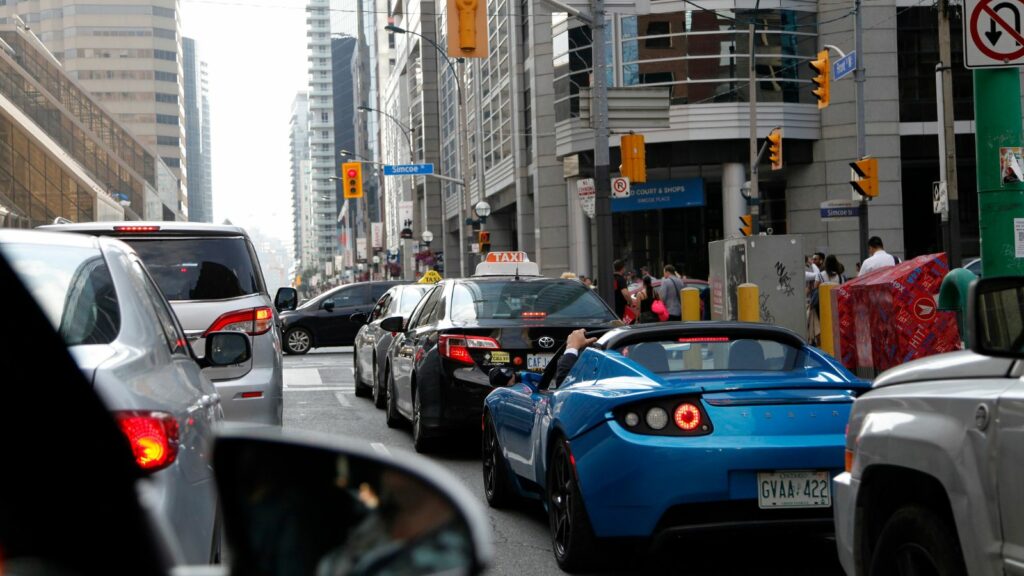
Car affordability used to sound like a ceiling: if a household could manage the payment, why not take the nicer trim, larger SUV or premium badge? Increasingly, some Canadians are treating that ceiling as something to stay well below. High vehicle prices, still-costly credit, insurance, fuel and pressure from housing have made total ownership cost more important than showroom approval. Marketplace data also points to strong demand for practical, value-oriented models rather than luxury choices. Together, 12 forces help explain why buying less car can be a deliberate financial strategy—one that trades unused capability and prestige for lower fixed costs, flexibility and peace of mind.
Approval Is Not the Same as Affordability

For years, Canadian car shopping often treated the maximum approved payment as a rough guide to what a household could buy. That logic is weakening. AutoTrader’s 2025 marketplace data showed luxury searches falling while practical, mainstream vehicles dominated actual sales, and its 2026 pricing reports still describe affordability as a major force shaping demand. A buyer who could qualify for a premium crossover may now decide that qualification is not the same thing as comfort.
That shift reflects a broader change in how households define value. The relevant question is increasingly not whether a larger or more expensive vehicle fits today’s budget, but whether it will still feel reasonable after insurance, fuel, maintenance, housing costs and other obligations arrive. Buying below the apparent ceiling creates room for expenses that are harder to predict. In that sense, choosing “less car” can represent more financial control over time rather than a sacrifice.
High Prices Changed What “Normal” Means

Vehicle prices have eased from recent peaks, but that does not mean they are cheap again. AutoTrader reported average new-vehicle pricing above $63,000 at the end of 2025, with used vehicles averaging more than $35,000. Its Q2 2026 update said both categories remained well above pre-pandemic levels even after year-over-year declines. For many households, the psychological definition of a “normal” vehicle purchase has therefore changed.
That matters because an upgrade that once looked modest can now add thousands of dollars before financing costs are considered. Moving from a mainstream compact or small crossover to a larger, higher-trim model may deliver more power, space, wheels and equipment, but the extra outlay competes with savings goals and other bills. Some buyers are responding by separating needs from wants more aggressively. A vehicle that comfortably handles commuting, groceries, children and weekend trips can look smarter than paying for capability that is rarely used.
Interest Makes Every Upgrade More Expensive
Borrowing costs make every step up in vehicle price more noticeable. Bank of Canada data showed the average rate on funds advanced for auto loans at chartered banks was 6.55% in June 2026. At that rate, financing an extra $10,000 for 72 months adds roughly $168 to the monthly payment and more than $2,100 in interest over the term, assuming a standard fully amortizing loan.
That arithmetic can turn an attractive upgrade into a recurring budget commitment. The leather package, larger engine or premium badge is not simply a one-time $10,000 decision when it is financed; it follows the household for years. Buyers with strong credit and adequate income may still decide the trade-off is poor. Choosing a cheaper vehicle can shorten the loan, reduce interest expense or leave room for investing and emergencies. Approval determines what a lender will finance, but it does not determine what feels financially efficient.
Long Loans Can Hide the Real Cost

Long loan terms can make expensive vehicles appear manageable because the payment is spread across more years. The Financial Consumer Agency of Canada warns that terms of 72 months or longer reduce payments but increase total interest and can leave borrowers owing more than the vehicle is worth. Its example shows a $25,000 purchase at 5% costing $26,974 over 36 months versus $29,681 over 84 months.
For buyers who have watched long financing become routine, deliberately choosing a cheaper car offers another path: keep the payment manageable without stretching the debt deep into the vehicle’s life. That can matter when circumstances change, because long loans reduce flexibility around selling or trading. A household may technically afford an 84-month payment on a larger SUV, yet prefer a smaller model that can be financed over five years. The monthly difference may be tolerable, while the freedom from prolonged debt feels more valuable.
Housing Is Competing for the Same Dollars
Housing costs are another reason a comfortable car budget may no longer feel comfortable. The Bank of Canada’s 2026 Financial Stability Report said Canadian household debt remains elevated and that the last group of pandemic-era five-year fixed mortgages will renew over the next 12 months. That group represents about 12% of outstanding mortgages and is expected to face average payment increases of roughly 15%.
A household anticipating a higher mortgage payment has a strong reason to avoid using every dollar of borrowing capacity on a vehicle. Even renters and mortgage-free households can be influenced by the same cost-of-living environment, because transportation competes with housing, food and savings for monthly cash flow. A smaller payment can function as a buffer before a renewal, move or rent increase. In that context, buying less car is not necessarily pessimism; it is a way of keeping one large fixed expense from crowding out another.
Financial Flexibility Has Become More Valuable

Economic uncertainty changes the value of spare cash. TransUnion’s Q2 2026 Canada Consumer Pulse Study found that 86% of respondents ranked inflation among their top three household financial concerns, while half said their income was not keeping pace with inflation. More than half, 51%, reported cutting discretionary spending. Those results do not describe every buyer, but they show why even financially stable households may be more protective of monthly flexibility.
A vehicle payment is unusually visible because it arrives every month whether the economy feels calm or unsettled. Choosing a less expensive model can preserve room for job changes, childcare, repairs or an emergency fund without requiring a household to give up driving altogether. For a buyer deciding between two perfectly workable vehicles, that flexibility can carry more value than extra horsepower or a larger screen. The purchase becomes less about maximizing lifestyle today and more about protecting options tomorrow.
Insurance Rewards Looking Beyond the Payment

Insurance is another cost that can widen the gap between what buyers can finance and what they want to own. Insurance Bureau of Canada notes that a vehicle’s make, model, year, value, theft exposure and potential repair costs can all affect premiums. It also warns that vehicle technology can increase repair costs, even when those features add convenience, safety or comfort.
That gives buyers another reason to price insurance before choosing the biggest vehicle their budget permits. Two models with similar monthly loan payments can carry different ownership costs once premiums are added. A less expensive or lower-risk vehicle may leave more breathing room each year, depending on the driver, location and insurer. The broader lesson is that affordability does not stop at the dealership. Some Canadians are increasingly treating the insurance quote as part of the purchase decision, rather than an afterthought that appears after the keys change hands.
Fuel Costs Punish Unused Capability

Fuel costs make unused size and power harder to justify. Statistics Canada reported gasoline prices were 20.5% higher in June 2026 than a year earlier, while Natural Resources Canada advises buyers to choose the smallest vehicle that meets everyday needs because smaller vehicles generally consume less fuel. Its 2026 guide shows how widely annual fuel costs can vary across vehicle classes.
That difference becomes meaningful for households that drive to work, school and activities regularly. A larger tank does not soften the cost of filling it, and extra towing or off-road capability offers little financial return if it is rarely used. Buyers who can afford a bigger vehicle may still prefer a compact car, hybrid or smaller crossover because fuel savings recur for as long as the vehicle is owned. When gasoline prices are volatile, efficiency also makes future monthly transportation costs easier to absorb without cutting other household spending.
Depreciation Makes Overbuying More Painful

Depreciation makes overbuying costly even when the payment looks harmless. The Financial Consumer Agency of Canada says a new vehicle may be worth about 25% less after its first year and can lose 15% to 25% more in each of the next four years. That decline matters when a buyer paid extra for features or capability that delivered little everyday benefit.
Depreciation also interacts with financing. A long loan can leave the owner owing more than the vehicle is worth, creating negative equity if it must be sold or traded early. Choosing a less expensive vehicle reduces the amount of money exposed to that risk initially. The point is not that every premium car is a poor purchase; many owners find comfort, performance or design fully worth the cost. But buyers who mainly need reliable transportation can reasonably decide that depreciating fewer dollars is a better use of their income.
Urban Life Can Make Smaller Vehicles Enough
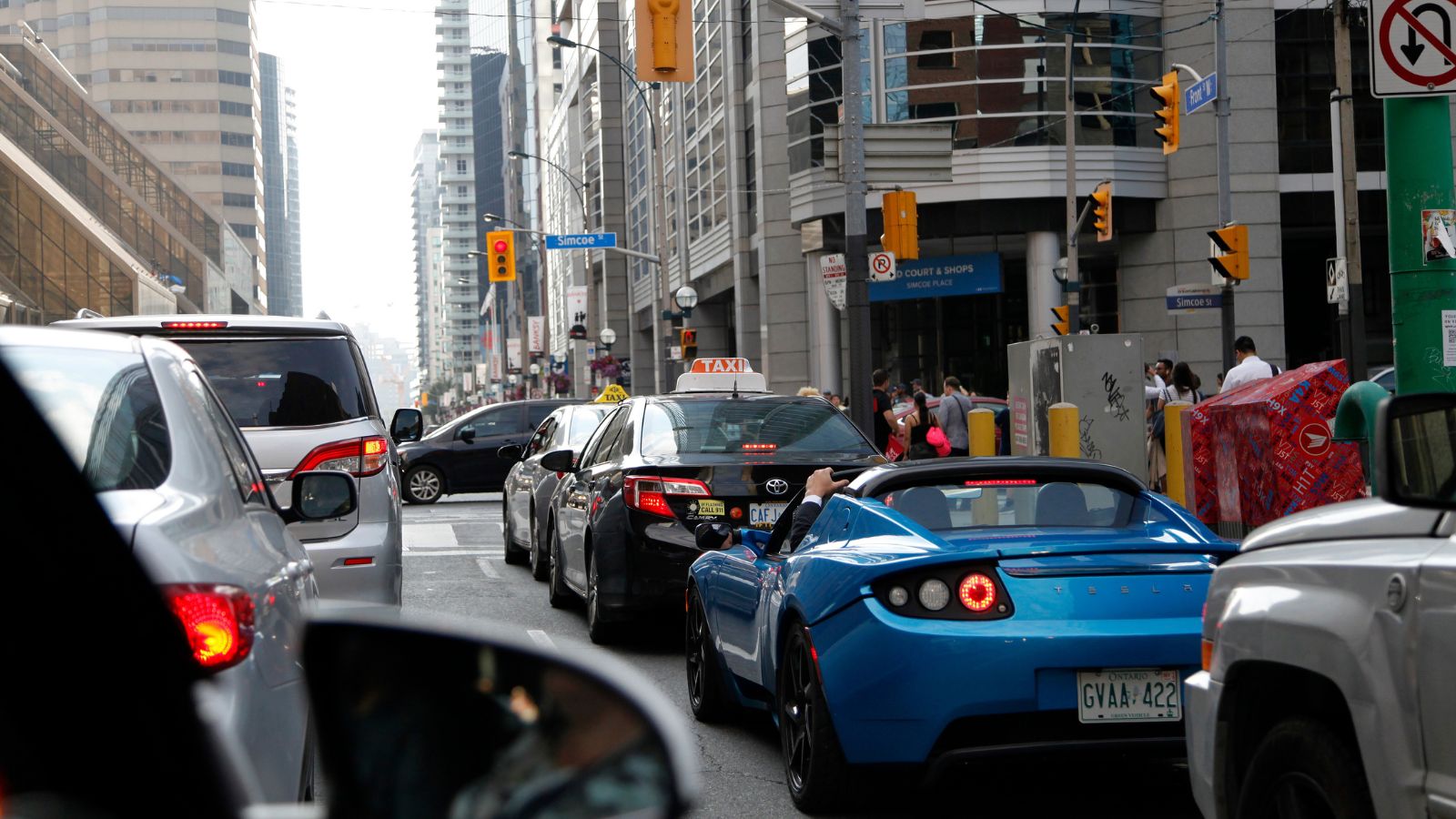
Canadian driving patterns can make a smaller vehicle sufficient more often than expected. Statistics Canada reported that 73.7% of Canadians lived in large urban centres in 2021. Among people who commuted by car in May 2024, 89.5% drove alone, and the average car commute lasted 26.4 minutes. That helps explain why maximum capacity is not always used on a typical weekday.
For an urban household, a compact sedan, hatchback or small crossover may handle the routine jobs while being easier to park and requiring less parking space. Larger vehicles still make sense for big families, towing, remote travel or bulky equipment, but capability has value only when it serves a real need. A buyer with enough income for three rows of seating may choose two rows because most trips involve one or two people. In that case, “less car” is simply closer to the amount of car actually used daily.
Mainstream and Used Choices Feel More Rational
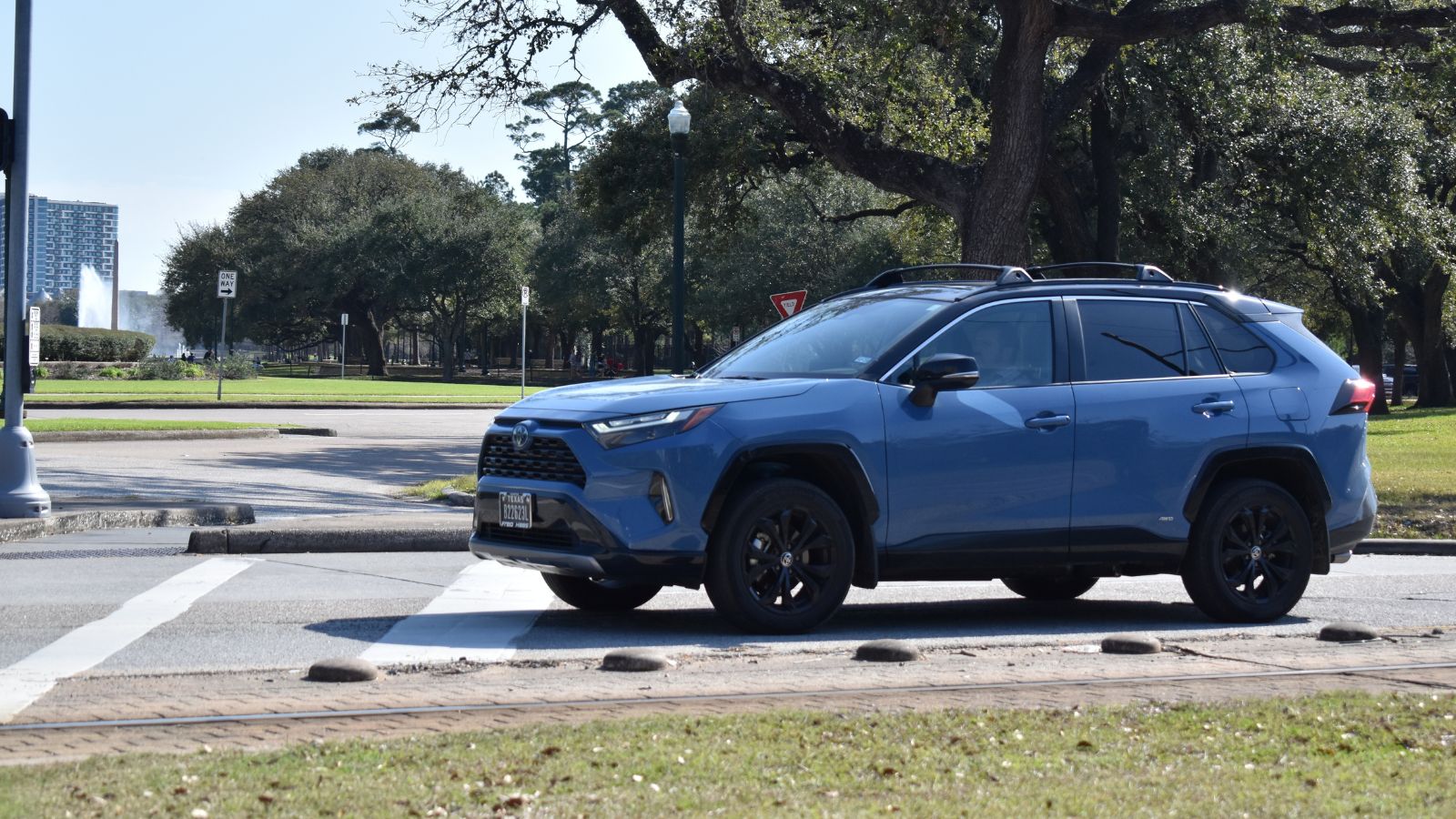
Mainstream and used vehicles can make restraint feel less like compromise. AutoTrader’s 2025 marketplace data found the Ford F-150, Toyota RAV4 and Honda Civic were its most-searched models, while the F-150, RAV4 and Honda CR-V led platform sales. No luxury vehicle appeared among its ten best-selling models, though premium brands remained prominent in searches.
The price gap reinforces that logic. AutoTrader put average new-vehicle pricing at $63,665 in November 2025, compared with $35,494 for used vehicles. By Q2 2026, prices in both categories had declined year over year and market conditions were described as stabilizing, but affordability remained a major consideration. A household able to buy new may choose a lightly used model, or a lower trim, and redirect the difference elsewhere. The decision is not about accepting worse transportation; it can be about refusing to pay a premium for novelty, badge prestige or equipment that adds little daily value.
A Cheaper Car Can Buy More Options

Buying below the maximum budget creates options that do not appear on a window sticker. The Financial Consumer Agency of Canada advises buyers to think beyond the monthly payment and include interest, maintenance, insurance and other ownership costs when deciding what they can afford. TransUnion’s 2026 consumer research shows many Canadians cutting discretionary spending and approaching new credit cautiously amid inflation concerns.
A cheaper vehicle can turn that caution into practical flexibility. The money not committed to a payment can support an emergency fund, retirement savings, home repairs, travel, debt repayment or a wider monthly margin. That does not make expensive vehicles irrational; people can reasonably spend more on something they use every day. Some households no longer treat unused borrowing capacity as money waiting to be spent. For them, the smartest car may be the one that leaves the most room for everything that happens after the purchase itself.
19 Used Cars Canadians Should Avoid in 2026 (Based on Owner Complaints)

Buying a used car in Canada can feel safe until repair bills start stacking up. Owner complaints tell a different story than glossy listings. Transmission failures, electrical problems, and weak winter reliability show up again and again in consumer reports. Many of these issues appear after warranties expire, when owners least expect them. Some vehicles look affordable upfront, but become expensive to keep on the road. Others struggle in cold weather, urban driving, or long highway commutes. Here are 19 used cars Canadians should avoid in 2026 (based on owner complaints).
19 Used Cars Canadians Should Avoid in 2026 (Based on Owner Complaints)

Alanna Rosen is an experienced content writer that focuses on many EV and educational content. Her articles are regularly published on Get CyberTrucked and syndicated on large publications.