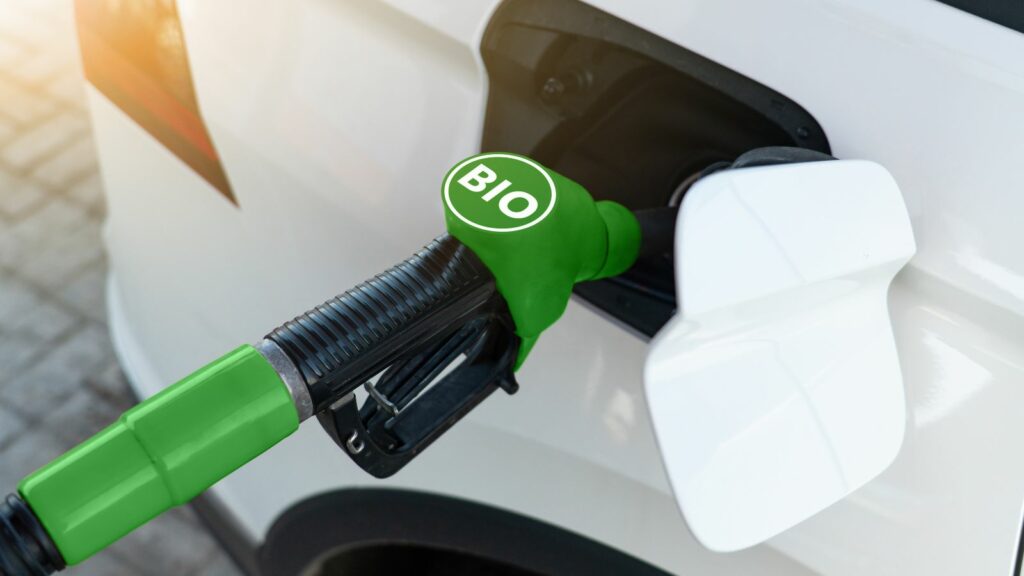
A part of the automobile most drivers rarely see is becoming a test case for how the industry can reduce its dependence on fossil-based plastics. Kautex Textron is preparing to begin production of bio-based plastic fuel tanks in Canada and the United States in 2026, taking its Green+ sustainability program from development into real-world manufacturing. The company says certified manufacturing sites will support traceability of the materials involved. The move is notable because fuel tanks must meet demanding requirements for durability, fuel-vapour control and, increasingly, hybrid-vehicle pressure management. It also shows how suppliers are trying to lower the environmental footprint of vehicles that still carry liquid fuel, even as investment in battery-electric technology continues.
From Green+ Concept to North American Production
Kautex’s move became public in an August 21, 2026 industry report stating that production of its bio-based plastic fuel tanks is scheduled to begin during 2026 in both the United States and Canada. The manufacturing locations are described as certified sites intended to provide material traceability. That is a meaningful step beyond producing prototypes or displaying lower-carbon materials at trade events: components destined for automotive production must be manufactured consistently, documented through the supply chain and capable of satisfying customer quality systems. The publicly available information reviewed for this piece does not identify the vehicle manufacturers receiving the tanks, production volumes or the specific North American plants assigned to individual programs.
The fuel tanks fit into Kautex’s Green+ portfolio, which the company introduced in 2024 and subsequently moved toward commercialization. Kautex defines a Green+ product as one containing at least 20% renewable or biomass material, or at least 25% recycled material. Fuel systems are specifically included among the product families eligible for the designation. That gives the North American tank program significance beyond a one-off material experiment. Kautex is attempting to establish a repeatable product category that automakers can specify when trying to reduce the upstream carbon footprint associated with parts. It is a relatively invisible change from a driver’s perspective, but one that could become important when carbon requirements increasingly reach deep into automotive supply chains.
What “Bio-Based” Actually Means in This Case
The term bio-based can easily create the wrong mental picture. It does not necessarily mean that a fuel tank behaves like a biodegradable container or that every piece of polymer in the finished component can be physically traced to a plant. Kautex describes its Green+ biomass materials as mass-balanced, drop-in solutions. In a mass-balance system, renewable feedstock is introduced into a larger industrial production chain and its contribution is tracked and allocated through accounting and certification. That allows established chemical-production infrastructure to incorporate renewable resources without requiring completely separate factories and logistics networks for every batch of polymer.
The “drop-in” part is particularly important for an automotive application. Research on bio-based polyethylene explains that bio-PE can be chemically identical to polyethylene produced from petrochemical sources. That potentially allows manufacturers to reduce fossil feedstock use while retaining familiar material characteristics and processing methods. It also explains why the environmental claim and the physical composition of an individual product should not be treated as exactly the same thing in a mass-balance system. Certification and chain-of-custody documentation become essential. For an automaker, that means the attraction is not a radically different kind of fuel tank, but the possibility of reducing dependence on virgin fossil resources without forcing an equally radical redesign of an already highly engineered component.
A Fuel Tank Is Far More Complicated Than a Plastic Shell
Kautex has been developing plastic automotive fuel storage for decades. Its company history traces an early plastic fuel-tank prototype to 1964 and says an HDPE tank entered series production in a Volkswagen Passat in 1973. The supplier subsequently introduced co-extruded fuel tanks into North American series production in 1994. Those developments matter because modern plastic fuel tanks are not normally simple single-material containers. Textron’s technical descriptions of Kautex systems refer to multilayer construction containing high-density polyethylene, reprocessed material and an ethylene-vinyl-alcohol barrier layer designed to reduce hydrocarbon permeation through the tank wall.
Government technical material similarly describes multilayer plastic tanks using HDPE around a thin EVOH barrier, together with bonding layers. The engineering challenge is to combine shape flexibility and relatively low weight with resistance to fuel, physical impacts and the slow movement of hydrocarbons through polymer walls. That makes changing raw materials more demanding than swapping one disposable plastic for another. A supplier needs to demonstrate that lower-fossil-content materials can be integrated while preserving the performance required of the complete fuel system. For manufacturers, reliability is especially important because a tank is expected to endure years of temperature changes, vibration, road impacts and continuous exposure to fuel without compromising evaporative-emissions controls.
Canada Already Has Deep Roots in Kautex’s Fuel-System Business
Canada is not a new manufacturing territory for Kautex. The company’s own historical timeline says it entered North American manufacturing by opening its Windsor, Ontario, operation in 1986. Current certification documentation lists the Windsor operation as a location manufacturing plastic fuel-tank systems and technical parts. Kautex also has established fuel-system manufacturing operations in the United States, including facilities identified in company environmental-certification records. That existing industrial footprint is important because automotive suppliers normally have to integrate a material change into a complex network of tooling, testing, logistics and customer-specific production requirements rather than simply opening an isolated production line.
The latest bio-based tank announcement does not publicly assign the new programs to specific Canadian or American factories, so it would be premature to assume that every existing Kautex fuel-system site will participate. Still, Windsor gives the Canadian side of the announcement considerable historical context. The company has spent roughly four decades producing automotive components in the region, where manufacturing operations sit close to one of North America’s densest cross-border automotive clusters. Moving a Green+ fuel system into Canadian production therefore represents an evolution of an existing manufacturing capability rather than the arrival of an unfamiliar technology sector. The key change is in how part of the material supply is sourced and documented.
Hybrids Make Advanced Fuel Tanks More Relevant, Not Less
Electrification has not eliminated the engineering problems associated with gasoline storage. In some respects, plug-in hybrids make those problems more complicated. A conventional gasoline engine runs frequently enough for its evaporative-emissions system to purge captured fuel vapours during normal operation. A plug-in hybrid may spend lengthy periods driving electrically with its engine switched off. Industry engineering sources note that this can require additional strategies for containing vapour and controlling pressure, including sealed or pressurized tanks and fuel-tank isolation valves. The fuel system must still be safe and durable even when the engine operates only intermittently.
Kautex has been developing specifically for that challenge for years. Its corporate history says the company began producing its first pressurized hybrid-vehicle tank in 2012 and started production of an all-plastic hybrid tank using plastic stiffeners rather than metal reinforcement in 2015. Those milestones help explain why a bio-based tank program can remain strategically relevant during the transition toward electric vehicles. Hybrids still require liquid-fuel storage, but their systems can face demanding vapour and pressure requirements. If renewable feedstock can be incorporated without compromising those capabilities, the material change addresses the environmental footprint of a component that is likely to remain necessary across a range of electrified powertrains.
The Environmental Benefit Depends on More Than the Word “Bio”
Reducing the use of fossil feedstocks is the central attraction of bio-based plastics, but the environmental mathematics can be complicated. Kautex says its broader sustainability program is targeting an 80% reduction in Scope 1 and Scope 2 emissions and a 30% reduction in Scope 3 emissions by 2030. It reports that greenhouse-gas emissions had fallen 45% against its 2019 baseline by 2025. The company also says Scope 3 represents roughly 80% of its emissions, making purchased materials and other value-chain activities especially important. Changing the raw material inside products is therefore directly connected to an area that factory-energy efficiency alone cannot address.
Independent research adds an important qualification. A 2024 peer-reviewed lifecycle study examined 31 bio-HDPE sourcing scenarios and found substantial differences depending on the biomass, production location, energy supply and end-of-life treatment. Some bio-HDPE pathways had lower global-warming impacts than fossil-based alternatives, while poorly chosen combinations could perform worse in particular environmental categories. That means the new Kautex tanks should not automatically be assigned a specific carbon-saving percentage without product-level lifecycle data. Kautex has not publicly disclosed such a figure for the North American tank program in the material reviewed here. The stronger conclusion is that renewable feedstocks create an opportunity for lower fossil-resource use, while the size of the environmental advantage depends on exactly how those materials are produced.
Traceability Is Central to Making the Claim Credible
The reference to certified manufacturing sites may sound like a procedural detail, but it sits at the centre of the business case. Mass-balanced materials depend on companies being able to demonstrate how much renewable feedstock entered a production system and how the corresponding environmental attributes were allocated downstream. Unlike a visibly different natural fibre that can simply be identified in a finished component, renewable input moving through a chemical supply chain requires documentation. Without credible chain-of-custody systems, automakers would have difficulty substantiating sustainability claims attached to the parts they buy.
Kautex says sustainability requirements are increasingly appearing in requests for quotations from automotive customers, while its procurement process evaluates suppliers using factors including environmental reporting, renewable-electricity use and long-term carbon commitments. This illustrates why the fuel-tank project is as much about industrial data as polymer chemistry. An automaker purchasing thousands of components needs repeatable evidence that a claimed lower-carbon input was actually sourced according to the agreed methodology. The new Canadian and U.S. production program therefore tests whether renewable-material accounting can function reliably at automotive manufacturing scale. Success will depend not merely on whether a tank can be molded, but whether the material story behind that tank can survive scrutiny from purchasing departments, sustainability teams and customers.
The Launch Comes as Kautex Faces a Bigger Corporate Transition
The production move is also happening during an important period for Kautex’s parent company. Textron announced on April 30, 2026 that it intends to separate its Industrial segment, which consists of Kautex and Textron Specialized Vehicles, from Textron’s aerospace and defence operations. Textron said the Industrial businesses are expected to generate more than $3 billion in combined 2026 revenue and that it was examining options including a sale or a tax-free separation into a standalone public company. At the time of the announcement, Textron targeted completion within roughly 12 to 18 months, subject to approvals and other conditions.
Kautex, meanwhile, is developing products for both sides of the powertrain transition. Fuel systems remain a core business, but the supplier is also investing in thermoplastic battery enclosures and has secured North American business for an electrified-vehicle battery enclosure program scheduled for production later in the decade. That makes the bio-based fuel tank less contradictory than it might initially appear in an EV-focused industry. Suppliers cannot assume that one propulsion technology will instantly replace every other architecture. Kautex is instead trying to lower the footprint of fuel-system components while building products for battery-based vehicles. What remains to be disclosed for the 2026 tank program—including customer names, exact production sites, output volumes, renewable feedstock sources and product-specific carbon reductions—will ultimately show how large the commercial step really is.
