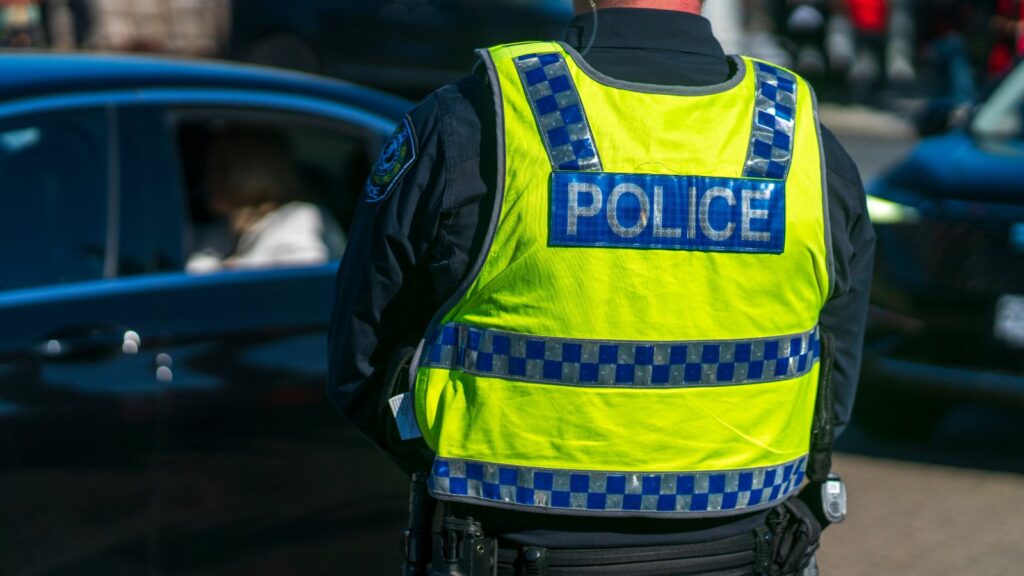
A Saturday afternoon call about an erratically driven, damaged vehicle in North York ended with a 26-year-old man dead after a Toronto police officer fired a gun. The incident unfolded on August 22 near King High Avenue, Wilson Avenue and De Quincy Boulevard, drawing police, emergency personnel and Ontario’s independent police watchdog to a residential area.
Early accounts from Toronto police and the Special Investigations Unit, or SIU, describe different parts of the developing sequence. Police initially emphasized the damaged vehicle, a collision and an attempted flight from the scene. The SIU subsequently said officers encountered a man who was in possession of a firearm. With investigators now examining the shooting, important details about the encounter remain unresolved.
The Call Began With Reports of a Damaged Vehicle
Toronto police said officers were dispatched shortly before 1:30 p.m. after reports that a damaged vehicle was being driven erratically near Wilson and King High avenues. According to the police account carried by The Canadian Press, the vehicle was subsequently involved in a collision and the driver tried to flee. Officers then arrived, and during an interaction with the driver, one officer discharged a firearm. Police said the individual was pronounced dead at the scene and no officers were injured.
Those details made the traffic-related events the first publicly visible part of the story. A damaged vehicle moving unpredictably through a residential neighbourhood can prompt an urgent response even before officers know why the driver is behaving that way. Yet the initial police statement did not provide a complete reconstruction of what happened between the collision and the shooting. It also did not establish what caused the vehicle damage, what preceded the reported erratic driving or precisely how the confrontation developed once officers arrived. Those questions are now central to the independent investigation.
The SIU Added a Crucial Detail About a Firearm
The SIU released its own preliminary account later on August 22, identifying the deceased as a 26-year-old man. Its statement described Toronto police receiving 911 calls at approximately 1:30 p.m. about a man behaving erratically around King High Avenue and De Quincy Boulevard. The SIU said officers responded and encountered a man who was in possession of a firearm. It said an interaction occurred between that man and two officers before one of the officers discharged his firearm. The man was struck and pronounced dead at the scene.
That information adds an important element that was not included in the earliest Toronto police summary. It does not, however, answer every question about the firearm or the interaction. The SIU’s initial release did not publicly explain whether the firearm was pointed at anyone, whether it was discharged by the man, where it was located during the encounter or how much time elapsed before the officer fired. The wording is significant: the SIU explicitly characterized its information as preliminary, meaning investigators still have evidence to collect and assess before reaching conclusions.
Why Ontario’s Police Watchdog Took Over
The SIU’s involvement is automatic in the sense that this type of event falls squarely within its statutory jurisdiction. Ontario law permits the civilian agency to investigate incidents that may have resulted from criminal conduct by an official when a person dies or suffers a serious injury, when a firearm is discharged at a person, or when a sexual assault is reported. A fatal police shooting therefore raises two separate triggers: a person has died and an officer has discharged a firearm at someone.
The SIU operates independently from municipal and provincial police services and at arm’s length from Ontario’s Ministry of the Attorney General. Its role is narrower than a general review of whether police policy was followed. Investigators gather evidence so the SIU director can determine whether there are reasonable grounds to believe an involved official committed a criminal offence. If that threshold is met, a criminal charge can be laid. If it is not, the investigation closes without charges and, subject to legal restrictions, the director publicly reports the reasoning behind that decision.
Seven SIU Investigators Have Been Assigned to the Case
The SIU said four investigators and three forensic investigators were assigned to the North York case. That staffing underscores how much work can follow a shooting that unfolds in seconds. Investigators may need to document the physical scene, examine firearms and other exhibits, identify potential witnesses and compare the various accounts of the incident. The agency’s broader mandate requires it to gather and assess evidence independently rather than simply accept the version supplied by the police service whose officer was involved.
The SIU has also asked anyone with information, photographs or video related to the incident to contact its investigators. In an urban neighbourhood, private security cameras, doorbell cameras, dashboard footage and cellphone recordings can potentially help investigators establish a more precise timeline. The agency has not publicly said what evidence has already been recovered in this case. Its appeal therefore matters because independent footage may capture events before officers arrived as well as the moments surrounding the shooting. Forensic findings and witness accounts can then be compared with dispatch information and statements collected during the investigation.
Major Questions Remain Unanswered
As of the SIU’s first public update, the 26-year-old man had not been publicly identified. Authorities had also not released a detailed account explaining the original vehicle damage, the collision described by Toronto police or the relationship between the reported driving behaviour and the later armed encounter. The number of shots fired was not specified in the SIU release, nor did it explain the precise positions of the man and officers when the police firearm was discharged. Those omissions should not automatically be interpreted as evidence that information is being withheld improperly; they are simply matters that had not yet been established publicly.
The distinction is important in a fatal police encounter, where early fragments can quickly harden into assumptions. Toronto police described a driver attempting to flee after a crash, while the SIU emphasized 911 calls concerning erratic behaviour and an encounter involving a man who possessed a firearm. Both accounts relate to the same developing incident but provide different slices of the timeline. Until investigators establish how those pieces connect, claims about motive, intent, threat level or the legal justification for the shooting would go beyond the verified evidence.
Preliminary Accounts Can Change as Evidence Is Tested
Ontario’s recent SIU cases illustrate why early information should be treated carefully. On August 6, the watchdog initially reported that Toronto police had located a Mercedes that had been reported stolen before a fatal police-involved shooting in Mississauga. Later that same day, the SIU issued a correction after receiving updated information: the Mercedes had not been reported stolen and officers had instead been tracking it in connection with a firearms investigation. The correction materially changed the public understanding of why police had been following the vehicle.
That earlier case is unrelated to the North York shooting, but it demonstrates how quickly preliminary facts can evolve once investigators examine records and receive additional information. The same caution applies here. The verified picture currently includes a damaged vehicle, a collision, an attempted flight described by Toronto police, a 26-year-old man whom the SIU says possessed a firearm, an interaction involving two officers and a fatal shot fired by one officer. The investigation will now determine how those facts fit together and whether the officer’s conduct crossed the threshold for criminal liability.
