
A new vehicle can feel affordable when the conversation stays focused on one attractive payment. The real cost, however, is buried in a combination of price, interest, loan length, fees, optional products and any debt carried forward from a trade-in. That matters even more in Canada’s high-priced vehicle market, where financing can remain on the household budget for six, seven or eight years.
Before a signature turns a showroom decision into a long-term obligation, the financing deserves as much scrutiny as the vehicle itself. These 21 questions Canadians should ask before signing a car loan are designed to expose the numbers behind the payment, clarify what is optional, and reveal financial risks that can otherwise remain hidden until years after the keys change hands.
What Is the Vehicle’s Actual Price Before Financing?

The first number worth establishing is not the weekly or monthly payment. It is the actual purchase price of the vehicle before loan interest enters the picture. Buyers should ask for a written breakdown showing the agreed vehicle price, dealer-installed equipment, administration charges, freight or preparation costs, applicable taxes and any other amount being added to the transaction. Without that baseline, comparing financing offers becomes unnecessarily difficult.
Pricing rules are not identical across Canada. Ontario, Alberta and British Columbia, for example, have consumer-protection requirements governing advertised dealer prices, although permitted exclusions differ. The larger lesson travels well across provincial borders: separate the price negotiation from the financing negotiation. A salesperson may be able to produce a comfortable payment simply by extending the loan. Knowing whether the vehicle itself costs $38,000, $41,000 or $44,000 makes it much easier to recognize what the financing is actually doing.
Exactly How Much Money Am I Borrowing?

The amount financed can be noticeably higher than the number displayed on the vehicle’s windshield. Taxes, financing-related charges, warranties, protection packages and debt left over from a trade-in may all affect the principal balance depending on the transaction. The contract should therefore show, in plain dollars, exactly how much credit is being advanced and how that figure was calculated.
That distinction matters because interest is generally paid on the financed balance, not merely the negotiated sticker price. Consider a buyer who believes the deal is based on a $40,000 vehicle but ultimately finances $45,000 after other amounts are incorporated. Even before considering the precise rate or term, the borrower has taken on $5,000 more debt than the showroom price might suggest. Canadian consumer guidance recommends examining the total amount financed alongside the rate, fees, payment schedule and loan length rather than judging the deal from its payment alone.
What Is the APR, Not Just the Advertised Interest Rate?

A prominently displayed interest rate can attract attention, but borrowers should also look for the annual percentage rate, or APR, where applicable. APR is designed to express borrowing costs on an annual percentage basis and can incorporate certain non-interest charges that affect the cost of credit. That makes it useful when one offer carries fees that another does not.
For loans from federally regulated financial institutions, cost-of-borrowing disclosure requirements cover important information about the credit agreement. Federal rules also require APR information in certain loan advertising when an interest rate is promoted. The practical question at the dealership is straightforward: “What APR appears on the final disclosure, and why is it different from the stated interest rate, if it is different?” A seemingly small gap deserves an explanation. When comparing two financing offers, Canadians should compare equivalent figures rather than assuming the lowest-looking promotional percentage automatically represents the least expensive loan.
Is the Interest Rate Fixed or Variable?

Most buyers understandably want to know the rate, but its structure is equally important. A fixed rate provides predictability because the interest rate specified for the loan does not fluctuate in response to an outside benchmark. A variable-rate agreement works differently, and borrowers should understand exactly how its rate is determined and how future increases could affect payments or the time required to repay the debt.
Federally regulated lenders have specific disclosure obligations for variable-rate personal loans, including information about how the annual rate is calculated. Depending on the structure, additional disclosures may be required as rates change. A buyer should therefore ask whether the quoted payment is guaranteed for the entire repayment period or could change later. If the loan is variable, the contract should identify the benchmark or calculation method. For a household already stretching its budget, certainty may have meaningful value even when two initial rates appear relatively close.
What Will This Car Cost After Every Loan Payment Is Made?

The purchase price and the financed cost are not the same number. Adding interest over several years can turn an apparently manageable purchase into a substantially more expensive one. The Financial Consumer Agency of Canada illustrates this with a $25,000 vehicle financed at 5%: its example produces a total cost of $26,974 with a 36-month loan but $29,681 with an 84-month loan.
That is a $2,707 difference for the same starting price and interest rate. The example demonstrates why the most useful figure may be the amount that will have left the buyer’s bank account by the final scheduled payment. Before signing, borrowers should request the total cost of borrowing and total repayment amount in writing. A dealership conversation centred exclusively on “What payment works?” leaves out this crucial perspective. The better question is, “How many dollars will this vehicle have cost when the debt reaches zero?”
How Much Interest Will I Pay in Dollars?

Percentages can feel abstract, particularly when financing discussions move quickly. Converting the interest cost into dollars makes the decision much easier to grasp. A buyer should ask the lender or dealer to show the total interest expected over the scheduled term, rather than relying solely on a rate such as 6%, 7% or 8%.
The effect of loan length can be substantial. Using standard amortization mathematics, financing $40,000 at 7% for 60 months produces roughly $7,500 in interest, while stretching the same principal and rate to 84 months produces roughly $10,700. The longer loan lowers the scheduled payment, but roughly $3,200 more goes toward interest. Exact figures vary with payment frequency, loan structure and other contractual details, so the signed disclosure is the authoritative figure for a particular transaction. Seeing interest expressed as an actual dollar amount can change how attractive an extended term feels.
Why Is the Loan Term This Long?
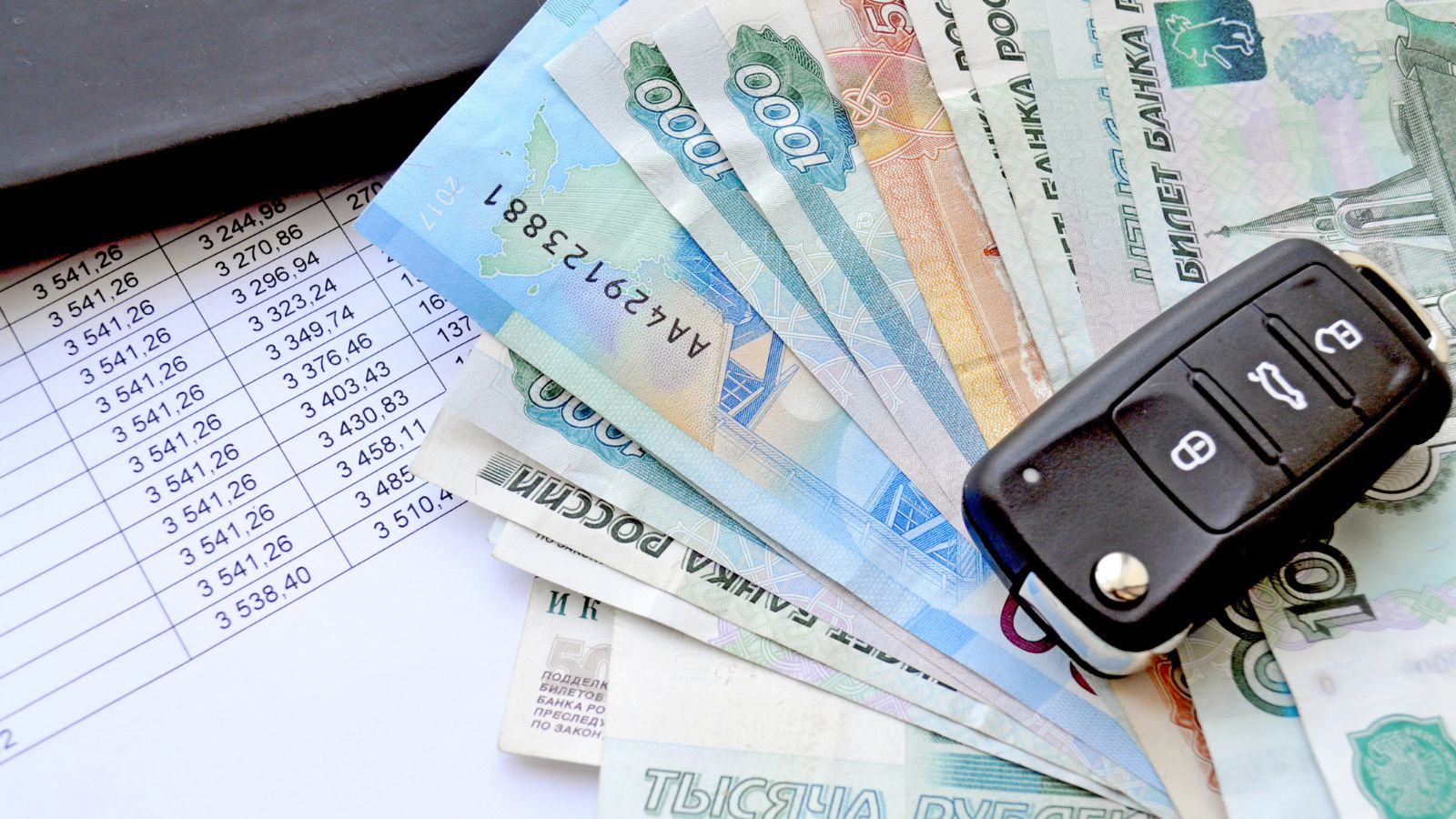
A six-, seven- or eight-year repayment schedule can make an expensive vehicle fit within a desired payment. That does not necessarily make the vehicle less expensive. Canadian federal consumer guidance identifies loans of 72 months or more as long-term car loans and warns that stretching repayment generally increases total interest while potentially prolonging negative equity.
This matters because the vehicle and the debt move in opposite directions. The outstanding loan balance gradually falls while the car typically depreciates. The longer repayment stretches, the greater the possibility that a driver who wants or needs to sell early still owes more than the vehicle is worth. Statistics Canada has also documented how extended financing became increasingly important in Canadian vehicle affordability, reporting that 57% of new-vehicle loans had terms of at least 84 months in 2023, based on J.D. Power Canada data. Buyers should ask why a lengthy term is being recommended rather than accepting it as the default.
What Would the Same Deal Look Like With a Shorter Term?

An excellent financing comparison changes only one variable at a time. Ask the dealer or lender to calculate the same amount financed and the same interest rate over several terms—perhaps 48, 60, 72 and 84 months. The shorter options will produce higher payments, but they can reveal how much the lower payment on an extended loan actually costs.
For illustration, a $40,000 loan at 7% works out to roughly $792 per month over 60 months and about $604 over 84 months using conventional monthly amortization. The 84-month option frees roughly $188 in the monthly budget, yet total interest rises from about $7,500 to roughly $10,700. That comparison reframes the decision: the borrower is effectively paying thousands of dollars for additional repayment time. FCAC advises consumers to consider the shortest loan term they can reasonably afford. Sometimes the shorter term also reveals that a less expensive vehicle would be the financially stronger choice.
How Often Are the Payments, and What Does That Equal Annually?

A payment can sound remarkably small when quoted weekly or biweekly. The useful comparison is the amount paid over an entire year. Fifty-two weekly payments and 26 biweekly payments occur in a typical year, so a $220 weekly obligation represents $11,440 annually before considering other ownership costs. A $440 biweekly payment works out to the same annual amount.
The payment schedule also needs to match the signed loan documents. FCAC recommends comparing payment schedules when evaluating vehicle financing offers, along with rates, fees, amounts financed and loan terms. Buyers should ask how many payments will be made in total, the amount of each payment and the exact final payment date. This prevents a smaller-looking weekly figure from obscuring a large annual commitment. When comparing loans quoted at different frequencies, converting each offer to total yearly payments and total repayment dollars makes the comparison far more meaningful than comparing individual payment amounts.
How Much Should I Put Down?

A down payment reduces the amount that needs to be financed, which can reduce total interest and provide an immediate cushion against depreciation. FCAC specifically lists making a down payment, when possible, among the measures consumers can consider to reduce auto-financing risk. The appropriate amount, however, depends on the household’s cash reserves and other financial priorities.
Emptying an emergency fund simply to produce a large down payment can create a different vulnerability, so the decision should be evaluated alongside the broader budget. Buyers can ask for several written scenarios—for example, no down payment, $3,000 down and $6,000 down—while keeping the vehicle price, interest rate and term unchanged. That exposes exactly how each additional dollar paid upfront changes the loan balance, scheduled payment and total interest. It also helps distinguish a genuinely better financing structure from a payment reduction achieved simply by contributing more cash at signing.
What Is Happening to My Trade-In?

A trade-in creates two transactions that can easily blur together: the dealership is purchasing one vehicle while selling another. Buyers should ask for the trade-in allowance, the remaining loan balance on the old vehicle and the new vehicle’s negotiated price to be shown separately. Combining everything into a single payment makes it harder to evaluate whether either side of the deal is competitive.
Suppose a vehicle receives a $20,000 trade-in allowance but still carries a $24,000 loan balance. The apparent $20,000 value does not provide $20,000 toward the next purchase because there is a $4,000 shortfall to resolve first. Conversely, a vehicle worth more than its remaining debt may provide positive equity toward the new purchase. Asking for each figure independently also allows the owner to compare the dealership’s trade-in offer with outside market information. A favourable new-car price can otherwise be offset by a weak trade-in value without being immediately obvious.
Am I Carrying Negative Equity Into the New Loan?

This may be the most important question for anyone trading a financed vehicle before its loan is finished. Negative equity exists when the vehicle is worth less than the outstanding debt. If that shortfall is incorporated into financing for the replacement vehicle, the buyer begins the next ownership cycle owing money connected to a car that is already gone.
FCAC illustrates the risk with a new vehicle valued at $31,300 and an eight-year loan of $35,000. In its example, the vehicle is worth $18,780 after two years while the loan balance remains $27,300, leaving $8,520 of negative equity. The agency warns that rolling remaining debt into another loan can produce a larger balance and additional interest. Buyers should ask for the old loan payoff and trade-in value in writing and calculate the difference. If that number is negative, postponing the trade may be financially safer than repeatedly refinancing old vehicle debt.
Which Extras Have Been Added to the Deal?

The finance office can introduce products after the vehicle price has already been negotiated. Depending on the dealership, these may include extended warranties, appearance protection, tire-and-wheel coverage, theft-related products or other service packages. The central question is whether each product is required, optional or already included in the negotiated vehicle price.
Optional products become more expensive when their cost is added to a long-term loan because the buyer may pay interest on the amount financed. A $2,000 add-on does not necessarily remain a $2,000 expense after years of financing. Provincial rules also affect how dealer fees and pre-installed products must be advertised or disclosed. Ontario, for example, generally requires dealer-advertised prices to include fees and pre-installed products other than permitted exclusions such as HST and licensing. Buyers should therefore request a line-by-line contract and ask for the loan payment both with and without every optional product before agreeing to anything.
Is Loan or Credit Insurance Really Required?

Loan insurance may be presented alongside financing as protection if circumstances such as death, disability or job loss interfere with repayment, depending on the product. Buyers should not assume that such insurance is automatically mandatory. For car loans offered by federally regulated financial institutions, FCAC states that loan or credit insurance is optional and requires the borrower’s express consent.
Federally regulated institutions must also provide information about the product, including its cost, term, coverage and cancellation conditions. That makes several questions worthwhile: What exactly is covered? What exclusions apply? How much does the insurance cost over the loan? Is the premium financed, and therefore potentially generating additional interest? A product can be useful for one household and unnecessary for another. The key is making a deliberate insurance decision rather than discovering afterward that a premium was incorporated into the financing. The contract should make the buyer’s choice and the associated cost clear.
Can I Make Extra Payments or Pay the Loan Off Early?

Financial circumstances change. A borrower may receive a bonus, sell another asset or simply decide that eliminating the car loan early is a priority. Before signing, it is worth asking whether additional principal payments are permitted, whether there is a limit on them and whether the entire balance can be paid off without a penalty or special charge.
FCAC notes more generally that financial institutions usually allow borrowers to make extra payments on loans without a penalty, helping debt disappear faster. But the actual contract remains what matters for a particular car loan. Buyers should ask exactly how extra payments are applied and whether they reduce principal immediately. A flexible prepayment provision can become valuable on a long loan because every dollar of principal removed earlier can reduce future interest where the agreement permits. Requesting the procedure in writing also prevents confusion later about whether an extra transfer counts as a principal payment or merely advances the next scheduled instalment.
Who Is Actually Lending the Money?

The dealership may arrange the financing, but it is not necessarily the lender. FCAC explains that dealers can arrange auto loans through a manufacturer’s financing arm, a bank or credit union, or an independent finance company. The name on the showroom may therefore be different from the organization that will own and administer the debt.
That distinction matters when questions arise about statements, payment changes, prepayment, hardship or complaints. Buyers should ask for the lender’s full legal name and contact information before signing. They should also establish whether the financing falls under federal or provincial consumer-protection rules. FCAC notes that loans from federally regulated financial institutions, such as banks, are covered by federal consumer protections, while other lenders may fall under provincial or territorial requirements. Knowing who actually holds the loan is basic information, yet it can be overshadowed when the entire financing process happens at a dealership desk.
Did the Dealer Compare More Than One Financing Offer?
Convenience is one of dealer-arranged financing’s biggest advantages, but convenience should not be confused with proof that the first offer is the best available. FCAC has advised consumers to obtain multiple financing quotes. Its research has also noted that dealerships may solicit offers from several lenders and that lenders can provide commissions or other incentives to dealers.
A buyer can therefore ask a direct question: “Which lenders considered this application, and is this the lowest-cost approval available?” The answer can then be compared with a bank or credit-union quote obtained independently. A familiar financial institution may sometimes offer a competitive rate, particularly to an established customer, although there is no guarantee it will beat dealer financing. Comparing offers should include APR, fees, term, amount financed and total repayment—not simply the monthly payment. Even a modest difference in borrowing cost can matter when tens of thousands of dollars remain financed for many years.
What Kind of Credit Check Is Being Run?

Car financing normally involves reviewing the applicant’s creditworthiness, and borrowers should understand when a formal credit application will trigger a hard inquiry. FCAC explains that hard credit inquiries can affect a credit score, while checking one’s own credit report is considered a soft inquiry and does not affect the score.
Shopping around does not necessarily mean abandoning comparison. FCAC advises consumers seeking a car loan or mortgage to obtain quotes from different lenders within a two-week period because credit bureaus generally treat these rate-shopping inquiries as one inquiry for scoring purposes. TransUnion similarly notes that many scoring models account for multiple auto-loan inquiries made while shopping for terms. Before giving broad authorization, buyers can ask which lenders will receive an application and whether an initial qualification step is soft or hard. Reviewing personal credit reports beforehand can also reveal errors that might otherwise contribute to an unnecessarily expensive financing offer.
Is There a Lien on the Vehicle—or Will the New Loan Create One?

A lien is a legal claim registered against a vehicle to secure repayment of a debt. FCAC explains that lenders can place liens on vehicles and that those registrations generally remain until the underlying debt has been paid. For a financed purchase, buyers should understand what security interest the lender will hold and what must happen before that lien is discharged.
Used vehicles require an additional question: does an existing lien already affect the car? FCAC advises buyers to make sure a used vehicle is free of unresolved liens and notes that lien searches can be performed through provincial or territorial personal-property security systems, generally using the VIN. Vehicle-history reports may also include lien information. A bargain becomes much less attractive if another creditor has a legitimate claim against the vehicle. Asking for written confirmation of lien status is therefore particularly important when purchasing outside a conventional registered dealership environment or when a seller still has financing outstanding.
What Happens If a Payment Is Missed?

No one signs a car loan expecting financial trouble, but understanding the consequences before trouble occurs is part of responsible borrowing. A missed payment can become part of the borrower’s credit history, and negative payment information may affect access to future credit. FCAC notes that credit reports can contain repayment history, late or missed payments, collection information and registered items such as vehicle liens.
The consequences of serious default depend on the agreement, lender and applicable provincial law, so borrowers should ask for the specific process rather than relying on assumptions. When is a payment considered late? Is there an NSF or late-payment charge? When does the lender report delinquency to a credit bureau? What options exist if temporary hardship occurs? Because a secured vehicle loan can involve a lien on the car, default may eventually put the vehicle at risk. Understanding the lender’s hardship and collection procedures while everything is going well can prevent unpleasant surprises later.
Can the Household Afford the Car, Not Merely the Loan Payment?

Financing is only one part of the cost of owning a vehicle. Insurance, fuel or electricity, scheduled maintenance, tires, repairs, parking and registration can turn a manageable loan payment into an uncomfortable transportation budget. FCAC specifically recommends considering interest, maintenance and insurance when deciding how much vehicle is genuinely affordable.
Recent market data shows why that broader calculation matters. AutoTrader reported an average Canadian new-vehicle price of roughly $62,830 in the first quarter of 2026, with average new-vehicle monthly payments around $915 in its data. Statistics Canada has separately documented the sharp rise in vehicle prices over the post-2019 period. A household taking on a payment of that magnitude still needs room for every other cost that arrives after delivery. Before signing, the useful test is to insert the complete ownership estimate into an ordinary monthly budget and determine whether savings and emergency expenses remain manageable.
What Protections Apply, and Do I Have the Complete Contract?

The final question should come before the final signature. Buyers should ask which consumer-protection rules govern the dealership and lender, what disclosure statement applies, how complaints are handled and whether every promised term appears in the written agreement. FCAC states that federal, provincial and territorial consumer-protection laws require applicable lenders or dealers to provide disclosure information before a car-financing agreement is finalized, although the exact regime depends on the parties involved.
For federally regulated financial institutions, consumers have formal complaint-handling protections. Dealership regulation, cancellation rights and sales rules can vary by province or territory, so assumptions based on another province—or on a previous purchase—can be risky. The safest approach is to obtain copies of the purchase agreement, financing disclosure and any optional-product contracts before leaving. Verbal assurances about rates, cancellation, warranties or future changes are much harder to evaluate later. The paperwork should tell the same story as the conversation that produced the deal.
19 Used Cars Canadians Should Avoid in 2026 (Based on Owner Complaints)

Buying a used car in Canada can feel safe until repair bills start stacking up. Owner complaints tell a different story than glossy listings. Transmission failures, electrical problems, and weak winter reliability show up again and again in consumer reports. Many of these issues appear after warranties expire, when owners least expect them. Some vehicles look affordable upfront, but become expensive to keep on the road. Others struggle in cold weather, urban driving, or long highway commutes. Here are 19 used cars Canadians should avoid in 2026 (based on owner complaints).
19 Used Cars Canadians Should Avoid in 2026 (Based on Owner Complaints)

Alanna Rosen is an experienced content writer that focuses on many EV and educational content. Her articles are regularly published on Get CyberTrucked and syndicated on large publications.