
A highway can slow down without a crash, construction zone, stalled vehicle or obvious bottleneck. Sometimes the trigger is much smaller: one driver reacts late, taps the brakes harder than necessary, and forces the next driver to do the same. In dense traffic, that tiny disturbance can travel backward through the line and become a full stop-and-go wave.
The underlying mistake is reactive driving—following too closely, watching only the vehicle immediately ahead, or waiting too long to ease off the accelerator. Braking itself is not the problem; safe driving obviously requires it. The problem is creating avoidable, abrupt speed changes that surrounding drivers must copy. These 12 highway-driving lessons explain how one unnecessary brake application can spread through traffic, why the effect becomes worse as roads get crowded, and what smoother drivers do differently.
The Real Problem Is Braking Later Than Necessary

There is an important difference between braking because traffic genuinely requires it and braking because a driver failed to anticipate what traffic was doing. On a relatively empty highway, the distinction may barely matter. In dense traffic, however, a sudden reduction in speed becomes information that every vehicle behind must process. One driver sees brake lights, reacts, slows, and causes another set of brake lights to appear farther back.
Traffic researchers have demonstrated that stop-and-go congestion can develop even when there is no collision, lane closure or physical obstruction. In a well-known controlled experiment, drivers circulating on a closed track were asked to maintain steady spacing and speed. Small differences in human acceleration and braking eventually grew into a travelling traffic jam. The lesson is surprisingly practical: highway traffic works better when drivers avoid constantly correcting their speed. Looking farther ahead and lifting off the accelerator early often accomplishes what a late brake application would otherwise have to do.
Following Too Closely Removes the Option to Coast
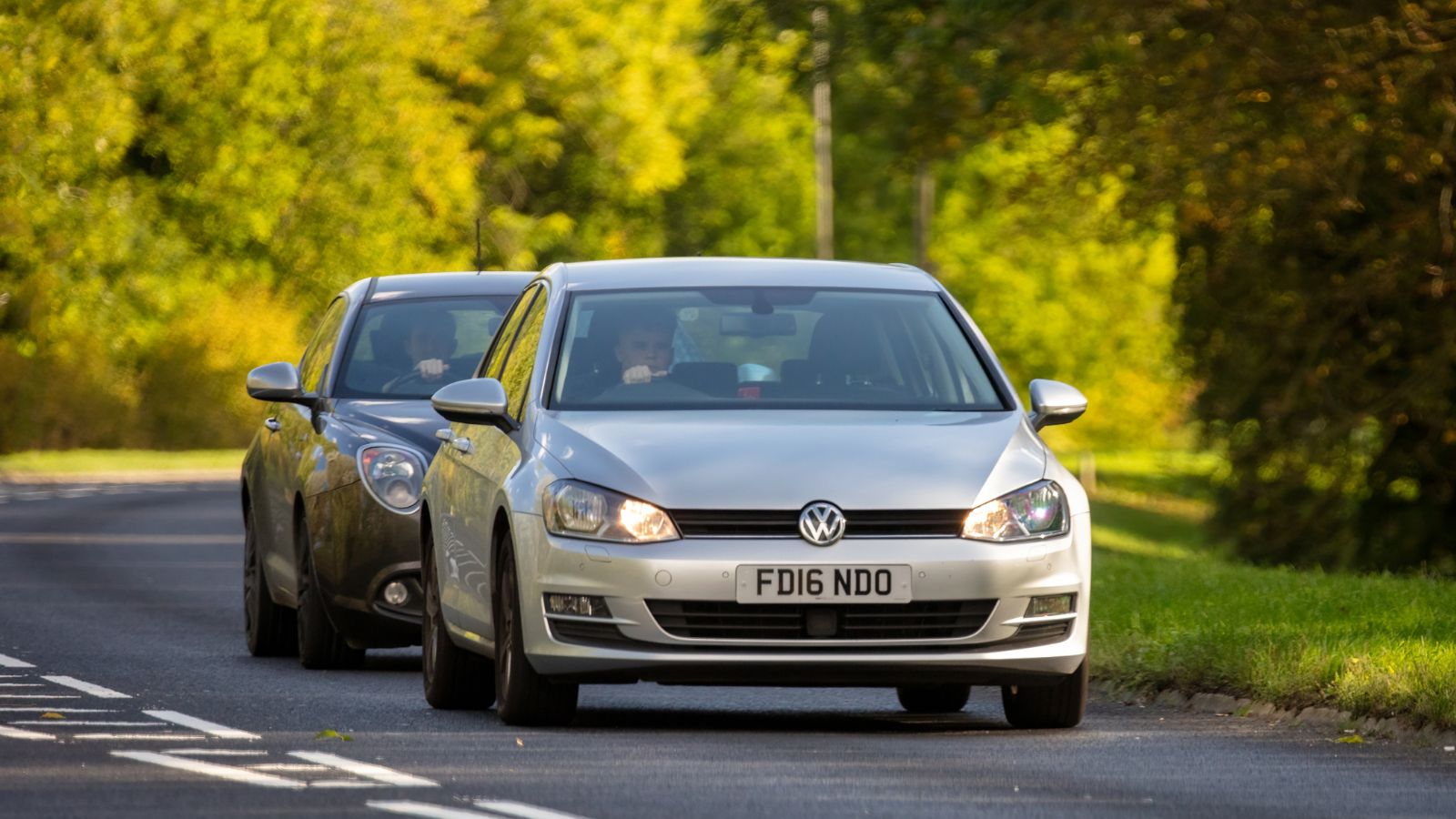
A comfortable gap does more than create emergency stopping distance. It gives a driver another valuable tool: time. When the vehicle ahead begins slowing slightly, someone with adequate space may simply release the accelerator and allow the car to lose speed naturally. A tailgating driver has far fewer choices. The same minor slowdown may require an immediate brake application because the available distance is disappearing too quickly.
Ontario’s driver’s handbook recommends at least a two-second following interval under ideal conditions and says more space is needed when conditions deteriorate. That gap should not be treated as empty pavement that needs to be reclaimed. It is a buffer designed to absorb changes in traffic speed. Consider two commuters approaching the same mild slowdown: one has enough room to coast from highway speed while the other is close to the bumper ahead. The second driver lights the brake lamps, and everyone behind begins wondering whether something serious is happening. Space makes highway driving calmer precisely because every small speed change does not become an emergency.
Looking Only One Car Ahead Makes Every Slowdown a Surprise
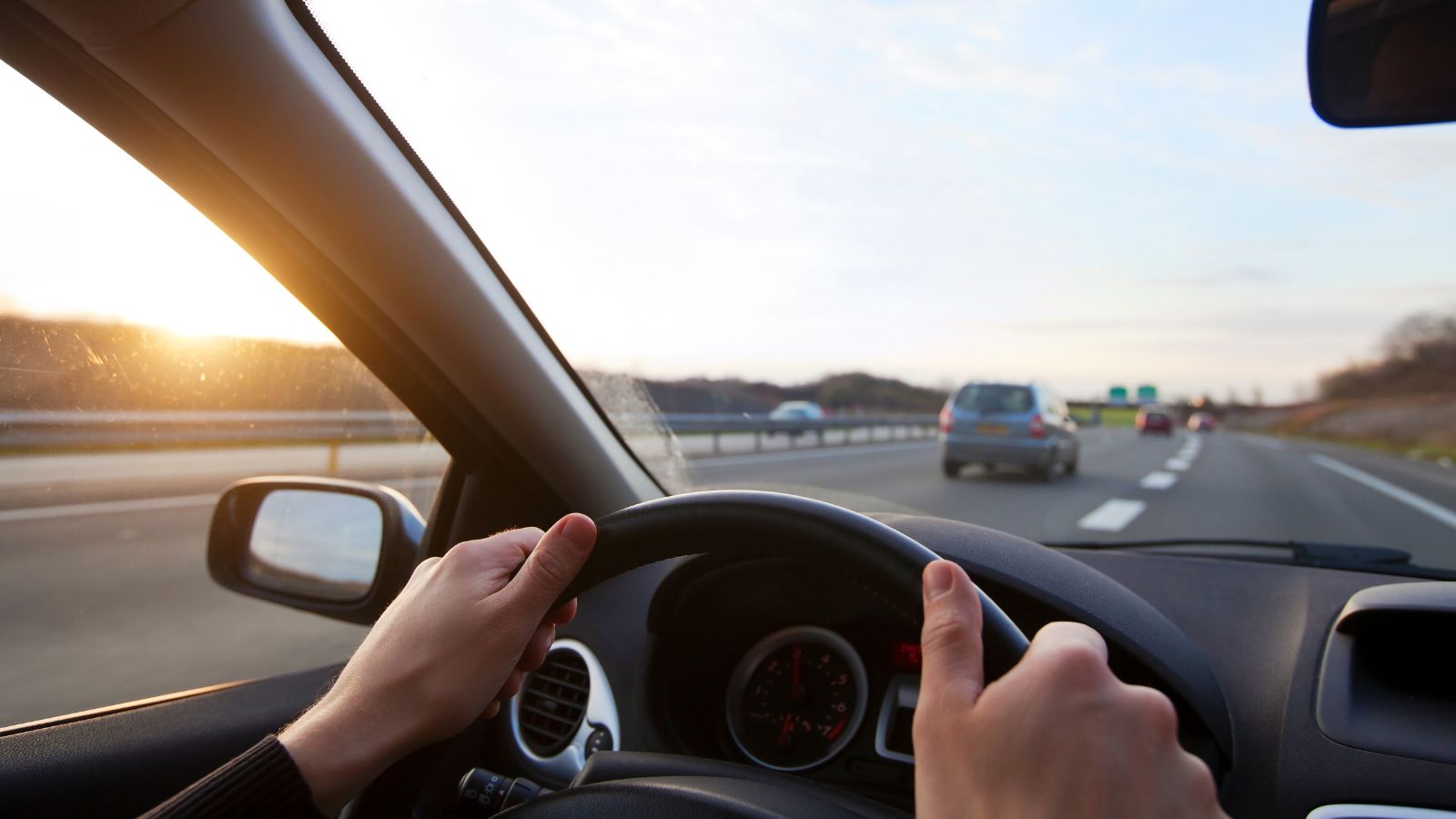
Drivers sometimes become fixated on the bumper directly in front of them. That vehicle becomes the entire traffic forecast: it accelerates, so they accelerate; it brakes, so they brake. The problem is that the lead vehicle may itself be responding to something several cars farther ahead. By the time its brake lights illuminate, part of the available warning time has already disappeared.
Ontario’s freeway-driving guidance advises motorists to scan far ahead—roughly where they expect to be 15 to 20 seconds later at higher speeds—while continuing to monitor mirrors and surrounding traffic. That longer visual horizon changes how a driver reacts. A cluster of brake lights far up the highway, an approaching interchange, a merging truck or a line of vehicles tightening together can all provide an early warning. Instead of maintaining full throttle until the car immediately ahead slows, an attentive driver can reduce accelerator pressure beforehand. The change feels almost invisible to passengers, but it prevents a much more noticeable braking event seconds later.
A Small Brake Tap Can Become a Traffic Wave
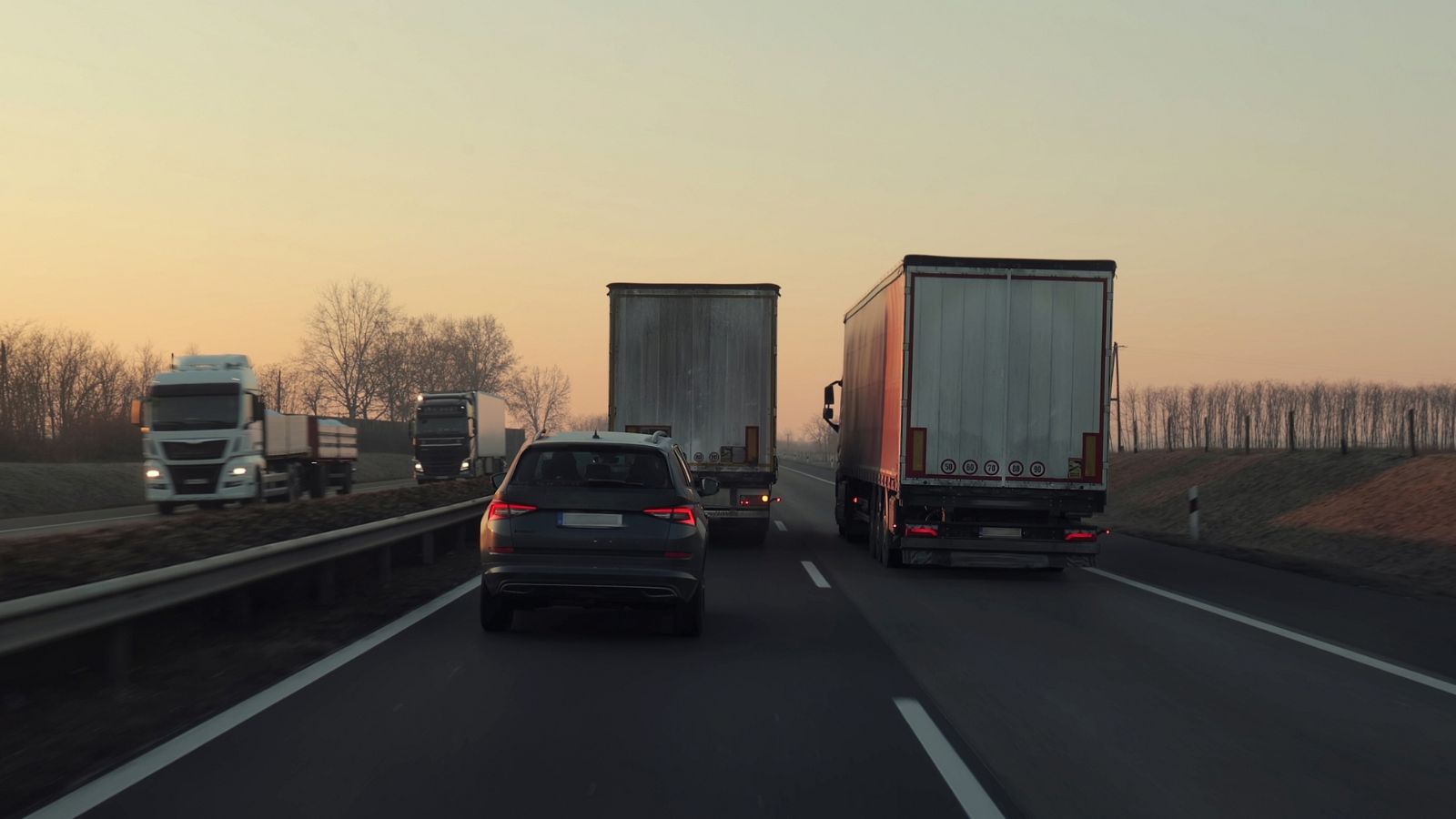
One of the strangest properties of congested highway traffic is that disturbances can travel in the opposite direction from the vehicles themselves. Cars continue moving forward, yet the slowdown appears to move backward through the queue. Transportation engineers commonly describe these disturbances as traffic oscillations, shock waves or, in certain cases, phantom traffic jams.
The process does not require anyone to slam on the brakes. Imagine one driver slowing slightly because the gap ahead looks uncomfortable. The next driver notices a moment later and reduces speed a little more. Another driver reacts later still and brakes harder. Eventually, someone farther back may need to slow dramatically or stop altogether. Federal Highway Administration material describes precisely this type of ripple, where the initial disturbance becomes progressively more disruptive as it passes through a line of closely spaced vehicles. That is why motorists sometimes crawl through a mysterious congestion pocket and then suddenly find open highway—with no crash, police activity or construction explaining what happened.
Drivers Behind May Have to Brake Harder Than the Driver Who Started It
Human reaction time means vehicles in a line do not all slow simultaneously. Each person must first recognize what the vehicle ahead is doing, decide whether action is required and then respond. If gaps are small, the following driver may need a stronger speed reduction to restore a safe distance. Repeated across several vehicles, those corrections can magnify the original disturbance.
Naturalistic driving research examining rear-end conflicts has found that braking is the dominant response when following drivers encounter serious deceleration by a lead vehicle. Research on traffic oscillations likewise shows that disturbances can grow as they propagate upstream. This helps explain a familiar highway experience: a driver near the front of a traffic wave may barely touch the brakes, while somebody much farther behind eventually comes almost to a halt. No individual driver necessarily intended to create the slowdown. It emerges from many slightly delayed reactions. Increasing spacing breaks that chain because drivers gain enough room to respond progressively instead of trying to reproduce every small movement of the vehicle directly ahead.
Poorly Timed Lane Changes Can Start the Same Chain Reaction
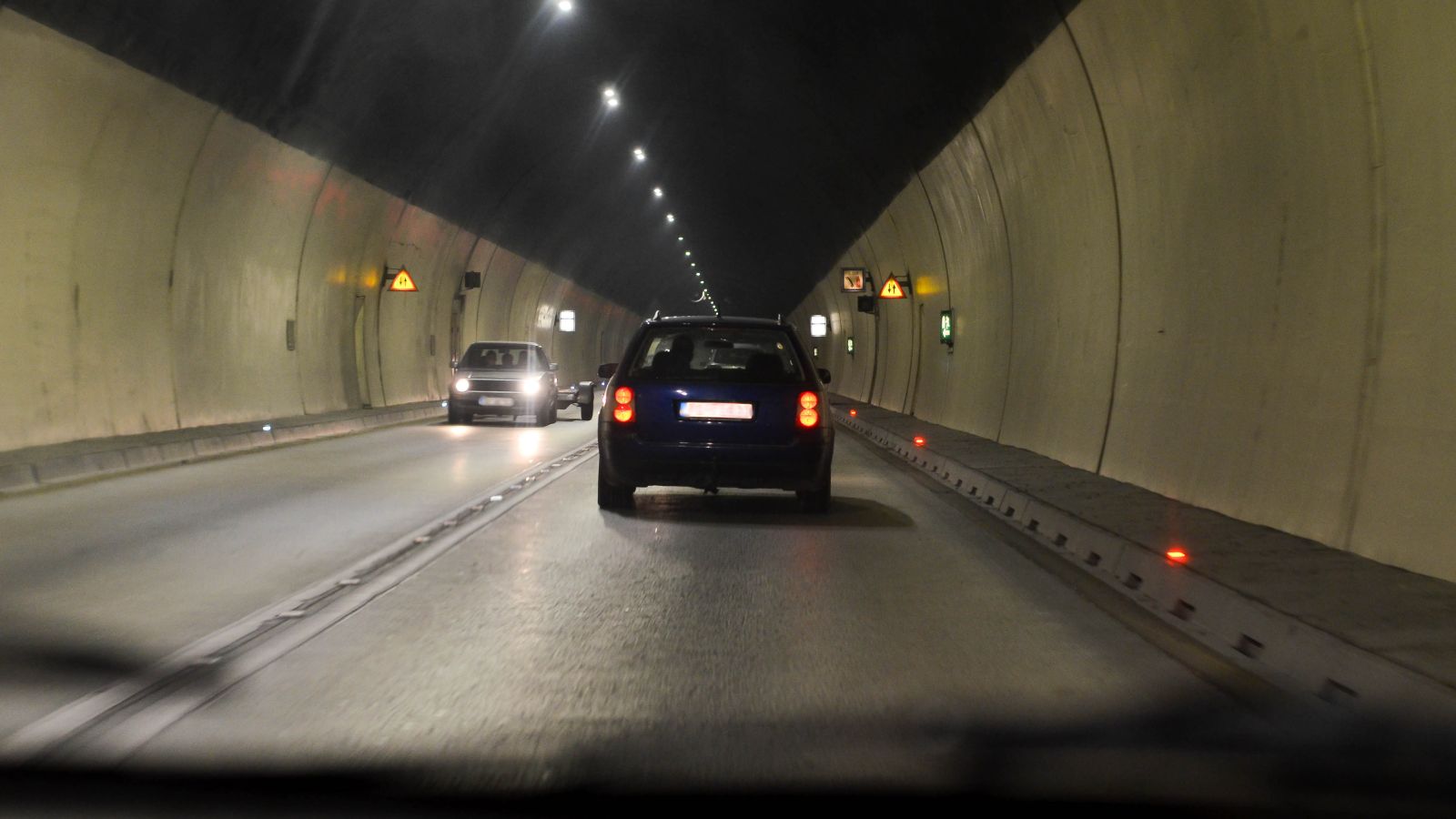
Lane changes are another common source of highway disturbances. A driver may see what appears to be a usable opening, move into it and discover that the vehicle behind suddenly has too little space. That driver brakes to recreate a safe gap. The vehicle behind reacts to those brake lights, and within seconds the lane change has affected motorists who never even saw the original manoeuvre.
Peer-reviewed traffic research has found that lane-changing behaviour can contribute to traffic oscillations and create bottleneck effects, particularly where traffic is already dense. That does not mean drivers should avoid necessary lane changes. It means timing and available space matter. Ontario guidance calls for checking mirrors and blind spots, signalling with enough notice, adjusting to the speed of the destination lane and moving across smoothly. A good lane change is almost uneventful for everyone else. If another motorist must immediately brake because someone entered the lane, the available gap probably was not as generous as it appeared from the driver’s seat.
Merging Too Slowly Forces Highway Traffic to Compensate
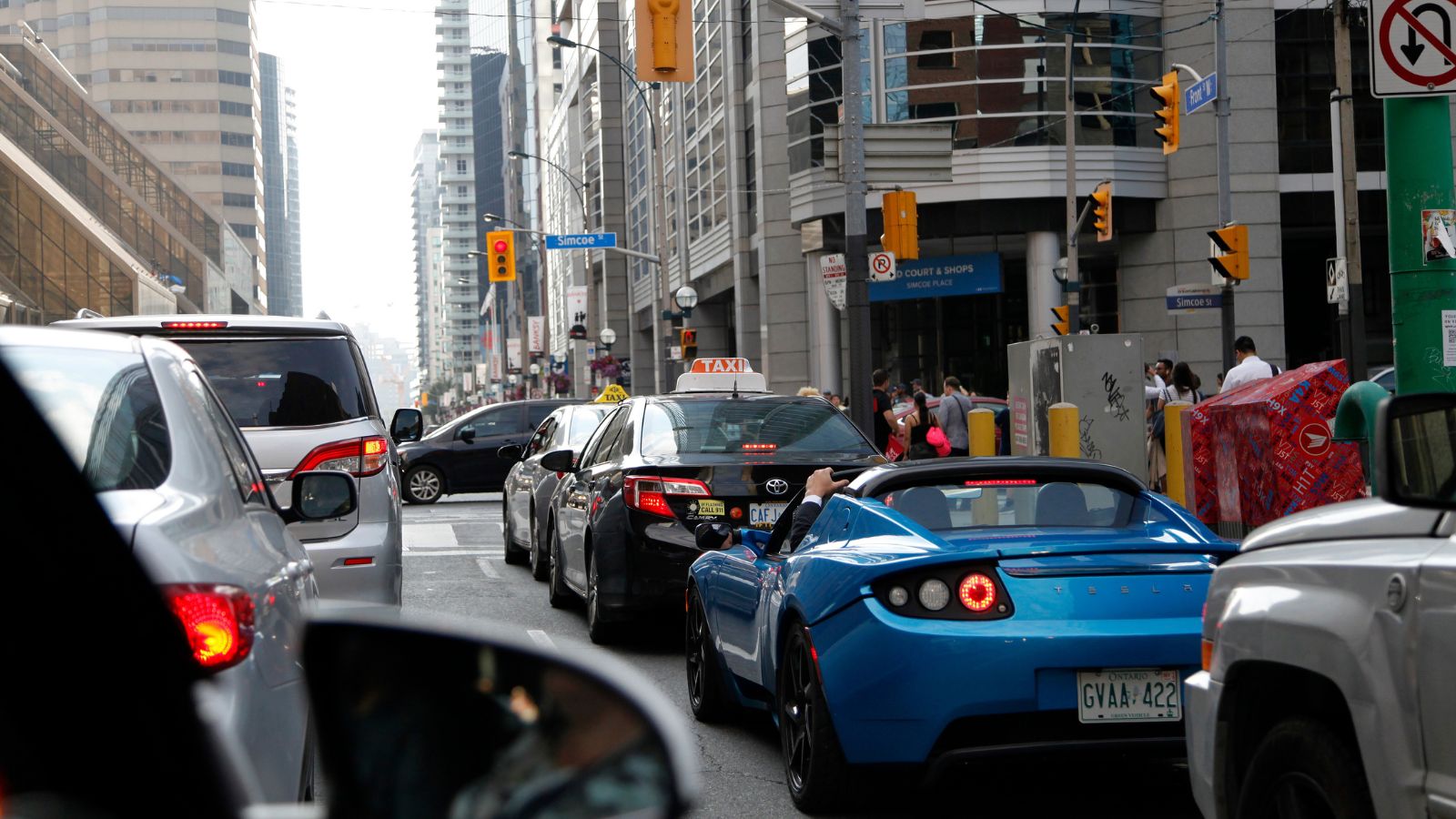
Entrance ramps create another situation where one driver’s speed choice can affect an entire lane. A vehicle entering a freeway substantially slower than surrounding traffic presents drivers already on the highway with a difficult problem. They may have to brake, change lanes or both. When traffic is dense, that adjustment can spread beyond the first vehicle and disturb several lanes at once.
Ontario’s freeway guidance tells drivers to use the acceleration lane to increase speed and blend smoothly with freeway traffic. That principle is also part of the reason highway agencies use ramp-metering systems in congested areas. By managing how vehicles enter the freeway and reducing competition for the same gaps, ramp meters are intended to improve merging and limit disruption to mainline traffic. For an individual driver, the lesson is simpler. A merge should be planned early enough that it does not become a last-second negotiation. Matching traffic speed when conditions permit gives other motorists a predictable moving target rather than forcing them to make abrupt corrections.
Tailgating Turns Ordinary Speed Changes Into Urgent Ones
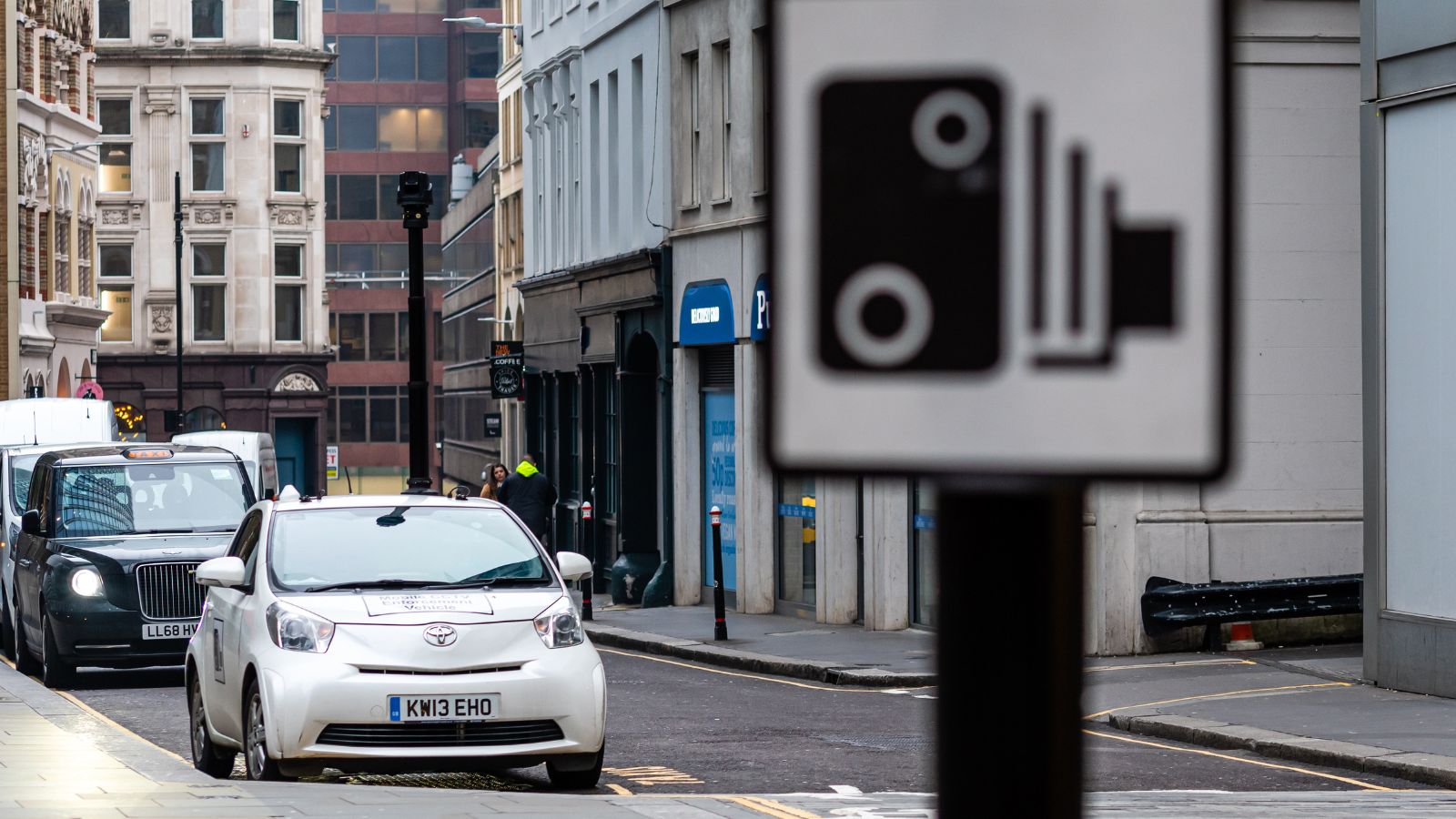
At highway speeds, a vehicle can cover a substantial distance while its driver is merely recognizing a developing hazard. A short following gap therefore transforms events that should be manageable into urgent situations. The vehicle ahead may not even be braking hard; a modest reduction in speed can rapidly consume an undersized gap.
Both Transport Canada and provincial driving guidance emphasize maintaining a safe speed and following distance rather than relying on collision-warning or automatic-braking technology. Modern systems can help detect a rapidly closing gap, but Transport Canada explicitly cautions that such technology is not a replacement for driver attention or judgement. This is especially important in a closely packed traffic stream. A tailgating driver who repeatedly alternates between accelerator and brake is not just creating an uncomfortable ride. The behaviour sends repeated speed changes backward to other motorists. Maintaining space allows small fluctuations to disappear within the gap instead. In traffic-flow terms, the driver becomes a shock absorber rather than another source of instability.
Driver-Assistance Technology Cannot Fix Bad Spacing
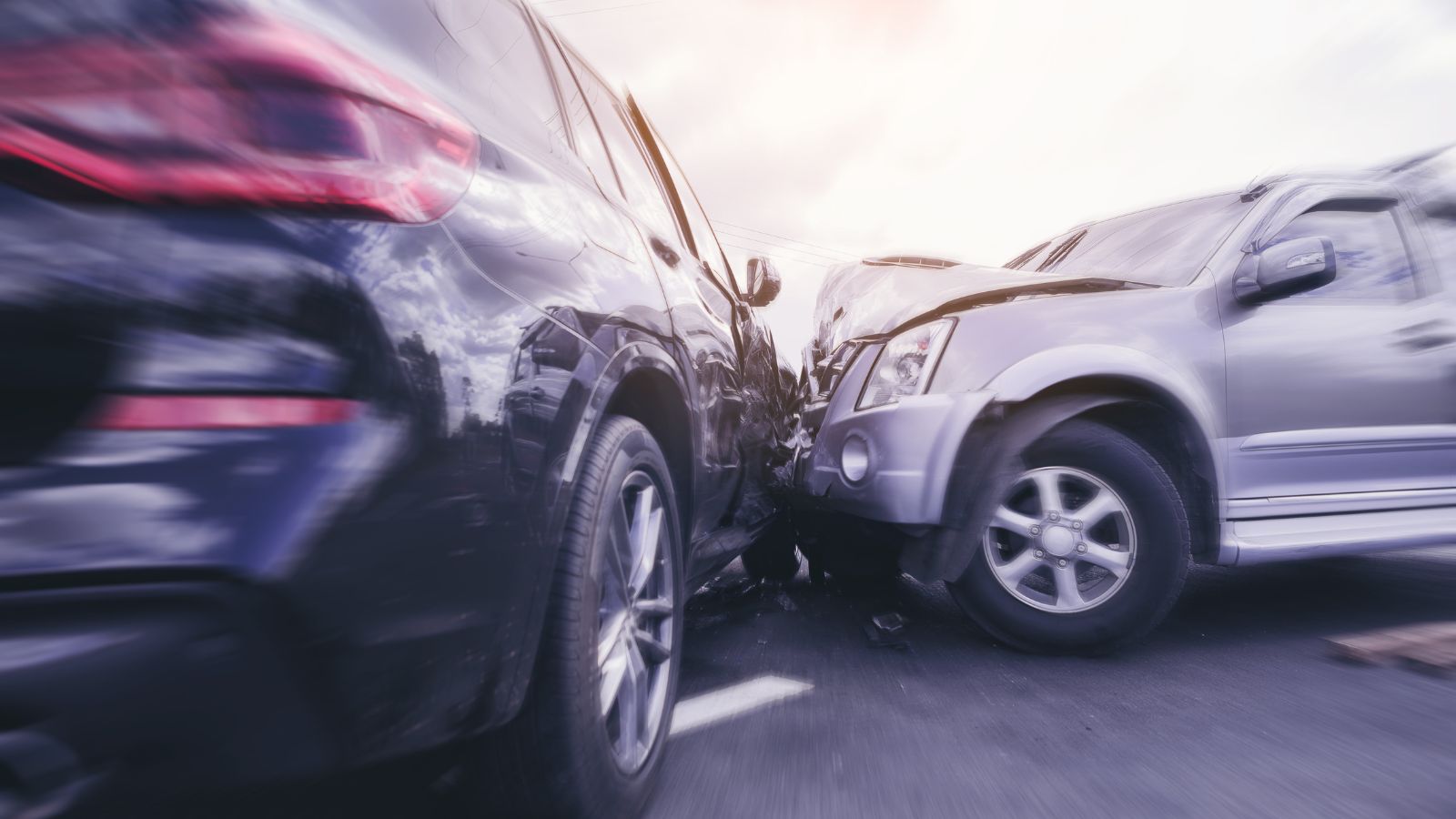
Forward-collision warning and automatic emergency braking have become common safety technologies, and their ability to assist during a genuine emergency is valuable. But they were never intended to make close following a sensible driving strategy. Transport Canada advises drivers to remain attentive, maintain safe speeds and leave appropriate following distance even when these systems are active. Sensor performance can also be affected by conditions such as heavy rain, snow, fog, darkness, glare or curved roads.
There is another practical reason not to depend on automation. Some collision-avoidance systems are specifically designed to brake when they determine that a crash risk is developing. A driver who routinely closes gaps aggressively may therefore end up provoking intervention rather than enjoying smoother travel. Technology works best as a backup layer, not as permission to eliminate the safety margin. The more predictable strategy remains decidedly low-tech: watch well ahead, preserve space and respond early. When those habits are present, automatic emergency braking is far more likely to remain what its name suggests—an emergency feature rather than a routine participant in highway driving.
Rain and Snow Make Abrupt Braking Even More Problematic
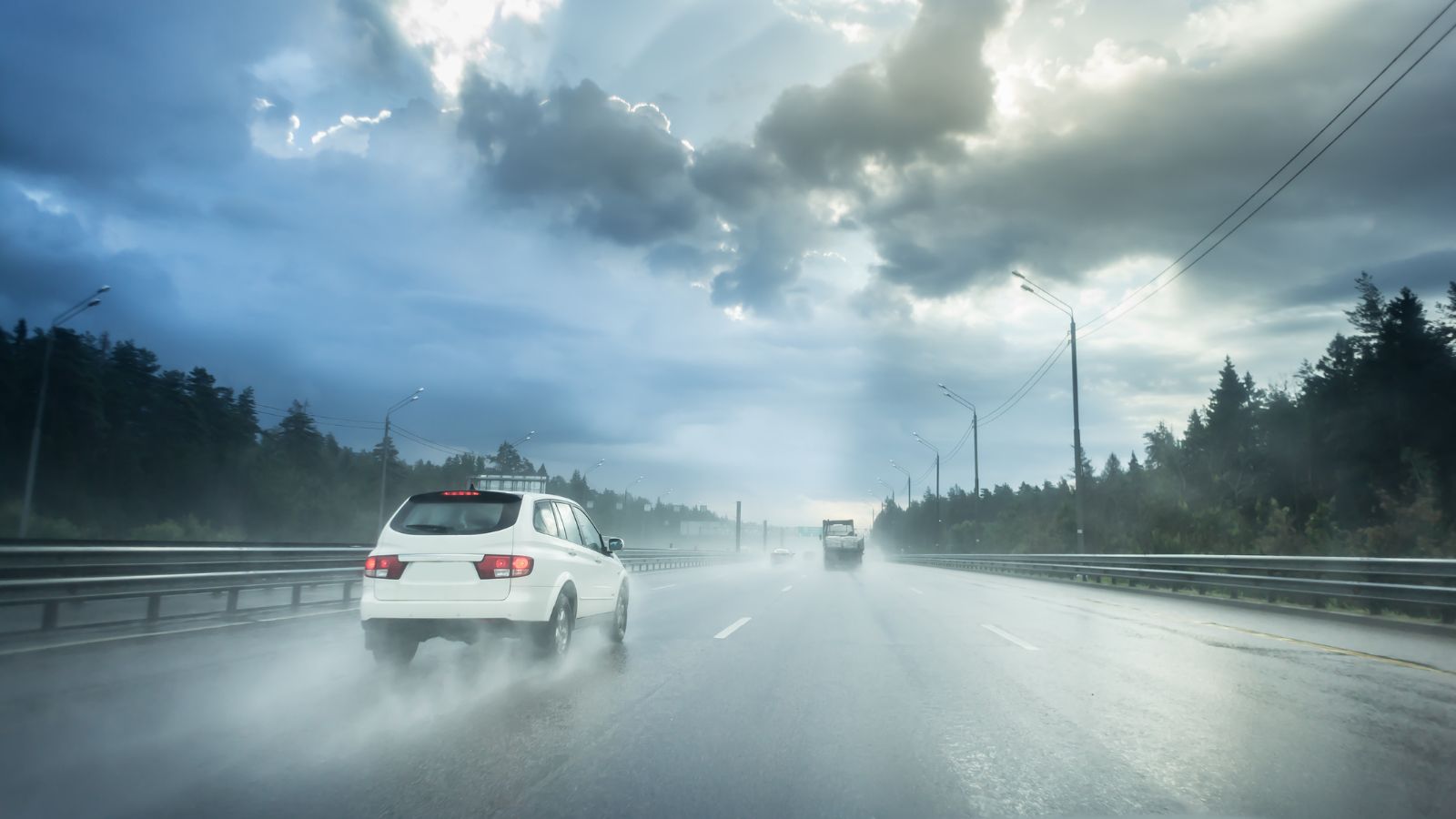
The safe gap on a dry summer highway is not automatically appropriate during rain, snow, fog or icy conditions. Reduced traction increases the importance of smoother inputs and greater spacing, while poor visibility reduces how much information drivers can gather about traffic farther ahead. That combination makes late reactions especially troublesome.
Ontario’s driving guidance recommends increasing following distance when conditions deteriorate and reducing speed gradually rather than making abrupt changes. Other road-safety organizations likewise advise drivers to avoid hard braking on wet roads where traction may be compromised. A common mistake is waiting until brake lights directly ahead become bright before responding. In bad weather, that leaves little margin for differences in tires, vehicle weight, road surface or visibility. A driver who begins slowing early gives the vehicle behind a clearer, more gradual warning as well. Smoothness becomes a form of communication. Instead of suddenly announcing, through hard braking, that conditions ahead have changed, the vehicle communicates that change over several seconds.
Repeated Braking Also Wastes Energy
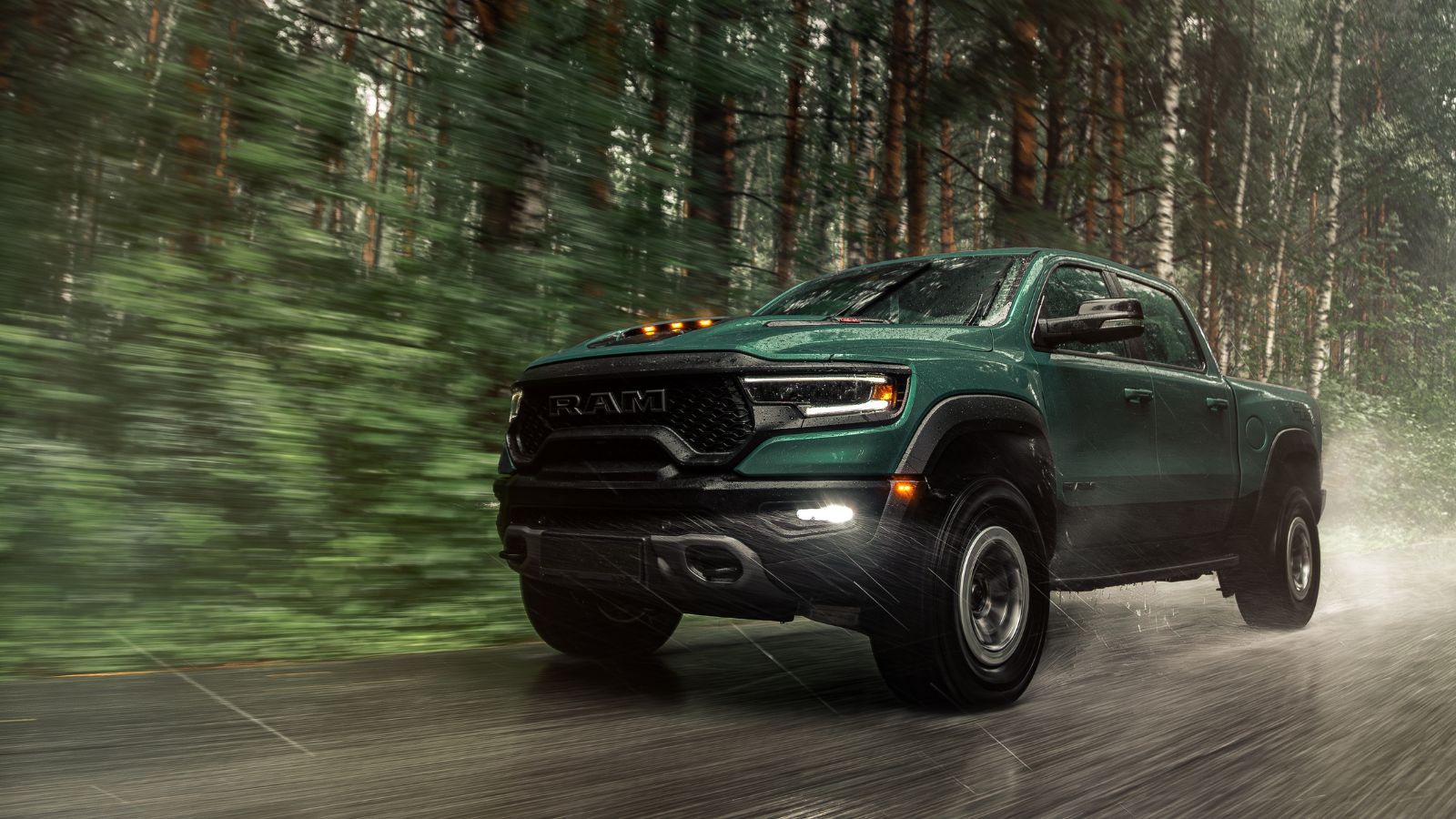
Constant accelerator-brake-accelerator driving does more than make traffic uncomfortable. For conventional gasoline vehicles, aggressive driving that includes rapid acceleration and braking can substantially reduce fuel economy. U.S. Department of Energy information cites research indicating that aggressive driving may lower fuel economy by roughly 15 to 30 per cent at highway speeds, depending on conditions and driving behaviour.
Traffic agencies have therefore looked at flow-smoothing strategies for reasons extending beyond congestion. Federal Highway Administration research into speed harmonization and connected-vehicle systems has examined how reducing speed oscillations can lower unnecessary braking, fuel consumption and emissions. The same principle applies on a much smaller individual scale. Every unnecessary speed correction requires energy to regain the speed that was just discarded through braking. Hybrid and electric vehicles can recover some energy through regenerative braking, but that does not eliminate the traffic disruption caused by an avoidable slowdown. The most efficient braking event, from both a traffic-flow and energy perspective, is often the one that anticipation makes unnecessary.
The Smoothest Driver Often Leaves More Space, Not Less
Heavy traffic creates a powerful temptation to defend every metre of pavement. A larger gap seems as though it will invite another vehicle to enter, so drivers close it. Yet the extra space can perform an important traffic-management function: it absorbs small fluctuations before they become brake applications. When traffic compresses slightly, a driver can ease off the accelerator. When it expands again, there is no need to race forward immediately and then brake again.
Experiments on stop-and-go waves have shown that changing the behaviour of even a small portion of vehicles can dampen traffic oscillations. Researchers have demonstrated this using controlled vehicles that respond more smoothly to changes in traffic rather than copying every acceleration and deceleration around them. Human drivers do not need sophisticated algorithms to apply the basic idea. Leave a usable buffer, scan beyond the nearest bumper and avoid rushing toward visible congestion. The objective is not to drive unusually slowly. It is to make fewer unnecessary changes in speed. On a crowded highway, predictability can be more valuable than squeezing into every available gap.
Ease Off Early Instead of Racing Toward the Brake Lights
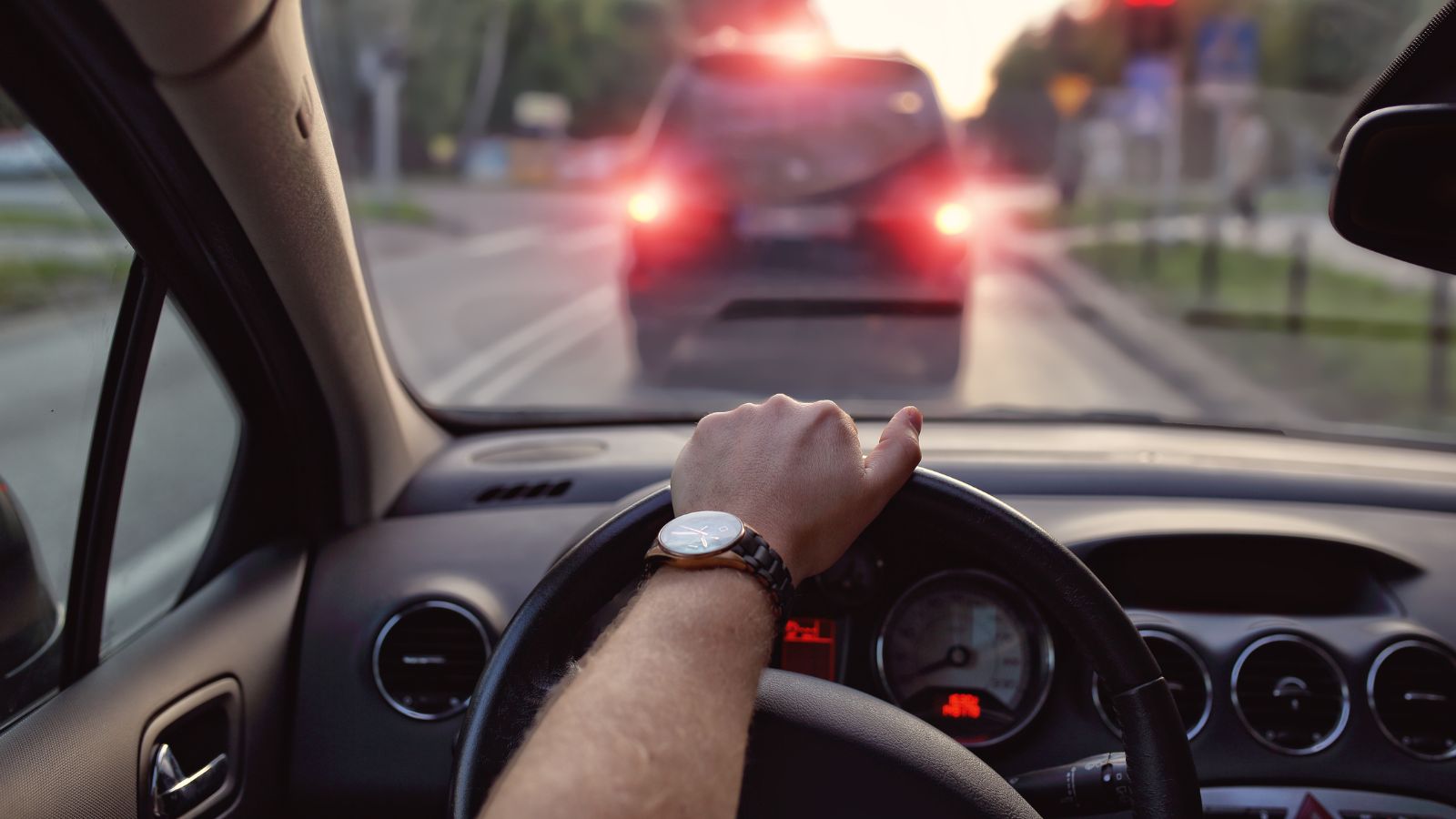
The practical solution to reactive highway driving is anticipation. If traffic is clearly tightening several hundred metres ahead, continuing at full speed until the nearest vehicle brakes gains very little. Lifting the accelerator early begins reducing speed gradually, keeps more distance available and gives drivers behind additional time to understand what is happening.
This approach does not mean refusing to brake when braking is required. Hazards, sudden stops and unpredictable road users can demand immediate action, and safety always takes priority over smooth traffic flow. The distinction is between emergency braking that cannot reasonably be avoided and routine braking created by poor observation or inadequate spacing. Government driving guidance repeatedly emphasizes visibility, space and communication as foundations of defensive driving. Those three ideas work especially well on highways. Looking farther ahead improves visibility. A larger following gap provides space. Gradual, predictable speed changes communicate intent. The reward is not merely a calmer trip for one vehicle. It reduces the chance that one ordinary slowdown becomes everybody else’s brake-light problem.
19 Used Cars Canadians Should Avoid in 2026 (Based on Owner Complaints)
Buying a used car in Canada can feel safe until repair bills start stacking up. Owner complaints tell a different story than glossy listings. Transmission failures, electrical problems, and weak winter reliability show up again and again in consumer reports. Many of these issues appear after warranties expire, when owners least expect them. Some vehicles look affordable upfront, but become expensive to keep on the road. Others struggle in cold weather, urban driving, or long highway commutes. Here are 19 used cars Canadians should avoid in 2026 (based on owner complaints).
19 Used Cars Canadians Should Avoid in 2026 (Based on Owner Complaints)

Alanna Rosen is an experienced content writer that focuses on many EV and educational content. Her articles are regularly published on Get CyberTrucked and syndicated on large publications.