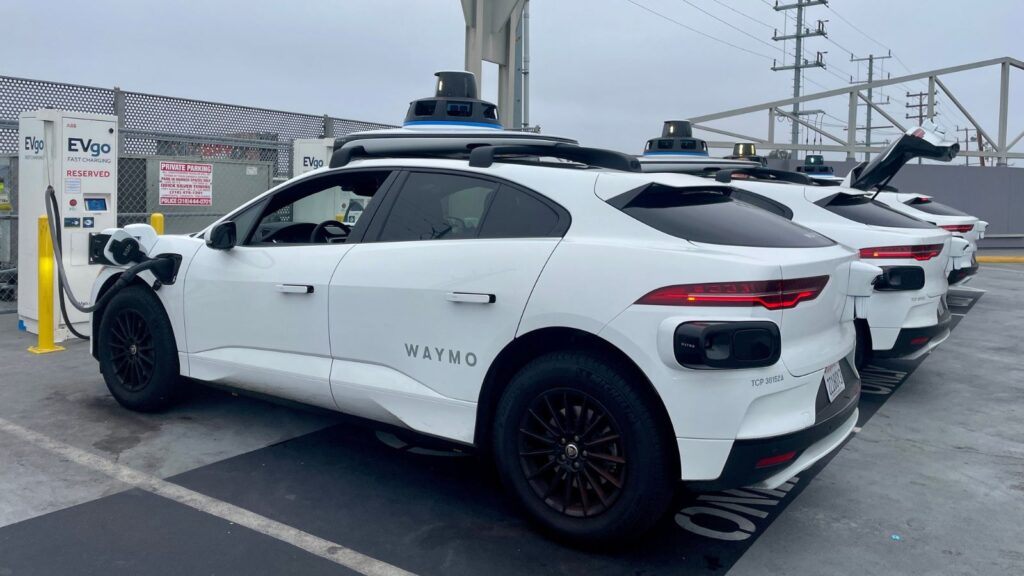
The sight of a car moving through busy city streets without anyone behind the wheel could soon become familiar in Canada. Waymo, the autonomous driving company owned by Alphabet, is reportedly preparing a massive expansion that could increase its robotaxi fleet to 20,000 vehicles by the end of 2027.
The ambitious target emerged on October 19, just days after Waymo confirmed plans to bring its driverless ride-hailing service to Toronto, with passenger operations targeted for 2028.
The company is already operating across 15 American cities and has secured billions of dollars to accelerate its expansion. However, entering the Canadian market presents challenges beyond purchasing vehicles. Winter weather, government regulations, road safety and public confidence will all help determine whether Toronto becomes a successful new market for autonomous transportation.
Waymo Reportedly Wants to Increase Its Fleet Fivefold
Waymo is considering one of the largest expansions in the commercial autonomous vehicle industry’s history. According to an October 19 report from Semafor, citing people familiar with the company’s plans, Waymo wants to increase its fleet from approximately 4,000 vehicles to 8,000 by the end of 2026. Its longer-term objective is reportedly to reach 20,000 vehicles by December 2027. That would represent a fivefold increase from its current fleet, potentially transforming Waymo from a rapidly growing transportation service into a much larger international robotaxi operator.
The numbers are significant, but they remain reported targets rather than official commitments. Waymo declined to comment on the specific projections, and no detailed public schedule identifies how many vehicles would be assigned to individual cities. The 20,000-vehicle figure also refers to the company’s broader planned fleet, not a commitment to operate that many robotaxis in Canada. Achieving the goal will require more than manufacturing additional electric vehicles. Waymo must prepare charging facilities, maintenance operations, regulatory approvals and customer-support systems capable of handling a much larger business.
A $5 Billion Loan Is Helping Finance the Expansion
Waymo’s aggressive growth plans follow a major financing announcement on October 8, when the company confirmed it had secured a US$5-billion term loan. The financing represents Waymo’s first debt transaction and involved major institutional lenders, including PIMCO, Blackstone and Sixth Street. Goldman Sachs served as the lead bookrunner. Waymo said the funds would provide additional financial flexibility as it expands autonomous ride-hailing services throughout the United States and into international markets. Semafor subsequently reported that the company intended to use the financing to support its planned fleet expansion.
The new loan comes on top of a separate US$16-billion equity investment announced in February 2026, which valued Waymo at approximately US$126 billion after the financing. Alphabet remains the company’s majority investor, providing important financial backing as commercial operations expand. However, securing capital does not guarantee profitable operations. Waymo must still purchase or integrate vehicles, build facilities, maintain fleets and generate enough passenger revenue to support its expenses. Investors will ultimately judge the expansion by whether increasing the number of available robotaxis improves the economics of operating the service.
Waymo Already Operates Across 15 American Cities
Waymo’s reported expansion is supported by several years of real-world commercial experience. The company began offering fully driverless public rides in Phoenix in 2020 before expanding into major markets including San Francisco, Los Angeles and Austin. Its footprint has grown quickly during 2026, reaching 15 American cities by September. Waymo’s Canadian information website now reports more than 500,000 passenger trips per week, illustrating how far the company has progressed from the small-scale demonstrations that once defined autonomous driving technology.
That existing customer base provides an advantage as Waymo enters new cities. The company has already developed procedures for passenger pickups, vehicle cleaning, charging, maintenance and responding to unexpected road conditions. A commuter booking a ride in San Francisco may encounter a fully autonomous electric vehicle that navigates traffic without a human driver present. Reproducing that experience elsewhere, however, involves adapting to different roads and local regulations. Operating successfully in sunny Phoenix does not automatically establish readiness for a February snowstorm in Toronto, and each additional city requires a separate validation process.
Toronto Is Confirmed as Waymo’s First Canadian Market
Waymo announced on October 16 that Toronto would become its first planned Canadian market, marking an important step beyond its American operations. The company intends to introduce fully autonomous ride-hailing in 2028, although the launch remains dependent on testing, regulatory approvals and operational readiness. Toronto was selected as Waymo continues expanding into major metropolitan areas, and the company has emphasized the city’s diversity, transportation needs and established public transit network. Co-chief executive Tekedra Mawakana described the Canadian expansion as an important milestone in the company’s international development.
For Toronto residents, the timeline requires an important distinction. Waymo vehicles are expected to begin appearing on local roads during the initial preparation phase in October 2026, but they will not immediately offer driverless passenger rides. The company says testing will begin with trained people behind the wheel, allowing engineers to collect data and evaluate local conditions. Toronto’s public service is targeted for 2028 rather than 2027, even if Waymo reaches its reported global fleet target before then. The company has not announced Canadian fares, a definitive service-area boundary or the number of vehicles that will eventually operate commercially.
Toronto Streets Will Be Mapped Before Driverless Rides Begin
Waymo’s first Canadian vehicles will be used to build detailed maps and collect information about Toronto’s road environment. The company has identified several neighbourhoods for initial validation work, including the St. Lawrence Market area, Harbourfront, Roncesvalles, Liberty Village, Don Mills, Yonge and Eglinton, Mimico and portions of Etobicoke. These locations contain different combinations of traffic patterns, road layouts and pedestrian activity. Testing in varied environments allows Waymo to examine how its autonomous driving technology responds to the everyday situations that make urban transportation complicated.
The initial vehicles will be driven manually by trained autonomous specialists before progressing toward more advanced testing. Waymo’s system relies on cameras, radar, lidar and computer processing to understand its surroundings and make driving decisions. Detailed mapping helps provide additional context about road geometry and local features. In Toronto, that could mean learning how streetcars share road space with other vehicles, recognizing complex intersections and anticipating cyclists near busy pickup locations. The company says its testing program will run through Ontario’s Automated Vehicle Pilot Program, and no commercial passenger rides are available during this preparatory stage.
Ontario’s Regulations Could Become a Major Challenge
Waymo has received approval to participate in Ontario’s Automated Vehicle Pilot Program, which allows authorized companies to test automated vehicles on public roads under specified conditions. Ontario introduced the pilot in 2016 and expanded it in 2019 to permit driverless testing in certain circumstances. However, the existing regulatory framework is scheduled to expire on October 13, 2027, creating an important question about the rules that will govern Waymo’s proposed commercial launch in 2028. Provincial authorization for testing is not equivalent to permission to operate an unrestricted driverless taxi service.
Ontario could extend the pilot program, replace it with permanent regulations or introduce another framework before Waymo begins carrying passengers. Those decisions have not yet been finalized. Regulators must consider vehicle safety, insurance coverage, incident reporting and how autonomous vehicles interact with emergency responders and other road users. The rules also need to address responsibility when no human driver is present. Waymo says it will continue working with authorities to obtain the permits required at each stage. For Canadian passengers, regulatory approval will be just as important as the company’s ability to demonstrate that its technology works.
Canadian Winters Will Put Autonomous Driving Technology to the Test
Toronto’s winter weather presents challenges that are less common in some of Waymo’s original operating markets. Snow-covered lane markings, icy roads, freezing rain and dirty sensors can make driving difficult even for experienced motorists. The company’s sixth-generation autonomous driving system has been designed with these conditions in mind. Introduced in February 2026, the latest Waymo Driver combines high-resolution cameras, advanced radar and lidar sensors with integrated cleaning mechanisms intended to maintain visibility when dirt, moisture and ice interfere with equipment.
Waymo has conducted winter testing in locations including Michigan, upstate New York and the Sierra Nevada, and its existing American operations include cities that experience snow and freezing temperatures. Nevertheless, Toronto will provide another demanding environment for the technology. A snowbank can narrow a road, obscure a pedestrian or change the space available for passing vehicles. Waymo says its system can adjust driving behaviour according to changing conditions and that operations may be restricted when weather becomes unsafe. The challenge is not simply whether a robotaxi can move through snow, but whether it can consistently make safe decisions throughout an unpredictable Canadian winter.
A Canadian Fleet Partner Could Help Create Hundreds of Jobs
Waymo’s arrival in Toronto includes a significant partnership with Element Fleet Management, a Canadian company headquartered in the city. The two businesses announced an expansion of their existing relationship on October 16, building on a June agreement that began supporting Waymo’s operations in San Diego. Element will provide end-to-end fleet management services for the Toronto deployment, including vehicle maintenance, charging operations, facility management and operational coordination. The partnership gives Waymo access to an established fleet specialist instead of requiring every support function to be developed internally.
Waymo and Element say their Canadian operations could support hundreds of jobs over time, including positions in maintenance, validation driving, customer service and fleet operations. Those positions represent a planned longer-term employment opportunity, not a confirmed number of workers already hired. The relationship also demonstrates that autonomous transportation still requires considerable human support even when passengers eventually ride without drivers. Vehicles need inspections, repairs, cleaning and charging, while operations teams must respond to unexpected situations. Waymo also maintains Canadian connections through the Canada Pension Plan Investment Board, an investor, and Magna International, its automotive manufacturing partner.
New Electric Vehicles Will Support the Growing Robotaxi Fleet
Waymo’s expansion will increasingly rely on vehicles designed or adapted specifically for autonomous ride-hailing. The company’s existing fleet includes the electric Jaguar I-PACE, which will also be used for its first Canadian testing operations. However, Waymo has introduced a newer vehicle called the Ojai, developed using a platform supplied by Chinese automaker Zeekr, part of Geely Holding Group. The Ojai features a spacious passenger cabin, sliding doors and Waymo’s sixth-generation autonomous driving system. The company began introducing it to public passengers in American markets during 2026.
Waymo also has a partnership with Hyundai to integrate its autonomous driving technology into the IONIQ 5 electric SUV. Hyundai has confirmed that vehicles for the program will be assembled at its Georgia manufacturing operation. Meanwhile, Waymo works with Magna at a facility in Mesa, Arizona, where autonomous systems are integrated into vehicles before deployment. The facility has been designed to support eventual production capacity of tens of thousands of Waymo-equipped vehicles annually. That manufacturing flexibility will be important if the reported 20,000-vehicle fleet target is achieved. For Toronto, however, Waymo has confirmed only a limited initial deployment of Jaguar I-PACE vehicles, with gradual expansion planned afterward.
Independent Safety Research Shows Progress, but Questions Remain
Waymo frequently points to its safety record as evidence that autonomous vehicles can reduce collisions. Its published safety analysis covering approximately 271 million fully autonomous miles through June 2026 found 95% fewer crashes involving serious injury or worse compared with estimated human-driver benchmarks in the American cities studied. A separate July 2026 study from the Insurance Institute for Highway Safety reached an encouraging conclusion using a different methodology. Researchers found that Waymo’s driverless vehicles experienced 68% fewer police-reportable crashes per mile than human drivers in comparable locations and periods.
Those findings are important, but they do not mean the technology is incapable of mistakes. The U.S. National Transportation Safety Board has investigated incidents involving Waymo vehicles passing stopped school buses. A December 2025 software recall affected 3,067 vehicles, while a separate January 2026 incident in Austin highlighted the challenges of interpreting school-bus signals and remote assistance responses. The independent insurance research also warned that federal crash-reporting systems need improvement as autonomous operations expand. Toronto regulators will need to examine both the positive safety evidence and documented failures when evaluating whether the technology is ready for Canadian streets.
Driverless Taxis Could Change Transportation Choices in Toronto
Waymo’s arrival could introduce a new option for people who need transportation but do not want to drive or own a vehicle. The company says its service is intended to complement public transit, walking and cycling rather than replace them. A robotaxi could eventually provide transportation for someone travelling home after transit service becomes less convenient, or for a person who cannot drive independently. Waymo has also begun working with Canadian accessibility organizations, including CNIB and BALANCE for Blind Adults, as part of its preparations for Toronto.
However, the economic and social effects remain uncertain. Traditional taxi and ride-hailing drivers may view autonomous vehicles as a threat to their income, while passengers will want to know how fares compare with existing services. More vehicles travelling between pickups could also contribute to congestion if fleet operations are not carefully managed. Accessibility will require more than a vehicle that drives itself; passengers may still need assistance with boarding, luggage or mobility equipment. Waymo has not announced Toronto pricing or established that its initial fleet will meet every accessibility requirement. Those practical details will determine how useful the service becomes.
The Next Two Years Will Determine Whether Expansion Targets Become Reality
Waymo is pursuing several international markets simultaneously, making the reported fleet target part of a much broader expansion strategy. In September, the company announced plans to introduce commercial autonomous rides in Tokyo in 2027 through partnerships with Nihon Kotsu and the GO taxi platform. It is also preparing operations in London and has identified 2028 as the intended commercial launch year for Singapore. Each market has its own regulatory requirements, transportation habits and operating conditions, so vehicles cannot simply be transferred from one country to another and begin carrying passengers immediately.
The next important milestones are therefore measurable. By the end of 2026, industry observers will be watching whether Waymo approaches the reported 8,000-vehicle target. During 2027, attention will shift toward international deployments, manufacturing capacity and the regulatory decisions necessary for Toronto’s anticipated 2028 service. For Canadians, the most visible evidence of progress will come from testing on local streets, the development of charging and maintenance facilities, and eventual confirmation of commercial operating permissions. Waymo has demonstrated that driverless ride-hailing can function at substantial scale. The question now is whether it can expand quickly without sacrificing the safety and reliability required to earn public confidence.
