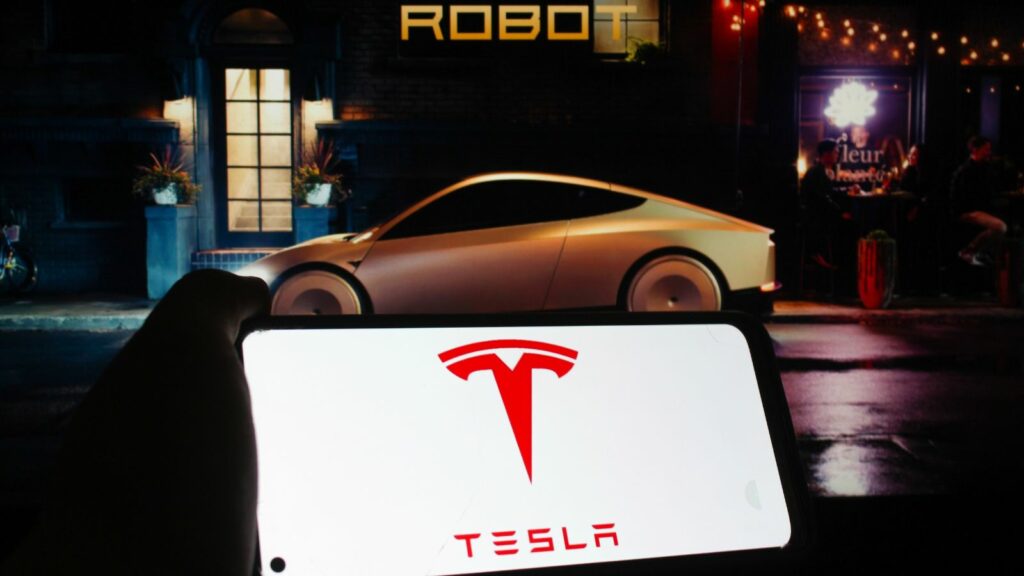
Self-driving taxis are becoming a reality in more American cities, but Canadian passengers are still waiting for the same opportunity. Tesla expanded its Robotaxi service to Fort Worth, Texas, on November 2, 2026, marking another step in the company’s effort to build an autonomous ride-hailing network across the United States.
The expansion follows months of growing operations in Texas and Florida, where Tesla has been introducing new service areas, extending operating hours, and deploying vehicles capable of transporting passengers without a traditional driver. However, significant questions remain about availability, safety, and how quickly the technology can reach new markets. For Canadians, the development highlights a widening gap between the automated driving features available in privately owned vehicles and the fully autonomous transportation services emerging south of the border.
Fort Worth Becomes Tesla’s Newest Robotaxi Market
Tesla officially launched its Robotaxi service in Fort Worth on Monday, November 2, with rides becoming available at 6 a.m. Central Time. The company announced the expansion through its official Robotaxi account on X, sharing a map outlining the new operating area. Fort Worth becomes Tesla’s seventh U.S. Robotaxi market across Texas and Florida, joining Austin, Dallas, Houston, Miami, Orlando, and Tampa. The opening represents the company’s first new city launch since expanding into Orlando and Tampa during July, making it a notable development in Tesla’s broader autonomous transportation strategy.
Early customer activity offered an indication that the service was operating beyond an announcement. A Fort Worth rider shared details of a first Robotaxi booking and subsequently posted footage from inside the vehicle. However, Tesla’s initial announcement did not disclose how many vehicles were assigned to the city, what customers would pay, or whether safety personnel would accompany rides. Those unanswered questions matter because launching in a new city does not automatically establish the service’s capacity or its ability to accommodate substantial passenger demand.
The New Service Area Covers Much of Fort Worth
Tesla’s initial Fort Worth operating area is centred on downtown and extends toward several surrounding communities, including White Settlement, Saginaw, Haltom City, and Benbrook. Some industry publications estimate that the service covers approximately 143 square miles, although other independent measurements have produced smaller figures. Tesla itself did not publish an official area measurement alongside its announcement. Regardless of the exact size, the boundary represents a meaningful expansion of the company’s North Texas operations, particularly because Fort Worth already shares a large metropolitan region with Dallas, where Tesla introduced Robotaxi rides earlier in 2026.
The geographical restrictions are important for understanding what passengers can actually expect. Tesla operates within designated service boundaries, commonly called geofences, rather than offering unrestricted transportation throughout an entire metropolitan region. A resident may live within the city limits but still be unable to book a Robotaxi if the requested journey falls outside the supported area. The Fort Worth and Dallas service zones were not connected at launch, meaning passengers could not simply assume that a Robotaxi would carry them between the two cities. Expansion therefore depends on both adding new cities and gradually connecting the neighbourhoods within them.
Texas Has Become the Centre of Tesla’s Robotaxi Expansion
Tesla’s autonomous ride-hailing journey began in Austin, Texas, in June 2025, when the company introduced a limited service using a small fleet of vehicles and human safety monitors. The operation has since expanded considerably. In April 2026, Tesla introduced Robotaxi services in Dallas and Houston, with footage showing Model Y vehicles operating without a human driver or safety monitor in the front seats. Subsequent launches in Florida brought the service to Miami, Orlando, and Tampa. Fort Worth now represents Tesla’s fourth Texas city and another step toward establishing an interconnected transportation network across major American metropolitan areas.
Tesla has also been improving operations in cities where Robotaxi is already available. In October, the company expanded its Houston coverage to include additional neighbourhoods such as Montrose, Midtown, and downtown. Tesla also announced operating hours extending from 6 a.m. to 2 a.m., although availability can differ between markets. These changes have practical implications for passengers who need transportation outside traditional commuting hours. Late-night restaurant workers, travellers, and people returning from entertainment venues could benefit from longer operating windows. Nevertheless, extending service hours in one market does not guarantee identical availability in Fort Worth.
Booking a Robotaxi Is Designed to Feel Like Regular Ride-Hailing
Tesla has structured its Robotaxi experience around a dedicated smartphone application, making the booking process similar to conventional ride-hailing services. Passengers download the Robotaxi app, sign in using a Tesla account, and enter their destination within the available service area. The application displays an estimated fare and waiting time before the trip is confirmed. Once the vehicle arrives, passengers verify its licence plate, enter the cabin, and begin the journey using the vehicle’s touchscreen or their smartphone. Tesla’s passenger instructions indicate that vehicles generally wait seven minutes at designated pickup locations before an unclaimed booking may be cancelled.
The experience also includes several features intended to make passengers comfortable without a traditional driver. Customers can adjust climate settings, access entertainment, monitor trip progress, and request assistance through the application or onboard touchscreen. Tesla also provides a way to request that the vehicle pull over or stop during a journey. However, some restrictions remain. Passengers need a smartphone to book, cannot currently arrange rides on behalf of another person, and generally cannot select a specific vehicle model. Pricing can also change, meaning fares shown during introductory operations should not be interpreted as permanent rates.
Cybercab Represents Tesla’s Bigger Autonomous Vehicle Ambitions
Fort Worth’s expansion comes as Tesla introduces its purpose-built Cybercab, a vehicle designed specifically for autonomous transportation rather than traditional ownership and driving. Unlike the Model Y vehicles already used throughout its Robotaxi network, Cybercab features a two-passenger cabin, butterfly-style doors, and a central touchscreen without a conventional steering wheel or driving pedals. Tesla began offering Cybercab rides in limited areas of Austin on September 3, 2026, demonstrating how its long-term transportation strategy extends beyond adapting existing vehicles. However, the company has not confirmed that Cybercabs are part of Fort Worth’s initial operating fleet.
During Tesla’s October earnings discussions, executives outlined plans to introduce Cybercab rides in Dallas during November, with additional markets expected afterward. The company’s third-quarter update also identified Cybercab manufacturing capacity at its Texas facility as part of its production plans. However, producing autonomous vehicles is only one component of building a commercially successful transportation network. Vehicles must be charged, maintained, dispatched, and supported when unexpected problems arise. Regulatory scrutiny remains another challenge. In September, American safety regulators opened an investigation into whether Tesla properly certified the Cybercab under federal vehicle safety requirements, particularly because its design lacks conventional manual driving controls.
Safety Remains One of the Biggest Questions
Tesla has published safety statistics intended to demonstrate the progress of its autonomous vehicle technology. In its October 2026 Robotaxi safety report, the company recorded approximately 3.1 million miles of unsupervised autonomous driving between January 22 and October 18. Tesla reported no injuries in collisions where a Robotaxi made first contact, no deployments of its own vehicles’ airbags, and no pedestrians or cyclists struck first by a Robotaxi. The company also identified approximately 862,000 miles driven after dark and at least 113,000 miles during rainy conditions, offering a clearer picture of the environments in which its vehicles have operated.
Those statistics are encouraging, but their limitations are important. Tesla’s figures exclude driving with onboard safety monitors, and its injury calculations use a different definition from the human-driver comparison presented in the same report. The company’s rapidly increasing online mileage counter also represents an estimate rather than a continuously audited total. Meanwhile, the U.S. National Highway Traffic Safety Administration requires companies to report qualifying automated-driving crashes and has separately investigated the certification of Tesla’s Cybercab. Safety assessments must consider exposure to difficult situations, reporting definitions, and long-term performance. A growing number of driverless miles is meaningful, but reliable operation across different cities and road conditions remains essential.
Tesla Faces Growing Competition From Waymo
Tesla is expanding into an American autonomous transportation market where competitors are already establishing substantial operations. Alphabet-owned Waymo offers fully autonomous ride-hailing in several cities where Tesla also operates, including Austin, Dallas, and Houston. Waymo has also expanded into markets such as Phoenix, Los Angeles, San Diego, and San Antonio. On October 14, 2026, the company announced that its services in Tampa, San Diego, and San Antonio were available to the general public without invitation requirements. The competition creates pressure on Tesla to provide more than technological demonstrations, as passengers increasingly expect practical transportation alternatives with predictable availability.
For Canadians, Waymo’s plans are particularly significant. On October 16, the company announced Toronto as its first planned Canadian Robotaxi market, targeting the introduction of commercial passenger rides in 2028. Waymo has received provincial approval to participate in Ontario’s automated vehicle testing program and is preparing to map Toronto streets before progressing through supervised testing. It has also partnered with Toronto-based Element Fleet Management to support fleet operations, maintenance, and customer services. The announcement does not mean driverless rides are currently available in Toronto, but it establishes a concrete Canadian expansion plan while Tesla continues concentrating its commercial Robotaxi efforts in the United States.
Canadian Tesla Owners Still Need to Supervise Their Vehicles
Although Tesla sells vehicles equipped with advanced driver assistance technology in Canada, these systems do not provide the same experience as the company’s commercial Robotaxi service. Tesla currently advertises Full Self-Driving (Supervised) for $99 per month on its Canadian website. The software can perform complex driving tasks, including steering, navigating intersections, changing lanes, and responding to surrounding traffic. However, Tesla explicitly states that the technology does not make a privately owned vehicle autonomous. Drivers must remain attentive, monitor the road, and be prepared to take control whenever necessary, regardless of how confidently the vehicle appears to handle a particular journey.
The difference becomes especially important when considering legal responsibility and public expectations. A Canadian Tesla owner using Full Self-Driving (Supervised) remains responsible for operating the vehicle safely, including complying with traffic laws. A commercial Robotaxi service operates under a different model, with the provider responsible for managing the autonomous fleet, defining operating areas, supporting passengers, and addressing operational problems. Consequently, the availability of advanced driver assistance software in Canada should not be mistaken for authorization to operate a personal Tesla without a driver. Tesla’s Fort Worth expansion does not change the existing supervision requirements for Canadian vehicle owners.
Canadian Regulations Could Slow the Arrival of Driverless Taxis
Canada’s regulatory environment presents a different challenge from the one Tesla faces in Texas. Transport Canada establishes federal vehicle safety standards, while provincial and territorial governments oversee vehicle registration, insurance, testing, and operation on public roads. Municipal governments also influence local transportation requirements, including taxi services and roadway management. Ontario has permitted automated vehicle testing through a provincial pilot program since 2016, with subsequent changes allowing driverless testing under specific conditions. The program is currently scheduled to continue until October 13, 2027, providing a controlled environment for evaluating emerging technology rather than unrestricted authorization for commercial autonomous transportation.
Waymo’s approval to begin testing in Toronto demonstrates how this regulatory process works. The company can conduct mapping and supervised testing, but additional approvals will be necessary before commercial driverless passenger operations begin. Other provinces have different requirements. British Columbia’s Motor Vehicle Act generally restricts Level 3, 4, and 5 automated vehicles from operating on public highways unless regulations permit otherwise. Transport Canada is also developing a broader regulatory framework for automated driving technology. For Tesla, entering Canada would therefore require more than transferring vehicles across the border. Any commercial launch would depend on satisfying applicable safety standards, securing operational permissions, and coordinating with local authorities and emergency services.
Winter Conditions and Future Expansion Will Shape What Happens Next
Canadian weather presents another important challenge for autonomous transportation. Snow-covered lane markings, icy roads, freezing rain, and reduced visibility can complicate the decisions automated driving systems must make. The University of Toronto’s WinTOR research program specifically examines the difficulties autonomous vehicles encounter during winter conditions, including perception, prediction, planning, and vehicle control. Transport Canada’s automated-driving testing guidelines also emphasize defining the environmental conditions in which a system can operate safely. A Robotaxi capable of handling busy Texas intersections must demonstrate that it can also respond appropriately when road conditions deteriorate, particularly without a human driver available to intervene.
Tesla has identified Las Vegas, Phoenix, Jacksonville, and San Antonio as upcoming American Robotaxi markets, although it has not established public launch dates for those cities. Interestingly, Fort Worth was not included in that previously announced group, illustrating how the company’s expansion plans can change as operations develop. For Canadians, the clearest announced path toward commercial autonomous ride-hailing currently comes from Waymo’s Toronto initiative and its proposed 2028 launch. Tesla has not announced a comparable Canadian timetable. Ultimately, the arrival of autonomous taxis will depend on proven safety performance, suitable regulations, reliable year-round operations, and public confidence. Fort Worth represents another milestone for Tesla, but widespread Canadian access remains a separate challenge.
