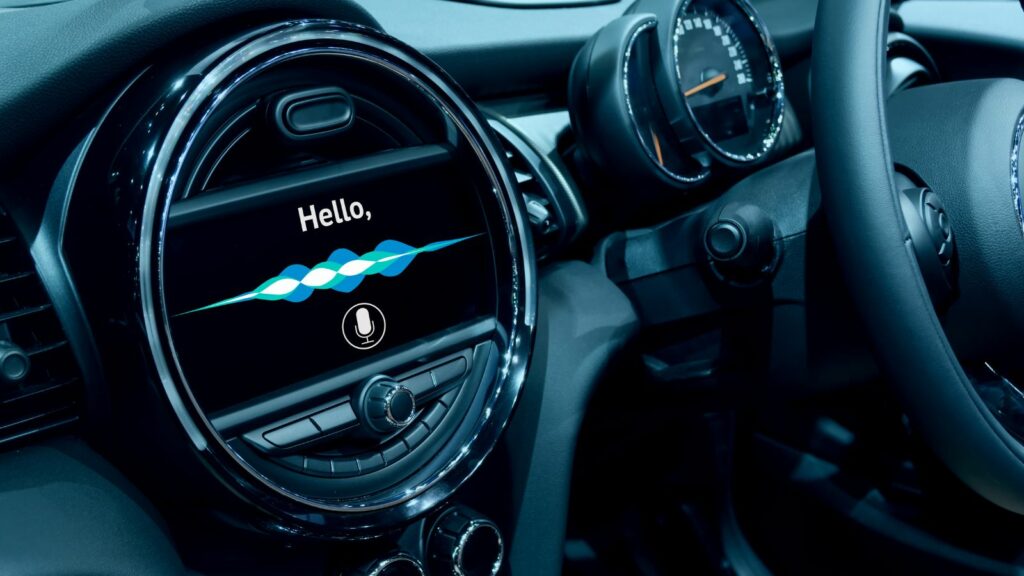
Cars are becoming increasingly capable of holding conversations, but automakers see a much bigger opportunity than replacing clumsy voice commands. Artificial intelligence could become the interface through which drivers discover vehicle features, schedule maintenance, find charging, buy subscriptions and pay for services without leaving the dashboard.
General Motors offers a glimpse of the economics behind that strategy. Its connected-services business is expanding rapidly, while Google Gemini is being introduced across millions of GM vehicles. One important distinction sits behind the widely cited $10.5 billion figure: GM expects more than $3 billion in realized software-and-services revenue during 2026 while deferred revenue approaches $7.5 billion by year-end. Those figures are not identical to $10.5 billion of annual recognized sales, but together they show how much future value automakers believe can be attached to a vehicle after it leaves the dealership.
GM’s $10.5 Billion Figure Comes With an Important Asterisk
GM’s latest financial disclosures show why software is attracting so much attention inside the automotive industry. During the second quarter of 2026, the company reported about $800 million in recognized OnStar revenue, more than 20% higher than a year earlier. Deferred OnStar revenue reached approximately $6.3 billion, an increase of nearly 50%. GM expects its subscriber base to approach 13 million by the end of 2026 and says realized software-and-services revenue should exceed $3 billion for the year.
At the same time, GM expects deferred revenue to approach $7.5 billion by year-end. Adding the two figures produces roughly $10.5 billion, but the distinction matters. Deferred revenue generally reflects services that have been contracted or bundled but will be recognized over future periods as GM delivers them. It therefore should not be described simply as $10.5 billion in annual software sales. Even with that qualification, the numbers are substantial. Super Cruise alone is expected to generate roughly $400 million in realized revenue in 2026, with GM projecting more than 850,000 subscribers by year-end.
AI Could Become the New Digital Dealership Counter
For decades, manufacturers made most of their money when a vehicle was sold, while dealers captured much of the subsequent relationship through servicing, accessories and repairs. Connected cars change that equation. An AI assistant that remains with a driver for years could explain an unfamiliar feature, recommend a subscription, identify a maintenance problem or surface a paid service precisely when it becomes relevant. The interaction can feel more like asking a knowledgeable passenger for help than navigating through several layers of touchscreen menus.
That creates an unusually powerful sales channel because the software can understand the context around a request. A driver asking about a long highway trip might learn that a vehicle supports a particular driver-assistance feature, while someone searching for charging could be directed toward compatible services. The commercial opportunity still depends on restraint. McKinsey research found that bundling connected-car features increased purchase interest by more than 16 percentage points compared with presenting features individually. Yet consumers did not value every digital feature equally, suggesting an AI salesperson that constantly pitches upgrades could quickly become more irritating than useful.
GM Is Turning OnStar Into an AI-Powered Layer
GM’s strategy goes beyond adding a chatbot to the infotainment screen. The company has been positioning OnStar as an AI-powered connected intelligence platform linking the vehicle, its condition and a growing collection of digital services. In 2026, GM began expanding Google’s Gemini assistant to eligible Chevrolet, Buick, GMC and Cadillac models from the 2022 model year onward with Google built-in. GM said roughly four million vehicles in the United States could ultimately be eligible.
Gemini can support conversational requests that would have been awkward for older command-based voice systems, including composing messages, finding destinations and planning routes through natural back-and-forth dialogue. GM is also developing its own vehicle-focused AI assistant using proprietary information. With permission, the system is intended to understand vehicle-specific data and personal preferences, potentially helping owners interpret features, anticipate maintenance needs or prepare the cabin. That is strategically important. General-purpose AI can answer questions about almost anything, but an automaker-controlled assistant has something a phone chatbot usually lacks: detailed knowledge of the machine carrying the driver down the road.
Ford, BMW and Stellantis Are Building Their Own Assistants
GM is far from alone. Ford began rolling out its own AI assistant through the Ford and Lincoln mobile apps in 2026, saying the technology could ultimately reach as many as eight million customers. Ford plans to bring an assistant directly into selected vehicles in 2027. Its system is designed to answer questions using vehicle-specific information and, where available, live data such as tire pressure, oil life, warning indicators and servicing needs.
European manufacturers are moving in the same direction. BMW started deploying an enhanced Intelligent Personal Assistant based on Amazon’s Alexa+ technology, beginning with the Neue Klasse iX3 and expanding across compatible models. Stellantis, meanwhile, has worked with French AI company Mistral AI on a conversational in-car assistant that can function like an interactive owner’s manual, explaining vehicle controls and warning indicators through natural speech. The approaches differ, but the objective is increasingly similar: replace rigid voice-command trees with a conversational interface that stays connected to the vehicle throughout ownership. Once that interface becomes useful enough to be used regularly, selling digital services through it becomes far easier.
The Most Valuable AI May Be the One That Knows the Car
A generic chatbot can recommend a restaurant. A deeply integrated automotive assistant can theoretically know whether the vehicle has enough range to reach it, whether a tire is losing pressure and whether scheduled maintenance is approaching. That difference could determine whether in-car AI becomes a genuine ownership tool or simply another technology demonstration. Ford, for example, has highlighted the ability of its assistant to interpret vehicle-health information instead of forcing an owner to search through manuals or decipher dashboard warnings.
Automotive technology suppliers are building around the same idea. Cerence has demonstrated AI ownership assistants capable of explaining underused vehicle features, providing vehicle-health information, helping arrange service and identifying available digital upgrades. A driver seeing an unfamiliar warning light could eventually ask what happened, hear an explanation and find an appropriate service appointment through one conversation. For manufacturers, that convenience creates additional opportunities to retain customers inside their digital ecosystem. For drivers, the trade-off is straightforward: recommendations need to solve an immediate problem. An assistant that understands the car can earn attention; one primarily designed to advertise add-ons risks losing it.
Drivers Will Pay for Digital Services, but Not Indiscriminately
The industry’s recurring-revenue ambitions collide with a basic consumer question: which services are actually worth another payment? McKinsey research involving motorists in the United States, Germany and China found that 39% preferred subscription payments for connected services, compared with 30% who preferred a one-time payment. Among those choosing subscriptions, more than 60% preferred annual billing. The same research found consumers’ willingness to pay for connectivity features averaged about 80% of the prices then being charged by premium manufacturers, indicating that pricing can easily outrun perceived value.
More recent evidence reinforces the importance of utility. Deloitte’s 2026 Global Automotive Consumer Study, covering more than 28,500 consumers across 27 markets, found the greatest willingness to pay for connected functions involving safety and security, including emergency assistance, automatic incident detection and anti-theft tracking. J.D. Power has also found substantial interest in in-vehicle payment functions, particularly for everyday expenses such as fuel, charging, parking and tolls. AI could make those transactions easier, but convenience alone does not guarantee another monthly subscription.
Software Margins Help Explain the Industry’s Urgency
Traditional car manufacturing is expensive. Factories, materials, labour, warranty costs and logistics consume enormous amounts of capital. Digital services look attractive partly because their economics can be dramatically different once the underlying technology is built. GM has said the gross margins of its connected-services operations are approximately 70%, a level much closer to software economics than conventional vehicle manufacturing. That helps explain why executives increasingly focus on the lifetime value of a customer rather than solely on the profit earned at the original vehicle sale.
GM already generated roughly $2.7 billion in recognized connected-services revenue during 2025, according to Counterpoint Research, while ending that year with about 12 million OnStar subscribers. Its Super Cruise subscriber population exceeded 620,000 and had risen by roughly 80% year over year. Yet the industry-wide transformation remains uneven. Counterpoint noted that most of the world’s largest automotive groups still did not separately disclose connected-services revenue. That makes GM an unusually visible test case: if its subscription base and deferred-revenue balance keep expanding, competitors will have even stronger incentives to make software a permanent part of vehicle economics.
Personalization Creates a Serious Privacy Test
The more useful automotive AI becomes, the more information it may need. A genuinely personalized assistant could use a vehicle’s location, destination history, service condition, preferred cabin settings, calendar information or other connected data to anticipate what an owner needs. Deloitte’s 2026 research found consumers were particularly concerned about sharing information from synced devices, in-cabin cameras and vehicle-location systems. Those concerns become more significant when the same AI interface that processes personal context is also expected to recommend commercial services.
GM has already experienced how sensitive connected-car data can become. In January 2026, the U.S. Federal Trade Commission finalized an order settling allegations that GM and OnStar collected, used and disclosed precise location and driving-behaviour information without adequate notice and affirmative consent in certain circumstances. The order includes restrictions on sharing specified data with consumer-reporting agencies and long-term requirements concerning consent, access and deletion. The episode does not mean personalized automotive AI cannot work. It demonstrates that data governance is part of the product itself. Drivers may accept recommendations based on their vehicle’s needs while reacting very differently if they cannot tell what information created those recommendations or where that information goes.
A Friendly Voice Can Still Be Distracting
Voice interfaces have one obvious appeal inside a moving vehicle: they can reduce the need to look down and tap a screen. Research has nevertheless shown that hands-free interaction is not automatically free from distraction. A 2023 study published in Accident Analysis & Prevention found speech-based assistants could reduce visual-manual demands compared with manual interfaces, while more complicated tasks such as composing messages still added cognitive workload. Earlier AAA Foundation research reached a similar broader conclusion: the difficulty and duration of a mental task matter even when a driver’s hands remain on the wheel.
That becomes especially relevant if AI assistants evolve into commercial platforms. A short spoken reminder that a charging session can be paid for automatically is very different from a lengthy attempt to sell an upgrade while traffic is demanding attention. J.D. Power’s 2026 U.S. Initial Quality Study found infotainment remained a significant trouble area, and among owners who reported a distraction-related vehicle problem, 46% attributed it to the infotainment system or touchscreen. Successful automotive AI therefore needs to know not only what to say, but when saying less is safer.
The Winning Model Will Feel Helpful Before It Feels Commercial
Automakers have a compelling reason to turn the dashboard into a long-term digital relationship. Connected vehicles can continue generating revenue years after they are sold, and AI provides a natural interface for discovering those services. But the strongest consumer evidence points toward a simple rule: people appear more receptive when technology removes friction from something they already need. Paying for parking, finding charging, receiving an early maintenance warning or activating emergency assistance has an obvious benefit. A persistent stream of upgrade suggestions does not.
That distinction could determine how large the opportunity becomes. Deloitte found consumers remain open to AI-driven personalization and over-the-air improvements, while simultaneously demanding trust and transparency around connected data. McKinsey’s findings similarly suggest packaging and pricing have major effects on willingness to buy. GM’s rapidly expanding connected-services operation demonstrates why manufacturers are pursuing the model so aggressively, but the $10.5 billion trajectory is ultimately about more than a financial target. The most successful in-car AI may be the system that can sell something without making the driver feel as though the car has turned into a rolling advertisement.
