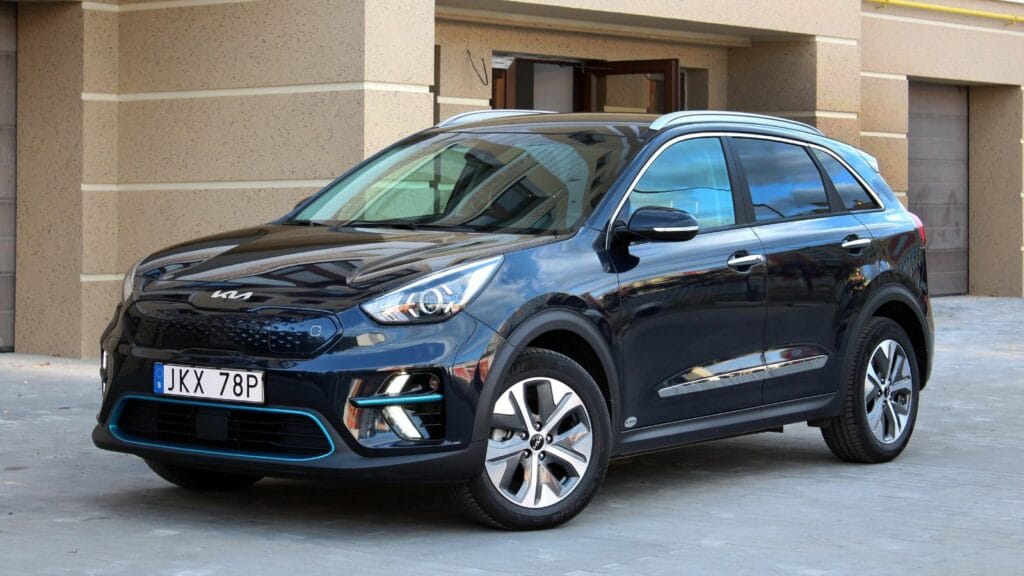
Kia is preparing to remove one of its most successful small electrified vehicles from Canadian showrooms at an unusual moment: sales have been growing, not collapsing. The Niro will disappear from Canada after the 2026 model year, even though Canadian deliveries surpassed 10,000 units in 2025 and climbed another 21% during the first half of 2026.
South of the border, the story is very different. American buyers are getting a refreshed 2027 Niro with updated styling, more technology and a hybrid-only lineup. The split highlights how differently Kia is now approaching two neighbouring markets—and leaves Canadian buyers losing a remarkably efficient, relatively affordable crossover just as hybrids are gaining momentum nationally.
Canada Is Dropping a Model That Just Had Its Best Year
The timing makes the Niro’s Canadian departure particularly noteworthy. Canadian Automobile Dealers Association data show 10,021 Niros were sold in 2025, up 45.9% from 6,867 a year earlier. That was the model’s best Canadian year on record. Instead of fading after that surge, sales continued climbing into 2026. Kia delivered 5,449 Niros during the first six months of this year, roughly 21% more than during the comparable period in 2025.
That 21% figure requires some context: it is a first-half year-over-year increase, not a full-year 2026 growth rate. Even with that distinction, the numbers make this very different from the familiar story of an automaker quietly eliminating a vehicle after years of shrinking demand. Kia Canada has confirmed that the Niro will not continue beyond model year 2026. For shoppers who have watched manufacturers eliminate slow-selling sedans and niche vehicles, the Niro presents the opposite situation—a nameplate leaving while Canadian demand has recently been moving upward.
Kia Says New Models Can Do the Niro’s Job
Kia Canada’s explanation points less toward weak demand than toward lineup strategy. When RPM asked the company why the Niro was being removed, Kia said the arrival of the 2027 Seltos Hybrid and 2027 EV3 created what it considered the right combination for the Canadian market. In that view, maintaining the Niro’s broader electrified family alongside newer products was no longer necessary. The company is effectively dividing the Niro’s old job between a more conventional hybrid SUV and a dedicated battery-electric crossover.
The redesigned Seltos is especially important to that plan. Kia Canada says its first-ever hybrid version uses a 1.6-litre hybrid powertrain with a six-speed dual-clutch transmission, with front-wheel drive and available electric all-wheel drive planned. Meanwhile, the new EV3 starts at C$36,995 before applicable charges and offers as much as 517 kilometres of available driving range according to Kia’s Canadian specifications. Rather than abandoning small electrified vehicles, Kia is betting that newer, more specialized models can cover the same customers more effectively.
Americans Get a Refreshed Niro Instead
The contrast becomes sharper when looking at Kia’s U.S. lineup. Rather than retiring the Niro, Kia America refreshed it for 2027. The American model starts at US$29,890 before a US$1,495 destination charge and is offered in five trims: LX, S, EX, SX and SX Touring. Kia has also redesigned the front and rear styling, incorporated its newer Star Map lighting theme and updated the cabin. The Niro therefore is not simply lingering in American dealerships as an aging leftover—it has received fresh investment.
Technology has moved forward as well. Available features include Kia’s newer Connected Car Navigation Cockpit, over-the-air updating, Highway Driving Assist 2, a Surround View Monitor and Blind-Spot View Monitor. The hybrid powertrain combines a 1.6-litre four-cylinder engine with an electric motor and six-speed dual-clutch transmission, producing 139 horsepower. Kia estimates the base American version can deliver 50 mpg combined and roughly 555 miles of total driving range. Canadians will effectively miss an updated version of a vehicle they were buying in growing numbers.
The Niro’s Three-Powertrain Formula Is Coming to an End
Part of the Niro’s appeal in Canada was that one body style could accommodate three very different approaches to electrification. Depending on the model year, buyers could choose a conventional hybrid, plug-in hybrid or fully electric Niro. A commuter without convenient home charging could select the HEV, someone with a short daily drive could make use of the PHEV’s electric range, while buyers ready to give up gasoline completely had the Niro EV. Few small crossovers covered such a broad range of propulsion choices under one name.
That era is already unwinding. Kia Canada’s own website now states that the Niro PHEV has been discontinued, although the 2026 Niro Hybrid and Niro EV remain listed. After model year 2026, neither will have a Canadian successor carrying the Niro badge. The United States is narrowing the lineup too, but not eliminating it: Kia’s refreshed 2027 American Niro is exclusively a conventional hybrid. The result is a simpler global strategy, but Canadian shoppers experience the biggest change because the entire nameplate disappears rather than being reduced to its strongest remaining powertrain.
Fuel Economy Was One of the Niro’s Biggest Advantages
The conventional Niro Hybrid occupies a difficult-to-replace niche. Natural Resources Canada’s 2026 Fuel Consumption Guide rates the Niro FE at 4.5 L/100 km in the city, 4.4 on the highway and 4.4 combined. A regular Niro configuration is rated at 4.8 L/100 km combined. Those numbers put the most efficient Niro among the country’s thriftier gasoline-fuelled vehicles, not merely among SUVs. A Toyota Corolla Hybrid, for comparison, is listed at 4.7 L/100 km combined in the same government guide.
Price strengthened that proposition. The 2026 Niro Hybrid carries a starting Canadian MSRP of C$30,845, according to current Canadian automotive reporting. That placed it within reach of shoppers who wanted hybrid fuel savings without moving into a much larger or substantially more expensive vehicle. It was not perfect for every Canadian driver—the hybrid is front-wheel drive rather than all-wheel drive—but for urban commuters and households primarily concerned with fuel consumption, packaging and price, the formula was unusually straightforward. Those attributes help explain why sales growth continued despite newer Kia products arriving around it.
Canada’s Hybrid Market Is Growing Rapidly
The Niro’s retirement also comes while Canadian interest in conventional hybrids is expanding. Statistics Canada reported that registrations of new hybrid-electric vehicles increased 39.5% year over year in the second quarter of 2026. That was the largest increase among the fuel types measured for the quarter, ahead of the 37.4% increase for battery-electric vehicles and the 8% gain for plug-in hybrids. Gasoline-vehicle registrations, by contrast, declined 7.3%.
The trend was already visible before 2026. Across all of 2025, Statistics Canada recorded a 36.1% increase in new hybrid registrations even as battery-electric and plug-in-hybrid registrations declined. That does not mean every individual hybrid will automatically succeed, and quarterly numbers can move sharply as supply and incentives change. Still, it makes the Niro decision more interesting. Kia is not removing the vehicle because Canadians have collectively lost interest in hybrid technology. Instead, the company appears to believe that demand can be redirected toward products such as the upcoming Seltos Hybrid, allowing the older Niro nameplate to be removed without abandoning the rapidly expanding hybrid category.
U.S. Sales Give Kia Another Reason to Keep the Niro There
Kia also has evidence that the Niro remains commercially useful in the United States. Through August 2026, Kia America reported 18,472 Niro sales, compared with 17,663 during the first eight months of 2025—an increase of about 5%. August itself was slightly weaker, with 2,983 deliveries compared with 3,124 a year earlier, but the year-to-date performance remained positive. That provides a reasonable business backdrop for Kia’s decision to invest in a refreshed American model rather than retire it.
The broader U.S. hybrid business is even stronger. Kia said sales of its hybrid models jumped 99% year over year in August. The company has been adding hybrid powertrains to more of its lineup, so not all of that growth belongs to the Niro. Still, keeping a relatively affordable, highly efficient hybrid crossover gives Kia another product for Americans who want lower fuel use without relying on charging. The Canadian decision therefore cannot be explained by a global retreat from hybrids or by Kia losing faith in the Niro concept everywhere. It is specifically a market-by-market product decision.
The EV3 Is Newer, but It Is Not a Direct Niro Hybrid Replacement
Kia’s EV3 makes a compelling replacement for customers who were considering the Niro EV. The Canadian-market 2027 EV3 begins at C$36,995 MSRP, making it one of Kia’s least expensive dedicated electric vehicles. Depending on configuration, Kia advertises maximum available range of up to 517 kilometres. It also brings a dedicated EV platform, modern cabin technology and available all-wheel drive—features that give it advantages over the outgoing Niro EV in important areas.
The substitution becomes less direct for Niro Hybrid customers. Using the published base prices, the EV3 starts C$6,150 above the 2026 Niro Hybrid before considering fees, incentives or individual transaction prices. More importantly, one requires charging while the other does not. The forthcoming Seltos Hybrid is likely the more natural alternative for those buyers, but Kia’s Canadian announcements have not yet provided the same complete pricing and fuel-economy picture that shoppers already have with the Niro. That means the company is asking an established group of buyers to move from a known product to newer choices whose value equations are not identical.
Existing Niro Owners Still Have Kia’s Published Warranty Coverage
The disappearance of a model from the new-vehicle catalogue does not erase the manufacturer’s published warranty coverage on vehicles already sold. Kia Canada lists a five-year/100,000-kilometre comprehensive warranty and a five-year/100,000-kilometre powertrain warranty as part of its ownership coverage. Hybrid, plug-in-hybrid and electric-vehicle components receive eight-year/150,000-kilometre coverage, while Kia lists eight-year/160,000-kilometre coverage for the high-voltage battery.
For an owner who bought a Niro because of its low operating costs and plans to keep it for several years, that distinction matters. The immediate change is about future Canadian model availability, not the vehicle suddenly becoming unsupported the moment the calendar reaches 2027. Kia continues to advertise the 2026 Niro Hybrid and Niro EV in Canada, while its PHEV page now explicitly identifies that version as discontinued. Buyers interested in a final-year example therefore still have a window, depending on dealer inventory and availability. What disappears is the opportunity to move into the refreshed 2027 Niro that American customers are already being offered.
Kia Is Betting the Niro’s Buyers Will Follow It Elsewhere
Kia Canada’s strategy ultimately depends on whether Niro customers were loyal to the badge or to what the vehicle represented. The Niro carved out an unusual position: small enough for urban driving, crossover-shaped without becoming oversized, exceptionally economical in hybrid form and available with several levels of electrification. Sales of 10,021 units in 2025 and another 5,449 in the first half of 2026 suggest that combination was still finding an audience. Removing it creates an opportunity for Kia’s newer vehicles, but it also creates space for competitors.
The Seltos Hybrid could prove to be the logical successor, particularly for buyers who want a more traditional SUV profile and the availability of all-wheel drive. The EV3 gives Kia a much newer answer for shoppers ready for full electrification. Yet neither changes the unusual optics of the decision: Canadians are losing the Niro after a record year and further first-half growth while Americans receive a freshly updated version. Kia is not walking away from electrification. It is betting that Canada no longer needs the particular vehicle that helped introduce many buyers to it. Whether those buyers agree will become clear once the last 2026 Niros leave Canadian dealerships.
