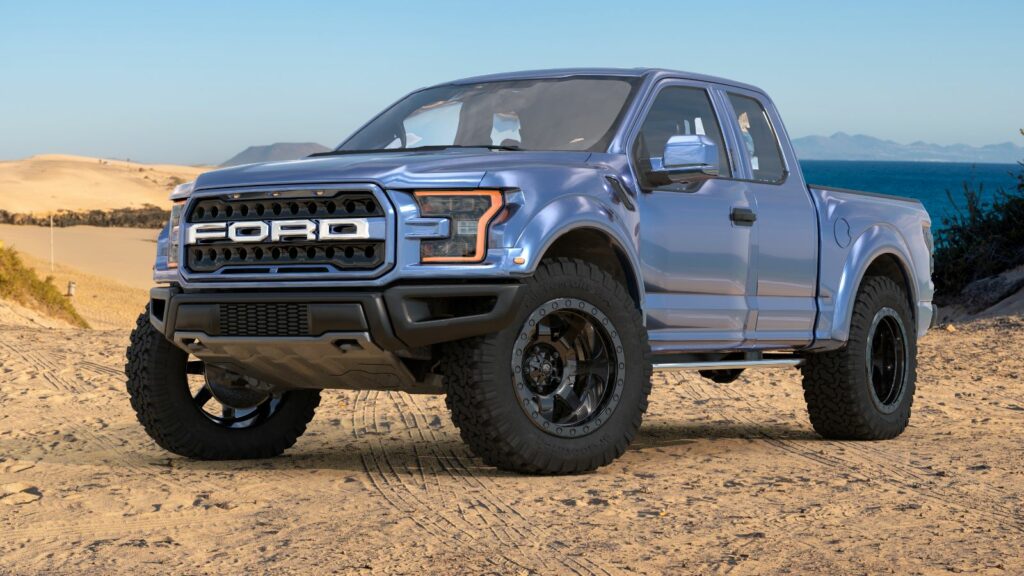
At a traffic light, the 2027 Ford F-150’s available 5.0-litre V8 is set to behave differently. The engine will no longer shut itself off automatically during a routine stop, according to a Ford spokesperson’s clarification reported this week. But the truck is not abandoning every fuel-saving feature: its cylinder-deactivation system will remain.
That distinction matters after an earlier report mistakenly suggested both technologies were disappearing. Ford’s updated plans arrive alongside new engines, wider V8 availability and changes to U.S. vehicle-emissions policy. They also carry a Canadian connection, because the Coyote V8 is manufactured in Windsor, Ontario.
For pickup buyers, the change promises a different experience in traffic, not a return to a completely technology-free engine.
Ford Clarifies What Is Really Changing for 2027
The key confirmation came on October 13, when automotive journalist Tim Esterdahl published a correction based on written information from Daniel Peake, a Ford communications manager. Peake confirmed that automatic stop-start is being eliminated from 2027 F-150 trucks equipped with the 5.0-litre V8. He separately confirmed that Variable Displacement Engine technology, Ford’s term for cylinder deactivation, remains. Ford Authority published a consistent account on October 14, reinforcing that the two features should not be treated as one package.
The correction is important because an October 1 report had indicated that cylinder deactivation would also disappear. That claim spread precisely because both systems are associated with reducing fuel consumption, even though they operate in different circumstances. The newer information does not come from a comprehensive Ford specification sheet describing every Canadian configuration; it comes from direct correspondence with a company representative. Buyers should therefore distinguish a confirmed engineering clarification from assumptions about equipment on individual vehicles. The central finding is firm: the 2027 5.0-litre engine loses stop-start, not cylinder deactivation.
Two Fuel-Saving Features Do Completely Different Jobs
Automatic stop-start is designed for moments when a vehicle is stationary. In a truck equipped with the system, the engine can shut down at a traffic signal and restart when the driver is ready to move. The objective is straightforward: prevent gasoline from being burned while the truck is waiting. The U.S. Department of Energy identifies reduced idling as a method of saving fuel and cutting pollution, particularly during city driving where stopping and starting are frequent.
Cylinder deactivation operates while the vehicle is moving. Under suitable light-load conditions, Ford’s V8 can stop combustion in four cylinders while the other four continue providing power. The entire engine does not turn off, and the system can return to eight-cylinder operation when greater power is required. Imagine a driver cruising steadily on a relatively flat highway, then accelerating up a grade: the engine’s workload changes, and the control system responds. Removing stop-start therefore does not eliminate four-cylinder operation during cruising. It simply changes what happens when the truck comes to a complete stop.
The Coyote V8 Still Has Its Four-Cylinder Mode
Ford introduced Variable Displacement Engine technology to the F-150’s 5.0-litre V8 for the 2021 model year. At the time, an F-150 engineering manager described a system designed to run on four cylinders during suitable conditions, with a targeted fuel-efficiency improvement of roughly 1% to 2%. That was an engineering target for the earlier introduction, not a measured saving promised for the 2027 truck. Ford’s latest written clarification confirms that the underlying fuel-saving strategy survives the update.
The hardware is more involved than simply switching off four spark plugs. A technical bulletin from the AERA Engine Builders Association identifies cylinders 1, 4, 6 and 7 as the deactivating cylinders on 2021–2024 versions of the Coyote V8 and describes specialized rocker components. The bulletin is evidence about those earlier engines; Ford has not used its October clarification to publish a complete 2027 parts breakdown. The practical point is that cylinder deactivation remains a real mechanical and electronic system, even though stop-start is going away. Anyone hoping for a V8 without either technology would misunderstand the announced change.
Other F-150 Engines Will Follow Different Stop-Start Rules
The new policy is not a blanket deletion across the 2027 F-150 range. In separate comments reported by Pickup Truck + SUV Talk, Ford’s Daniel Peake said stop-start is removed from 3.5-litre EcoBoost trucks with two-wheel drive, all 5.0-litre models and Raptor configurations. It remains on the new 3.0-litre EcoBoost and the 3.5-litre EcoBoost when paired with four-wheel drive. That creates an unusual distinction: two trucks carrying a similar 3.5-litre engine badge may behave differently at a red light because their drivetrains differ.
Ford did not explain why those particular configurations were selected, so it would be premature to attribute the split to hardware costs, durability testing or an emissions calculation. Nor does Peake’s summary establish every detail of how the PowerBoost hybrid manages engine shutdowns. Hybrids have their own engine-management strategies, which should not be casually equated with conventional stop-start equipment. For shoppers, the lesson is practical. Engine displacement alone will not tell the whole story, and a dealer’s final order guide or vehicle-specific equipment list matters more than an assumption about the entire 2027 lineup.
Changes in Washington Help Explain the Timing
The announcement arrives in a substantially different U.S. regulatory environment. In February 2026, the Environmental Protection Agency finalized the repeal of federal motor-vehicle greenhouse-gas standards and eliminated associated off-cycle credits, including incentives related to automatic stop-start technology. Those credits had rewarded certain fuel- and emissions-saving features that were not fully reflected in standard laboratory tests. Removing them changes the regulatory value of installing stop-start, even though an individual driver may still save gasoline by avoiding unnecessary idling.
That context helps explain why manufacturers are reconsidering familiar features, but it is not evidence that the EPA decision alone caused Ford’s exact 2027 engine choices. Peake’s reported statements established the equipment changes, not a detailed explanation of Ford’s internal calculations. Nor does a change to U.S. emissions rules automatically rewrite Canada’s regulatory requirements. The policy and the engineering should be kept separate: a feature can lose a government incentive while retaining a physical fuel-saving function. Whether removing it is worthwhile ultimately depends on the vehicle’s operating conditions and the automaker’s broader design priorities.
Drivers May Notice More at Stoplights Than at Highway Speeds
For someone who dislikes feeling an engine pause and restart at every busy intersection, the V8 change is likely to be noticeable. A commuter moving through repeated traffic lights would no longer experience the normal stop-start cycle on a 2027 5.0-litre truck. Conversely, that same engine may spend more time idling and consuming fuel when stationary. An older EPA technical guide estimated that stop-start systems could improve fuel economy by roughly 4% to 5% in suitable use, with the largest gains in stop-and-go conditions.
That general estimate should not be turned into a prediction for the new F-150. Traffic, climate control, vehicle loading, driving style and the rest of the powertrain all influence the outcome. Ford has not provided a controlled, like-for-like 2027 V8 fuel-economy comparison isolating the removal of stop-start. Cylinder deactivation also remains available to reduce consumption when driving conditions permit. The consumer trade-off is therefore convenience versus an as-yet-unquantified amount of idling fuel use, not proof that every buyer will save money or that every owner will experience a measurable penalty.
Ford Is Updating the V8’s Fuel System at the Same Time
The 2027 Coyote is receiving more than a change in stoplight behaviour. Peake told Pickup Truck + SUV Talk that the 5.0-litre engine gets minor emissions-related revisions, including a new 350-bar direct-injection fuel system and updated engine sensors. Those details indicate continued refinement of the powertrain rather than a wholesale return to an older mechanical design. Direct injection concerns how fuel enters the combustion chamber; cylinder deactivation concerns which cylinders are firing under a given load. Neither is inherently removed by deleting automatic stop-start.
Ford’s Canadian preview lists the 2027 5.0-litre V8 at 400 horsepower and 410 pound-feet of torque. The company’s materials do not establish that the fuel-system changes improve long-term reliability, nor do they provide a separately measured efficiency gain from the new injection hardware. It would also be incorrect to confuse the V8 revisions with reporting about a gasoline particulate filter on certain 3.5-litre engines. For buyers, the important distinction is between confirmed parts changes and assumptions about their results. The Coyote retains its familiar headline output while Ford changes selected components around it.
The V8 Will Be Available in More Upscale F-150 Trims
Ford is simultaneously giving customers more opportunities to choose the naturally aspirated V8. Its September 2026 U.S. announcement says the 5.0-litre returns to the King Ranch and Platinum for the first time since 2023, expanding availability across the lineup from XL through Platinum. That is notable because the upper trims had increasingly emphasized alternative powertrains. Buyers who want luxury equipment alongside a traditional V8 will have another factory-backed combination to consider, without confusing that option with the loss of cylinder deactivation.
The broader 2027 engine range also changes. A new 3.0-litre EcoBoost V6 replaces the 2.7-litre as the standard engine, while Ford says it produces roughly 10% to 11% more torque in everyday driving conditions despite similar peak capability. The 3.5-litre EcoBoost and PowerBoost hybrid remain available, and Ford is adding features such as BlueCruise with Towing on eligible trucks. These changes show that the F-150 update is not simply about removing technology. Ford is offering multiple approaches to performance, efficiency and convenience so customers can select a truck suited to commuting, work or towing.
The News Has a Direct Connection to Workers in Windsor
The F-150’s V8 is also a Canadian manufacturing story. Ford says the production 5.0-litre Coyote is built at its Essex Engine Plant in Windsor, Ontario, where engineers and plant employees support a powertrain used in both the F-150 and Mustang. The company’s July 2026 account of its engineering program described how lessons from demanding motorsport tests inform changes to production engines. That work links an American pickup’s mechanical specifications with skilled manufacturing and engineering activity on the Canadian side of the border.
In July, Ford and Unifor ratified a new three-year agreement accompanied by C$1.25 billion in planned Canadian manufacturing investment. Ford earmarked C$700 million of that amount for the Essex Engine Plant, including efforts to maximize 5.0-litre production, support 7.3-litre engine output and potentially add a third shift. Those are planned commitments, not proof that a specific number of additional jobs has already materialized. Still, continued V8 availability matters beyond enthusiasts comparing exhaust notes. It is connected to product demand, plant utilization and investment decisions that affect Canadian industrial communities.
What Buyers Should Confirm Before Ordering a 2027 Truck
The most immediate takeaway is clear but narrower than some early headlines suggested. Buyers of a 2027 F-150 equipped with the 5.0-litre V8 should expect automatic stop-start to be absent while cylinder deactivation remains. Those seeking a completely deactivation-free engine should not assume that the new model meets that preference. Shoppers considering a 3.5-litre EcoBoost should also pay attention to the two-wheel-drive versus four-wheel-drive distinction, while recognizing that published equipment details may evolve before delivery.
Canadian customers have an additional reason to examine the final specifications carefully. Ford’s Canadian 2027 overview confirms the updated powertrain lineup, but it does not spell out every stop-start configuration in the same detail as the spokesperson’s comments. Natural Resources Canada advises drivers to compare model-specific fuel consumption ratings in litres per 100 kilometres rather than rely on general technology claims. Once finalized 2027 labels, order guides and vehicle listings are available, they will offer a better basis for judging running costs and equipment. The development is not the end of V8 fuel-saving technology; it is Ford’s decision to keep one form while retiring another.
