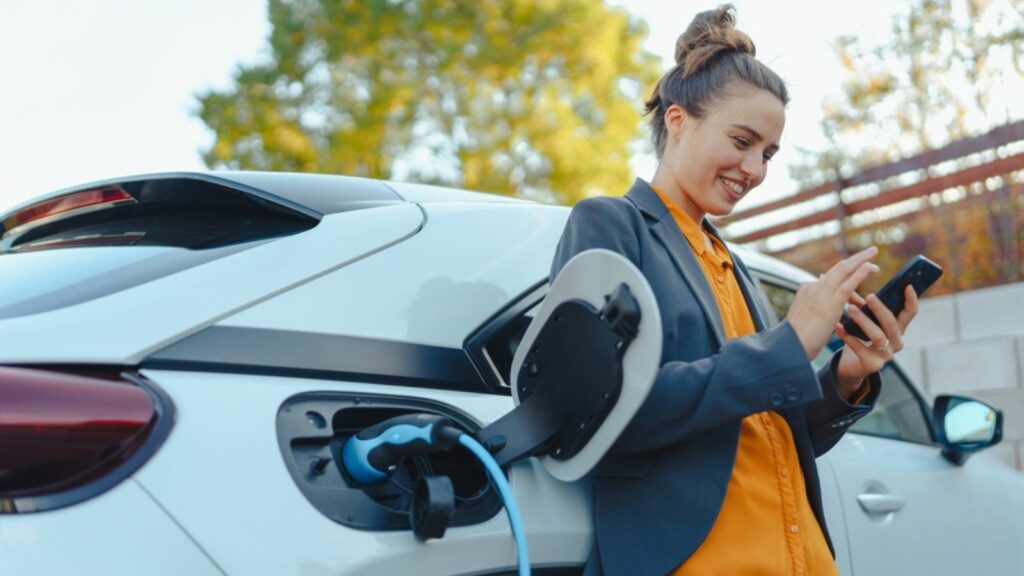
Nova Scotia’s electric-vehicle owners have a new cost to factor into ownership starting October 1. The province is now charging owners of fully electric vehicles an additional $500 every two years when a vehicle permit is issued or renewed, while plug-in hybrid owners face a $250 levy. Conventional, non-plug-in hybrids are not subject to the charge.
The government says the change addresses a growing road-funding problem: gasoline-powered vehicles contribute through provincial fuel taxes, while fully electric vehicles do not. But the levy arrives just as EV registrations in Nova Scotia are rebounding, creating a new debate over how governments should replace declining fuel-tax revenue without discouraging cleaner transportation.
The $500 Charge Starts With New and Renewed Vehicle Permits
The new levy applies to eligible battery-electric passenger vehicles, light trucks and vans registered at 5,000 kilograms or less. It is not a one-time fee charged only when an EV is first purchased. The levy becomes payable when an eligible vehicle permit is issued or renewed, meaning existing EV owners will encounter it as they move through their normal registration cycle. Nova Scotia vehicle permits are renewed every two years, so a battery-electric vehicle is charged $500 for that two-year period. Plug-in hybrids face half that amount at $250. Those charges come on top of the regular permit cost, which varies according to vehicle weight.
That distinction matters for household budgeting. A $500 payment every two years is effectively equivalent to $250 a year, although owners will generally encounter the cost in one larger payment rather than smaller annual installments. The comparable plug-in hybrid levy works out to $125 per year over the same period. Non-plug-in hybrids, such as conventional hybrids that recharge their batteries through the engine and regenerative braking rather than a charging cable, are excluded. Nova Scotia is also not applying HST to the new levy.
Nova Scotia Says the Issue Is Who Pays for the Roads
The provincial government’s explanation centres on a long-standing feature of transportation funding: drivers of gasoline and diesel vehicles pay taxes every time they fill their tanks. Nova Scotia currently applies a provincial tax of 15.5 cents per litre to gasoline and 15.4 cents per litre to diesel. Fully electric vehicles consume neither fuel, while plug-in hybrids can significantly reduce the amount of gasoline their owners purchase. Finance Minister John Lohr has argued that the new levy ensures those vehicles also make a contribution toward the construction and maintenance of provincial roads and highways.
The measure was introduced through Nova Scotia’s 2026-27 budget and subsequently approved before its October implementation. The province projected that the electric- and hybrid-vehicle levy would generate about $1.6 million during the 2026-27 fiscal year, rising to roughly $3.3 million in 2027-28 once it is fully implemented. Those numbers are small compared with total provincial spending, but the policy addresses a larger structural issue governments across Canada are beginning to face. As more vehicles move away from gasoline, fuel-tax systems designed around the internal-combustion era collect revenue from a shrinking share of vehicles using public roads.
A Flat EV Levy Works Differently From a Gasoline Tax
The most important difference between the two systems is how the amount is calculated. Gasoline taxes naturally vary with consumption. Someone who drives relatively little generally buys less fuel and therefore pays less provincial fuel tax, while a high-mileage driver or the owner of a less efficient vehicle usually pays more. Nova Scotia’s EV levy does not change according to kilometres driven, electricity consumed or vehicle efficiency. A battery-electric vehicle travelling 5,000 kilometres in a year can face the same $500 two-year levy as an otherwise comparable EV travelling 30,000 kilometres.
Using Nova Scotia’s 15.5-cent-per-litre gasoline tax as a simple comparison, $500 is equivalent to the provincial tax collected on roughly 3,226 litres of gasoline. Spread across two years, that represents about 1,613 litres annually. That comparison does not mean every gasoline driver pays precisely that amount because fuel economy and mileage vary substantially. It does illustrate why some EV advocates support the principle that electric vehicles should contribute to transportation infrastructure while questioning a flat-fee approach. Electric Vehicle Association of Atlantic Canada executive director Kurt Sampson has argued that a usage-based system would better reflect how differently individual motorists use the road network.
Other Provinces Are Experimenting With Different EV Charges
Nova Scotia is not alone in moving toward dedicated road-use charges for electric vehicles. Saskatchewan currently imposes a $300 annual road-use charge on qualifying electric vehicles. The province doubled that amount from $150 in June 2025 and plans to begin indexing the fee annually to inflation in 2027. Alberta has a different system, charging owners of battery-electric vehicles $200 per year when vehicles are registered or their registrations are renewed. Alberta’s charge does not apply to hybrids. Nova Scotia’s $500 fee every two years therefore translates to $250 per year when averaged across its registration cycle.
Quebec has also announced an annual contribution for electric and plug-in hybrid vehicles beginning in 2027. The amounts announced are $125 annually for fully electric vehicles and $62.50 for plug-in hybrids. Nova Scotia describes itself as the fourth province to establish an EV levy, following Saskatchewan, Alberta and Quebec’s announced system. The differences show that there is not yet one Canadian model for replacing fuel-tax revenue. Provinces are using different amounts, renewal schedules and rules for plug-in hybrids, while conventional hybrids remain treated differently depending on the jurisdiction.
The Levy Arrives Just as Nova Scotia’s EV Registrations Rebound
The timing is notable because Nova Scotia has recently seen a renewed rise in zero-emission vehicle registrations. Statistics Canada recorded 870 new zero-emission vehicles in the province during the second quarter of 2026. That total tied Nova Scotia’s quarterly record set in late 2024 and was 46 per cent higher than in the second quarter of 2025. Statistics Canada defines zero-emission vehicles in this data as battery-electric and plug-in hybrid vehicles, meaning the category closely overlaps with the vehicles affected by Nova Scotia’s new levy.
The growth is becoming visible outside a single market as well. Halifax recorded 485 new ZEV registrations in the second quarter, up from 289 in the first. Truro increased from 22 to 45, while Cape Breton went from 33 to 59. Still, electric vehicles remain a relatively small part of the broader Nova Scotia market. The province recorded 18,026 new vehicle registrations across all fuel types during the second quarter, including 14,174 gasoline vehicles. Gasoline alone represented 78.6 per cent of new registrations. The numbers therefore show both trends at once: gasoline still dominates, but the group of motorists affected by EV-specific road charges is expanding.
Federal EV Incentives and Nova Scotia’s New Charge Now Coexist
The new levy also arrives after Nova Scotia moved away from its earlier consumer EV-purchase rebate. The province’s Electrify program stopped accepting qualifying light-duty electric vehicles and e-bikes in April 2025, with remaining eligible rebate payments scheduled to be completed the following month. That program had previously helped reduce the upfront cost of buying electric and plug-in hybrid vehicles. By 2026, Nova Scotia residents no longer had a provincial light-duty EV purchase rebate, even as the province prepared to introduce the recurring registration levy.
Federal policy moved in the opposite direction in early 2026. Ottawa launched the Electric Vehicle Affordability Program on February 16, offering eligible battery-electric and hydrogen fuel-cell vehicles incentives of up to $5,000 during 2026 and qualifying plug-in hybrids up to $2,500. The federal incentive is scheduled to decline over the program’s lifespan and is subject to eligibility conditions, including vehicle transaction-value rules. The two programs should not be treated as cancelling each other out: the federal payment is intended to reduce the upfront purchase cost of an eligible vehicle, while Nova Scotia describes its recurring levy as a contribution toward road infrastructure. For buyers, however, both now form part of the overall economics of EV ownership.
There Are Exemptions, Refunds and Administrative Rules Owners Should Know
Most affected owners will pay the levy at the same time as their normal vehicle permit fee. Nova Scotia allows payment online or through an Access Nova Scotia location. Registry staff can ask the owner to declare the vehicle’s fuel type and can use the vehicle identification number to verify that information. The levy generally covers eligible passenger vehicles, light trucks and vans, but several categories are excluded. Vehicles registered above 5,000 kilograms are exempt, as are certain restricted-plate and specialized vehicles. The exemption list includes farm and fisher plates and vehicles registered in categories such as ambulances, hearses, school buses, motorcycles, campers and some government or emergency vehicles.
The system also recognizes that an owner may not keep an EV for the entire two-year permit period. A partial refund can be available when the vehicle is sold and proof of sale is supplied, when an unexpired permit is returned, or when the levy was collected incorrectly. Refunds are calculated according to the number of full calendar months remaining on the permit. Certain Status Card holders may also qualify for an exemption when eligibility requirements are satisfied and the vehicle will be located on reserve most of the time. Taken together, the rules mean the headline $500 charge is straightforward, but the amount actually owed can depend on vehicle classification, ownership circumstances and timing.
Sources and Verification
