Canada’s affordable-EV market suddenly looks far more crowded. Ten battery-electric models now cluster between roughly $35,000 and $46,000 in base MSRP, giving shoppers everything from compact sedans to practical family SUVs without immediately entering luxury-car territory.
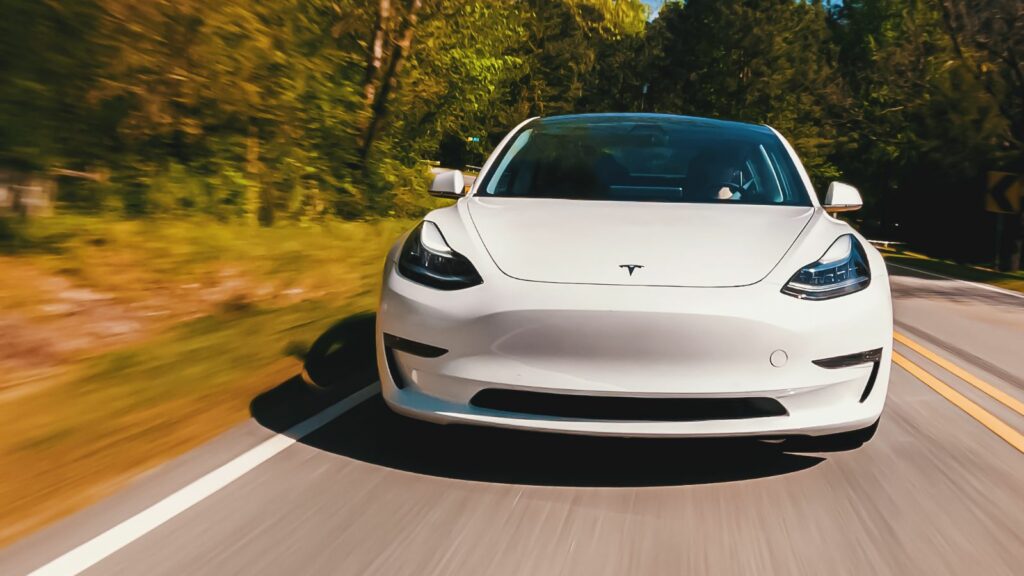
The federal Electric Vehicle Affordability Program makes those prices even more competitive for qualifying vehicles, offering up to $5,000 on eligible battery-electric purchases in 2026 when the final transaction value stays within the program’s limit. One prominent exception is Tesla’s $39,490 Model 3 Premium Rear-Wheel Drive. Its price easily fits the affordability theme, but the cars supplied to Canada are built in Shanghai. Because EVAP generally requires non-Canadian vehicles to come from countries that have free-trade agreements with Canada, the China-made Model 3 does not qualify.
Tesla Model 3 Is Cheap Enough, but Its Origin Costs the Rebate
At $39,490 before freight and other charges, Tesla’s Model 3 Premium Rear-Wheel Drive sits almost perfectly in the middle of Canada’s new affordable-EV cluster. Tesla currently lists an estimated 463 kilometres of range with the standard 18-inch wheels, giving the sedan a combination of price and usable driving distance that would ordinarily make it an obvious candidate for Ottawa’s incentive. But transaction price is only one part of the federal test.
Canada’s Model 3 Premium RWD is sourced from Tesla’s Shanghai factory. Canada now allows a quota of Chinese EVs to enter at the normal 6.1% tariff instead of the former 100% surtax, which helped make the dramatic price cut possible. EVAP is different: eligible imported vehicles must generally originate in a country covered by a Canadian free-trade agreement. China is not. Transport Canada’s eligible list includes certain Tesla Model Y versions but not the Shanghai-built Model 3, showing that the restriction concerns manufacturing origin rather than the Tesla brand itself.
Nissan Leaf Resets the Floor at $34,998
Nissan now holds the lowest base MSRP in this group. The 2027 Leaf S starts at $34,998, with Nissan listing a selling price of $37,966 once specified charges are included. The entry model uses a 53-kWh battery and carries an estimated 341 kilometres of range. It also comes with a native NACS charging port, an important change for drivers who want easier access to the growing North American fast-charging network.
More important for the purchase calculation, Transport Canada lists the Leaf S as eligible for the full 2026 EVAP amount of up to $5,000 on a qualifying purchase or 48-month lease. Nissan itself points out that the incentive effectively takes the entry MSRP below $30,000, although taxes and mandatory charges still matter to the final bill. That price gives the Leaf a very different role from earlier generations: instead of merely competing with other EVs, it begins to overlap with conventional compact cars and crossovers purchased by households primarily concerned with monthly transportation costs.
Kia EV3 Brings an SUV Shape Below $37,000
Kia’s new 2027 EV3 starts at $36,995 for the Light FWD, only about $2,000 above the Leaf before freight and fees. The entry model uses a 58.3-kWh battery and Kia has estimated roughly 354 kilometres of range for that configuration. More expensive long-range versions use an 81.4-kWh battery, with the broader EV3 lineup offering substantially more range and available all-wheel drive. That gives shoppers room to move upward without leaving the same model family.
The significance is less about one impressive specification than about body style. Many Canadians prefer crossovers, and a small electric SUV priced in the mid-$30,000 range removes one of the old compromises of shopping at the affordable end of the EV market. Transport Canada lists multiple EV3 trims as eligible for EVAP, including the Light FWD. Kia’s nationally advertised all-in price for that version was $39,744 before incentives and taxes when Canadian pricing was announced, keeping even the more realistic showroom figure close to the psychological $40,000 mark.
Kia EV4 Puts a Long-Range Sedan Into the Same Conversation
The 2026 Kia EV4 Light FWD starts at $38,995 and provides another reminder that affordable EV competition is no longer confined to small hatchbacks. The sedan uses a 58.3-kWh battery and carries an estimated range of 391 kilometres. Buyers wanting considerably more distance can move to the Wind Long Range FWD, where Kia estimates as much as 552 kilometres from an 81.4-kWh battery, although that version starts at a higher $42,995.
Charging is also competitive for the price category. Kia says the smaller battery can move from 10% to 80% in approximately 29 minutes under suitable DC fast-charging conditions, and the car comes with a NACS port. Transport Canada lists the EV4 Light among vehicles eligible for up to $5,000 through EVAP in 2026. For someone comparing it with Tesla’s sedan, that creates an unusual situation: the EV4 starts only $495 below the Model 3 before incentives, yet its qualifying manufacturing origin can potentially widen the effective cost difference substantially.
Chevrolet Bolt Returns at $39,999
Chevrolet has brought the Bolt name back with an especially deliberate number: the 2027 Bolt LT carries a $39,999 base MSRP. GM estimates as much as 422 kilometres of range from its 65-kWh lithium-iron-phosphate battery, placing the revived model above 400 kilometres without pushing its starting price into the mid-$40,000s. Chevrolet also gives the new Bolt a native NACS charging port and substantially faster DC charging than its predecessor.
Transport Canada lists both Bolt LT and RS versions as eligible for EVAP, subject to the program’s final-transaction-value rules. Chevrolet’s own build-and-price tool shows why buyers should distinguish MSRP from an actual invoice: destination, air-conditioning charges and other fees push the standard vehicle above the headline $39,999 figure before incentives. Even so, the Bolt changes the competitive landscape because it combines a recognizable name, more than 400 kilometres of estimated range and a sub-$40,000 base MSRP. A few years ago, finding all three together in Canada was considerably harder.
Subaru Uncharted Adds Another Crossover at $42,995
Subaru’s 2026 Uncharted enters the group at $42,995 for the front-wheel-drive version. The base model uses a 57.7-kWh battery and offers an estimated range of up to 399 kilometres, while shoppers prioritizing distance can choose the FWD Long Range version with as much as 496 kilometres. Subaru also offers higher trims with its familiar all-wheel-drive emphasis, including versions producing up to 338 horsepower.
The practical details make the Uncharted more than another small EV with a different badge. Subaru says it provides more than 700 litres of cargo room behind the second row, a standard 14-inch touchscreen and a native NACS connector. DC charging from 10% to 80% can take around 30 minutes in ideal conditions, aided by battery preconditioning in colder weather. The federal government lists qualifying Uncharted trims for the $5,000 2026 EVAP incentive. Subaru has already announced that the 2027 model will start even lower, at $40,995, reinforcing how quickly manufacturers are compressing EV prices.
Kia EV5 Makes the Price War Family-Sized
The EV5 is larger than Kia’s EV3, yet the 2027 Light FWD starts at $43,495. Kia lists an all-in price of $46,209 before incentives and taxes for the entry version. That pushes affordable-EV competition directly into a part of the Canadian market where families commonly shop for gasoline-powered compact and midsize crossovers. The Light uses a roughly 60-kWh standard-range battery, while higher EV5 versions move to an 81.4-kWh pack.
Canada is also unusually important to this vehicle. Kia says the EV5 is exclusive to Canada within the North American market and builds Canadian-market examples in Gwangju, South Korea. That manufacturing location matters because Canada and South Korea have a free-trade agreement, and Transport Canada lists qualifying EV5 versions for the full 2026 EVAP purchase incentive. For a family comparing purchase prices rather than badges, the combination can make the EV5 particularly disruptive: it offers five-passenger SUV packaging while remaining within only a few thousand dollars of several much smaller electric cars.
Hyundai Kona Electric Remains Competitive at $43,999
The Hyundai Kona Electric is one of the more established names in this price group. Hyundai lists the 2026 Preferred at a $43,999 MSRP, with an advertised starting price of $46,944 once additional charges are included. It uses a 64.8-kWh battery, drives the front wheels through a 150-kW electric motor and has an estimated all-electric range of 420 kilometres. Hyundai says DC charging from 10% to 80% takes roughly 43 minutes under suitable conditions.
Its strength is familiarity. The Kona has existed in gasoline and electric form for years, so buyers are not being asked to embrace an unfamiliar body style or newly created nameplate simply to move into an EV. The federal incentive also keeps it relevant against newer rivals: Transport Canada lists the 2026 Kona EV Preferred and several option-package versions for up to $5,000 under EVAP. As more competitors arrive below $40,000, Hyundai’s challenge is no longer convincing Canadians that an affordable electric crossover exists; it is showing why an established one remains worth roughly $44,000.
Toyota C-HR Offers Nearly 500 Kilometres From $44,895
Toyota’s revived C-HR is now a fully electric vehicle in Canada, and its entry price puts it squarely into the affordability fight. The 2027 C-HR SE starts at $44,895, with Toyota estimating an all-in vehicle price of $47,972 before taxes, licensing and insurance. Its 77-kWh battery powers the front wheels and provides up to 496 kilometres of estimated range, one of the strongest range figures among the base versions in this group.
Toyota also equips the SE with features that would once have been associated with considerably more expensive EVs, including a 14-inch multimedia display, heated front seats and steering wheel, dual wireless phone chargers and a 1,500-watt AC outlet. Transport Canada lists the C-HR SE FWD for the $5,000 EVAP incentive in 2026. The important comparison is not simply Toyota against Tesla. The C-HR shows how far the market has broadened: a shopper near $45,000 can now consider an electric Toyota crossover with close to 500 kilometres of rated range instead of choosing among only a handful of specialized EV brands.
Toyota bZ Keeps a Larger Electric SUV Below $46,000
Toyota’s 2027 bZ rounds out the group with a base MSRP of $45,985. The XLE front-wheel-drive model uses a 57.7-kWh battery, produces 168 horsepower and offers an estimated 380 kilometres of range. Toyota’s estimated vehicle price, including freight and specified maximum fees but excluding taxes and registration, is $49,067. That is particularly relevant because EVAP eligibility for imported vehicles ultimately depends on final transaction value staying at or below $50,000.
Transport Canada lists the bZ XLE FWD as eligible for the current $5,000 incentive. The model also includes a native NACS port, battery preconditioning and Toyota estimates of roughly 30 minutes for a 10%-to-80% DC fast charge under ideal conditions. It does not offer the longest range in this group, but it demonstrates how much choice now exists below the federal price ceiling. From the $34,998 Leaf to the $45,985 bZ, Canada has developed a genuine affordable-EV tier—and Tesla’s China-built Model 3 is competing in it without Ottawa’s rebate advantage.
