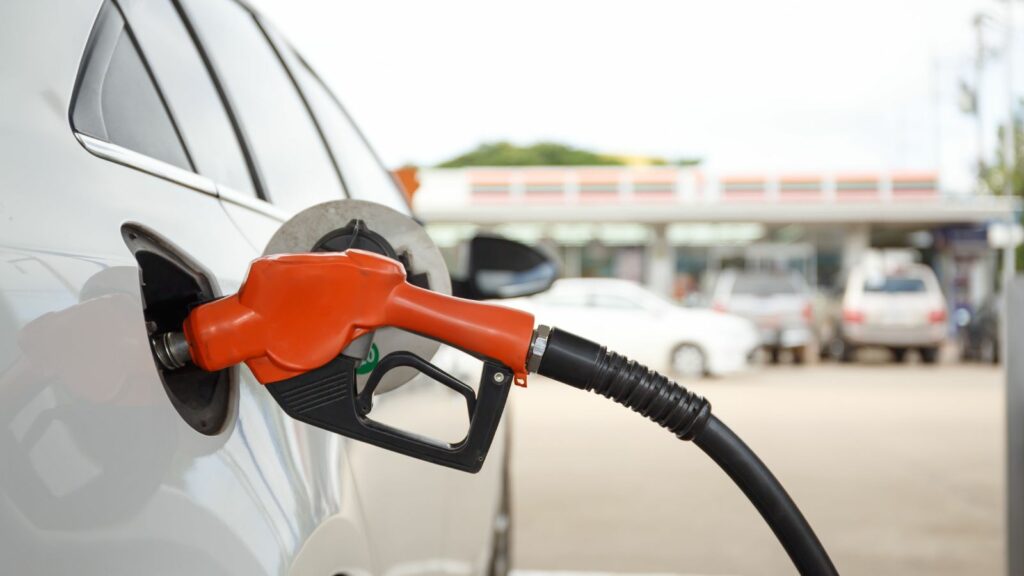
A regular gasoline fill-up can cost dramatically different amounts depending on which Canadian city a driver calls home. This weekend, the difference between Vancouver and Edmonton is especially striking.
For Saturday, October 17, 2026, Gas Wizard forecasts regular gasoline at 198.9 cents per litre in Vancouver and 138.9 cents in Edmonton. That creates an exact 60-cent difference between the two western Canadian cities, despite both benefiting from falling prices heading into the weekend.
The divide highlights how taxes, refinery access, transportation infrastructure, and local wholesale markets can produce very different costs within the same country. With international oil prices remaining elevated, the comparison also raises questions about how much relief Canadian drivers can expect and why geography continues to matter so much at the pump.
Vancouver and Edmonton Face an Exact 60-Cent Gas Price Difference
Gas Wizard’s October 17 forecast places regular gasoline in Vancouver at 198.9 cents per litre, compared with just 138.9 cents in Edmonton. The difference amounts to exactly 60 cents for every litre purchased. Vancouver’s forecast is down four cents from Friday’s 202.9-cent price, while Edmonton is expected to experience a larger six-cent reduction from 144.9 cents. The forecasts therefore show prices falling in both cities, but the gap between them widening slightly. On Friday, that difference was 58 cents per litre.
The national picture offers additional context. Gas Wizard’s forecast Canadian average for October 17 is approximately 181.6 cents per litre, putting Vancouver above the national figure and Edmonton considerably below it. However, these are regional price predictions rather than a comprehensive survey of individual stations. Actual prices can vary depending on neighbourhood competition, inventory turnover, and retailer pricing decisions. A driver in suburban Vancouver may encounter a different posted price from someone filling up downtown, even though both are operating within the same regional fuel market.
A 60-Cent Difference Adds $30 to a 50-Litre Fill-Up
The financial consequences become clearer when comparing the cost of an identical gasoline purchase. At Vancouver’s forecast price of $1.989 per litre, purchasing 50 litres of regular gasoline would cost approximately $99.45. The same purchase in Edmonton, at $1.389 per litre, would cost $69.45. That leaves a $30 difference for one stop at the pump. For households operating larger vehicles, including SUVs, pickup trucks, and minivans, the difference can become even more noticeable whenever substantial quantities of fuel are required.
Over time, the gap can represent a meaningful household expense. A motorist purchasing 1,500 litres annually would spend $900 more at Vancouver’s forecast price than at Edmonton’s, assuming the 60-cent difference remained unchanged throughout the year. That is an illustrative calculation rather than a prediction of annual fuel prices. Nevertheless, it helps explain why motorists pay close attention to seemingly small price movements. For people who drive to work, transport children to activities, or regularly travel between communities, fuel is a recurring expense that cannot always be reduced simply by postponing a trip.
Metro Vancouver’s Fuel Taxes Explain Part of the Higher Price
Provincial and regional fuel taxes account for a meaningful portion of Vancouver’s higher gasoline costs. According to British Columbia’s published motor-fuel tax schedule, clear gasoline purchased within the Metro Vancouver transportation service region carries a combined provincial and regional tax of 27 cents per litre. That includes 18.5 cents dedicated to TransLink, 6.75 cents for the B.C. Transportation Financing Authority, and 1.75 cents in general provincial revenue. These charges are incorporated into gasoline prices before the customer pays at the pump.
The TransLink portion is particularly significant because it helps finance transportation services and infrastructure throughout the region. However, the tax difference does not explain the entire 60-cent divide with Edmonton. British Columbia also eliminated its consumer carbon tax effective April 1, 2025, meaning the former provincial carbon-tax charge should not be added to the current gasoline tax total. Other influences, including wholesale fuel prices, delivery costs, competition, and sales taxes, must also be considered. The comparison illustrates why breaking down the final pump price is more useful than attributing the entire difference to one government charge.
Alberta’s Fuel-Tax Suspension Gives Edmonton an Additional Advantage
Alberta’s tax policy provides an important explanation for Edmonton’s relatively low forecast. Effective October 1, 2026, the provincial government suspended its gasoline and diesel fuel tax, reducing the rate from the normal 13 cents per litre to zero. The relief applies through at least December 31, 2026. Alberta operates an oil-price-based adjustment system under which the provincial fuel tax can be reduced or eliminated when West Texas Intermediate crude reaches specified price thresholds. A sustained average of US$90 per barrel or more triggers a complete suspension.
There is also federal relief benefiting motorists in both cities. Ottawa announced an extension of its temporary gasoline excise-tax suspension through January 31, 2027, keeping the usual federal 10-cent-per-litre charge at zero during that period. This national measure helps reduce costs but does not explain why Edmonton is cheaper than Vancouver. Both cities are also subject to the federal goods and services tax. The most important distinction is that Alberta is currently collecting no provincial gasoline fuel tax, while Metro Vancouver retains its 27-cent motor-fuel tax structure. Even before accounting for supply and wholesale differences, the two markets operate under notably different provincial policies.
Edmonton’s Access to Major Refineries Helps Keep Supply Costs Competitive
Geography plays an important role in the difference between Edmonton and Vancouver. Alberta is Canada’s largest refining province by processing capacity, with five refineries capable of handling approximately 569,000 barrels of crude oil per day, according to the Canada Energy Regulator’s provincial profile. Several major facilities operate in or near the Edmonton region, including Imperial Oil’s Strathcona refinery, Suncor’s Edmonton refinery, and Shell’s Scotford complex. Their proximity gives the city direct access to substantial refining operations and established regional distribution networks.
Vancouver faces a different supply situation. British Columbia has two main crude oil refineries: the approximately 55,000-barrel-per-day Burnaby facility and the smaller Prince George refinery, with roughly 12,000 barrels per day of capacity. The Lower Mainland consequently relies on gasoline produced locally, refined products transported from Alberta, and additional supplies obtained through other markets. Moving fuel across provincial boundaries, through pipelines, or by alternative transportation methods creates costs that are less significant for customers located close to Alberta’s refining hub. Refinery proximity does not guarantee low prices, but it can provide an important structural advantage.
Pipeline Constraints and Wholesale Competition Have Long Affected B.C. Prices
Vancouver’s unusually high gasoline prices have attracted regulatory scrutiny for years. In 2019, the British Columbia Utilities Commission identified an unexplained wholesale price difference of approximately 13 cents per litre between southern B.C. and comparable Pacific Northwest markets. The investigation raised concerns about competition and pricing transparency, although it did not establish that every retailer was engaging in collusion. Provincial authorities subsequently introduced fuel-price reporting requirements intended to improve understanding of how wholesale and retail prices are determined.
Later economic research offered another explanation. In a 2024 study published by the C.D. Howe Institute, University of Calgary economist G. Kent Fellows argued that historical constraints on the Trans Mountain pipeline had significantly increased the cost of supplying refined products to British Columbia. The pipeline’s expansion entered service in May 2024, easing transportation constraints, while the Canada Energy Regulator later confirmed that refined products continued flowing to the Burnaby area. These findings help explain the historical price gap, but they should not be interpreted as proof of exactly how much pipeline costs contribute to October 2026 prices. Wholesale pricing remains influenced by transportation capacity, market conditions, and competition.
British Columbia’s Low-Carbon Fuel Rules Add Another Layer
British Columbia’s fuel standards also differ from those in Alberta. Under the province’s Low Carbon Fuel Standard, companies supplying gasoline and other transportation fuels must meet renewable-content and carbon-intensity requirements. For 2026, gasoline must contain at least five percent eligible renewable fuel, while the applicable carbon-intensity reduction target is 20.6 percent relative to the regulatory baseline. Beginning January 1, 2026, eligible renewable fuels used to satisfy the gasoline renewable-content requirement must also be produced in Canada.
These requirements are separate from the consumer carbon tax eliminated in 2025. They operate primarily through obligations imposed on fuel suppliers, creating incentives to blend renewable products, reduce emissions, and acquire compliance credits where permitted. Meeting the requirements can influence fuel procurement and wholesale costs, although the impact depends on market conditions and the compliance strategies used by individual suppliers. It would therefore be misleading to assign a fixed portion of Vancouver’s 60-cent price difference to the low-carbon standard without a detailed current cost assessment. The policy is one factor among several that distinguish British Columbia’s fuel market from Alberta’s.
Higher Global Oil Prices Leave Both Cities Vulnerable to Future Increases
Despite the striking difference between Vancouver and Edmonton, neither city is insulated from international oil markets. On October 16, Brent crude futures settled at US$109.86 per barrel, while U.S. West Texas Intermediate closed at US$101.41. Reuters attributed the gains to concerns about energy supplies amid renewed instability in the Middle East and attacks affecting Russian refining operations. Such developments can increase costs for refiners and fuel distributors, even when Canada continues producing substantial quantities of crude oil.
The relationship between crude oil and retail gasoline prices is not immediate or identical across cities. Refineries purchase crude oil, manufacture finished products, and sell them into wholesale markets that respond to local inventories, transportation costs, and seasonal demand. Currency movements can also influence costs because international oil benchmarks are commonly quoted in U.S. dollars. Gas Wizard’s Saturday forecasts actually show gasoline declining in Vancouver and Edmonton despite elevated international crude prices, demonstrating how local wholesale conditions can temporarily move differently from global benchmarks. If the international price rally persists, however, it could create renewed upward pressure across Canadian fuel markets.
Diesel Prices Reveal an Even Larger Cost Challenge
Regular gasoline attracts the most attention from everyday motorists, but diesel prices reveal another important dimension of Canada’s energy situation. Canadians for Affordable Energy’s October 17 forecasts place diesel at approximately 289.9 cents per litre in Vancouver and 221.9 cents in Edmonton. That creates a separate 68-cent difference between the cities. Diesel is also substantially more expensive than regular gasoline in both locations, indicating that the current fuel market pressures extend beyond conventional passenger vehicles.
The International Energy Agency’s October 2026 Oil Market Report warned that global diesel and gasoil supplies remain under severe pressure because of disruptions to exports from the Middle East and Russia. The agency expects market tightness to persist well into 2027. This matters because diesel powers much of the equipment used in trucking, agriculture, construction, and freight transportation. When those businesses face higher fuel expenses, their operating costs increase. Some may absorb the pressure temporarily, while others may eventually adjust prices for transportation and services. Higher diesel costs therefore create risks extending beyond the pump, even for households that drive gasoline-powered or electric vehicles.
What Drivers Can Expect as the Price Gap Changes
The latest forecasts offer some immediate relief because regular gasoline is expected to become cheaper in both cities on October 17. Nevertheless, a one-day reduction does not establish that prices will continue declining or that the Vancouver–Edmonton gap will remain exactly 60 cents. Future movements will depend on international crude prices, refinery supply, wholesale gasoline markets, competition, and government tax policies. Alberta’s provincial fuel-tax suspension is scheduled to remain in place through the end of 2026, while Ottawa’s temporary federal excise-tax relief currently extends into early 2027.
For motorists, the most practical response is to compare recent station prices rather than assume every retailer is charging the regional forecast. Fuel-efficient driving can also reduce exposure to high prices. Natural Resources Canada recommends smoother acceleration, steady speeds, reduced unnecessary idling, and regular tire-pressure checks to lower fuel consumption. These changes cannot eliminate the structural differences between provincial gasoline markets, but they can make recurring transportation expenses easier to manage. Vancouver’s near-$2 forecast and Edmonton’s sub-$1.40 outlook ultimately demonstrate how Canadian drivers can experience very different fuel costs despite purchasing the same product under the same national economic conditions.
