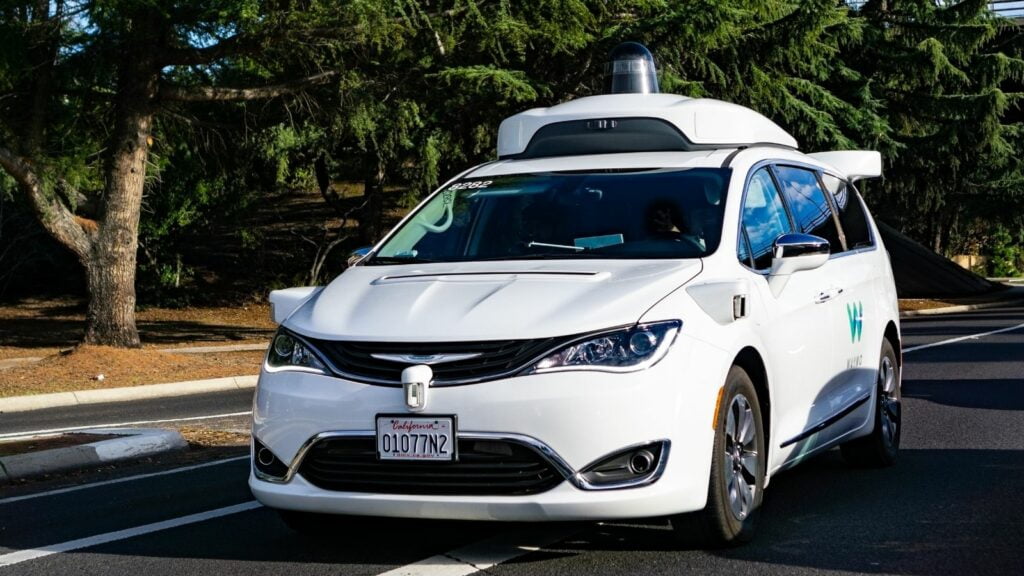
Toronto could soon become the first Canadian city where passengers can hail a taxi without a human driver behind the wheel. Waymo, the autonomous driving company owned by Google parent Alphabet, announced on October 16, 2026, that it plans to introduce its driverless ride-hailing service in Toronto, with the first public rides targeted for 2028.
The announcement represents a significant development for Canada’s transportation industry and Waymo’s international expansion. However, the transition will not happen overnight. The company must navigate provincial regulations, demonstrate its technology can handle Toronto’s unpredictable weather and complex traffic conditions, and address concerns about road safety and employment. For residents, the prospect of booking a fully autonomous electric vehicle raises an intriguing question: how close is Toronto to a future where taxis no longer need drivers?
Toronto Becomes Waymo’s First Canadian Robotaxi Market
Waymo’s decision to expand into Toronto marks an important milestone for the American autonomous vehicle industry. The company already operates commercial robotaxi services across numerous U.S. cities, including San Francisco, Phoenix and Los Angeles. Its growing network has demonstrated that fully autonomous vehicles can operate as a transportation service rather than simply as experimental technology. Toronto will become the company’s first planned Canadian market, extending its international ambitions beyond the United States. The move comes as Waymo also pursues opportunities in cities such as London and Tokyo, where different traffic conditions and regulatory environments present new challenges.
Toronto offers a particularly interesting environment for autonomous vehicles. Canada’s largest city combines dense downtown streets, busy suburban roads, significant pedestrian activity and an extensive public transportation network. Unlike some American markets where Waymo initially concentrated its operations, Toronto has streetcars sharing road space with vehicles, closely spaced intersections and constantly changing traffic patterns. Successfully navigating these conditions could help demonstrate the technology’s adaptability. Nevertheless, the company’s announcement establishes an expansion plan rather than an immediate commercial launch, with substantial testing and regulatory work still required.
The First Waymo Vehicles Will Still Have Human Drivers
Although the announcement focuses on fully driverless transportation, the first Waymo vehicles appearing on Toronto streets will have people behind the wheel. The company plans to begin manual driving and high-definition mapping in the coming days, using trained autonomous specialists to understand local road layouts and driving behaviour. This process allows Waymo to collect detailed information about intersections, road markings, traffic signals and neighbourhood-specific conditions before activating more advanced autonomous capabilities. Initial operations will use a limited number of all-electric Jaguar I-PACE vehicles, the familiar white SUVs equipped with Waymo’s distinctive rooftop sensor systems.
The transition toward driverless operation will occur gradually rather than through a single technological switch. Waymo’s established approach involves mapping streets, conducting supervised testing, evaluating safety performance and obtaining further approvals before removing human safety operators. Toronto residents may therefore notice Waymo vehicles circulating through neighbourhoods long before passengers can book a commercial ride. The company’s technology must demonstrate that it can respond appropriately to everyday situations, from cyclists changing lanes to pedestrians crossing busy intersections. This deliberate approach also gives regulators an opportunity to evaluate performance before approving more advanced operations.
Testing Will Reach Neighbourhoods Across Toronto
Waymo’s initial preparations are not limited to a small downtown demonstration area. The company has identified numerous Toronto neighbourhoods where it expects to conduct mapping and safety-validation work, including St. Lawrence Market, Harbourfront, Liberty Village, Parkdale, Roncesvalles Village, Leaside, East York, Don Mills and Yonge and Eglinton. Its plans also include locations such as Yorkdale, Summerhill, Weston, Mimico and Etobicoke. This geographic variety matters because driving conditions can change considerably between densely populated commercial districts, residential streets and larger suburban corridors. A system that performs reliably on one type of road may encounter different challenges elsewhere.
Waymo says testing typically takes place around the clock, allowing its technology to encounter a wide range of conditions. Morning congestion, evening traffic, delivery vehicles stopping unexpectedly and reduced visibility after dark all provide different situations for an autonomous driving system to interpret. A vehicle navigating downtown near streetcar tracks faces challenges that differ from those on a quieter Etobicoke street. Importantly, these identified testing locations do not represent confirmed future passenger service boundaries. Waymo has not announced the complete geographical coverage of its planned 2028 commercial operations, meaning the eventual service area could be introduced gradually.
Ontario’s Approval Does Not Yet Authorize Commercial Robotaxi Rides
One of the biggest obstacles facing Waymo is regulatory rather than technological. Ontario has permitted autonomous vehicle testing through its Automated Vehicle Pilot Program since 2016, with changes introduced in 2019 allowing driverless testing under specific conditions. Waymo has received provincial approval to begin manual driving and testing, but that authorization does not automatically permit the company to operate a commercial service carrying paying passengers without a human driver. Ontario’s framework requires participating companies to meet safety conditions, maintain appropriate insurance and obtain additional approval before moving into more advanced testing arrangements.
Another complication involves the province’s regulatory timetable. Ontario’s existing automated vehicle pilot regulation is scheduled to expire on October 13, 2027, before Waymo’s anticipated commercial launch. The provincial government will therefore need to determine what framework will govern autonomous passenger services beyond that date. Responsibility is also shared across governments: federal authorities oversee vehicle safety standards, provinces regulate road operations and insurance, and municipalities manage transportation matters such as taxis and local traffic rules. Toronto’s experience could influence how other Canadian cities approach driverless ride-hailing, but Waymo must first establish a legally approved path from experimental testing to everyday commercial transportation.
Toronto’s Winters Will Be a Major Test for Driverless Technology
Toronto’s unpredictable winter conditions could prove considerably more challenging than the sunny environments commonly associated with autonomous taxis. Snow-covered road markings, freezing rain, slush and reduced visibility create situations that demand quick and accurate driving decisions. Environment and Climate Change Canada’s 1991–2020 climate normals show an average January temperature of approximately -3.5°C in Toronto’s city climate record. Actual winter conditions can be much harsher during individual storms. For autonomous vehicles, the challenge involves recognizing surrounding objects while accounting for changing road surfaces, reduced tire traction and the unpredictable movements of other drivers navigating snow-covered streets.
Waymo has invested in developing technology for colder environments, including testing in snowy parts of the United States. Its sixth-generation autonomous driving system incorporates improved sensors and cleaning mechanisms intended to maintain visibility when cameras become obstructed by moisture, road grime or ice. The company also identifies Denver and Detroit as cities where it has gained experience with winter conditions. However, operating in freezing temperatures does not automatically establish that a vehicle can safely handle every Canadian snowstorm. Waymo acknowledges that severe weather may require operational restrictions. Toronto’s testing period will help determine when its vehicles can operate reliably and when conditions make temporarily suspending service the safer decision.
How Waymo’s Technology Navigates Roads Without a Driver
Waymo’s autonomous driving platform combines cameras, radar, lidar and artificial intelligence to understand its surroundings. Cameras help identify traffic lights, road signs, lane markings and other recognizable objects. Lidar uses laser pulses to build detailed three-dimensional representations of the surrounding environment, while radar provides information about the position and movement of nearby objects. According to Waymo, its sensor system can monitor the area around a vehicle in every direction and detect objects hundreds of metres away. Software then interprets this information, predicts how other road users might behave and determines when the vehicle should accelerate, slow down, stop or change direction.
Toronto presents situations that make these capabilities particularly important. A vehicle may need to identify a pedestrian preparing to cross, anticipate a cyclist moving around a parked delivery truck or respond to passengers boarding a streetcar. Human drivers routinely interpret these situations using judgment developed through experience, although that judgment is not always reliable. Autonomous systems attempt to perform similar tasks through continuous sensing and software-based decision-making. The technology must also recognize its limitations. Successfully identifying a difficult situation is only part of the challenge; the vehicle needs to make an appropriate decision without creating additional danger for passengers, pedestrians or other motorists.
Waymo’s Safety Record Offers Encouragement, but Questions Remain
Road safety will be central to Waymo’s efforts to win the confidence of Toronto residents and regulators. The company reports that its autonomous vehicles were involved in approximately 95% fewer crashes causing serious injuries or worse than human-driven vehicles travelling comparable distances in its established U.S. operating areas. Its analysis, covering more than 270 million fully autonomous miles through June 2026, also found an estimated 82% reduction in injury-causing crashes. Research published in the peer-reviewed journal Traffic Injury Prevention has examined Waymo’s collision performance against human-driving benchmarks. However, the research includes Waymo-affiliated authors, and results from existing American service areas cannot automatically be applied to Toronto.
Despite those encouraging figures, the company’s safety record has attracted regulatory scrutiny. In December 2025, Waymo recalled thousands of vehicles for software updates after incidents involving vehicles passing stopped school buses. In January 2026, a Waymo robotaxi struck a child near a California elementary school, causing minor injuries and prompting a federal safety investigation. An investigation does not establish that a vehicle system was defective, but incidents involving vulnerable road users reinforce the importance of continued oversight. For Toronto, meaningful safety assessment will require transparent collision reporting, attention to unexpected vehicle behaviour and evidence that the technology performs reliably under local conditions.
Canadian Companies and Workers Could Benefit From the Expansion
Although Waymo is an American company, its Toronto expansion has several significant Canadian connections. The company has selected Toronto-headquartered Element Fleet Management to provide operational support, including vehicle maintenance, fleet management, charging infrastructure and related services. Waymo and its partners say they expect to support hundreds of jobs over time in areas such as validation driving, customer service and vehicle operations. Those positions would reflect an often-overlooked reality of autonomous transportation: removing the driver from the vehicle does not eliminate the people required to maintain, charge, clean, monitor and support a transportation fleet.
The partnership also builds on Waymo’s existing Canadian relationships. CPP Investments, which manages assets for the Canada Pension Plan, has been a long-term investor, while Canadian automotive supplier Magna International supports Waymo’s vehicle manufacturing and technology integration activities. These connections demonstrate that Canadian businesses already participate in the autonomous vehicle industry. However, the promised employment opportunities should not be confused with jobs that have already been created. The expansion also raises questions about potential displacement among taxi and ride-hailing drivers. Whether new technical and operational positions will compensate for any future reduction in driving jobs remains uncertain, making workforce impacts an important consideration as the service develops.
Toronto’s Taxi Industry Faces a Potential New Competitor
Waymo’s arrival could eventually reshape competition in Toronto’s passenger transportation market. The city’s residents already choose between traditional taxis, app-based ride-hailing services, public transit and personal vehicles. A fully autonomous option would introduce another competitor, potentially changing expectations around availability, service consistency and operating costs. However, Waymo has not announced Toronto fares, making it impossible to determine whether its rides will be cheaper than existing alternatives. Passengers might appreciate the novelty of travelling in a vehicle without a human driver, but convenience, wait times, affordability and reliability will ultimately influence whether the service becomes part of regular commuting habits.
Existing transportation providers are already responding. Toronto’s Beck Taxi has raised concerns about traffic congestion and the implications of another large American technology company entering the local transportation market. Uber Canada, meanwhile, has indicated that it expects autonomous vehicles and human drivers to operate alongside one another for years, while emphasizing the need for clear safety standards and worker protections. Waymo argues that its service could complement Toronto’s public transit network rather than replace it. That outcome is not guaranteed. If robotaxis attract passengers away from buses and streetcars or increase the number of vehicles circulating downtown, their broader transportation impact could become a subject of considerable public debate.
Accessibility and Privacy Will Be Important to Public Acceptance
Autonomous transportation could offer meaningful benefits to people who face barriers when travelling independently. Individuals with certain disabilities, including people who are blind or have low vision, may welcome additional transportation options that do not depend on driving themselves. Waymo has begun engaging with Canadian accessibility organizations, including CNIB, BALANCE for Blind Adults, Community Living Toronto, Connected Canadians and Epilepsy Ontario. These partnerships could help the company better understand the needs of passengers who require accessible booking systems, dependable pickup arrangements and assistance during unexpected situations. Meaningful accessibility, however, involves more than removing the driver. Vehicle design, passenger support and accommodations for different mobility needs will remain important.
Privacy represents another significant consideration. Waymo’s vehicles use cameras and other sensors to continuously gather information about their surroundings, allowing the autonomous driving system to detect road users and navigate safely. This technology inevitably raises questions about how information is collected, stored and protected, particularly when cameras operate around pedestrians, residential areas and commercial properties. Waymo says it will comply with applicable Canadian privacy laws and has published information about its data practices. Public confidence will depend on how effectively those commitments are implemented. For a service built around advanced surveillance and decision-making technology, transparency about data handling could become nearly as important as transparency about road safety.
The Road to 2028 Still Has Several Important Milestones
Waymo’s goal of carrying its first Toronto passengers in 2028 provides a timeline for the city’s possible introduction to commercial driverless transportation. The company says passengers will be able to request rides through the Waymo app once the service becomes available. Initial operations are expected to begin with a limited number of electric vehicles before expanding gradually. However, Waymo has not confirmed an exact opening date, commercial fares or the full area that passengers will be able to travel within. Those details will depend on operational readiness and the approvals required for public service. Even if a launch takes place in 2028, it may initially cover only selected neighbourhoods.
For now, the most important developments will occur during testing rather than passenger service. Waymo must demonstrate that its vehicles can navigate Toronto’s streets, manage challenging weather, interact safely with pedestrians and cyclists, and operate under an appropriate regulatory framework. Government officials will also need to consider insurance, liability, commercial licensing and the broader transportation impacts of a driverless fleet. The first Toronto passenger to enter a Waymo without a driver would represent a notable milestone for Canadian mobility. Yet the success of the expansion will ultimately depend on something less dramatic: whether autonomous vehicles can provide safe, accessible and dependable transportation consistently enough to earn the public’s trust.
