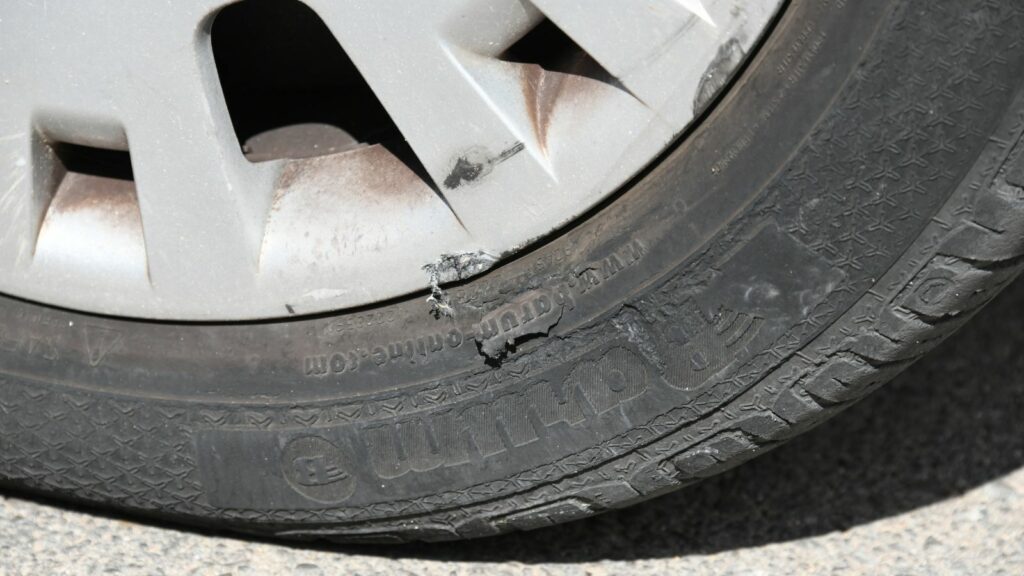
A flat tire is rarely convenient, but the experience becomes far more complicated when the cargo compartment contains sealant and a compressor instead of an actual replacement wheel. Automakers have increasingly removed spare tires to reduce weight, improve packaging, and support efficiency targets. For many motorists, the compromise remains unnoticed until roadside trouble occurs.
The practical consequences can be especially frustrating in Canada, where winter temperatures, long distances, rough pavement, limited rural services, and inconsistent cellular coverage can turn a basic puncture into a towing event. These 12 reasons explain why some Canadians eventually decide that the space and weight saved by eliminating the spare were not worth the added uncertainty.
The Missing Spare Can Be an Unpleasant Surprise
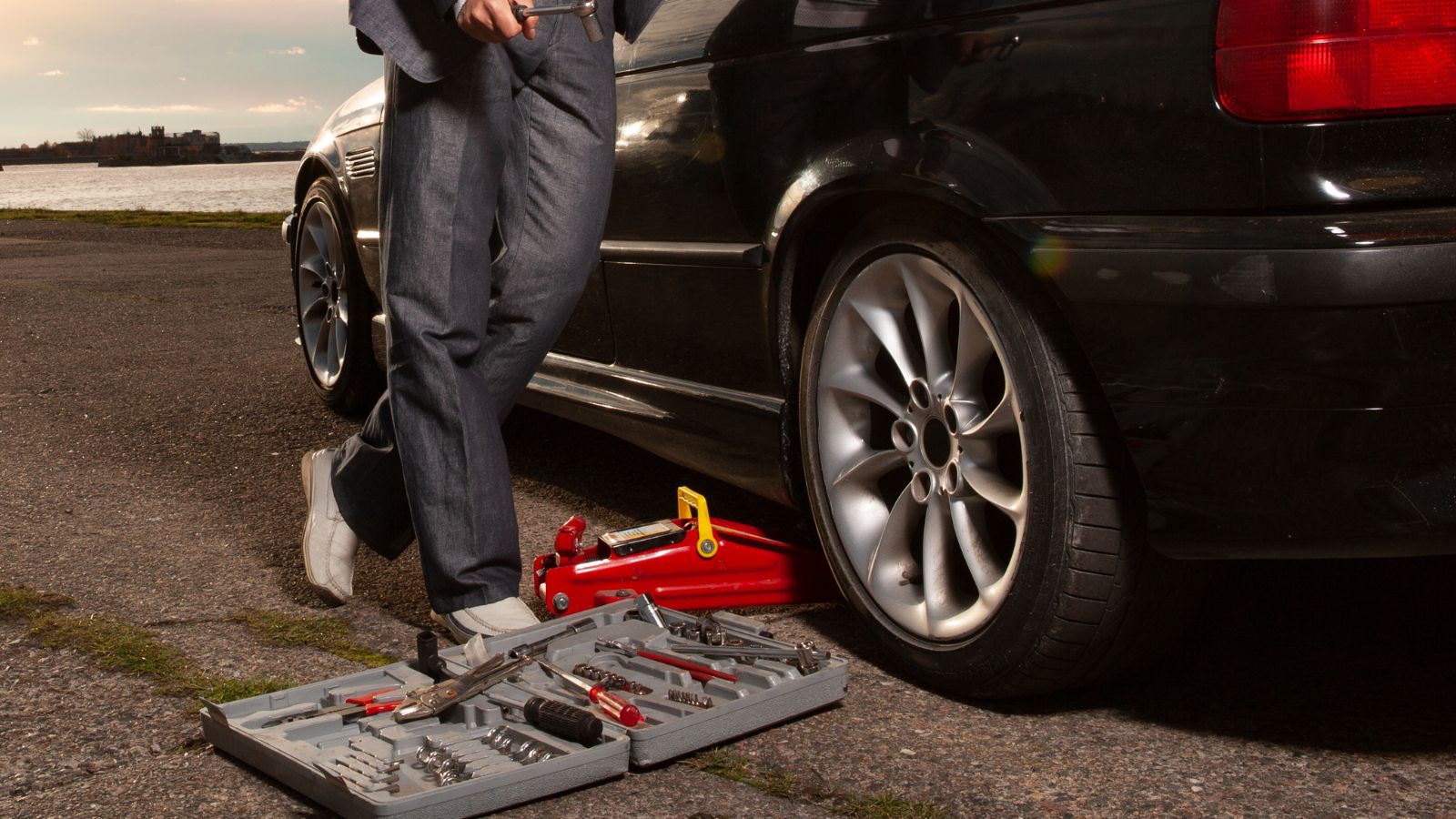
Many buyers discover the missing spare only after the first puncture. The cargo floor may look normal at delivery, yet beneath it sits a compressor and sealant bottle instead of a wheel, jack, and lug wrench. AAA found that 28 percent of 2017-model-year vehicles lacked a spare as standard equipment, showing how common the change had already become across the market for buyers.
The regret comes from expectations. A flat once meant a roadside wheel swap and a cautious drive to a shop. Without a usable spare, the same event may require roadside assistance or towing. CAA Atlantic’s membership terms make that distinction explicit: technicians can install a member’s inflated spare, but when none is available, the towing benefit applies. A buyer who never checked the cargo compartment can therefore learn, during an already stressful breakdown, that the vehicle’s emergency plan depends on outside help rather than equipment carried onboard.
Repair Kits Work Only in Limited Situations
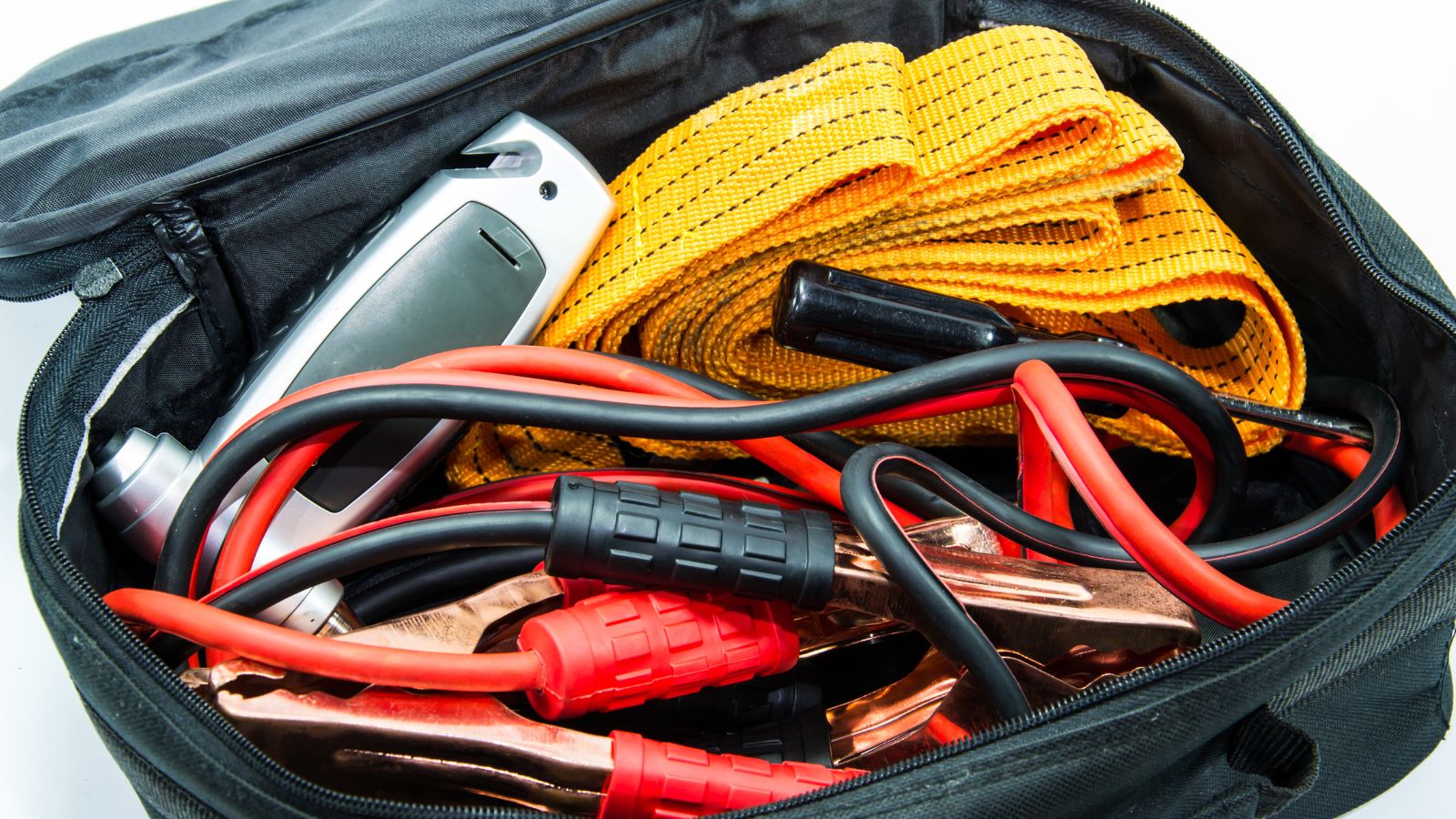
A sealant-and-inflator kit can be useful, but only within a narrow range of damage. Honda’s instructions for one factory kit say it should not be used when the puncture exceeds 4.8 millimetres, the sidewall or rim is damaged, the bead has separated, or more than one tire is punctured. Those conditions require towing.
That limitation surprises drivers because many flats are not neat nail holes in the centre of the tread. A pothole edge can pinch a sidewall, debris can cause a cut, and continued driving on low pressure can create internal damage. Michelin Canada likewise says repairable damage must be confined to the tread and no larger than one-quarter inch. In practical terms, the kit is not a universal substitute for a spare. It is a temporary tool for a specific puncture, and regret begins when real-world damage falls outside that narrow window, leaving the vehicle unable to move without assistance.
Sidewall Damage Usually Defeats Sealant
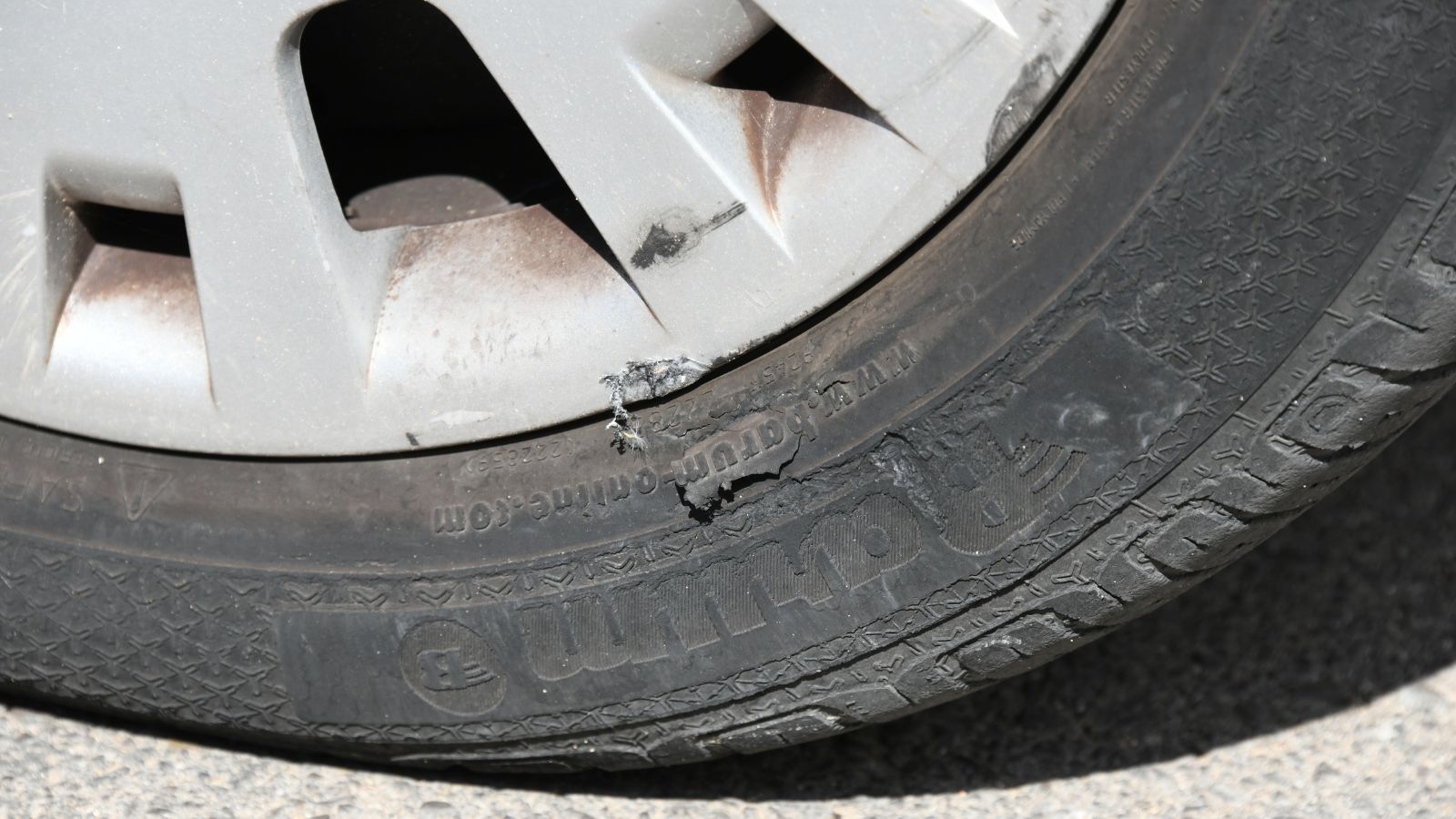
Sidewall damage is one of the clearest reasons a spare can matter. The sidewall flexes constantly as the tire carries the vehicle, so cuts, bulges, or impact damage cannot be treated like a simple tread puncture. Michelin Canada states that sidewall damage is unsuitable for ordinary repair, while factory mobility-kit instructions commonly direct the driver to arrange towing.
Consider a family striking a broken pavement edge while travelling to a cottage. The tire may lose air immediately even though no nail is visible. A sealant bottle cannot rebuild torn structural cords, and a compressor cannot reseat a displaced bead or straighten a bent rim. With a spare, the damaged assembly can be removed and the trip may continue cautiously. Without one, the vehicle remains where it stopped until help arrives. What looked like a small saving in cargo space can become a cancelled reservation, missed ferry, or hours spent waiting beside the road.
Run-Flat Tires Have Strict Distance Limits
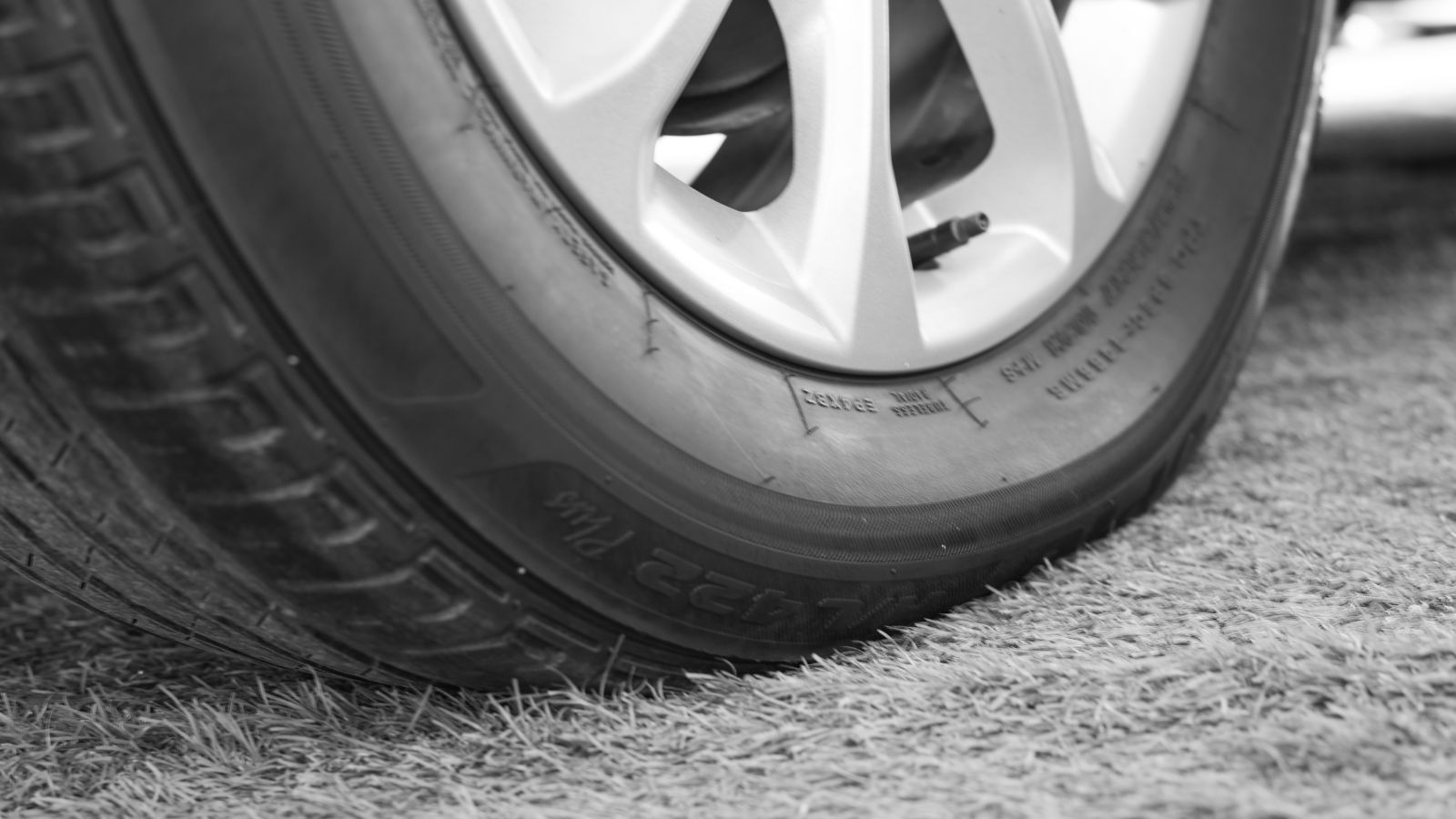
Run-flat tires reduce the chance of being stranded immediately, but they do not provide unlimited mobility. Bridgestone says its run-flat designs can generally continue for up to 80 kilometres at no more than 80 km/h after losing pressure. The exact limit depends on the tire and vehicle, and damage or heavy loading can reduce the usable distance.
That range may be enough inside Toronto, Calgary, or Montréal, where several tire shops could be nearby. It can feel far less reassuring on a northern highway, a rural route late on Sunday, or a long stretch between communities. The nearest open shop may be beyond the permitted distance, and the required size may not be available upon arrival. Run-flats still need professional inspection after pressure loss. Some Canadians regret assuming that “run-flat” means driving normally until convenient. It really means limited emergency travel, under restrictions, toward a facility capable of repairing or replacing the tire.
Remote Highways Expose the Dependence on Outside Help
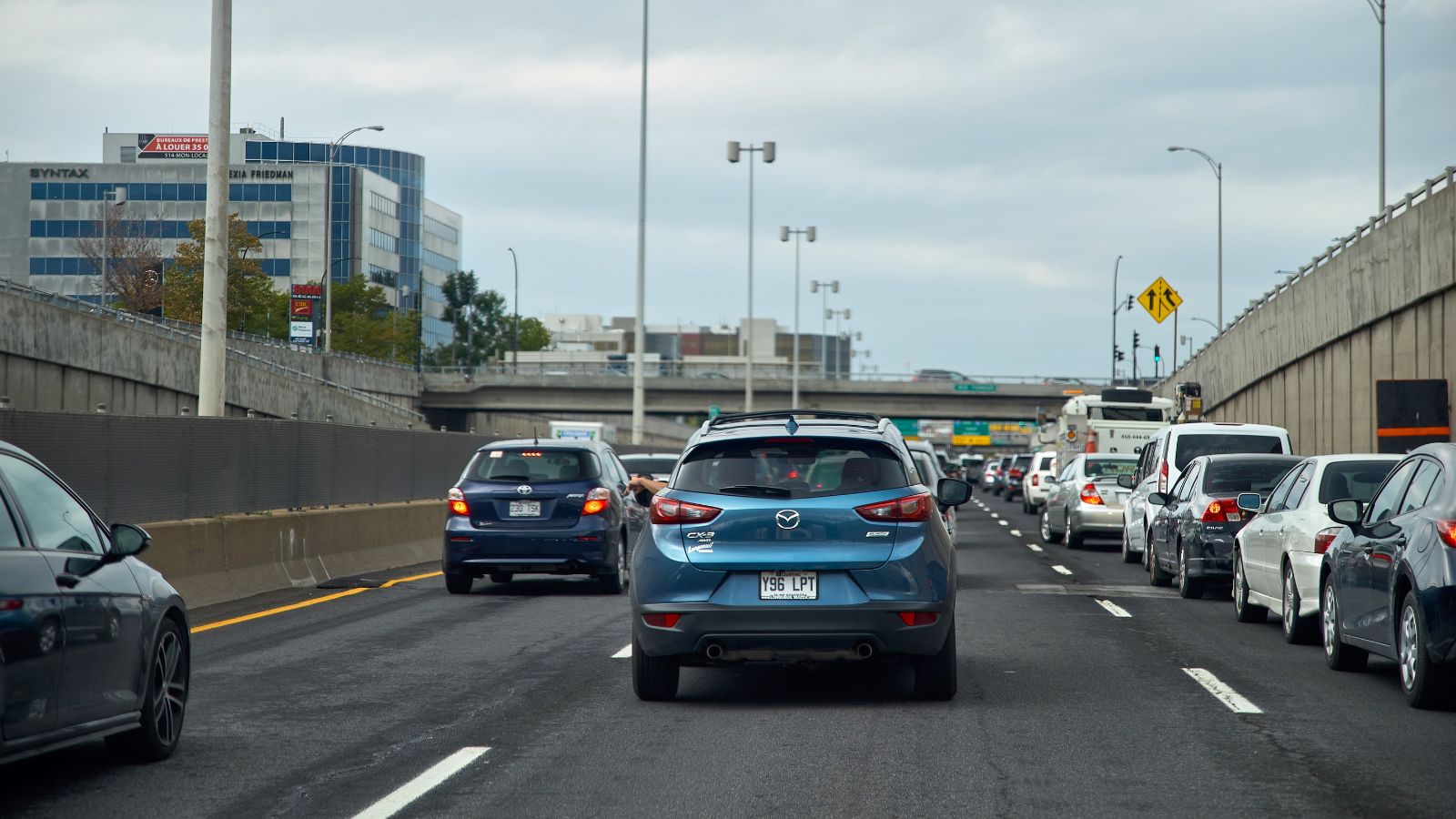
Canada’s geography makes dependence on towing more consequential than it appears in a showroom. The CRTC has acknowledged that wireless coverage can be insufficient along highways in remote areas, even where surrounding regions are considered served. A flat tire without a spare can therefore become a communications problem as well as a mechanical one.
On a busy urban expressway, a roadside request may be placed within minutes. On a lightly travelled route, the driver may need to walk toward a signal, wait for another motorist, or rely on satellite emergency features unavailable in every vehicle or subscription. Weather and darkness add pressure. A spare does not solve every tire failure, but it gives a prepared driver one more independent option when cellular service is weak. The regret is often less about the tire itself than the sudden loss of control: no wheel to install, no reliable signal, and no certainty about when assistance will arrive.
Canadian Winters Make Mobility Kits Harder to Use

Cold weather exposes another weakness in repair-kit dependence. Transport Canada notes that tire pressure falls as temperatures drop, which is why pressures should be checked when tires are cold. Honda’s mobility-kit instructions add that sealant may not flow easily in low temperatures and may need warming before use. That is awkward during a roadside stop in freezing wind.
Winter also raises the stakes of waiting. A driver who can install a properly inflated spare may be able to leave an unsafe shoulder and reach shelter. A driver whose only remedy is sealant must confirm that the damage qualifies, operate a compressor outside, and verify that pressure holds. If the kit fails, towing is still required. Canadians who bought a vehicle in warm weather may not appreciate this distinction until January. The missing spare can turn a manageable puncture into prolonged exposure, especially with children, older adults, or passengers who lack adequate winter clothing.
Potholes Can Cause Damage a Kit Cannot Fix
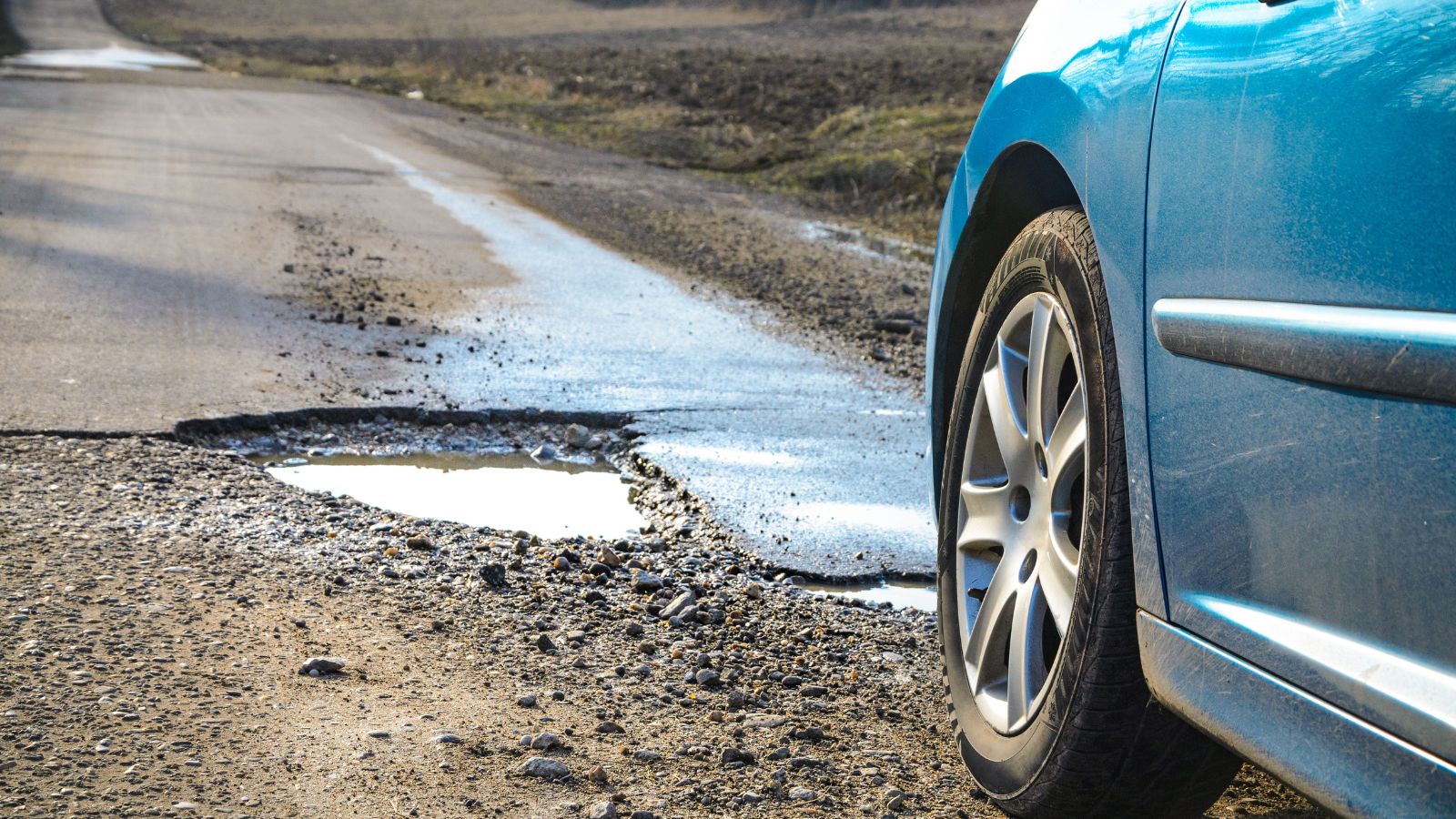
Poor pavement does not merely affect ride comfort. A CAA study using Statistics Canada infrastructure data estimated that poor roads add an average of $126 per vehicle each year in operating costs, with tire, wheel, suspension, fuel, and depreciation effects contributing to the burden. The report identified more than one million kilometres of roads across Canada and meaningful provincial variation.
For a vehicle without a spare, a pothole impact can be especially disruptive because the damage may involve more than a small tread puncture. A tire can develop a sidewall bulge, a wheel can bend, or the bead can lose its seal. Those are situations mobility kits are least able to address. A commuter who expected quick inflation may instead need a flatbed and a replacement wheel or tire. The regret is sharpened by knowing the road hazard was ordinary, not extraordinary. A spare cannot repair the wheel, but it can restore mobility when the damaged assembly can be removed safely.
Roadside Assistance May Mean Towing, Not Repair

Roadside-assistance memberships are valuable, yet their benefits are not the same as carrying a spare. CAA Atlantic states that a provider will replace a flat with the member’s inflated and mounted spare. When no usable spare exists, the towing benefit applies, and repairs or extra trips to deliver a repaired tire are not included in the tire-change service.
That difference can create costs beyond the tow itself. Coverage distances vary by membership level, while the chosen repair facility may be closed or unable to supply the tire. The vehicle may need to remain overnight, leaving occupants to arrange a taxi, hotel, rental car, or pickup from relatives. A flat during a workday can also mean lost appointments or wages. None of those outcomes is guaranteed, but the risk changes when the car cannot move using onboard emergency equipment. Some owners regret buying a vehicle marketed as convenient, then discovering that a routine puncture requires several third-party services.
Specialized Tires May Not Be Locally Available
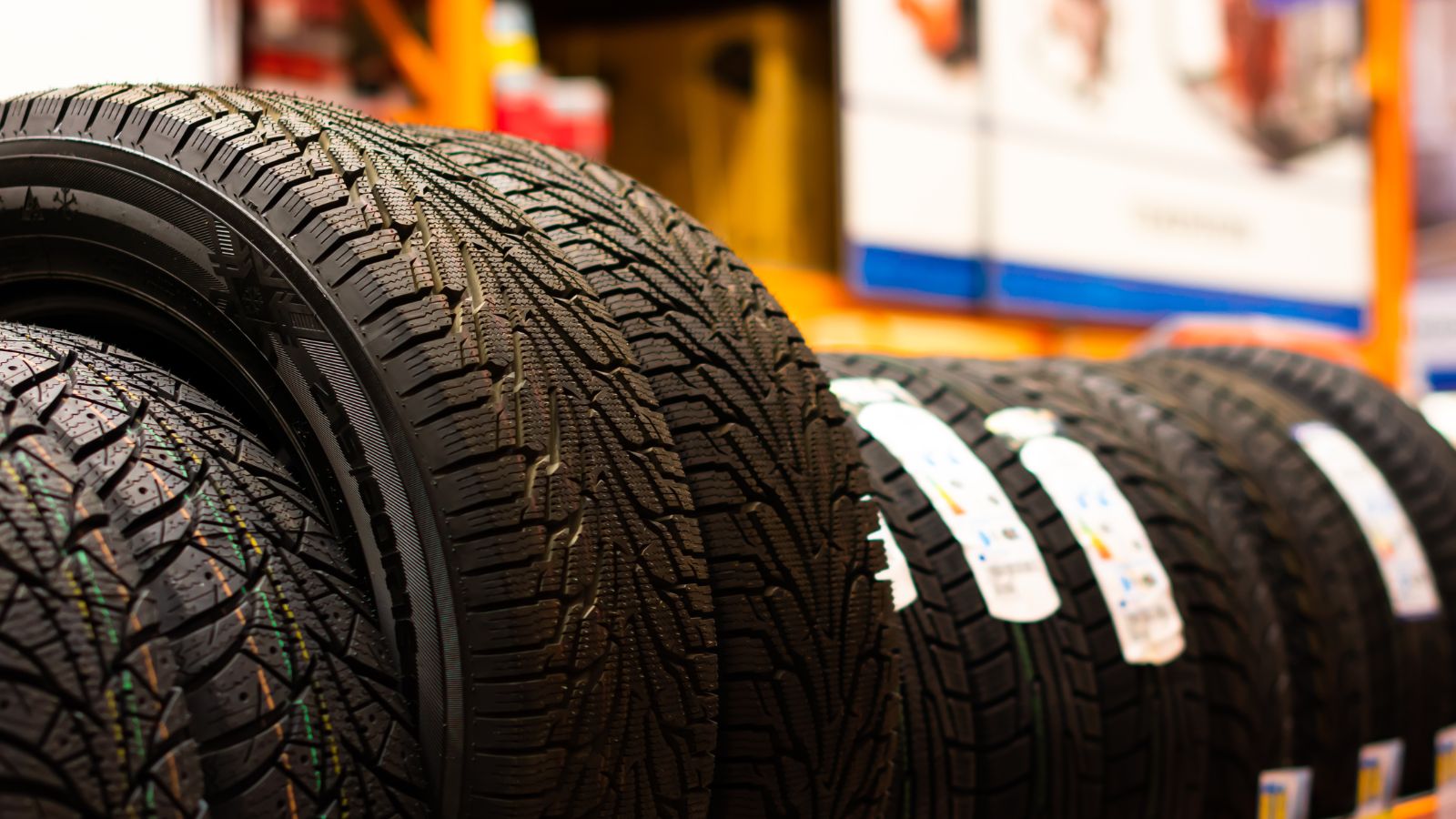
A replacement tire is not always a simple off-the-shelf purchase. Modern vehicles use many wheel diameters, widths, speed ratings, load ratings, and specialized constructions. Performance trims, large crossovers, and electric vehicles may use sizes that a small-town shop does not stock. Reaching a garage by tow therefore does not guarantee an immediate return to the road.
The issue becomes more complicated on all-wheel-drive vehicles. Subaru guidance emphasizes matching tire size, type, brand, and wear across all four wheels so stability systems operate as intended. Tesla similarly recommends replacing tires in pairs when tread-depth differences exceed a stated tolerance. A single destroyed tire may therefore lead to additional inspections, replacement of a pair, or more extensive matching, depending on the vehicle and remaining tread. A spare would not erase that eventual bill, but it could let the owner reach a preferred shop instead of accepting whatever limited solution is available near the breakdown.
Tire Sealant Can Expire Unnoticed
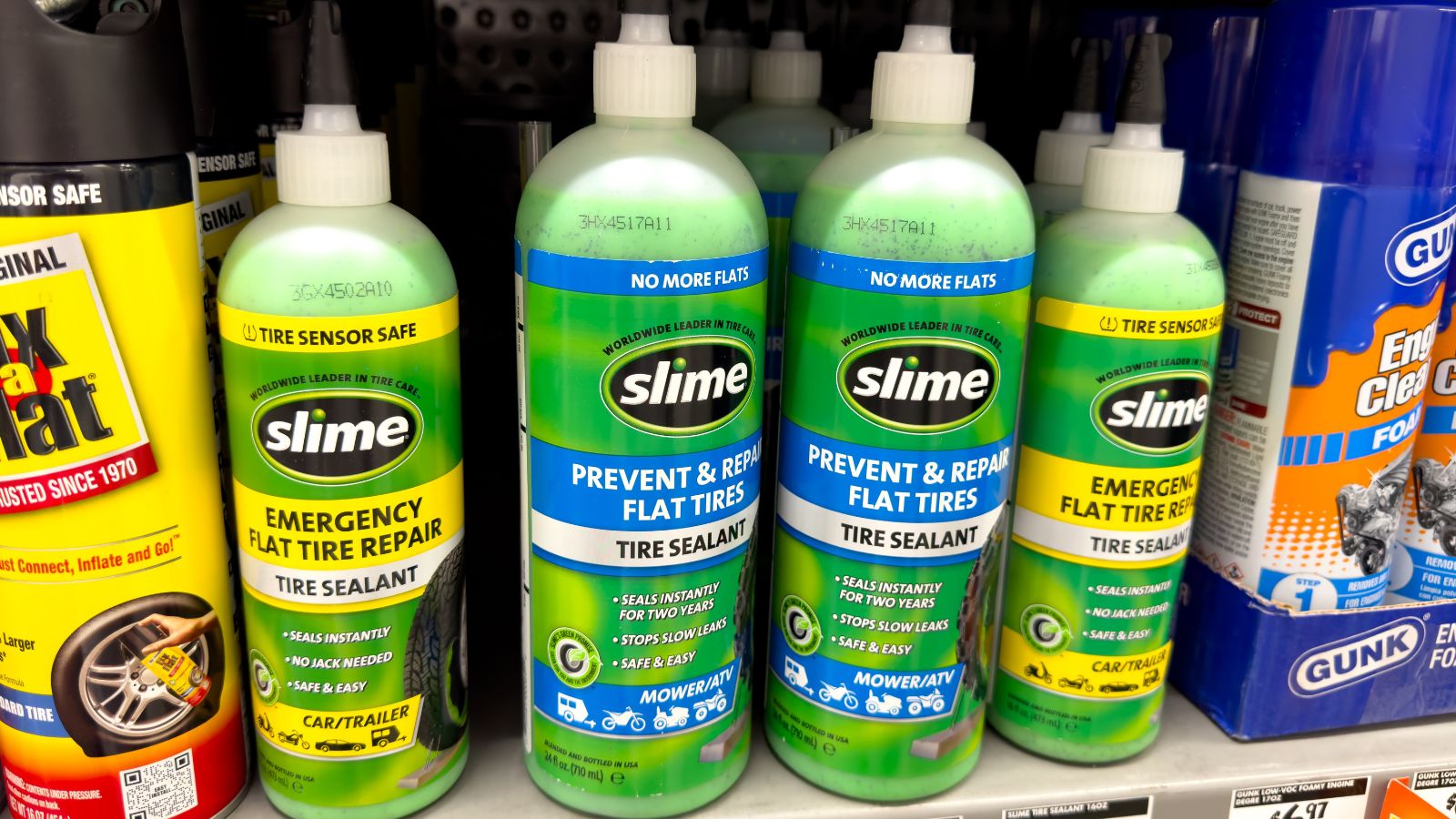
Mobility kits require maintenance even when they are never used. Ford’s Canadian-market owner information instructs drivers to check the sealant canister’s use-by date and replace it when expired. Honda also lists expired sealant among the conditions in which the kit should not be used. A forgotten bottle can therefore become useless precisely when the vehicle finally needs it.
This creates a quiet ownership task that many buyers do not know exists. Traditional spares also require pressure checks, but their condition is easier to understand: the tire must be inflated, undamaged, and securely stored. Sealant kits add chemical shelf life, hoses, electrical connections, and compressor operation to the checklist. Used-car buyers are particularly vulnerable because the canister may be original, partly used, missing, or expired. The first sign of neglect may appear on a dark shoulder. Regret often follows the realization that the vehicle technically included an emergency solution, but that solution had become unusable years before the puncture.
The Weight Savings Can Feel One-Sided
Removing the spare gives automakers measurable advantages. AAA reported that manufacturers cited reduced weight and improved fuel economy, while eliminating the wheel, tire, jack, and tools also creates additional packaging flexibility. Those benefits help explain why the change spread across conventional cars, hybrids, and electric vehicles.
The trade-off feels different after a breakdown. Extra storage or modest weight reduction may be appreciated every day, but the financial value is difficult for an owner to see directly. The inconvenience of one tow, missed shift, hotel stay, or emergency tire purchase is immediate and memorable. That imbalance drives regret: the manufacturer receives design flexibility and efficiency gains, while the owner assumes more dependence on roadside networks. For urban drivers who rarely leave populated areas, the compromise may be acceptable. For Canadians who travel between communities, visit cottages, tow trailers, or drive in winter, the missing spare can feel like the wrong place to save weight.
The Problem Is Often Discovered Too Late
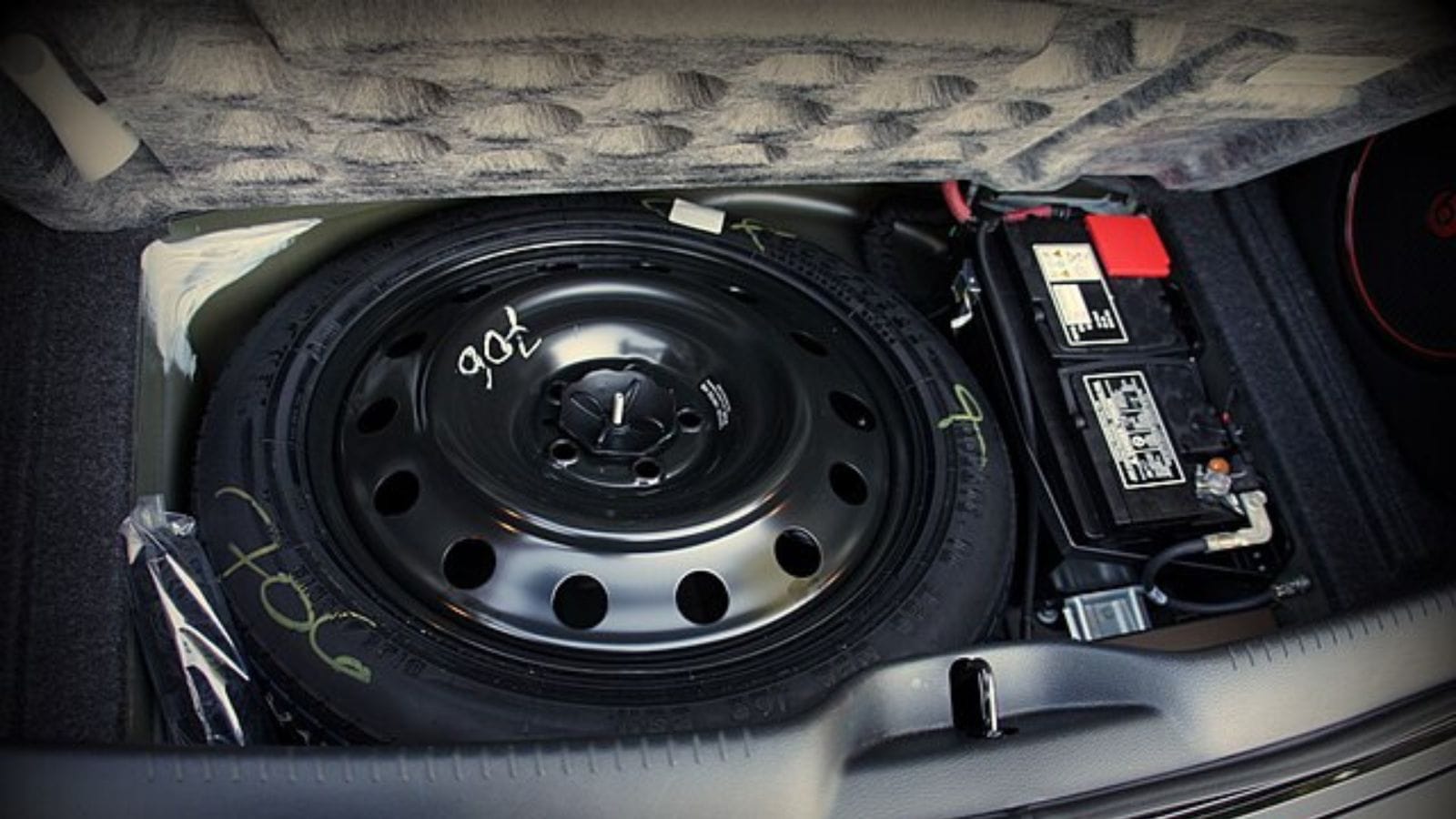
The strongest regret often comes from discovering the problem too late. AAA has urged motorists to inspect the cargo area before trouble strikes because a normal-looking trunk does not guarantee a spare. Transport Canada, meanwhile, advises checking spare-tire pressure regularly on vehicles that have one. Both messages point to the same lesson: emergency equipment should be confirmed and maintained before a trip.
A careful buyer can ask whether the vehicle has a full-size spare, compact spare, run-flat tires, or only a mobility kit; where the jack and wheel-lock key are stored; and whether an approved spare can be added. The owner’s manual should also be checked for towing rules, speed limits, sealant restrictions, and all-wheel-drive requirements. Some vehicles cannot conveniently accommodate an aftermarket spare, while others have factory or third-party options. Canadians who regret buying without one often do not reject the vehicle itself. They regret deciding without recognizing how their travel habits, climate, and distance from service would magnify the omission.
22 Things Canadians Do to Their Cars in Spring That Mechanics Hate

Spring brings relief to many Canadian drivers after months of snow, freezing temperatures, and icy roads that put serious strain on vehicles. As temperatures rise across the country, drivers begin washing cars, switching tires, and preparing vehicles for warmer weather and upcoming road trips. However, mechanics across Canada notice the same mistakes every spring when drivers attempt to recover from winter damage. Road salt, potholes, and harsh winter driving conditions often leave vehicles with hidden problems that drivers ignore. Some spring habits even create new mechanical issues that could have been avoided with proper maintenance. Here are 22 things Canadians do to their cars in spring that mechanics hate.

Alanna Rosen is an experienced content writer that focuses on many EV and educational content. Her articles are regularly published on Get CyberTrucked and syndicated on large publications.