Most car interiors carry small signs of daily life: a water bottle, a laptop bag, groceries, a child’s book, or a pet harness tossed on the seat. In ordinary driving, these things feel harmless. In a hard stop or collision, they keep moving, turning convenience into hazard.
Crash forces do not sort objects by how familiar they are; hard edges, weight, and placement can decide whether an item stays forgotten or becomes a projectile. These 12 everyday items can raise the risk inside a vehicle, from phones and bottles to pets, luggage, and decorative accessories. The issue is not about keeping a spotless cabin. It is about understanding how ordinary clutter behaves when a moving vehicle stops violently.
Phones and Tablets
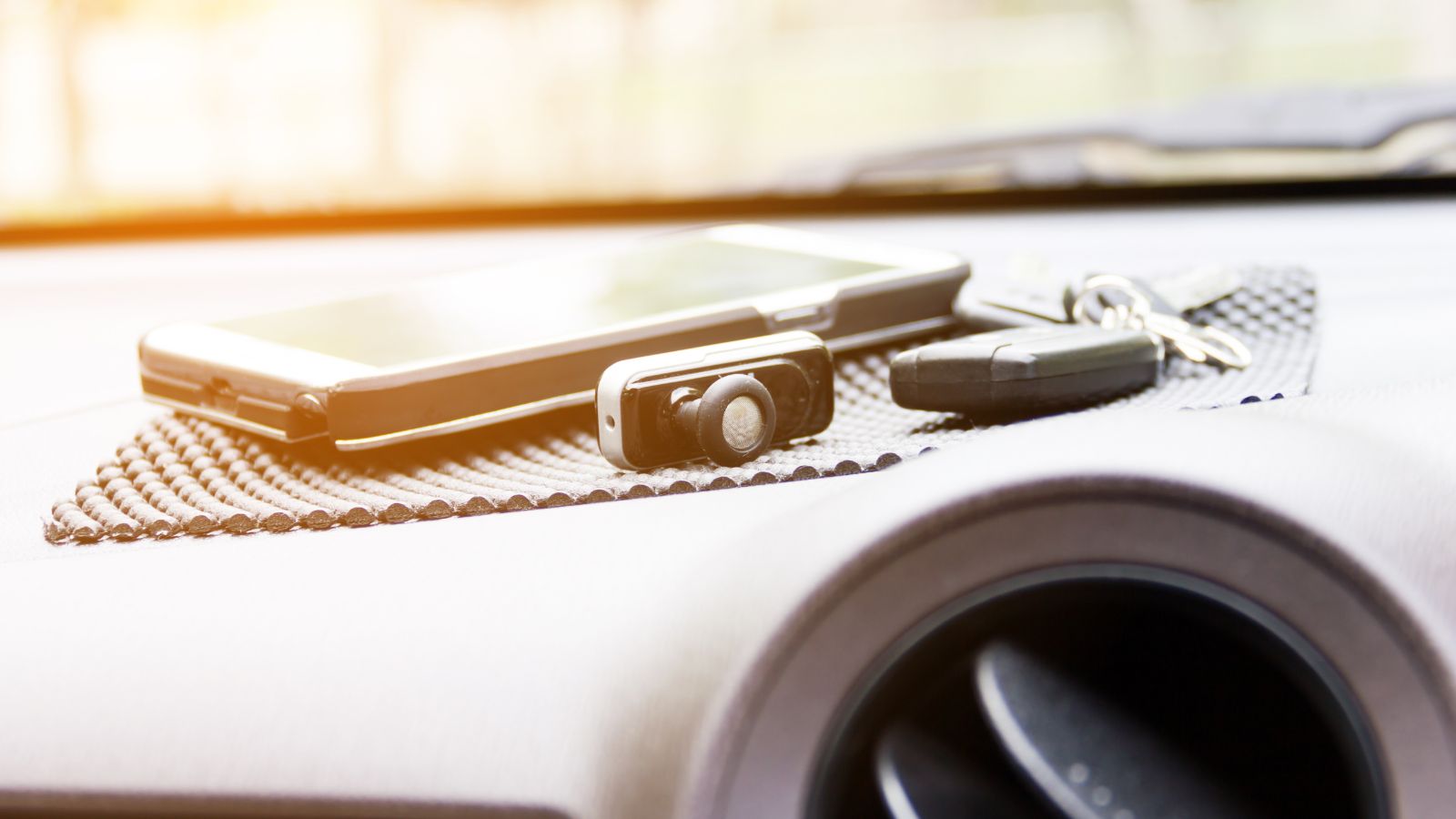
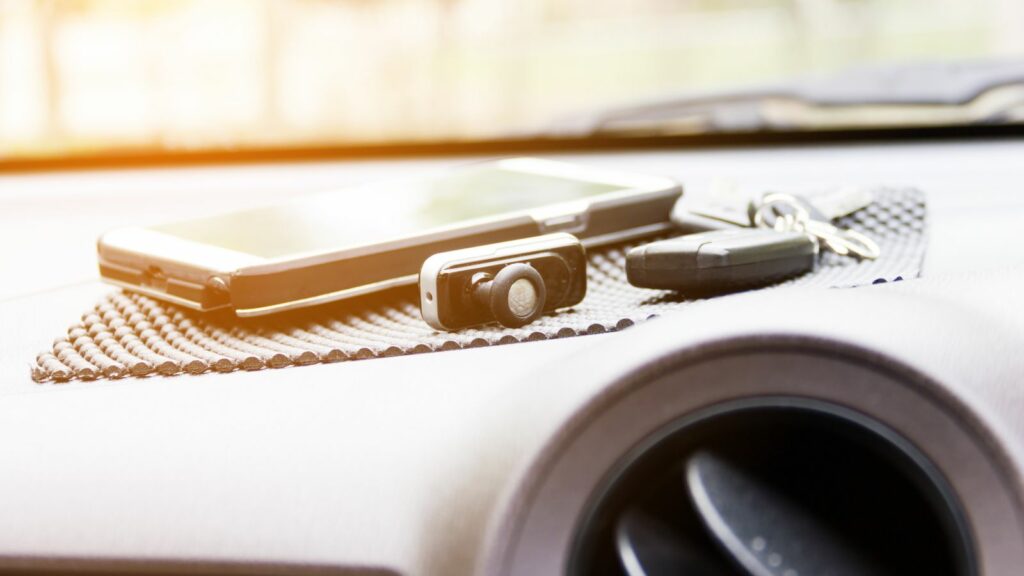
A phone left on the passenger seat seems too small to matter, but it combines two crash risks in one object. Before impact, it can pull attention away from driving. In 2024, distracted driving killed thousands of people in the United States, and phones remain one of the most discussed sources of that danger. After impact, the same device can become a hard-edged object moving through the cabin.
Tablets create a bigger version of the same problem, especially when handed to children in the back seat without a secure mount. Their glass screens, metal frames, and squared corners can strike a face, arm, or eye during sudden deceleration. A safer habit is to store unused devices in a closed console, seat-back pocket, or bag placed low on the floor, away from airbags and passengers’ heads.
Water Bottles and Travel Mugs
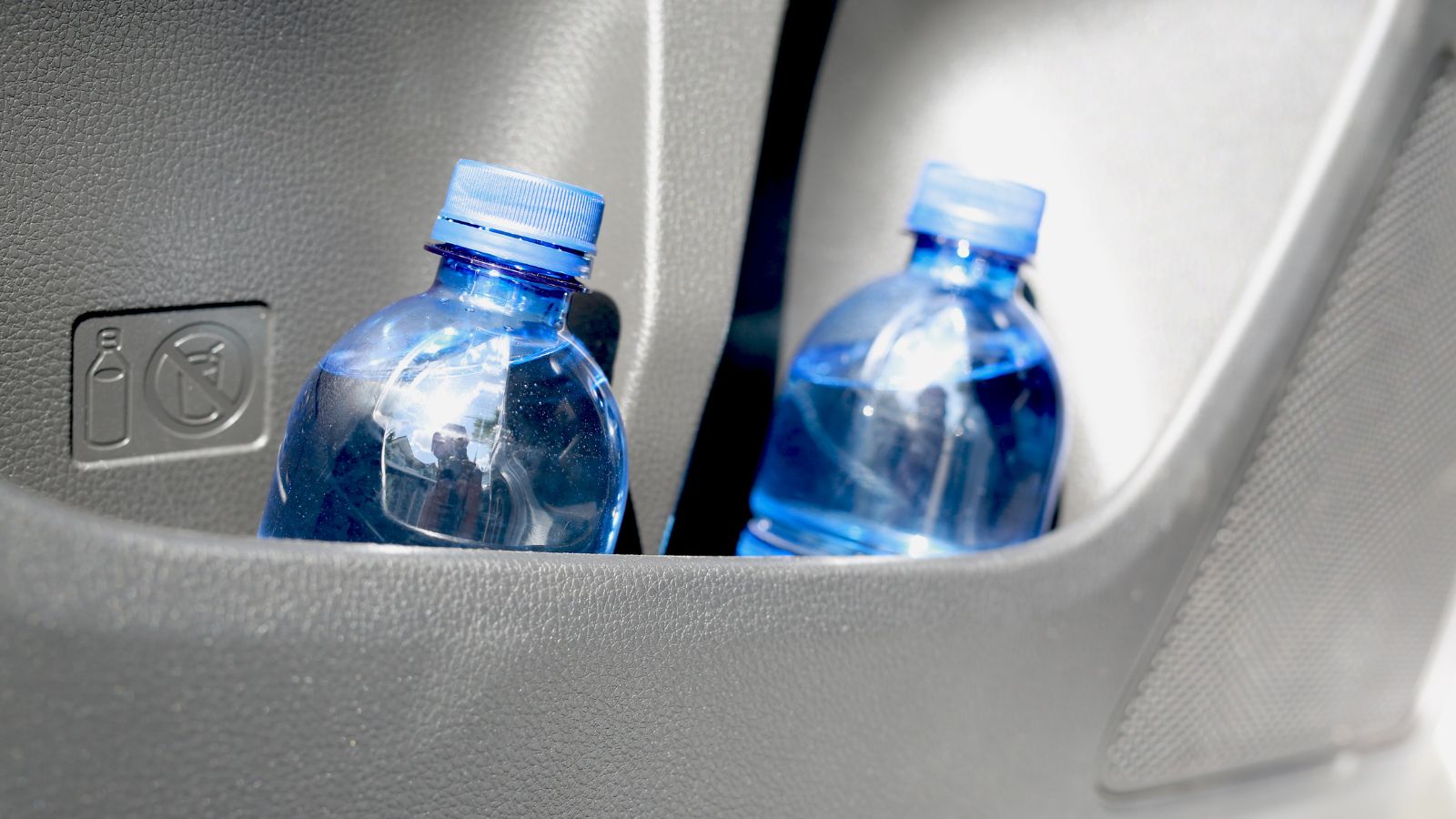
A half-full bottle rolling around the cabin looks ordinary until the vehicle stops abruptly. Road-safety organizations have warned that a one-litre water bottle can hit with far more force than its normal weight suggests during violent deceleration. That makes a bottle on the rear seat more than a minor nuisance, especially if it is made of metal or hard plastic.
Travel mugs add another layer of risk because they are dense, often have handles, and may spill hot liquid during a crash. A stainless-steel tumbler flying forward can injure an occupant, while a loose bottle can roll into the driver’s footwell before an emergency stop. Cup holders help only when the container actually fits. Anything too tall, loose, or wedged awkwardly is better stored low and secured.
Purses, Backpacks, and Work Bags
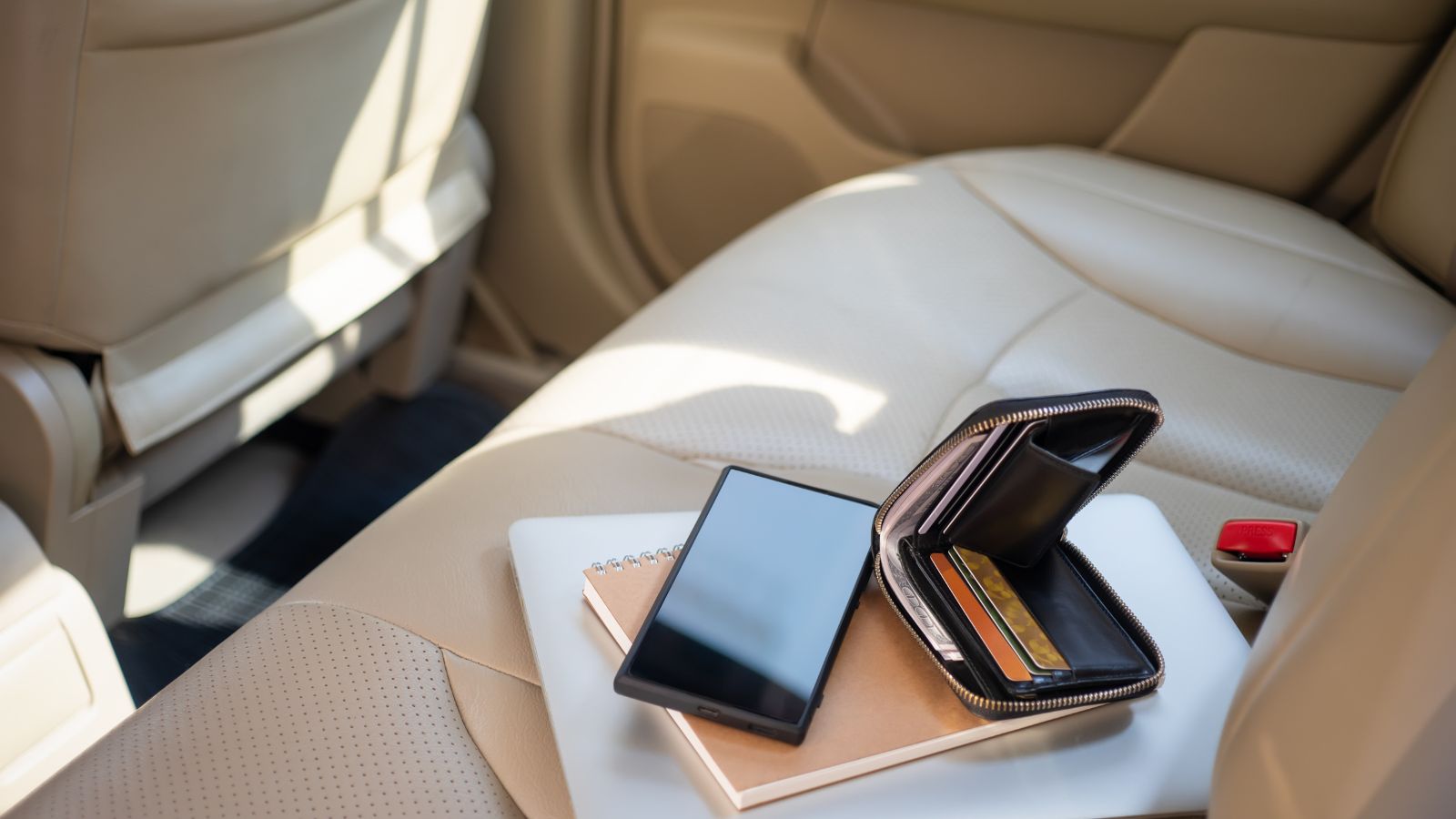
A purse or backpack often becomes a mobile junk drawer: keys, coins, cosmetics, chargers, pens, glasses, snacks, and sometimes small tools. In a crash, the bag itself can move, and the contents can scatter into separate hard objects. A commuter bag that seemed safely parked on the passenger seat can become a burst of metal zippers, key rings, and compact cases.
The safest place depends on the vehicle, but higher surfaces are usually the wrong answer. A bag on a seat or parcel shelf has a clearer path toward occupants than one placed low on the rear floor or secured in the trunk. The driver’s footwell should stay completely clear. A bag sliding under the pedals at the wrong moment can create danger before the crash even happens.
Groceries and Canned Goods
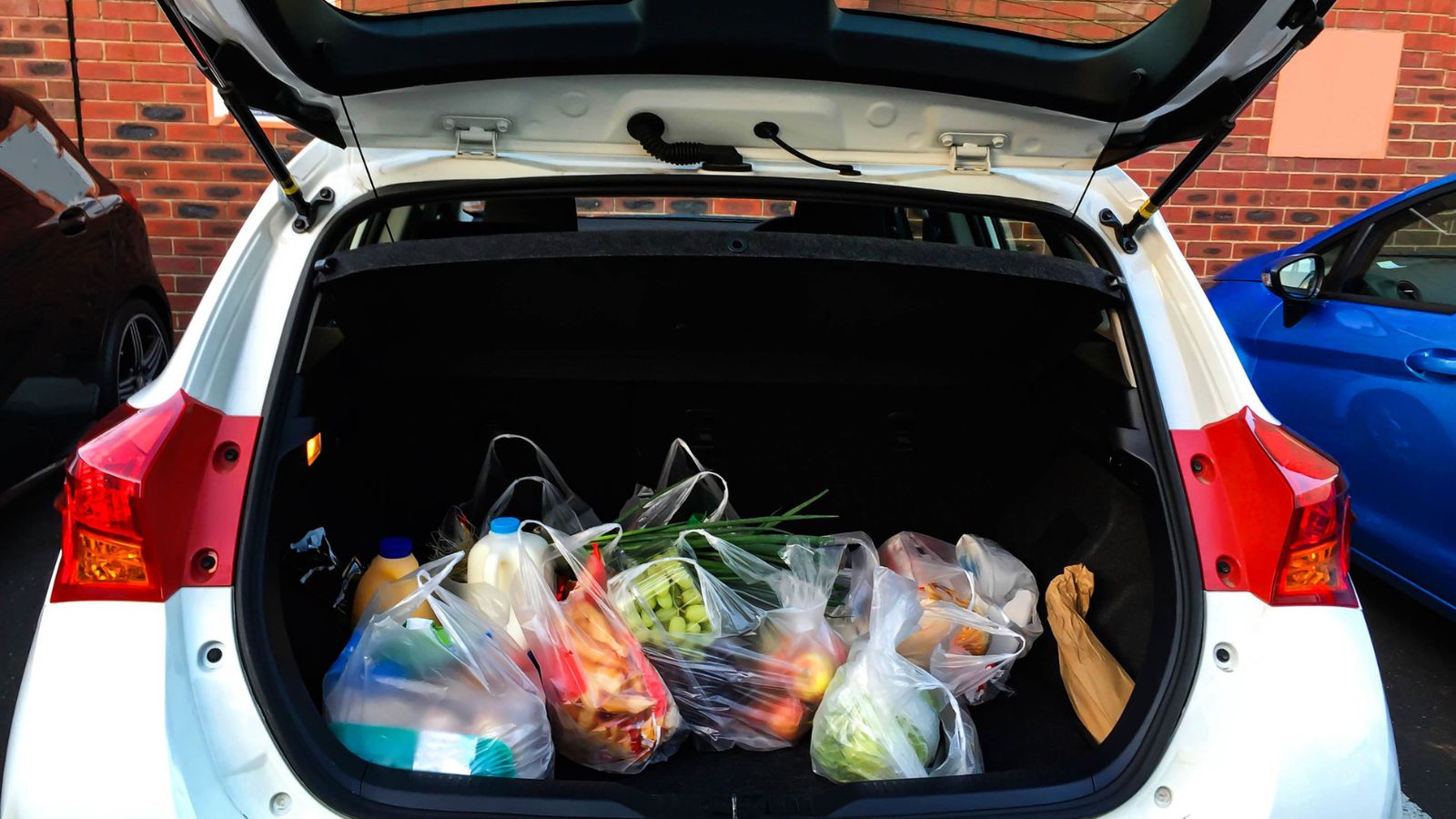
Groceries feel harmless because they are familiar, but many items in a grocery run are surprisingly dense. Cans, jars, bottles, frozen foods, and boxed goods can all shift violently in a sudden stop. A loose bag of canned tomatoes or glass pasta sauce in the back seat can become a cluster of small projectiles rather than one soft load.
The risk grows in hatchbacks, minivans, and SUVs because the cargo area is connected to the passenger compartment. A trunk offers separation; an open cargo area needs restraint. Heavy groceries should sit low, ideally behind the rear seat, inside bins, cargo nets, or a lidded organizer. It is also worth avoiding the habit of placing grocery bags on the rear bench, where a hard stop can send them directly toward the front occupants.
Laptops and Briefcases
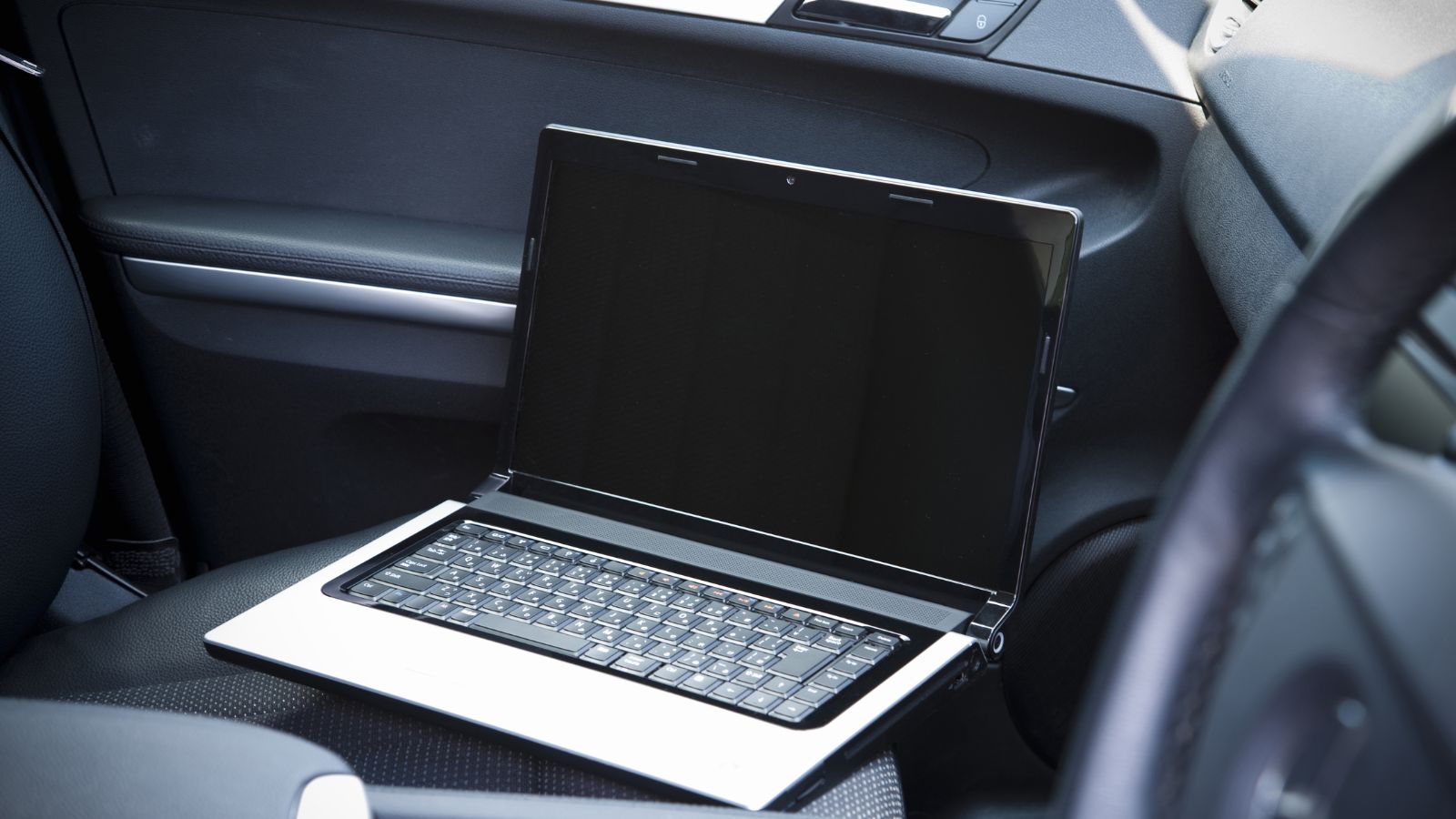
A laptop is one of the most overlooked hazards in a modern car. It is flat, heavy for its size, and built with hard corners. Safety groups have specifically identified laptops as potential projectiles, and crash-force examples show that their effective impact can become far greater than their resting weight. A slim device on the back seat is still a rigid object with momentum.
Briefcases and laptop bags can make the problem worse because they often include chargers, power bricks, notebooks, and metal accessories. During a collision, the bag may move as one heavy mass, or it may open and release several objects at once. Keeping work gear in the trunk or flat on the rear floor is a simple improvement. Seat-top storage is convenient, but convenience matters less once crash forces take over.
Tools and Hardware
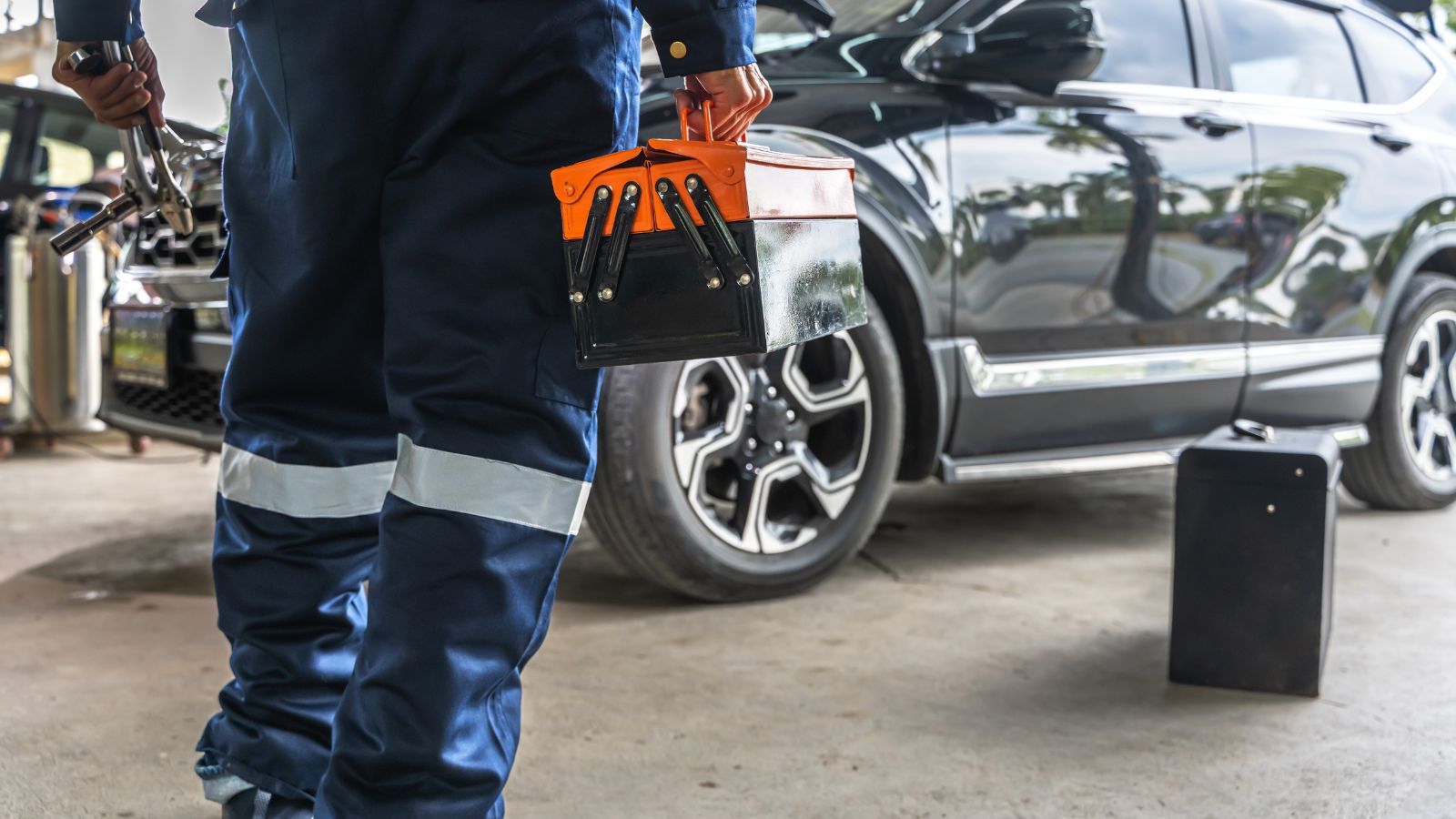
Tools are designed to be hard, compact, and durable, which is exactly why they can be dangerous inside a crashing vehicle. A screwdriver, wrench, tape measure, hammer, drill battery, or box cutter may be useful on a job site, but inside a cabin it can become a sharp or blunt-force hazard. A small toolbox sitting unsecured behind the front seat can strike with enough force to cause serious injury.
Hardware-store runs deserve the same caution. Loose lumber, paint cans, garden tools, and fasteners can shift suddenly, and road-safety research has also linked unsecured cargo and building materials to debris-related crashes when they leave vehicles. Inside the vehicle, the best approach is restraint: close the toolbox, place it in the cargo area, use tie-down points, and keep sharp tools away from passenger space.
Sports Gear

Sports equipment often rides home in a hurry after practice, which is why it gets tossed into the cabin instead of secured. Golf clubs, hockey sticks, baseball bats, lacrosse sticks, skates, helmets, dumbbells, and balls all behave differently in a crash. Long items can spear forward, heavy items can strike, and round items can roll into the pedal area.
The danger is not limited to adults. A child’s sports bag may contain cleats, metal water bottles, pucks, baseballs, or skate blades. In an SUV, that gear may sit behind the rear seat with a direct path into the cabin if it is not restrained. Cargo covers hide equipment from view, but they do not always hold back weight in a crash. Nets, barriers, and tie-downs matter far more.
Hard Toys, Books, and Seat-Back Accessories
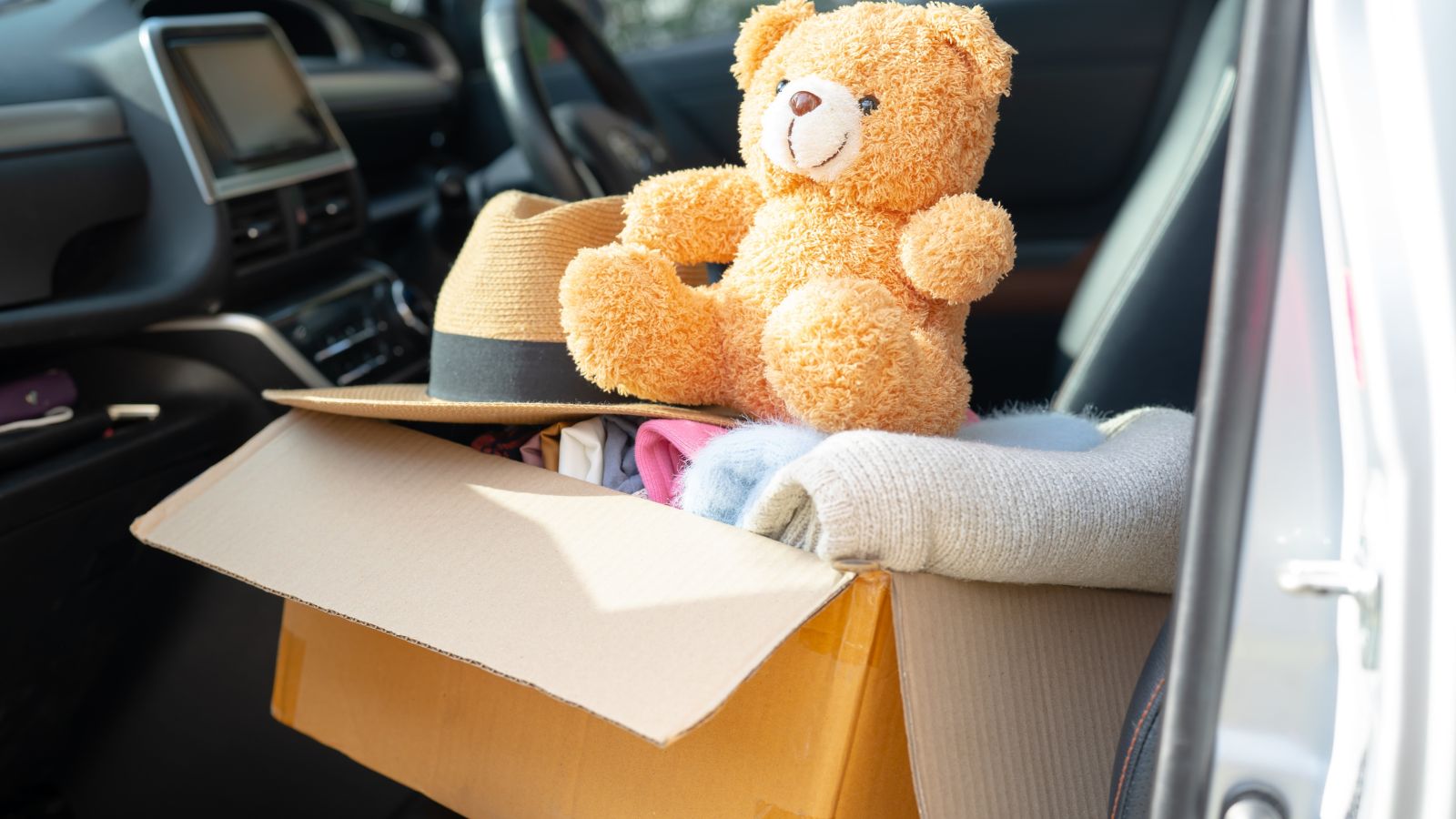
Children’s items can be deceptive because they are associated with comfort and distraction rather than danger. Hard plastic toys, board books, metal cars, tablets, clip-on trays, and hanging accessories can all become projectiles during hard braking or a crash. Pediatric safety guidance often recommends soft toys instead of hard ones for travel.
Seat-back mirrors, suction-cup shades, and clip-on organizers deserve a second look as well. If an accessory is attached loosely, mounted near a child’s head, or positioned where an airbag might deploy, it can add risk. A soft stuffed animal is easier to justify than a rigid toy with corners. For longer drives, the better setup is light, soft entertainment stored within reach but not hanging from handles, headrests, or fragile mounts.
Unrestrained Pets
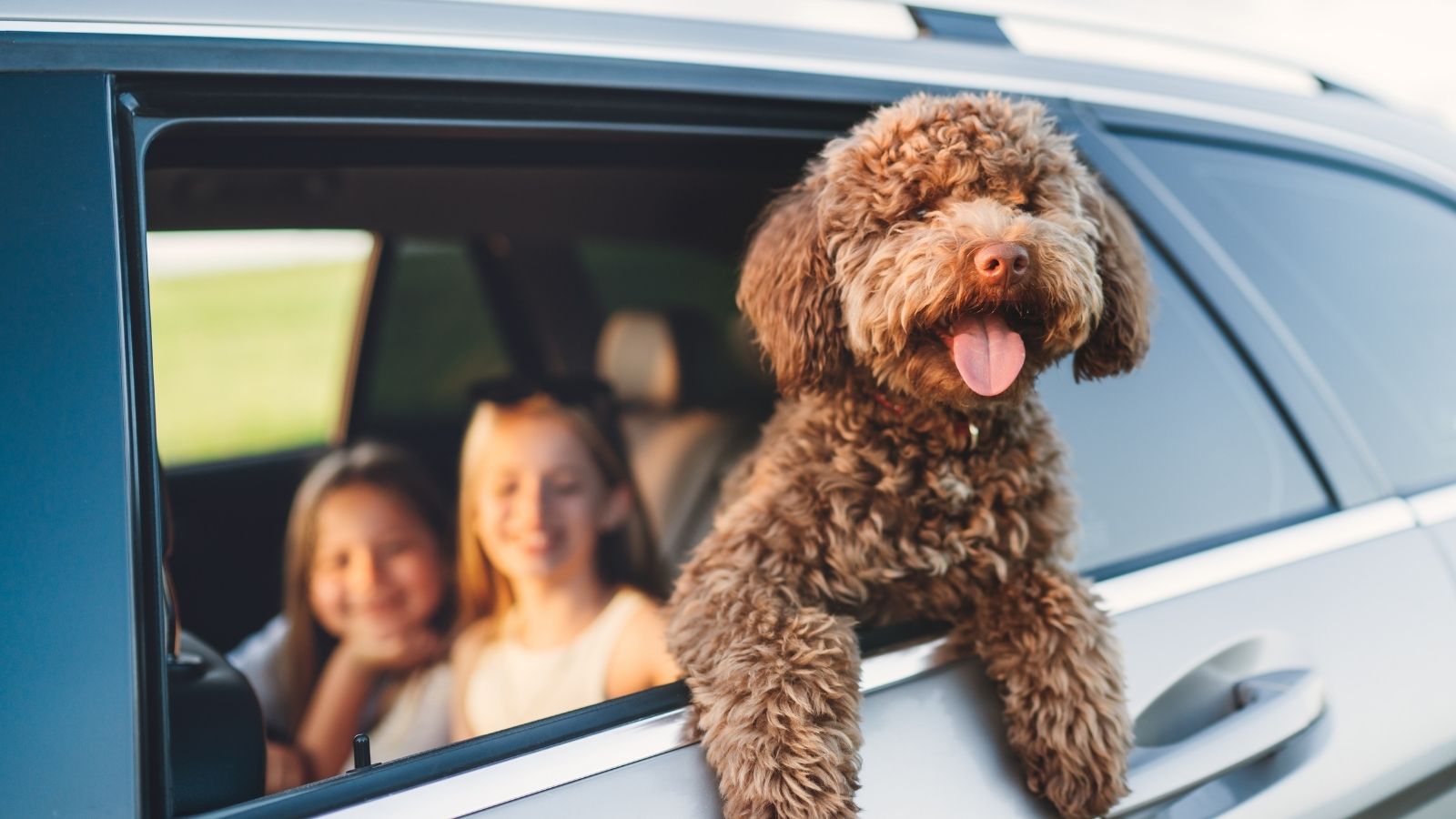
A pet loose in the cabin can be injured, ejected, or thrown into another occupant during a crash. Veterinary safety guidance warns that unrestrained animals may be thrown through windows or windshields, and airbags can also injure pets in the front seat. A small dog on a lap may feel affectionate, but crash physics treats it as an unsecured body.
Pets also create pre-crash risk when they climb between seats, move underfoot, or distract the driver. The safer approach is a properly secured carrier, crate, or vehicle-rated harness, ideally positioned away from the front airbag zone. The goal is not only protecting the animal. It is also protecting every person in the vehicle from the force of a frightened, unrestrained pet moving through the cabin.
Dashboard Decorations and Steering-Wheel Bling
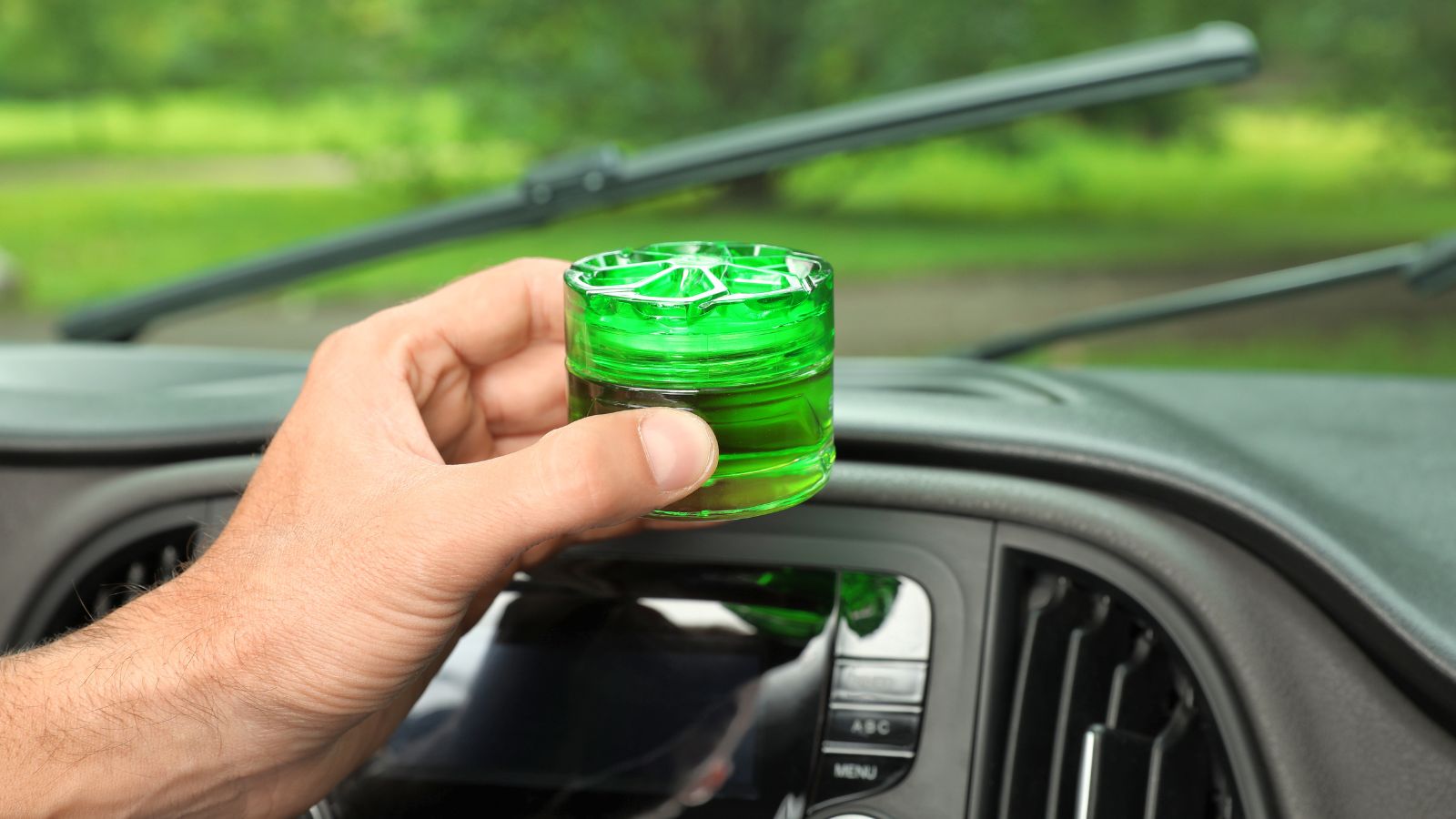
Decorations can turn dangerous when placed on or near airbag covers. Federal safety officials have warned drivers not to use aftermarket steering-wheel decals after severe injuries involving decorative emblems. In one case, airbag deployment sent metal pieces from a rhinestone decal into a driver’s face and neck. Another known injury involved loss of sight in one eye.
Dashboard ornaments, crystals, phone mounts, religious icons, figurines, and adhesive accessories can also interfere with visibility or become airborne during a crash. The airbag zone deserves special caution because airbags deploy extremely quickly and with enough force to move objects violently. Factory emblems and panels are engineered as part of the safety system. Add-on decorations are not, and the difference matters most at the worst possible moment.
Seat Covers, Dash Mats, and Extra Cushions
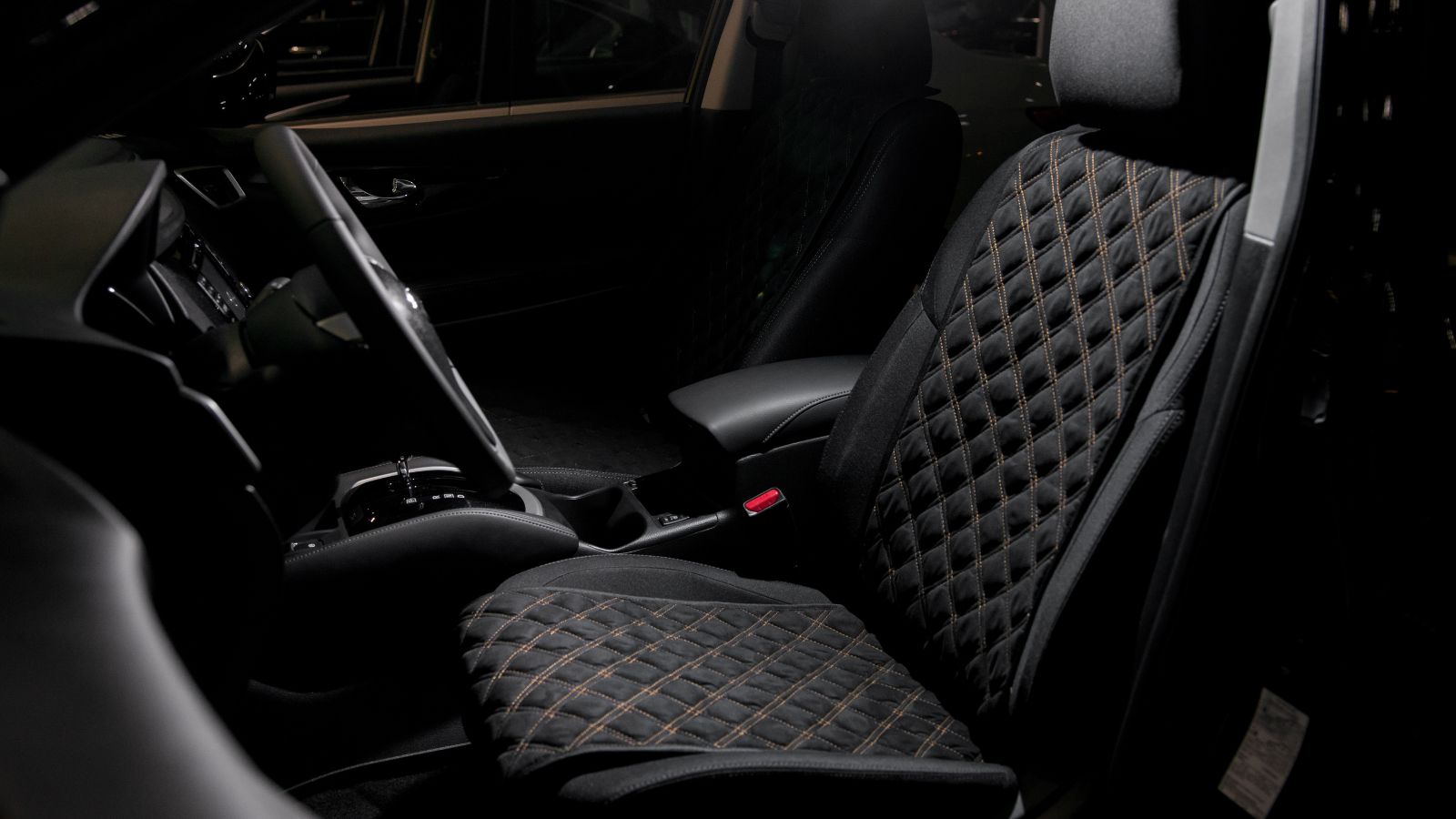
Some items are dangerous not because they fly across the cabin, but because they change how safety systems work. Extra seat cushions can alter a person’s seating position, affecting how the seat belt and airbag interact with the body. A cushion that feels helpful on a long drive may place the torso or head outside the position engineers expected.
Seat covers and dash mats create similar concerns. If a seat has side airbags, an incompatible cover may interfere with deployment. A dash mat over a passenger airbag area may move violently when the airbag deploys or affect how the airbag opens. The safest versions are designed for that exact vehicle and installed according to instructions. Generic accessories may look harmless, but crash protection depends on precise timing, spacing, and movement.
Luggage, Coolers, and Cargo in SUVs or Hatchbacks
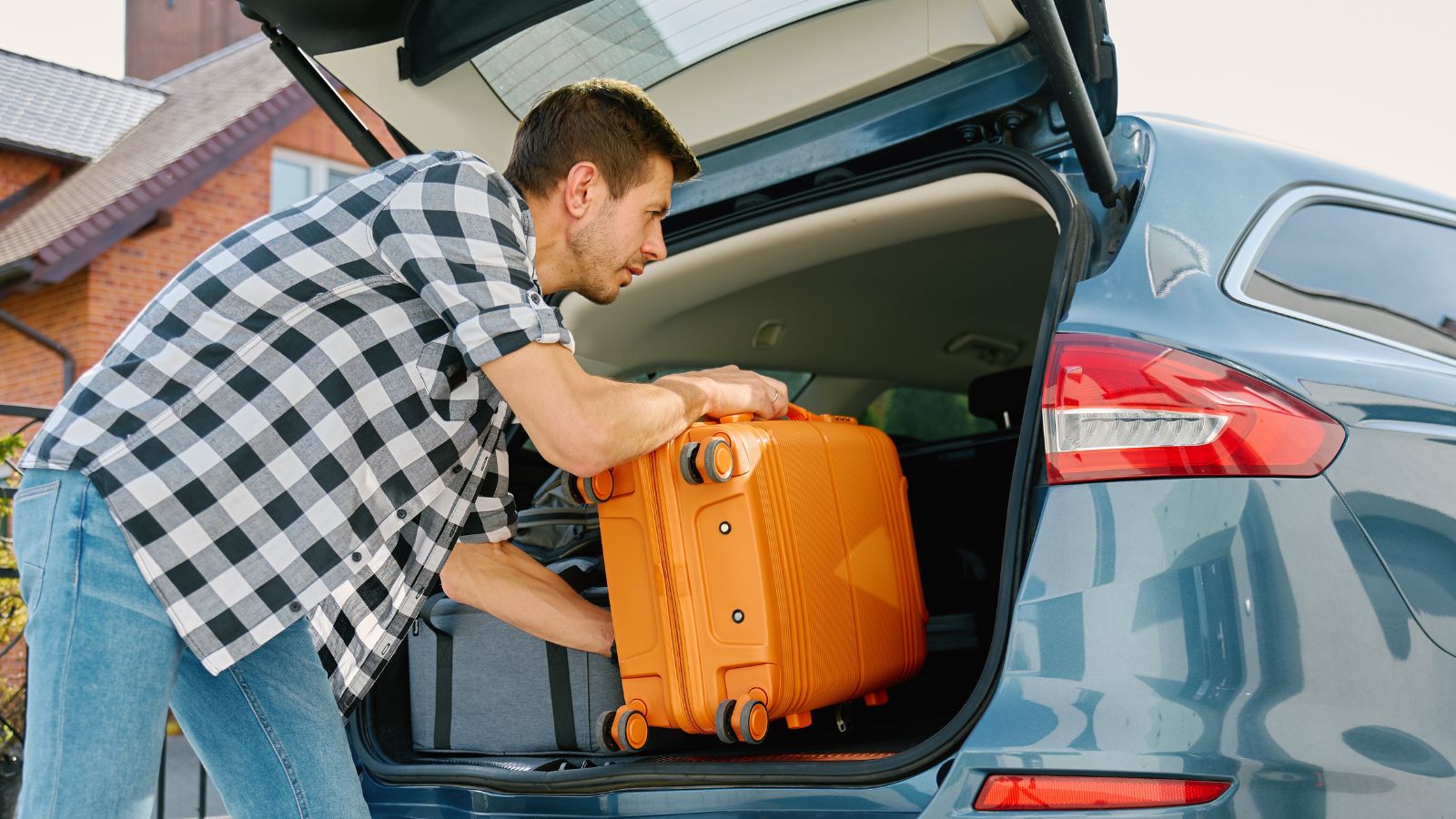
Luggage is easy to underestimate because it usually sits behind passengers, out of mind. In a sedan, the trunk creates a physical barrier. In an SUV, hatchback, minivan, or wagon, suitcases and coolers often share the same open space as occupants. A hard cooler, loaded suitcase, stroller, or camping bin can surge forward if the vehicle stops suddenly.
The heaviest items should sit low, close to the rear seatbacks, and secured with tie-downs when possible. Cargo barriers and nets are not just neatness tools; they help manage motion in a crash. Road-debris research also shows that unsecured cargo can become a hazard outside the vehicle when it falls onto the roadway. The same principle applies inside: if it is heavy enough to hurt when dropped, it should not be free to fly.
22 Things Canadians Do to Their Cars in Spring That Mechanics Hate
Spring brings relief to many Canadian drivers after months of snow, freezing temperatures, and icy roads that put serious strain on vehicles. As temperatures rise across the country, drivers begin washing cars, switching tires, and preparing vehicles for warmer weather and upcoming road trips. However, mechanics across Canada notice the same mistakes every spring when drivers attempt to recover from winter damage. Road salt, potholes, and harsh winter driving conditions often leave vehicles with hidden problems that drivers ignore. Some spring habits even create new mechanical issues that could have been avoided with proper maintenance. Here are 22 things Canadians do to their cars in spring that mechanics hate.

Alanna Rosen is an experienced content writer that focuses on many EV and educational content. Her articles are regularly published on Get CyberTrucked and syndicated on large publications.