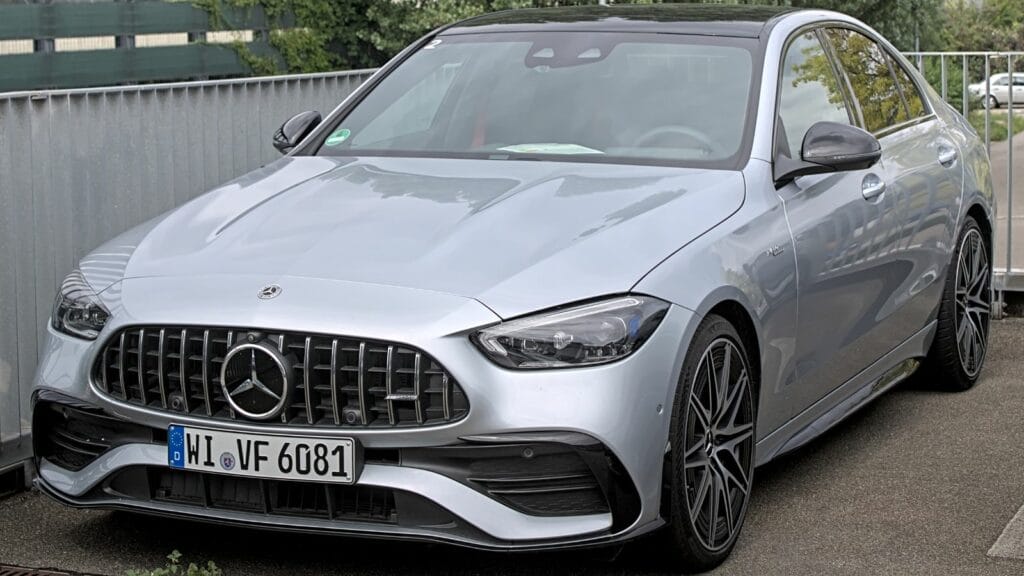
The Mercedes star still carries weight in Canadian driveways, but its latest sales figures show even premium badges are not immune to a more cautious consumer mood. Mercedes-Benz Canada reported a softer second quarter, with total passenger vehicle and van sales falling 12.6% from the same period last year.
The decline does not point to a brand in crisis. Core nameplates such as the GLC and GLE remain strong, electrified models are gaining share, and SUVs continue to dominate the showroom mix. Still, the numbers show a clear shift: luxury buyers are taking longer, comparing harder, and thinking more carefully before committing to a vehicle that often comes with a six-figure price tag, higher financing costs, and bigger ownership expenses.
A Softer Quarter Hits the Star Badge
Mercedes-Benz Canada retailed 8,823 passenger vehicles and vans in the second quarter of 2026, down from 10,094 in the same quarter of 2025. That 12.6% decline is the headline number, but the weakness was not limited to one corner of the business. Passenger vehicles fell 12.9%, while vans declined 10.9%, suggesting that both personal luxury buyers and commercial customers showed more restraint.
The year-to-date picture looks even weaker. Through the first half of 2026, Mercedes-Benz Canada sold 15,707 passenger vehicles and vans, down 16.0% from 18,701 a year earlier. For a brand that finished 2025 with 37,382 vehicles sold in Canada, the latest results mark a noticeable reset. The company’s own leadership described the quarter as “softer,” while emphasizing that demand for core products remained solid. That distinction matters: buyers may not be abandoning Mercedes, but many appear less willing to rush into a premium purchase.
The SUV Business Still Carries the Weight
The strongest part of the Mercedes-Benz Canada business remains its SUV lineup. In Q2, SUVs accounted for 5,786 of the company’s 7,435 passenger vehicles sold, representing 78% of passenger vehicle volume. That is a revealing number. Even in a softer quarter, Canadian luxury buyers continued to gravitate toward practical premium vehicles rather than traditional sedans, coupes, or wagons.
The GLC and GLE were the company’s volume leaders, with 2,564 and 1,466 units retailed respectively in the quarter. Those two models sit in the heart of the Canadian luxury market: roomy enough for families, premium enough for status-conscious buyers, and still more practical than a low-slung luxury car in a winter country. There were bright spots too. The GLS, Mercedes’ larger three-row SUV, grew 51.0% from Q2 2025. That suggests higher-income households are still buying when the product fits a clear need, especially where space, comfort, and prestige overlap.
Financing Math Is Changing the Showroom Conversation
The pullback is easier to understand when the purchase is viewed through the monthly-payment lens. A Mercedes SUV is not only a vehicle decision; it is a household budget decision. Buyers are weighing insurance, fuel or charging, maintenance, winter tires, interest costs, and depreciation at a time when many Canadians remain sensitive to high prices and economic uncertainty.
That pressure changes how luxury shopping feels. A buyer who once focused mainly on trim, colour, and delivery timing may now be asking whether to lease, extend a loan, buy used, or wait another year. Longer loan terms can make payments look easier in the short run, but they can also raise the total interest paid over time. That matters in the premium market because a small change in rate or term can translate into thousands of dollars on a vehicle priced far above the national average. Luxury demand has not disappeared; it has become more deliberate.
Electrified Models Are Growing, but Not Enough to Offset the Drop
Mercedes-Benz Canada’s electrified lineup was one of the more encouraging parts of the quarter. Electrified vehicles represented 15.7% of Mercedes-Benz passenger vehicle volume in Q2, with 1,171 units sold. That total included 237 all-electric vehicles and 934 plug-in hybrids, showing that buyers remain interested in lower-emission luxury options even as total sales declined.
The split between fully electric models and plug-in hybrids is important. Plug-in hybrids accounted for a much larger share of Mercedes’ electrified sales than battery-electric vehicles. That reflects a broader reality in Canada: many buyers like the idea of electric driving, but still want flexibility for highway trips, cottage drives, cold-weather range concerns, or limited home-charging access. In that environment, plug-in hybrids can feel like a safer bridge technology. The challenge for Mercedes is that electrification growth, while useful for brand positioning, was not large enough to fully counter the broader decline in passenger vehicle demand.
Vans and Pre-Owned Sales Show the Caution Is Wider Than New Luxury Cars
Mercedes-Benz Vans Canada retailed 1,388 units in Q2, down 10.9% from the same quarter last year. That business serves a different kind of buyer than the GLC or GLE: contractors, fleet operators, delivery companies, tradespeople, and small businesses. When van sales soften, it can signal caution beyond the luxury household. Businesses may be delaying fleet upgrades, stretching existing vehicles, or waiting for more clarity on demand and costs.
There was one positive sign inside the van numbers. Mercedes sold 155 eSprinter electric vans in the quarter, up 18.3% year over year. That suggests commercial EV interest is not dead, especially for operators with predictable routes or urban delivery needs. Still, the broader pre-owned division also weakened, delivering 3,011 units, down 9.4% from Q2 2025. Used luxury sales often benefit when new vehicles become too expensive, so a decline there points to a wider pause. Buyers are not simply shifting down one rung; some are stepping back from the transaction entirely.
Mercedes Is Slipping More Than the Broader Canadian Market
Mercedes’ first-half decline stands out because Canada’s overall auto market has not collapsed. Industry estimates showed Canadian light-vehicle sales rose in June, ending a stretch of year-over-year declines, though first-half sales still trailed the previous year. That creates an important contrast: the market remains active, but Mercedes-Benz Canada is underperforming the broader pace so far in 2026.
This does not mean mainstream brands are free of pressure. Many Canadians still need vehicles, and some purchases are unavoidable after leases end, repairs rise, or family needs change. But when budgets tighten, luxury purchases are easier to delay than basic transportation needs. A household may still replace an aging compact SUV with a Toyota, Honda, Hyundai, or Mazda, while deciding that a Mercedes can wait. That difference helps explain why a premium brand can weaken even when the national market shows signs of life.
What Mercedes Needs to Prove Next
The next test for Mercedes-Benz Canada is not simply whether sales recover in the third quarter. The bigger question is whether the brand can convince cautious luxury buyers that its vehicles are worth the premium in a tougher market. That means strong lease offers, clear electrified options, reliable inventory, and a dealership experience that makes buyers feel protected rather than pressured.
The product story still gives Mercedes room to fight back. The company has strong SUV nameplates, a growing plug-in hybrid base, and a global launch cycle built around electrification, software, and refreshed high-end models. But the Canadian numbers show that reputation alone is not enough. In 2026, even affluent buyers are asking sharper questions. The badge may bring them into the showroom, but value, flexibility, and confidence will decide whether they sign.

Alanna Rosen is an experienced content writer that focuses on many EV and educational content. Her articles are regularly published on Get CyberTrucked and syndicated on large publications.