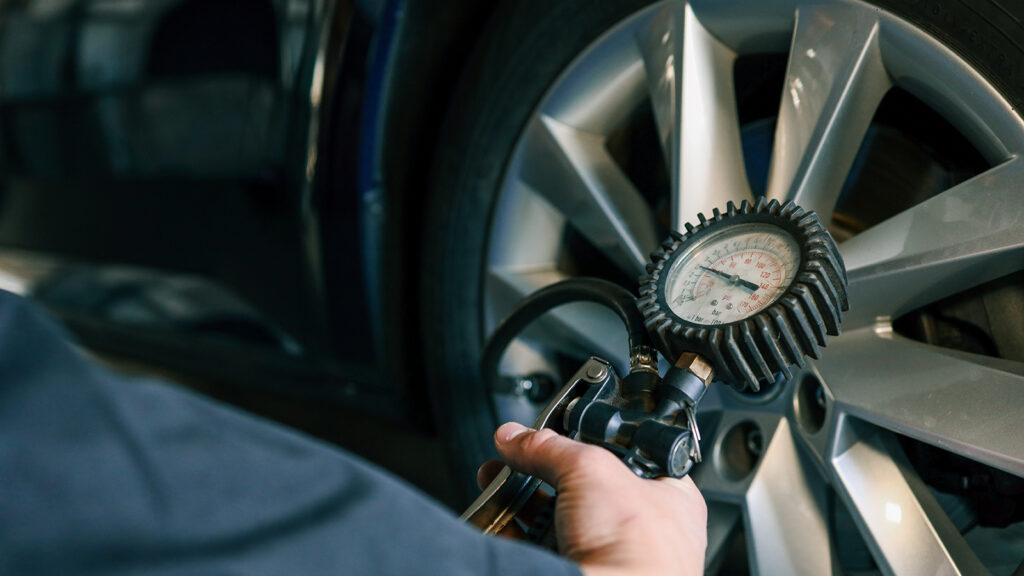
A tire can look perfectly normal in a driveway and still be carrying too little air for a long highway run. That matters because underinflation increases flexing and heat inside the tire, conditions that can contribute to sudden failure when speed, temperature, cargo and distance begin working against it. The simplest defence is not an expensive diagnostic tool or a trip to a mechanic. It is a cold-pressure check with an accurate tire gauge.
These 12 points explain why tire pressure deserves attention before highway driving, how to measure it properly, where to find the correct number, and what other warning signs should be checked at the same time. The routine takes only minutes, but it can expose problems that are nearly impossible to spot from a casual glance.
A Few Minutes With a Gauge Can Reveal a Hidden Problem
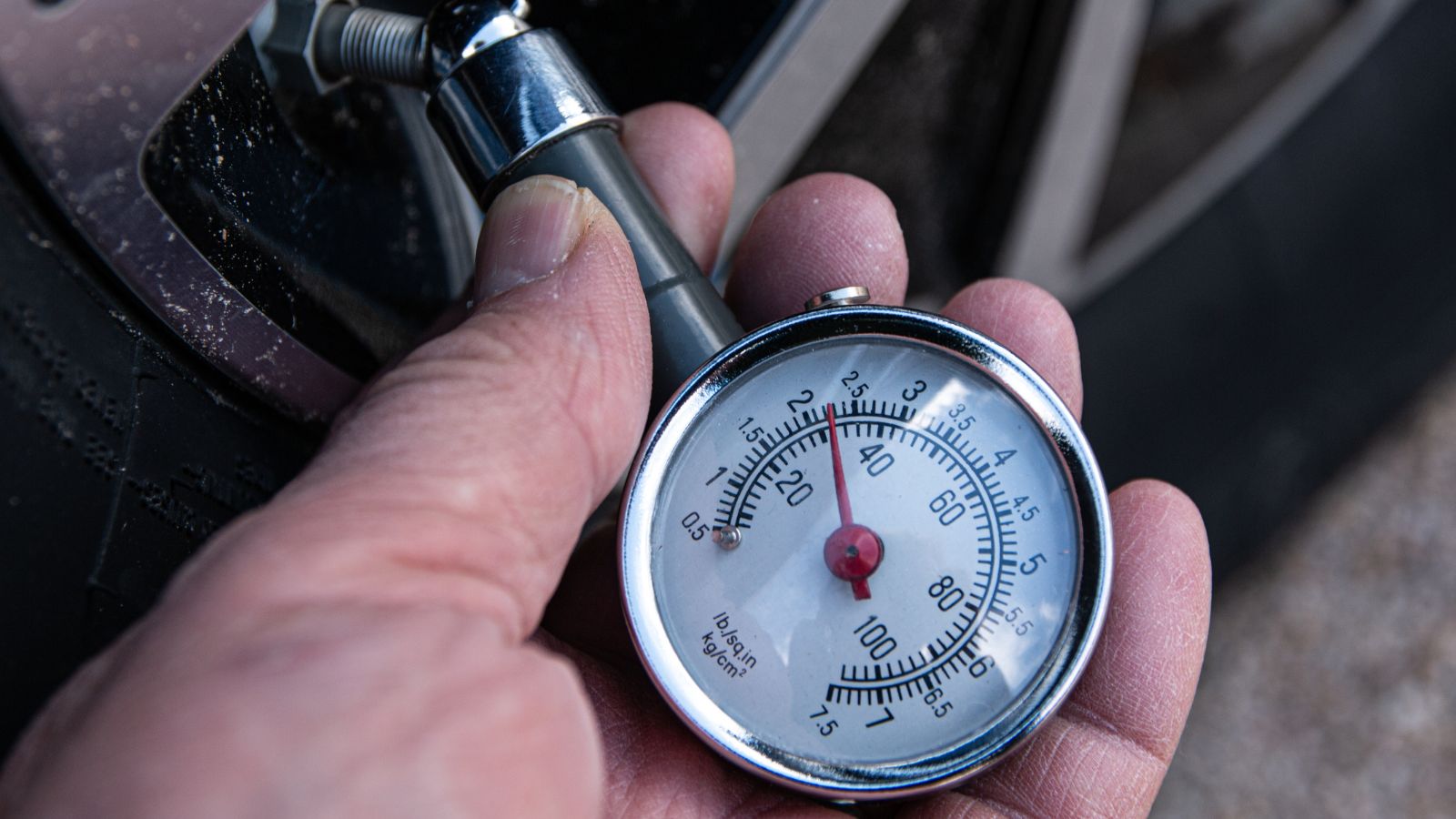
Tire pressure is one of those maintenance items that is easy to ignore because nothing may seem wrong. Transport Canada recommends measuring the pressure in every tire, including the spare, at least once a month. NHTSA gives essentially the same advice and describes proper inflation as a fundamental part of tire maintenance. A small handheld gauge is enough to perform the check.
The significance becomes clearer on the highway. A tire supports the vehicle through the air contained inside it, so losing pressure changes how the tire carries its load and moves against the pavement. Transport Canada warns that improper inflation can contribute to sudden tire failure. NHTSA reported 511 deaths in U.S. tire-related crashes in 2024, although not every one of those crashes was caused by underinflation. The point is not that a pressure check guarantees safety; it is that one easily measured variable can remove an important and preventable source of risk.
Low Pressure Creates Heat Where Drivers Cannot See It
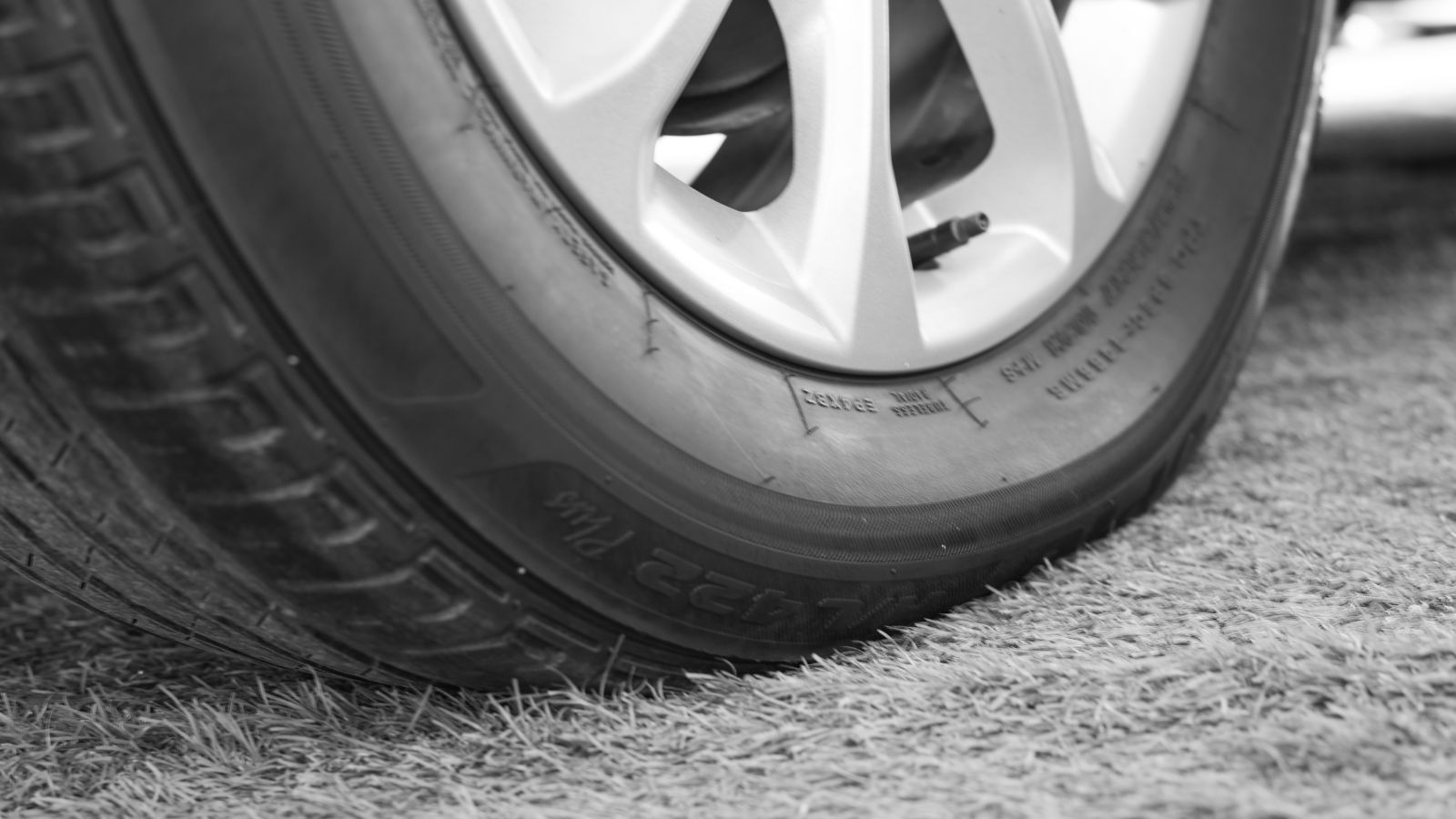
An underinflated tire does not simply sit a little lower. As it rotates, its sidewalls bend and flex more than they were designed to at the vehicle manufacturer’s specified pressure. That repeated flexing generates additional heat. Transport Canada specifically warns that insufficient air allows the sides of a tire to bend too much, building heat that can cause serious damage and contribute to sudden tire failure.
Highway driving makes that relationship more important because the tire completes thousands of revolutions while carrying the vehicle at sustained speed. The additional heat is being produced inside a structure made from rubber, steel belts, cords and other materials working together under load. NHTSA safety information similarly warns that underinflation produces excessive sidewall flexing and heat buildup that may lead to premature or sudden failure. A driver may never see that internal stress developing, which is precisely why measuring pressure before the trip is more useful than waiting for an obvious symptom.
The Correct Number Is Usually on the Vehicle, Not the Tire
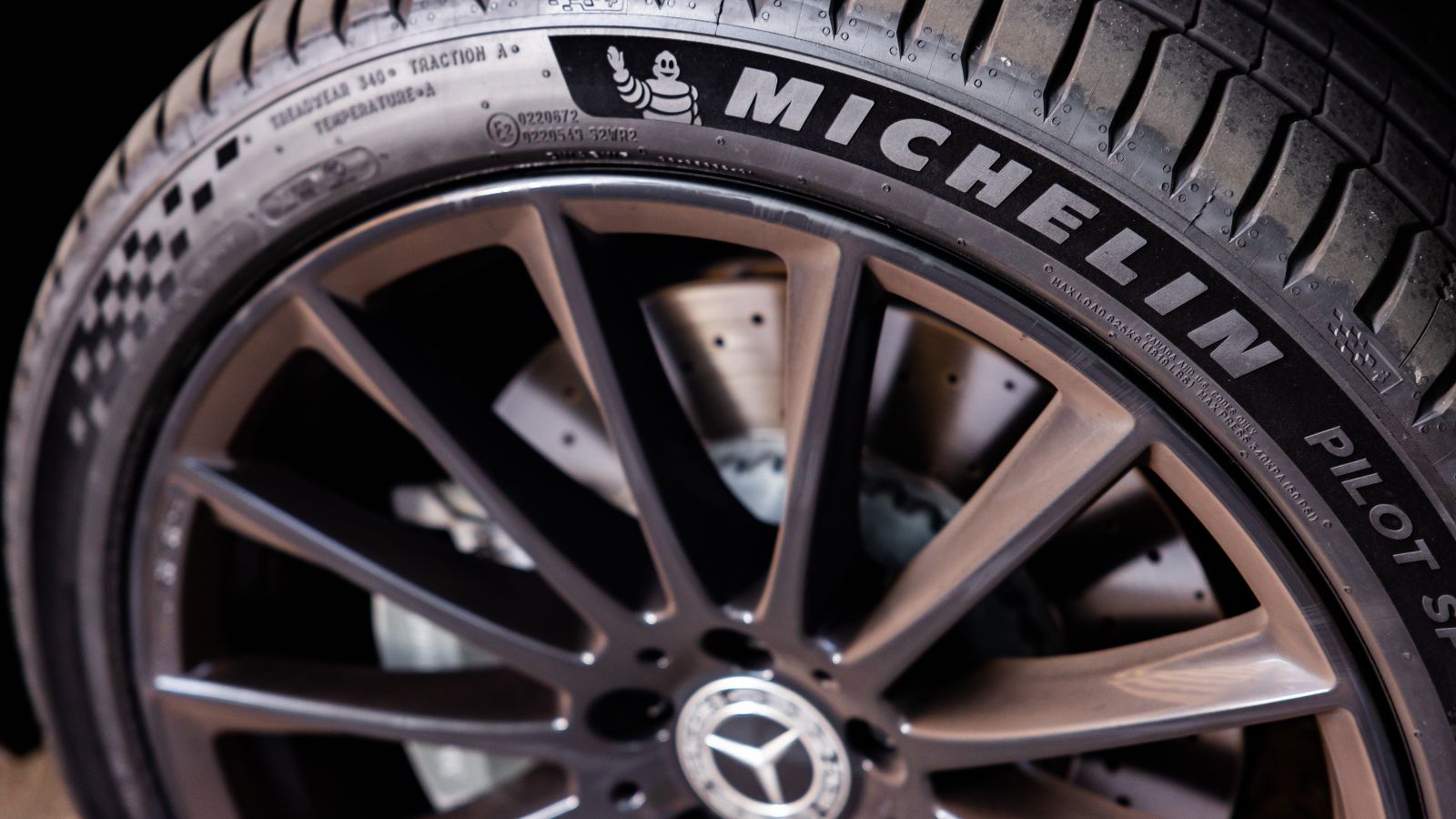
One of the easiest mistakes is reading the pressure molded into a tire’s sidewall and assuming that is the target inflation pressure. It generally is not. The number on the sidewall represents a maximum tire-related specification, while the vehicle manufacturer determines the recommended cold inflation pressure for the specific vehicle, tire size, weight distribution and application.
For most passenger vehicles, the correct figure can be found on the tire-information placard around the driver’s door, door jamb or another location identified in the owner’s manual. Front and rear pressures can even be different on some vehicles, making guesswork particularly unhelpful. Transport Canada explicitly advises motorists not to use the pressure printed on the tire as the normal target. NHTSA provides the same guidance. A driver who automatically inflates every tire to the sidewall maximum can therefore overshoot the vehicle manufacturer’s specification instead of improving safety. The door-jamb placard is the number that should normally guide the pressure check.
Pressure Should Be Checked Before the Tires Heat Up
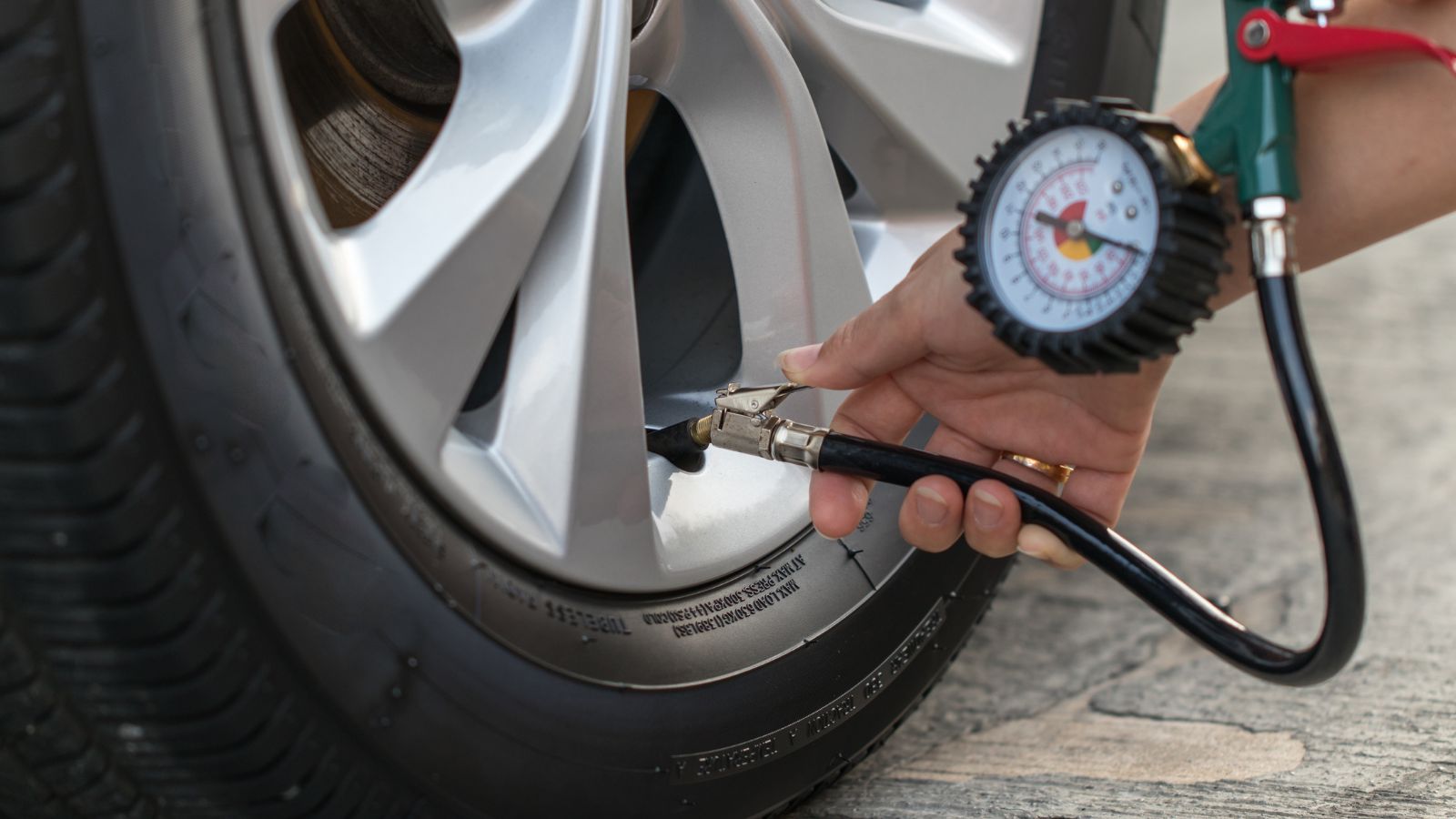
Timing matters almost as much as the gauge. Both Transport Canada and NHTSA recommend measuring tire pressure when the tires are cold. Transport Canada defines that condition as a vehicle that has generally been stationary for at least three hours or has travelled less than about two kilometres. Driving warms the tire and the air inside it, raising the measured pressure and potentially disguising an underinflated cold condition.
Temperature outside the tire matters as well. Transport Canada says tire pressure drops by roughly 7 kPa, or about 1 psi, for every 5°C decrease in temperature. That is enough to make seasonal changes noticeable, especially during a rapid Canadian autumn cooldown. A vehicle that showed an acceptable reading during a warm spell may therefore need attention after temperatures plunge. Checking first thing in the morning, before significant driving, removes much of that uncertainty and makes it easier to compare the gauge reading directly with the manufacturer’s cold-pressure specification.
Looking at the Tire Is Not an Accurate Pressure Test
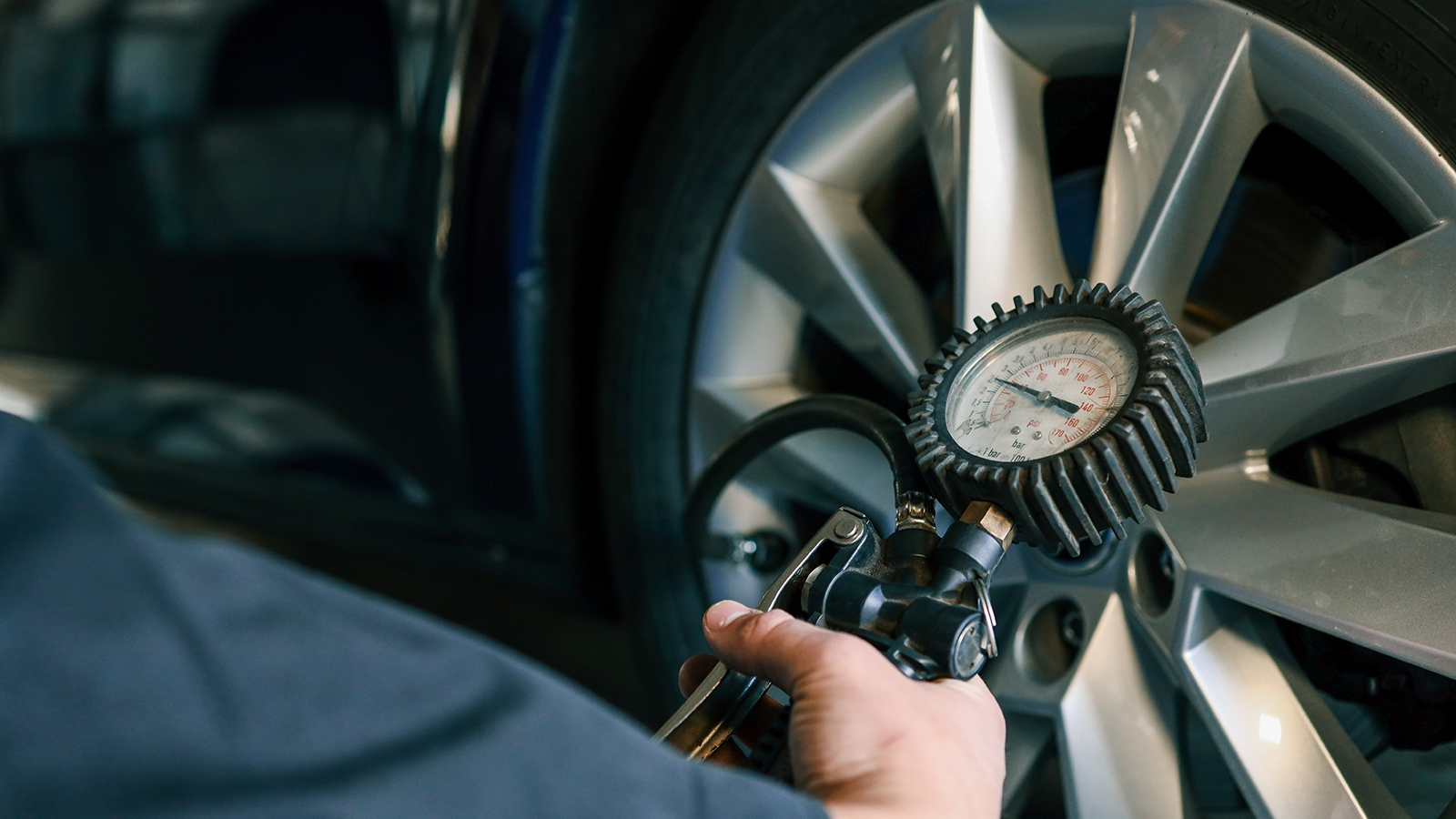
A visibly flat tire obviously needs attention, but pressure can be significantly low long before the difference becomes obvious to the eye. Modern radial tires have flexible sidewalls and can retain a relatively normal shape despite meaningful pressure loss. Transport Canada cautions that a tire may appear fine while still being underinflated, while NHTSA similarly describes underinflated tires as difficult to identify visually.
There is another reason a gauge belongs in the glovebox: tires naturally lose some air over time even when there is no dramatic puncture. Transport Canada notes that pressure can fall through normal permeability and gives an approximate figure of 14 kPa, or 2 psi, per month. Pothole impacts, nails, valve problems and rim leaks can accelerate that loss. A driver who waits for a tire to look soft may therefore discover the problem far later than someone who checks pressure routinely. The gauge converts an impression—“it looks okay”—into an actual measurement that can be compared with the manufacturer’s specification.
The Dashboard Warning Light Is Not a Replacement for the Gauge
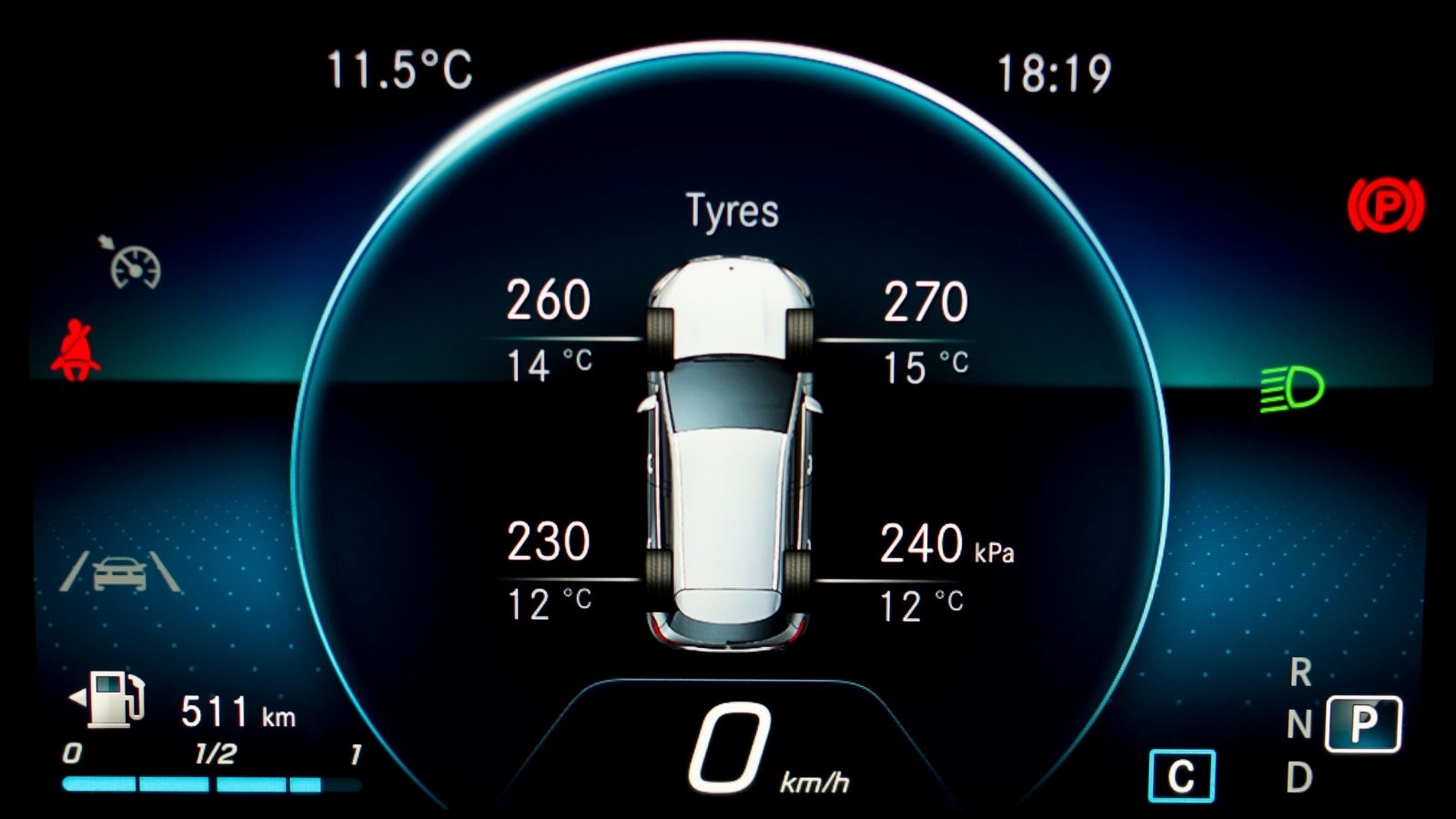
Tire-pressure monitoring systems have made low pressure easier to notice, but they are best treated as a backup warning rather than permission to stop checking manually. Transport Canada says some systems provide a warning only after a tire has become significantly underinflated. It specifically advises drivers to continue measuring tire pressure monthly even when a monitoring system is installed.
Systems can also work differently. Some directly measure tire pressure through wheel-mounted sensors, while others infer a problem from differences in wheel rotation using data connected with the vehicle’s ABS system. Temperature changes can trigger warnings, and tire changes or rotations can sometimes require a system reset. Most importantly, no warning light means only that the system has not detected a condition meeting its alert criteria; it does not prove that all four tires are sitting precisely at the manufacturer’s preferred cold pressure. Checking with a gauge catches smaller deviations before the dashboard necessarily demands attention.
Highway Speed Makes Underinflation More Serious

City driving and highway driving place different demands on a tire. At sustained highway speeds, the tire repeatedly flexes at a much higher rate while simultaneously supporting vehicle weight and dealing with pavement temperature, road imperfections and steering forces. Transport Canada warns specifically that operating an underinflated or overloaded tire at highway speed on a warm summer day creates conditions conducive to tire failure.
NHTSA also links sustained high temperature with tire deterioration, including the potential for blowouts and tread separation. The combination matters more than any single factor. A slightly neglected tire may survive weeks of short urban trips and then face a far tougher operating environment during a three-hour highway drive on a hot afternoon. That is why pressure checks make particular sense before vacations, cottage weekends or other long-distance trips. The goal is to start the journey with the tire operating as close as possible to the conditions its vehicle manufacturer intended rather than asking an already underinflated tire to manage additional heat.
Heavy Cargo Can Add Another Layer of Stress
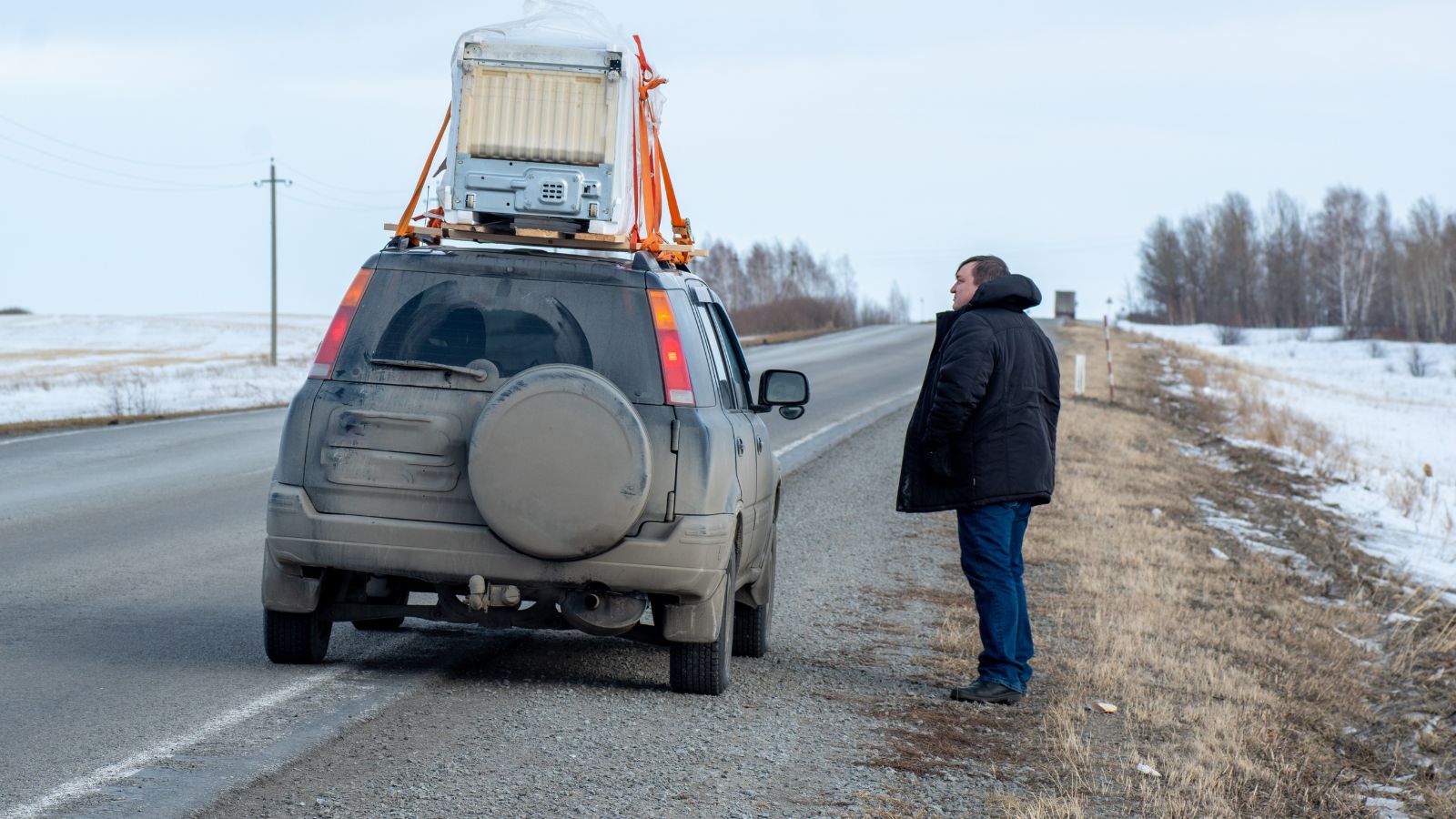
Tire pressure and vehicle loading are connected because the compressed air inside the tires helps support the vehicle’s weight. Adding passengers, luggage, camping equipment or other cargo increases the work being done by the tires. That makes a fully loaded vehicle a particularly poor time to discover that one tire was already substantially underinflated before departure.
Both Transport Canada and NHTSA warn against overloading vehicles and tires. Safety information hosted by NHTSA explains that overloading increases tire heat and can contribute to early or sudden failure. The vehicle’s tire-and-loading placard provides important information about permissible loading as well as inflation. This becomes especially relevant for summer road trips, when a normally lightly loaded crossover can suddenly be carrying five people, suitcases and recreational equipment. Pressure should therefore be checked before adding a long highway run to a heavily loaded vehicle. Proper inflation cannot make an overloaded vehicle safe, but correct pressure helps the tires perform within the limits for which the vehicle was designed.
Use the Pressure Check as a Quick Damage Inspection
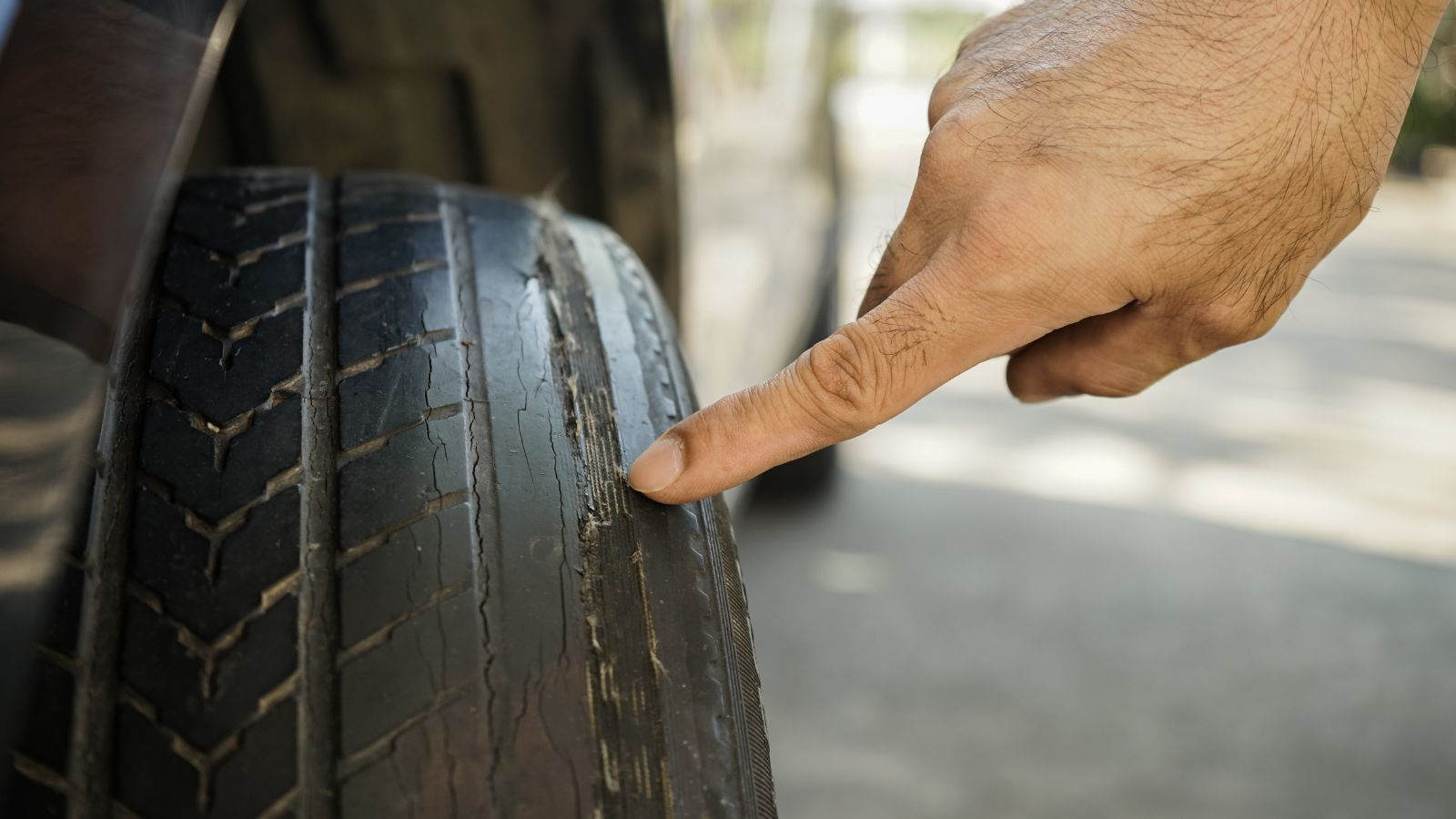
Once someone is already crouched beside each tire with a pressure gauge, another useful inspection takes only a little longer. Transport Canada recommends regularly checking tires for cuts, cracks, bulges, embedded objects and unusual or uneven wear. NHTSA recommends similar inspections, particularly before long road trips. Pressure may be perfect while the tire itself is giving another reason not to begin a high-speed journey.
Bulges deserve particular attention because they can signal structural damage. Deep cuts, cracking and other obvious trauma also warrant professional assessment or replacement rather than an optimistic highway test. Tread condition matters too, although tread depth primarily affects traction rather than inflation. A nail or screw lodged in the tread may also be associated with a slow leak that becomes apparent through repeated pressure checks. The useful habit is therefore not merely “read four numbers.” It is to measure the pressure while giving every tire a deliberate visual inspection instead of walking past them on the way to the driver’s seat.
Long Trips Deserve an Extra Check — Including the Spare
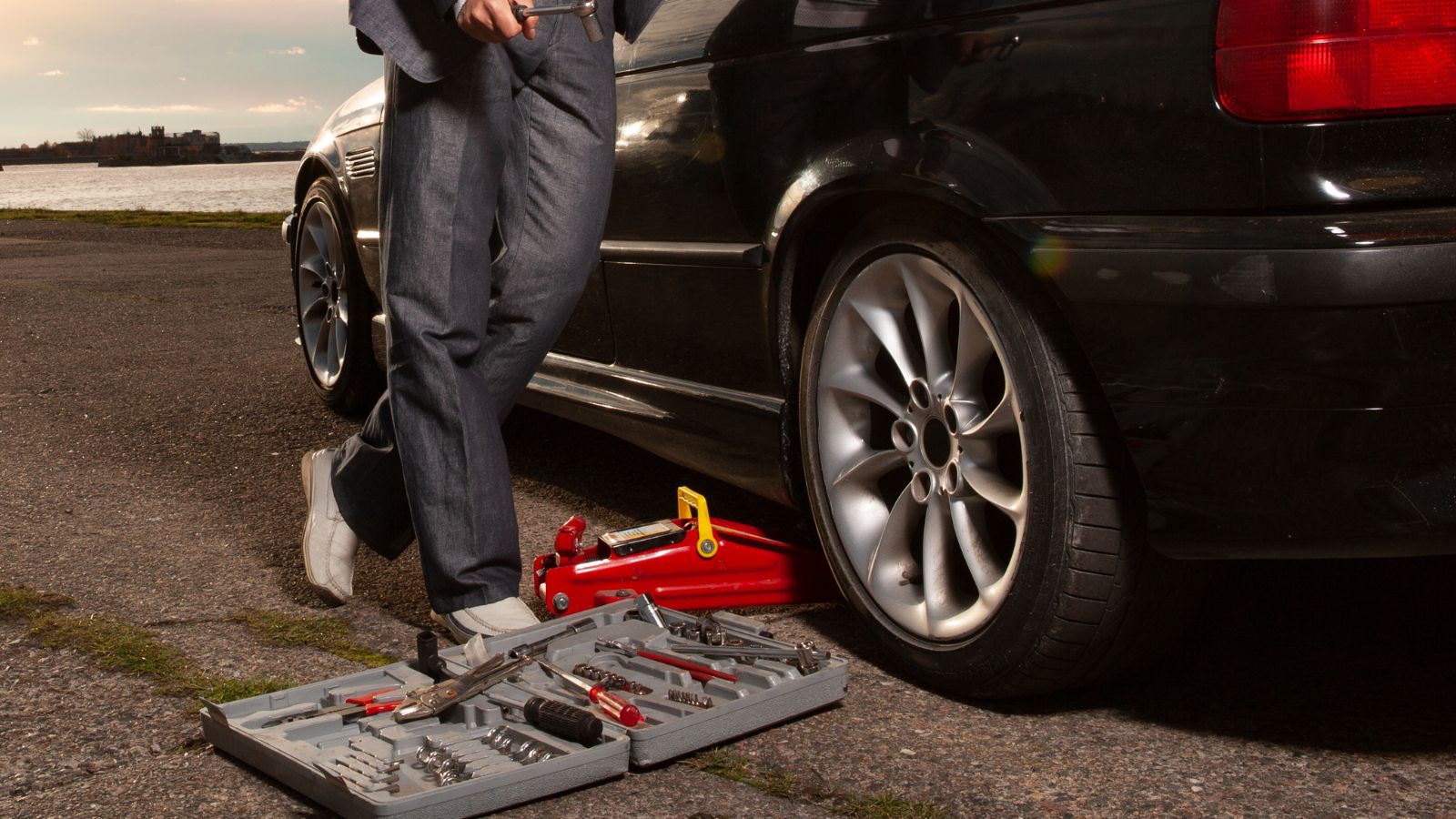
Monthly checks are a good baseline, but long-distance driving deserves another look before departure. Transport Canada specifically recommends measuring tire pressure before a long trip, while NHTSA’s road-trip guidance calls for checking inflation, tread, visible damage and the spare. That pre-trip routine can be done at home instead of discovering a problem beside a high-speed roadway hundreds of kilometres away.
The spare is easy to forget because it may sit under a cargo floor or beneath the vehicle for years without being used. Yet a spare tire can lose pressure and age just like the four tires on the road. Discovering that it is badly underinflated only after another tire fails defeats much of its purpose. Temporary spares may also use pressure specifications very different from the vehicle’s regular tires, so the owner’s manual or applicable label should be consulted rather than assuming one number fits everything. A five-tire check before a major trip is therefore more useful than checking only what is visible.
Adding More Air Than Recommended Is Not a Safety Upgrade
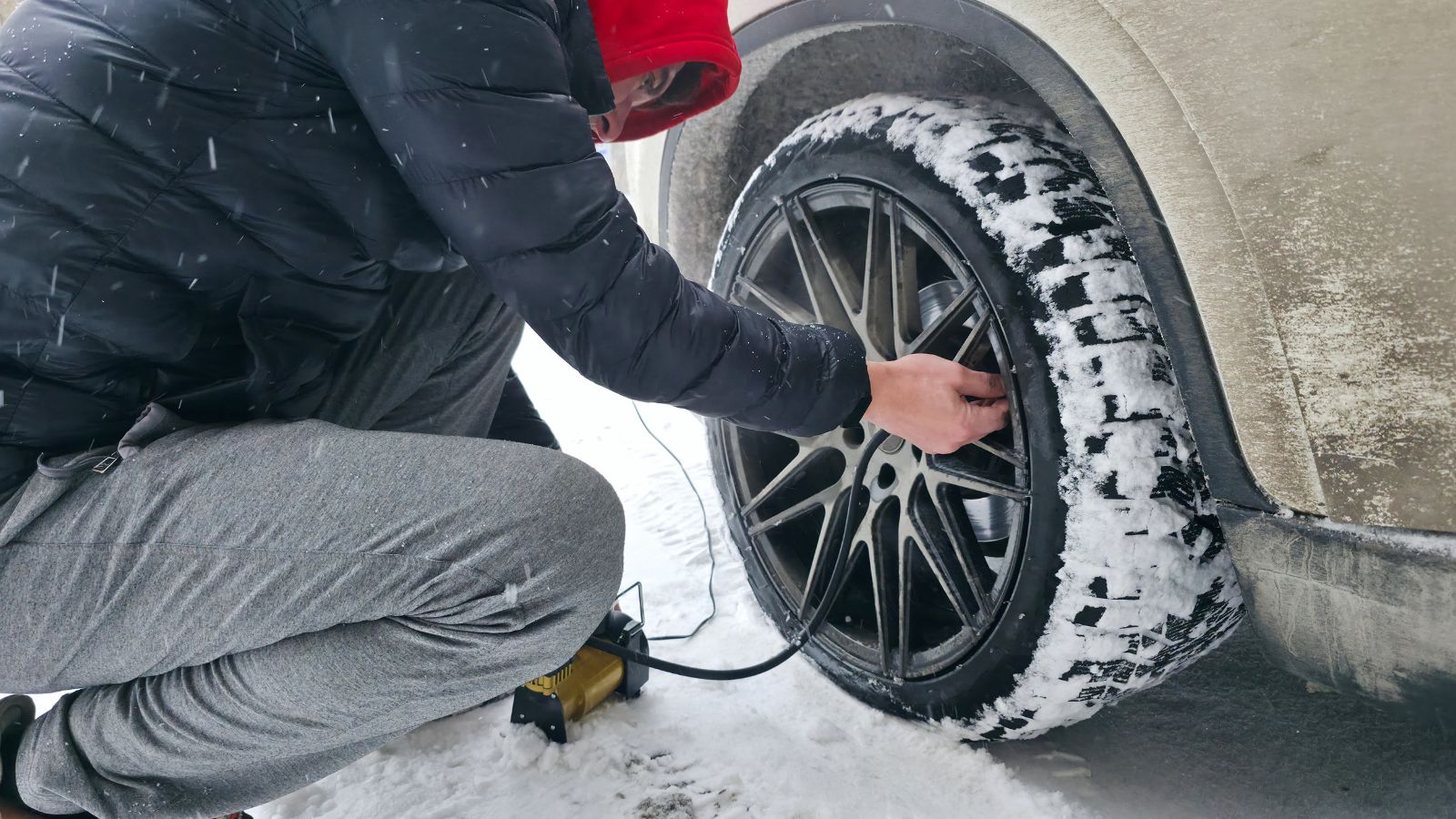
Concern about underinflation sometimes produces the opposite mistake: adding extra pressure “just to be safe.” More air is not automatically better. The vehicle manufacturer’s recommended cold pressure is intended to balance load carrying, handling and other operating characteristics. Once that specification has been reached, continuing toward the tire’s sidewall maximum is not an additional safety margin.
Transport Canada warns that overinflation can reduce the tread area effectively contacting the road, contributing to reduced grip, a harsher ride, handling concerns and increased wear. NHTSA-hosted safety material also notes that overinflation can make a tire more susceptible to impact damage. The practical goal is therefore accuracy rather than maximum pressure. If the placard calls for different pressures front and rear, each axle should be adjusted accordingly. When a gauge shows too much pressure in a cold tire, air can be released gradually and the reading checked again. Tire maintenance works best when the manufacturer’s specification is treated as a target, not a minimum to exceed.
If a Blowout Happens, Smooth Inputs Matter
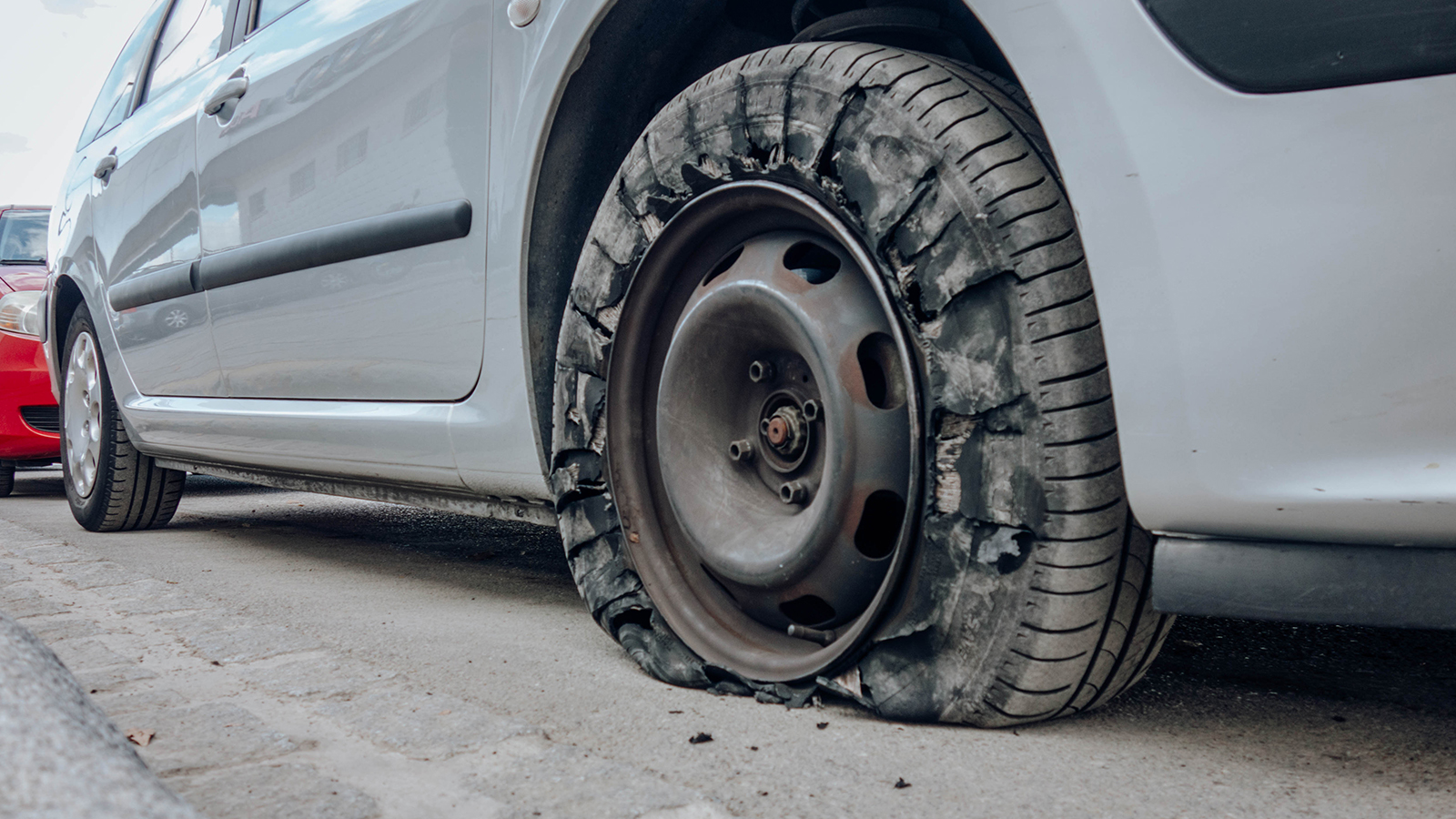
Even excellent maintenance cannot eliminate every blowout. Road debris, impact damage, manufacturing defects, aging and other factors can still cause rapid air loss. NHTSA describes a blowout as a rapid loss of tire pressure that can make a vehicle difficult to control. The agency’s guidance emphasizes avoiding the instinctive reactions that can make the situation worse, particularly slamming on the brakes or abruptly lifting off the accelerator.
Instead, NHTSA advises holding the steering wheel firmly with both hands, maintaining control, gradually releasing the accelerator and correcting the steering as necessary to stabilize the vehicle. Once the vehicle is stable, the driver should continue slowing and move off the roadway when it is safe. A front-tire failure may be felt more strongly through the steering wheel, while a rear failure may be felt through the seat or vehicle body. The pressure check remains valuable because prevention is preferable, but knowing what to do when prevention fails is another essential part of highway tire safety.
19 Used Cars Canadians Should Avoid in 2026 (Based on Owner Complaints)

Buying a used car in Canada can feel safe until repair bills start stacking up. Owner complaints tell a different story than glossy listings. Transmission failures, electrical problems, and weak winter reliability show up again and again in consumer reports. Many of these issues appear after warranties expire, when owners least expect them. Some vehicles look affordable upfront, but become expensive to keep on the road. Others struggle in cold weather, urban driving, or long highway commutes. Here are 19 used cars Canadians should avoid in 2026 (based on owner complaints).
19 Used Cars Canadians Should Avoid in 2026 (Based on Owner Complaints)

Alanna Rosen is an experienced content writer that focuses on many EV and educational content. Her articles are regularly published on Get CyberTrucked and syndicated on large publications.