A vehicle can feel strong one day and strangely flat the next, even when the accelerator is pressed with the same urgency. Sometimes the explanation is mechanical—a restricted fuel supply, weak ignition, lost turbo boost, or low compression. In other cases, heat, altitude, cargo, tyres, transmission programming, or electronic safety systems are simply demanding or withholding more power than expected.
The sensation matters because gradual sluggishness is easy to normalize, while sudden power loss can signal a fault that deserves immediate attention. These 16 causes explain why a vehicle may struggle to merge, climb, tow, or overtake, how normal operating conditions can imitate failure, and which warning signs separate harmless behaviour from a problem requiring diagnosis.
Extra Weight and Heavy Loads

An engine may be producing exactly the power it was designed to make, yet the vehicle can feel slower when carrying more mass. Passengers, tools, luggage, camping equipment, or a trailer all require additional force to accelerate. The effect is especially obvious in small hatchbacks, compact crossovers, and naturally aspirated vehicles with modest torque reserves. A car that feels lively with one occupant may need much more throttle when four adults and a packed cargo area are added.
The U.S. Department of Energy notes that an extra 100 pounds can reduce fuel economy by roughly 1%, with a larger proportional effect on smaller vehicles. Fuel economy is not acceleration, but both reflect the additional work demanded from the powertrain. Before assuming something has failed, performance should be compared under similar load conditions. Drivers should also check the door-jamb payload label and towing guidance, because exceeding rated limits creates braking, tyre, handling, and safety concerns—not merely sluggish acceleration.
Steep Grades, Headwinds, and Aerodynamic Drag

A steep climb can make a healthy vehicle seem weak because gravity adds a continuous opposing force. The transmission may downshift, engine speed may rise, and the accelerator may need to travel farther just to maintain speed. A strong headwind creates a similar sensation on an open highway. Aerodynamic drag rises rapidly with road speed, so a boxy SUV, pickup, roof box, or loaded roof rack may feel far less willing to accelerate into the wind than on a calm day.
This explains why a complaint sometimes appears only on one route, such as a mountain grade, long bridge, or exposed coastal road. The Department of Energy reports that large rooftop cargo boxes can reduce highway fuel economy substantially because they increase aerodynamic resistance. That does not directly measure lost horsepower, but it demonstrates how much power can be consumed pushing air aside. Repeating the drive on level ground without roof cargo can help isolate the cause. If normal response returns, the vehicle may be facing a demanding environment rather than an engine fault.
High Altitude

Mountain driving changes more than the view. As elevation rises, atmospheric pressure and oxygen density fall, leaving a naturally aspirated engine with less oxygen during each intake cycle. The control system reduces fuel accordingly, so less energy is released and the vehicle feels softer when passing or climbing. Garrett Motion gives a common rule of thumb: a naturally aspirated engine may lose about 3% of its power for every 1,000 feet of elevation gain.
That estimate varies with temperature, engine design, and operating conditions, but the difference becomes dramatic on high roads. Turbocharged engines can compensate by increasing boost, although turbo speed, cooling, and control limits eventually restrict that compensation. A driver arriving from sea level may notice that an ordinary overtaking manoeuvre requires a lower gear and more planning. If power returns after descending, altitude is a strong explanation. Persistent weakness at low elevation points toward another cause and deserves diagnosis rather than being dismissed as a normal effect of mountain driving.
Hot Weather and Air-Conditioning Load

Hot weather can make a vehicle feel less energetic before a warning light appears. Warm air is less dense than cool air, while cooling fans may run aggressively and the air-conditioning compressor adds a substantial accessory load. The effect is most noticeable in vehicles with small engines, older compressors, or cabins heat-soaked in direct sunlight. Pulling away with maximum cooling, several passengers, and a steep grade can produce a very different response from the same car on a mild morning.
Department of Energy research identifies climate control—particularly the air-conditioning compressor—as the largest accessory load in many light-duty vehicles. Initial cabin cooling can require several kilowatts of mechanical power, with less needed after the interior stabilizes. Modern controls may reduce compressor demand during hard acceleration, but strategies differ by model. A brief comparison with the air conditioning switched off can reveal its contribution. Overheating warnings, coolant loss, knocking, or power that remains reduced after temperatures normalize should not be dismissed as ordinary summer behaviour.
A Clogged Air Filter
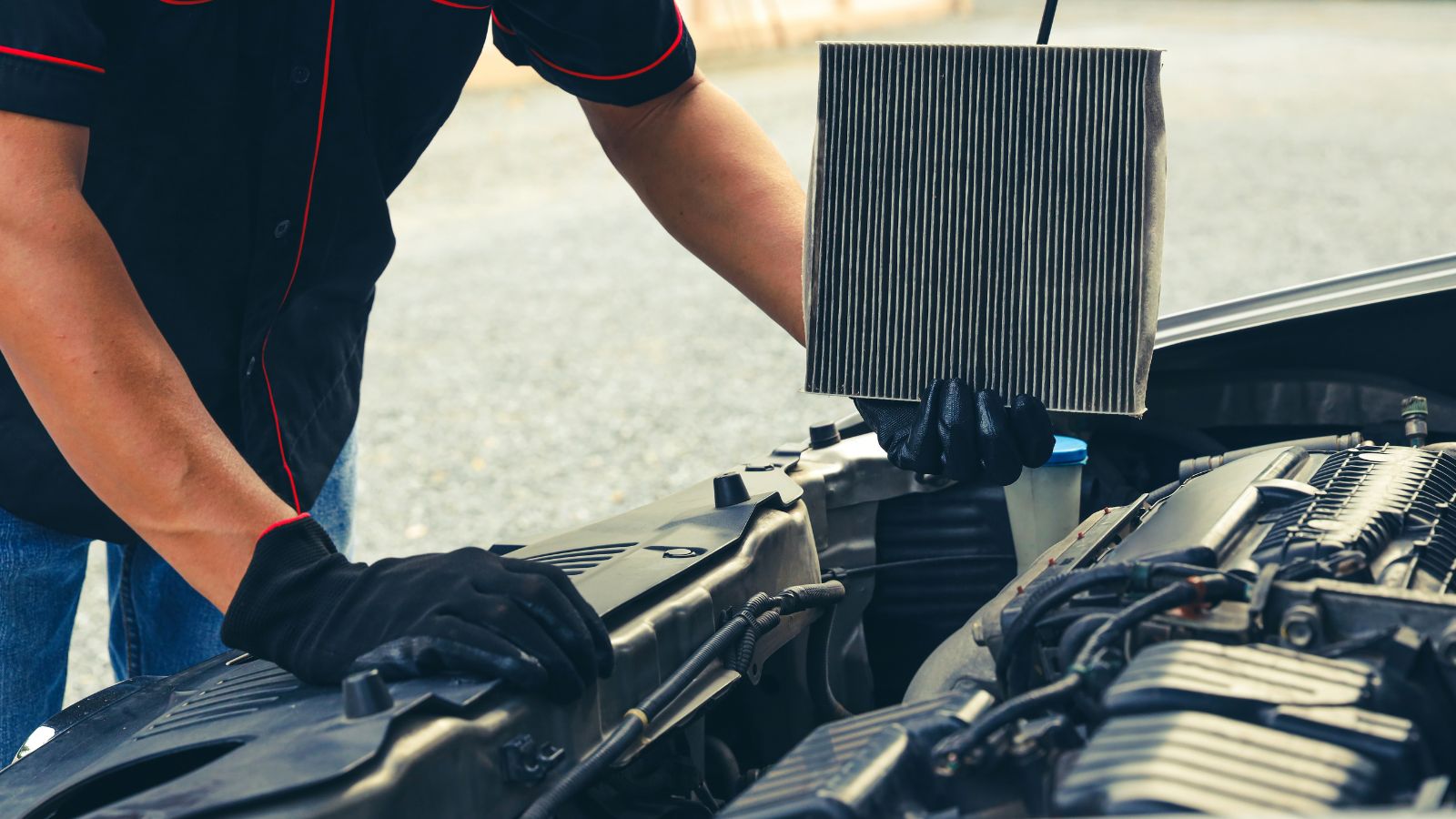
A heavily restricted engine air filter can dull acceleration because the engine must draw intake air through a greater pressure drop. On modern fuel-injected vehicles, the control system usually preserves the correct air-fuel ratio, so a dirty filter may not cause the dramatic fuel-economy penalty many people expect. It can still limit the air available at higher loads, when the engine needs maximum flow. The result may be most apparent during merging, hill climbing, or high-rpm acceleration.
The U.S. Department of Energy states that replacing a clogged filter on modern computer-controlled gasoline or diesel vehicles can improve acceleration even when fuel economy does not change. Bosch likewise lists reduced engine power among the consequences of a silted-up air filter. Inspection should follow the manufacturer’s schedule and account for local conditions; dusty roads, construction zones, and wildfire smoke can contaminate filters more quickly. The filter, housing, and intake ducting should be checked for restriction, damage, or incorrect installation rather than replacing parts without inspection.
Restricted Fuel Delivery
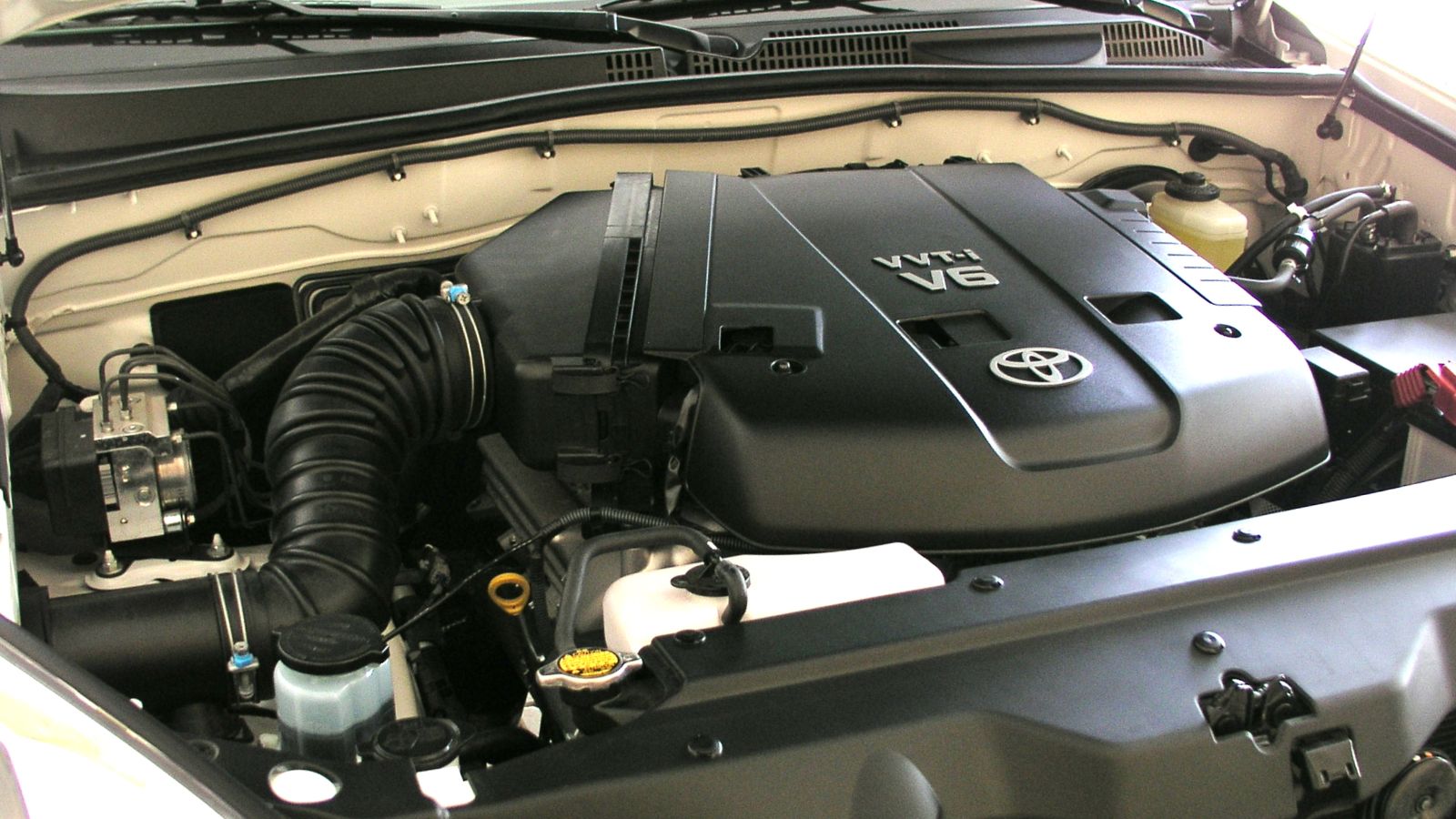
Engines need fuel delivered at the correct pressure and volume, especially when the accelerator is pressed hard. A restricted fuel filter, weakening pump, contaminated pickup, or pressure-control problem may supply enough fuel for idling and gentle cruising but fall short under heavy demand. The pattern can be distinctive: the vehicle starts normally, drives acceptably around town, then hesitates or loses speed during a long climb or highway pass. Some faults worsen when the tank is low or the pump becomes hot.
Bosch identifies loss of engine power, impaired fuel supply, and reduced fuel-pump output as possible consequences of silted-up gasoline and diesel filters. Not every modern vehicle has a separately serviceable filter; many place it inside the fuel-tank module. Proper diagnosis requires checking stored trouble codes and comparing measured fuel or rail pressure with manufacturer specifications. An unresolved supply problem may become more pronounced under sustained load, making professional testing wiser than replacing filters, pumps, or injectors by guesswork. The most expensive component is not automatically the faulty one.
Worn Spark Plugs or Weak Ignition
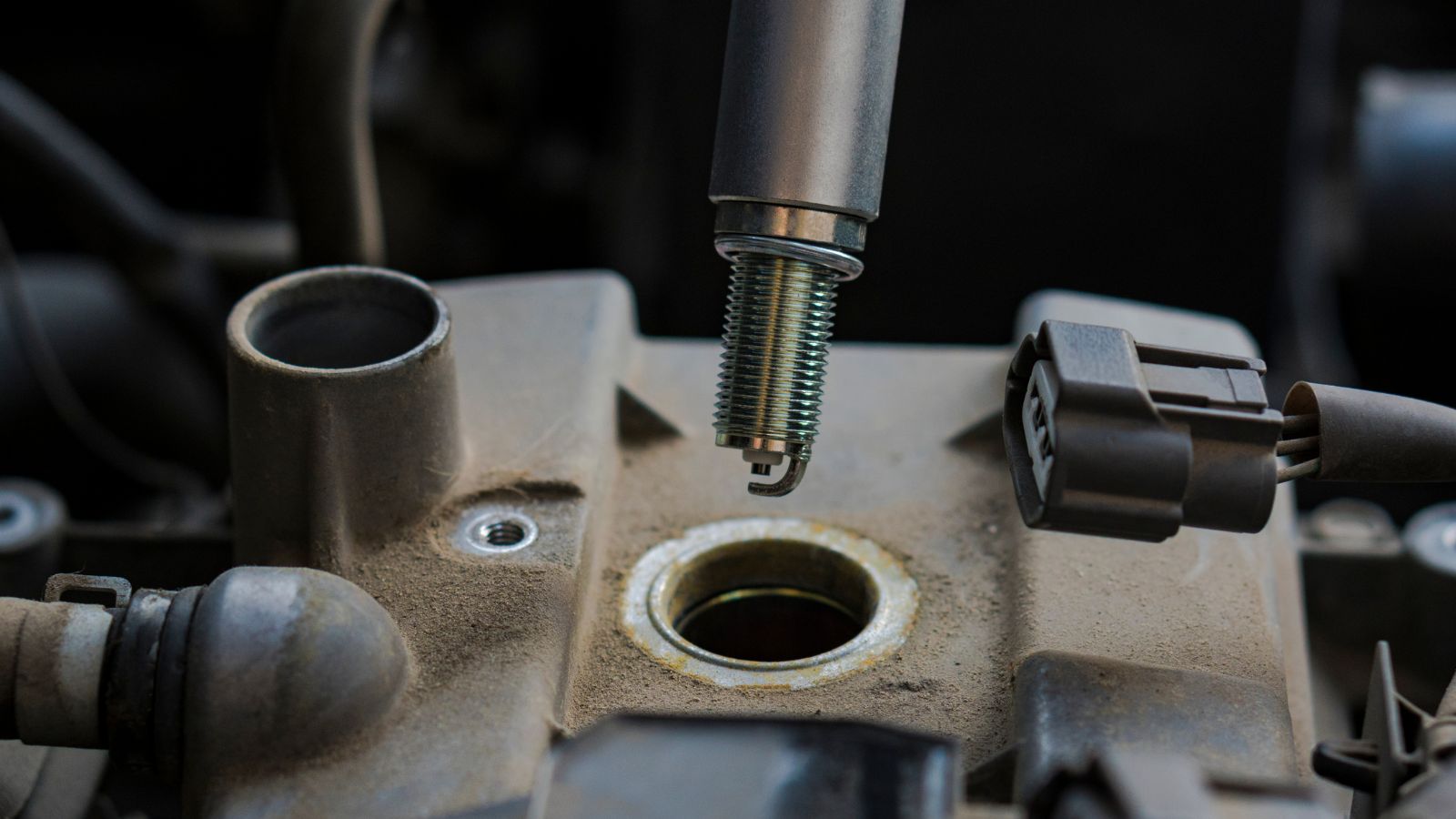
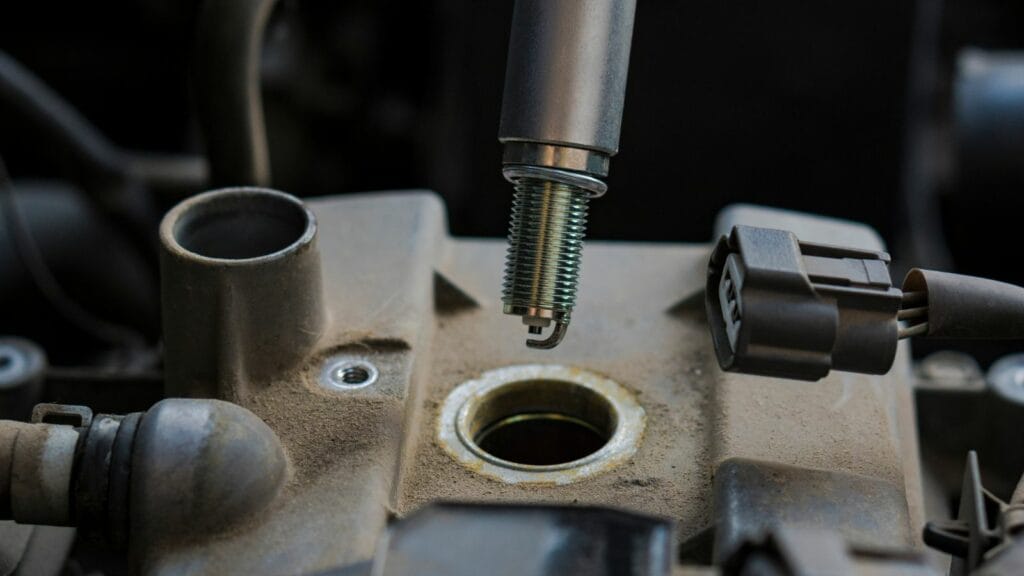
Worn spark plugs and weak ignition coils often reveal themselves under load because increased cylinder pressure makes the spark harder to produce. The engine may idle smoothly yet stumble when climbing, accelerating, or operating at low rpm in a high gear. Drivers sometimes describe a flat spot, shudder, or rapid series of small jerks rather than simple loss of speed. A flashing malfunction indicator is especially serious because an active misfire can send unburned fuel into the exhaust and overheat the catalytic converter.
NGK explains that an incorrect spark-plug gap can contribute to misfires and loss of power, while replacing worn plugs can reduce misfires and restore performance. Spark plugs are only one part of the circuit; coils, boots, wiring, oil contamination, and incorrect plug types can create similar symptoms. Service intervals vary, so mileage alone cannot confirm the cause. A scan tool may identify the affected cylinder, but diagnosis should determine why it misfired. New plugs will not correct a leaking seal, failing coil, injector fault, or compression problem.
Faulty Airflow, Pressure, or Throttle Sensors
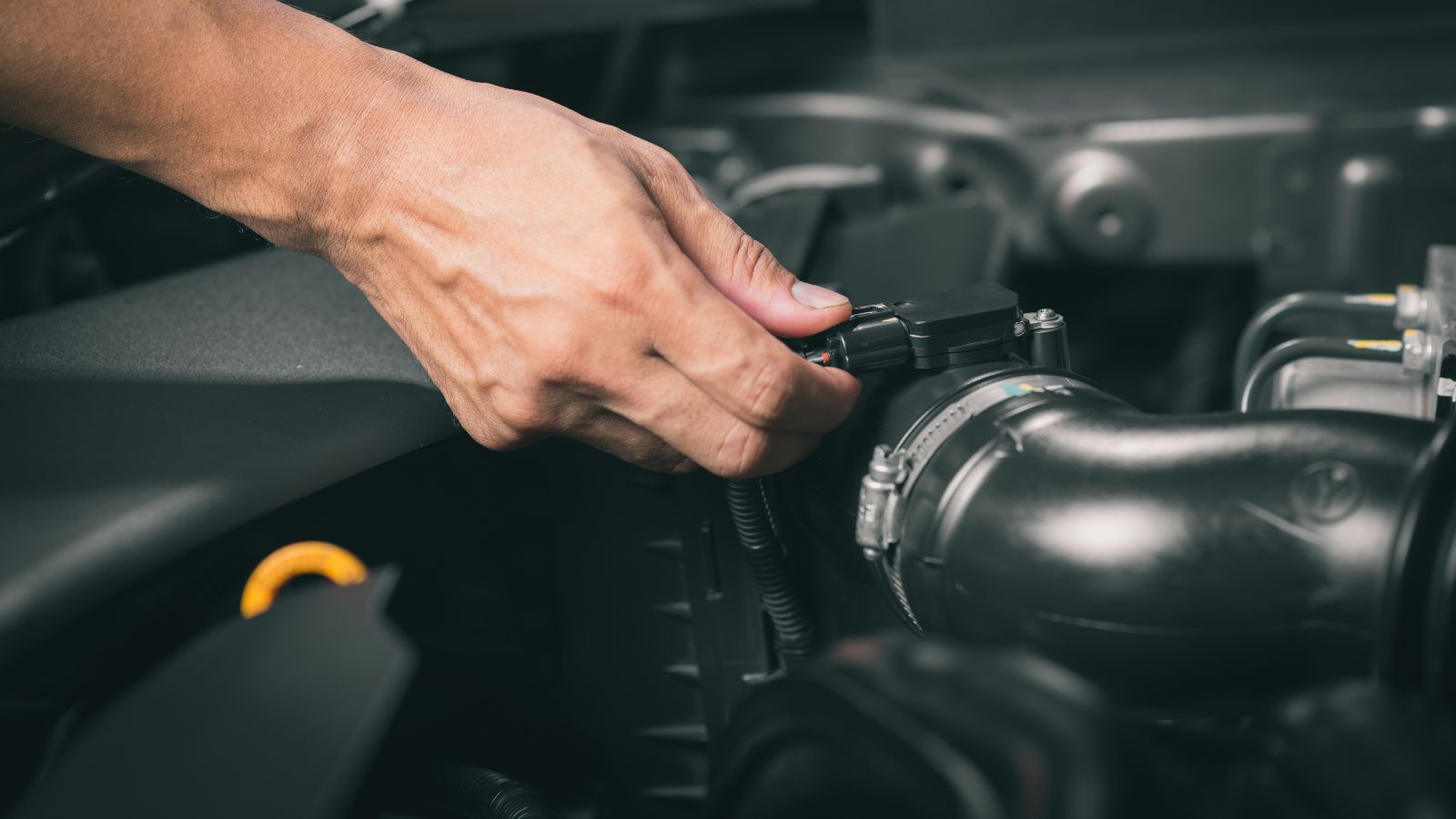
Modern engines calculate load from electronic sensors rather than relying on a simple mechanical connection between the accelerator and throttle. The mass-airflow sensor, manifold-pressure sensor, throttle-position sensors, oxygen sensors, and related circuits help the control unit decide how much fuel, ignition timing, and boost to command. If one signal is contaminated, intermittent, or implausible, the engine may respond slowly, run an incorrect mixture, or adopt a conservative substitute value that protects components but reduces performance.
Bosch describes the air-mass meter as measuring intake-air mass so the control unit can prepare the correct mixture, and it emphasizes the importance of clean, stable airflow. Symptoms can be deceptive: a split hose after the sensor, an excessively oiled aftermarket filter, wiring corrosion, or throttle-body deposits may mimic a failed sensor. Trouble codes are clues, not automatic instructions to replace the named component. Technicians compare live readings with expected values, inspect connectors and ducting, and test the circuit before condemning costly electronic parts that may still be functioning properly.
A Restricted Catalytic Converter or DPF
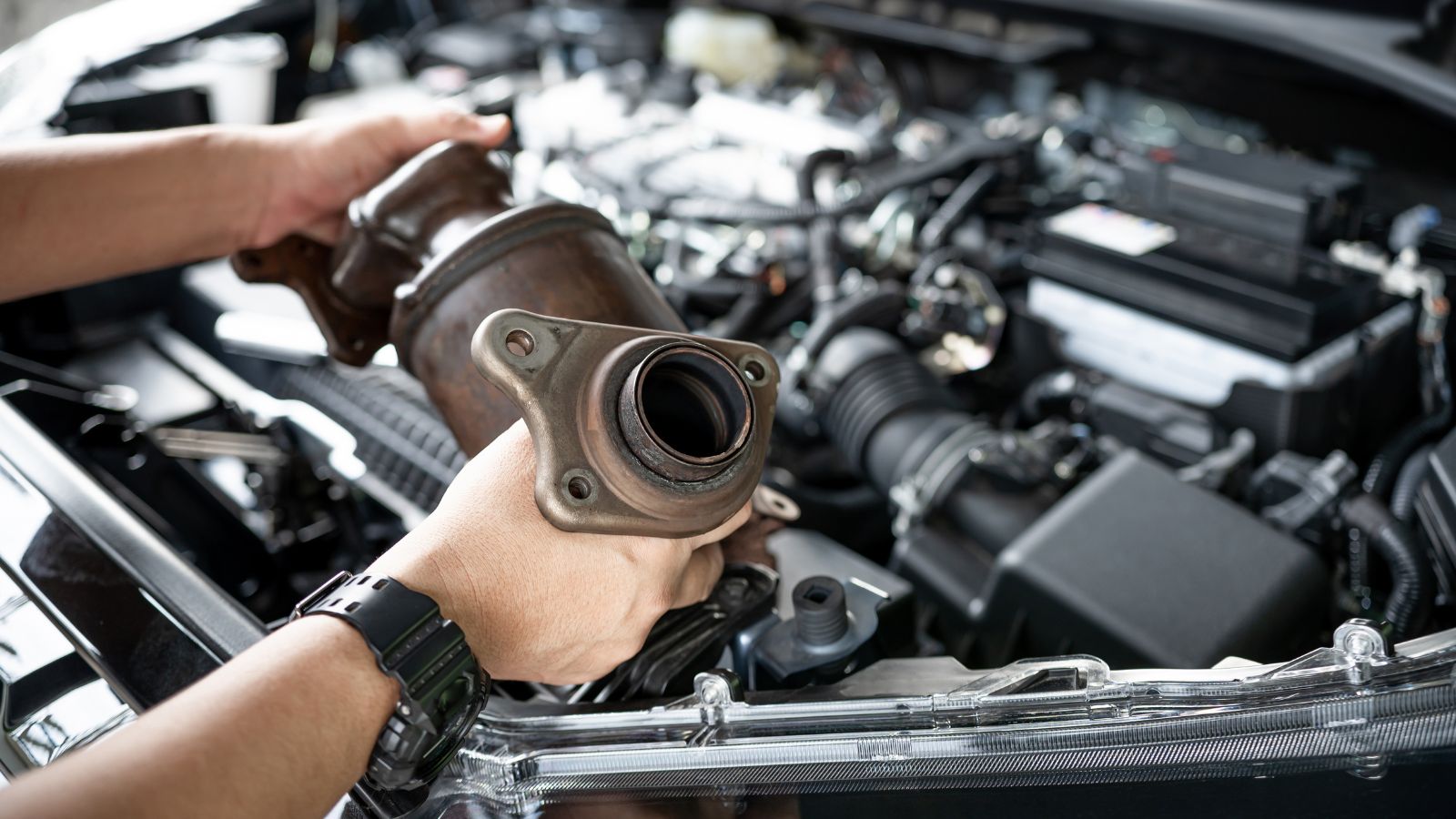
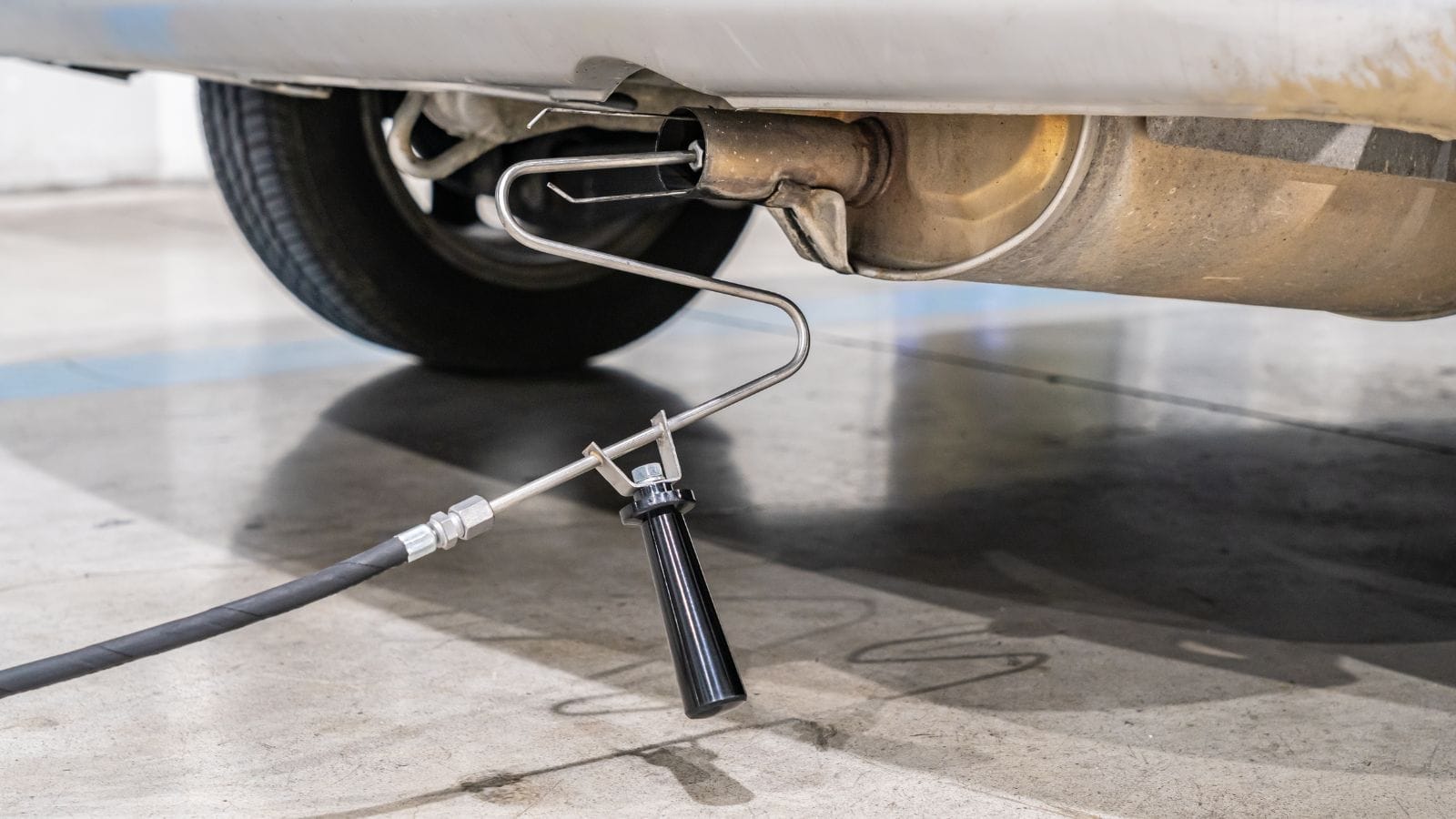
An engine must expel exhaust gases as effectively as it draws air in. When a catalytic converter, diesel particulate filter, muffler, or damaged internal baffle becomes restricted, exhaust backpressure rises and the cylinders cannot clear themselves efficiently. The vehicle may start and idle normally yet feel increasingly strangled as engine speed and load rise. Delayed acceleration, unusual heat, rattling, sulphur-like odours, regeneration warnings, or an abnormally hot converter can accompany the power loss.
Walker Exhaust lists delayed acceleration and loss of power among the symptoms of a clogged catalytic converter, noting that melted or displaced substrate material can block flow. On diesel vehicles, a particulate filter that cannot regenerate may eventually trigger reduced-power operation. The restriction is often the result of another problem—misfires, oil consumption, coolant contamination, rich operation, or faulty sensors—rather than an isolated converter failure. Replacing the exhaust component without correcting the root cause can produce another expensive failure, so backpressure testing and a complete engine diagnosis matter.
Turbo Lag or Lost Boost
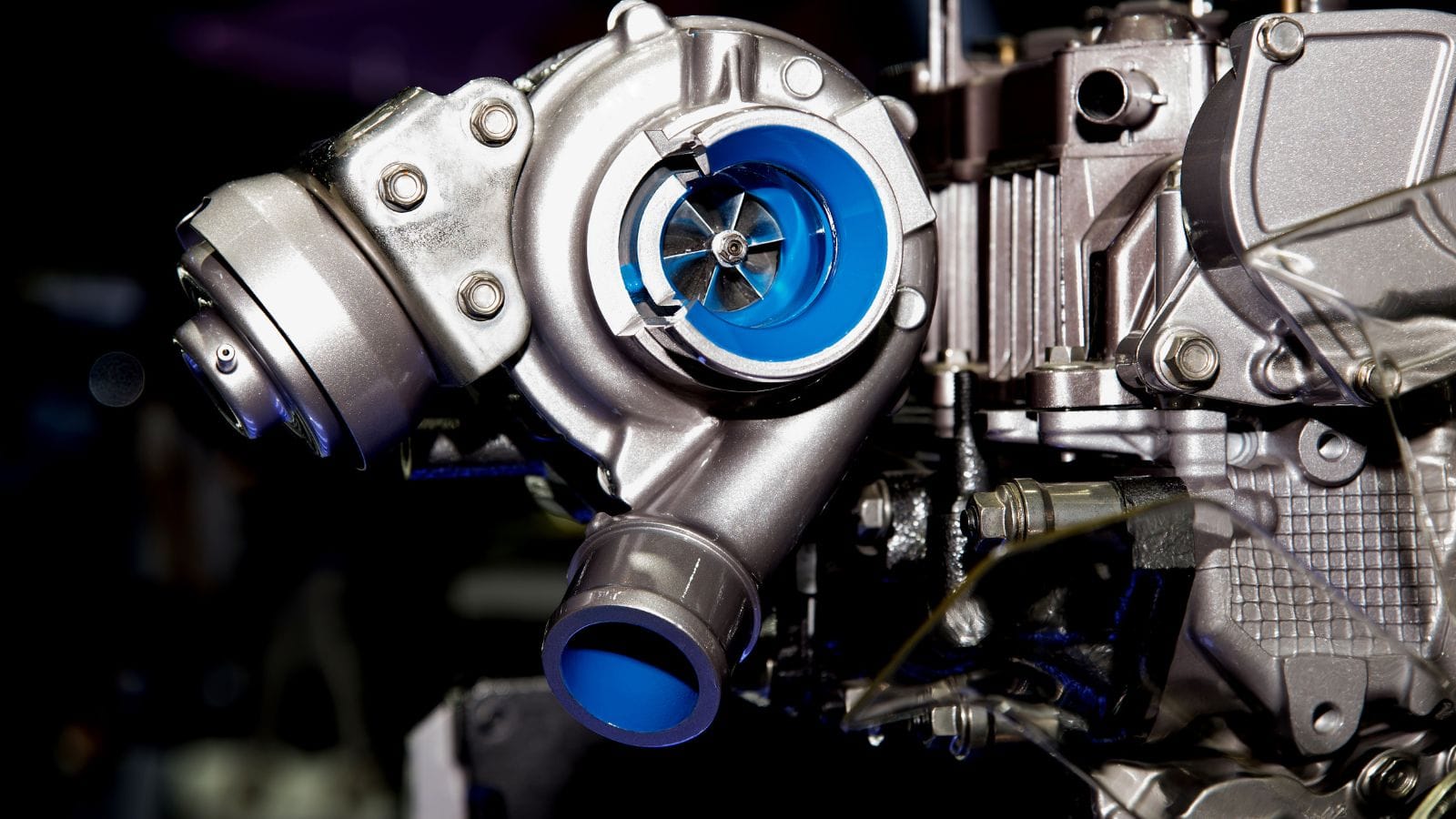
Turbocharged engines can feel underpowered for two different reasons: normal response delay or genuine loss of boost. Turbo lag is the interval between pressing the accelerator and producing enough exhaust energy to spin the turbine. It is usually noticeable at low engine speed, after an upshift, or when a small engine is asked for sudden torque. A downshift can move the engine into a stronger operating range and make its response feel much more immediate.
A leaking charge hose, loose clamp, damaged intercooler, sticking wastegate, control-solenoid fault, or worn turbocharger creates another pattern. The engine may never reach its expected boost, often accompanied by hissing, smoke, warning lights, or underboost codes. Garrett Motion explains that turbo lag reflects the time needed to generate exhaust pressure and accelerate the turbine. Because turbo systems operate at extremely high speeds and temperatures, random adjustments are risky. Diagnosis should compare commanded and actual boost, inspect the pressurized intake path, and verify lubrication and control operation before replacing the turbocharger itself.
Transmission Programming or Transmission Trouble
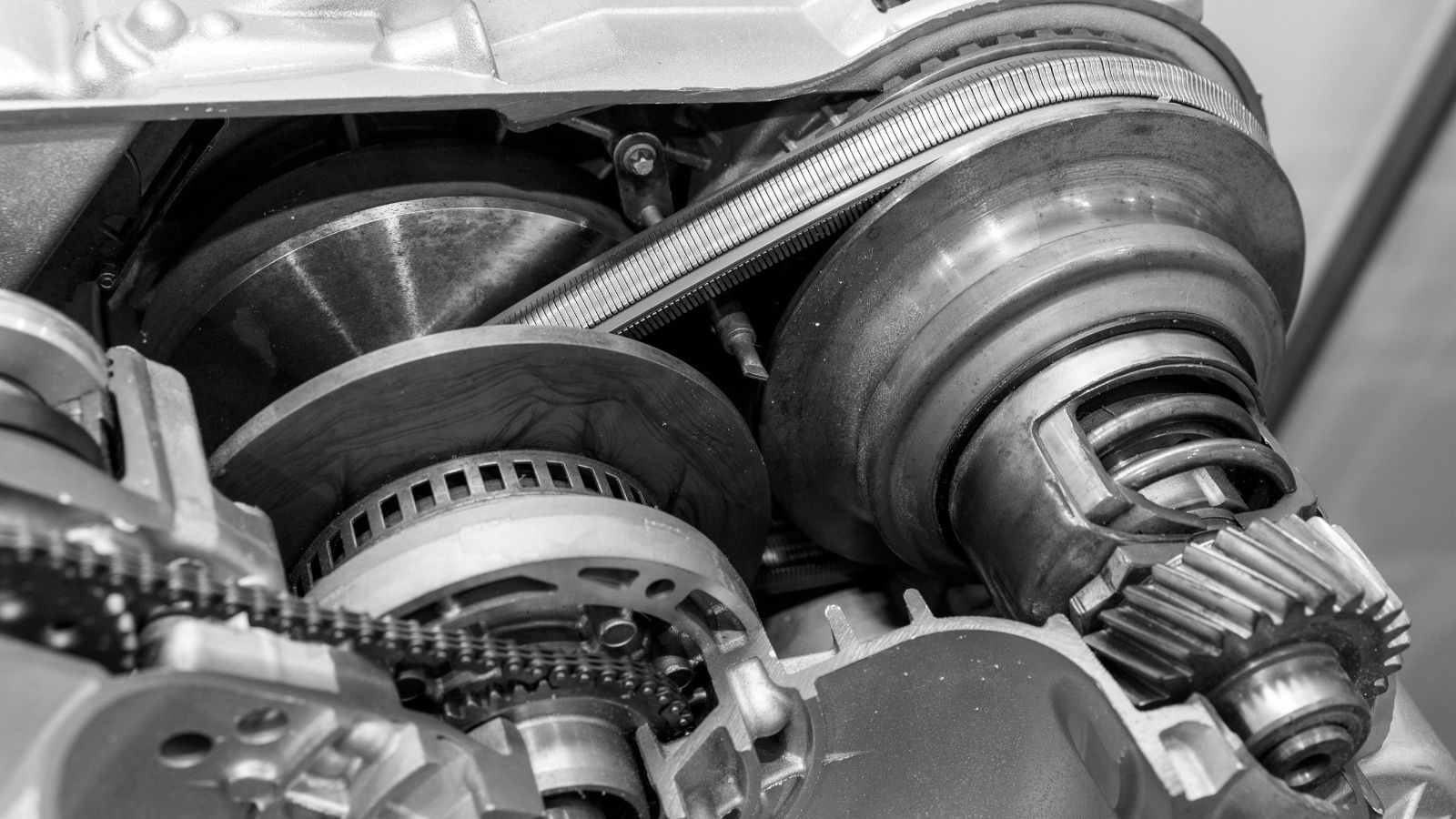
Transmission programming strongly shapes how powerful a vehicle feels. In an economy-oriented mode, an automatic may upshift early, hold a tall ratio, and soften throttle response to reduce fuel use. Pressing the accelerator gently can therefore produce little initial acceleration until the transmission downshifts. Continuously variable transmissions may let engine speed rise and remain steady while road speed catches up, a sensation some drivers interpret as slipping or weakness even when the system is operating normally.
Manufacturer manuals commonly distinguish regular Drive from Sport or manual modes, which select lower ratios sooner and hold higher engine speeds for stronger response. A healthy transmission should still react predictably when more throttle is requested. Delayed engagement, engine flaring without matching acceleration, harsh shifts, shuddering, overheating messages, or refusal to downshift can indicate a fault. Comparing modes on the same road can clarify the difference. Fluid checks are model-specific, and many modern units require temperature-controlled procedures, so improvised topping-up can create additional problems rather than correcting the original complaint.
Traction and Stability Control Intervention
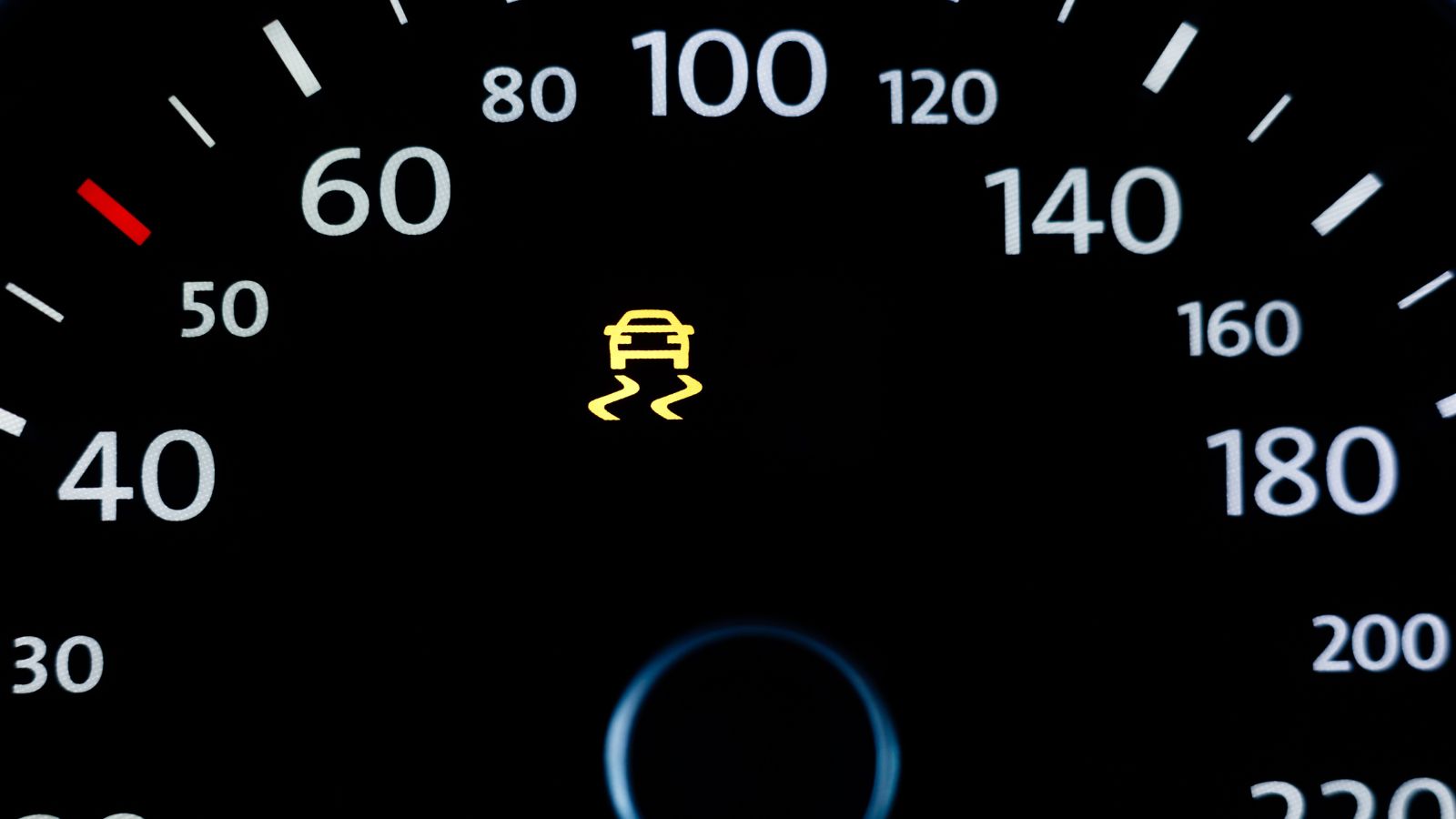
Traction and stability systems can deliberately reduce engine torque when tyres spin or the vehicle deviates from its intended path. On wet paint, gravel, snow, broken pavement, or during a sharp turn, the accelerator may be pressed while the engine suddenly feels muted. A dashboard indicator often flashes at the same moment. The system may also apply individual brakes, creating a brief sensation that the vehicle is being held back despite continued accelerator input.
This intervention is normally a safety function, not evidence that the engine has become weak. General Motors guidance states that electronic stability control can reduce engine power according to driving conditions, while traction control automatically limits wheelspin. Repeated activation on dry, straight pavement deserves attention. Mismatched tyre sizes, low tread, incorrect pressures, wheel-speed sensor faults, alignment problems, or a compact spare can confuse the system. Disabling stability control for ordinary road driving is not a diagnosis and removes an important safety layer. The underlying tyre, sensor, or chassis issue should be inspected instead.
Underinflated Tyres
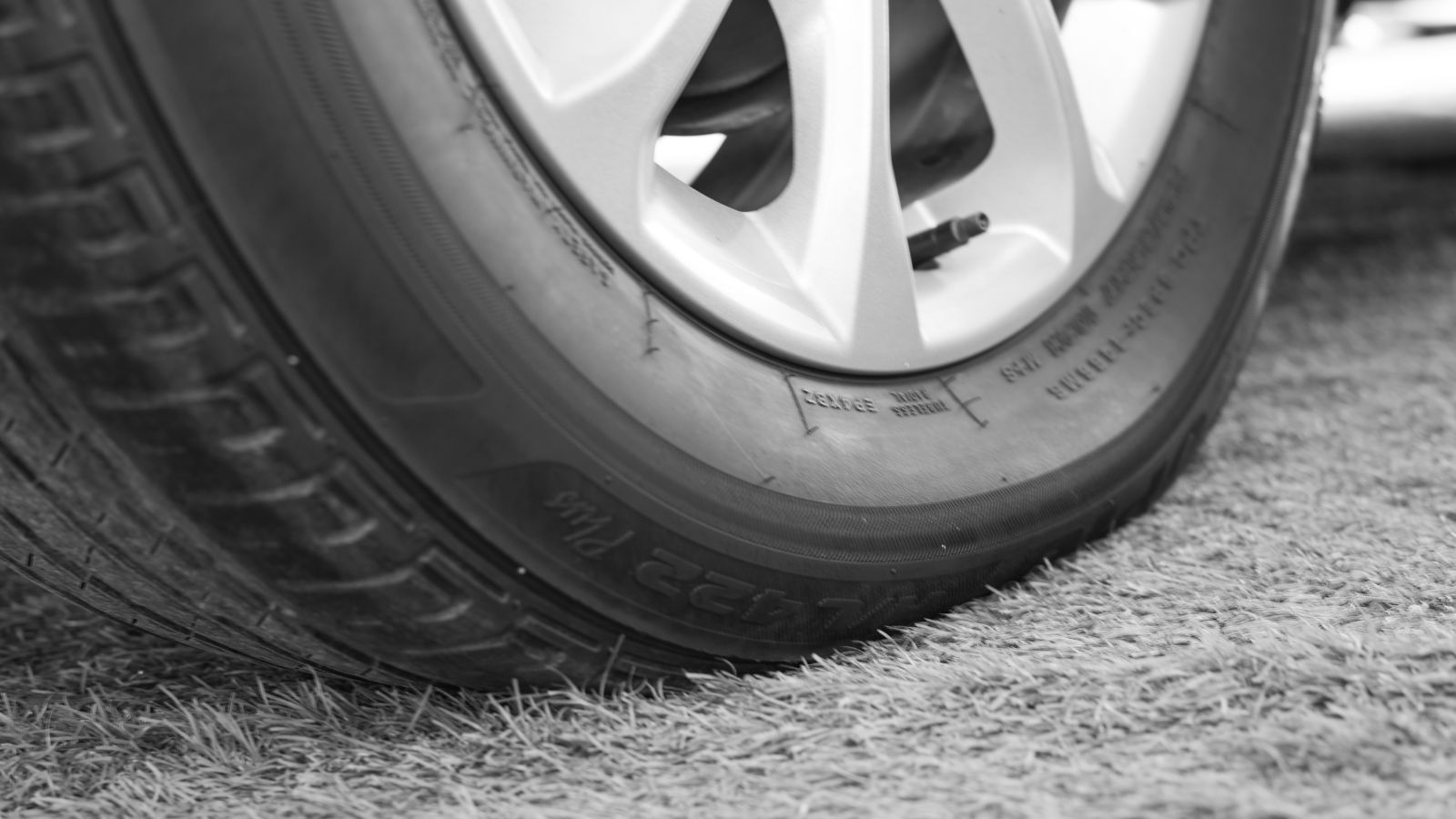
Underinflated tyres deform more as they roll, converting additional energy into heat. The engine must overcome that extra rolling resistance, so a vehicle can feel reluctant to coast and slightly slower to gather speed. The change may develop gradually enough that the driver adapts without noticing. Cold weather, a slow puncture, or tyres never adjusted after seasonal temperature changes can create the effect even when none of them looks visibly flat.
The Department of Energy reports that underinflation lowers fuel economy and recommends using the pressure listed on the vehicle placard rather than the maximum printed on the tyre sidewall. The National Highway Traffic Safety Administration also explains that rolling resistance changes with inflation pressure and that lower-resistance tyres reduce energy loss. Pressure should be measured cold with a reliable gauge, then investigated if one wheel repeatedly loses air. Overinflating tyres to make them roll more easily is not a safe solution. Correct pressure restores the intended balance of grip, ride, tyre durability, and efficiency rather than creating additional engine power.
Dragging Brakes
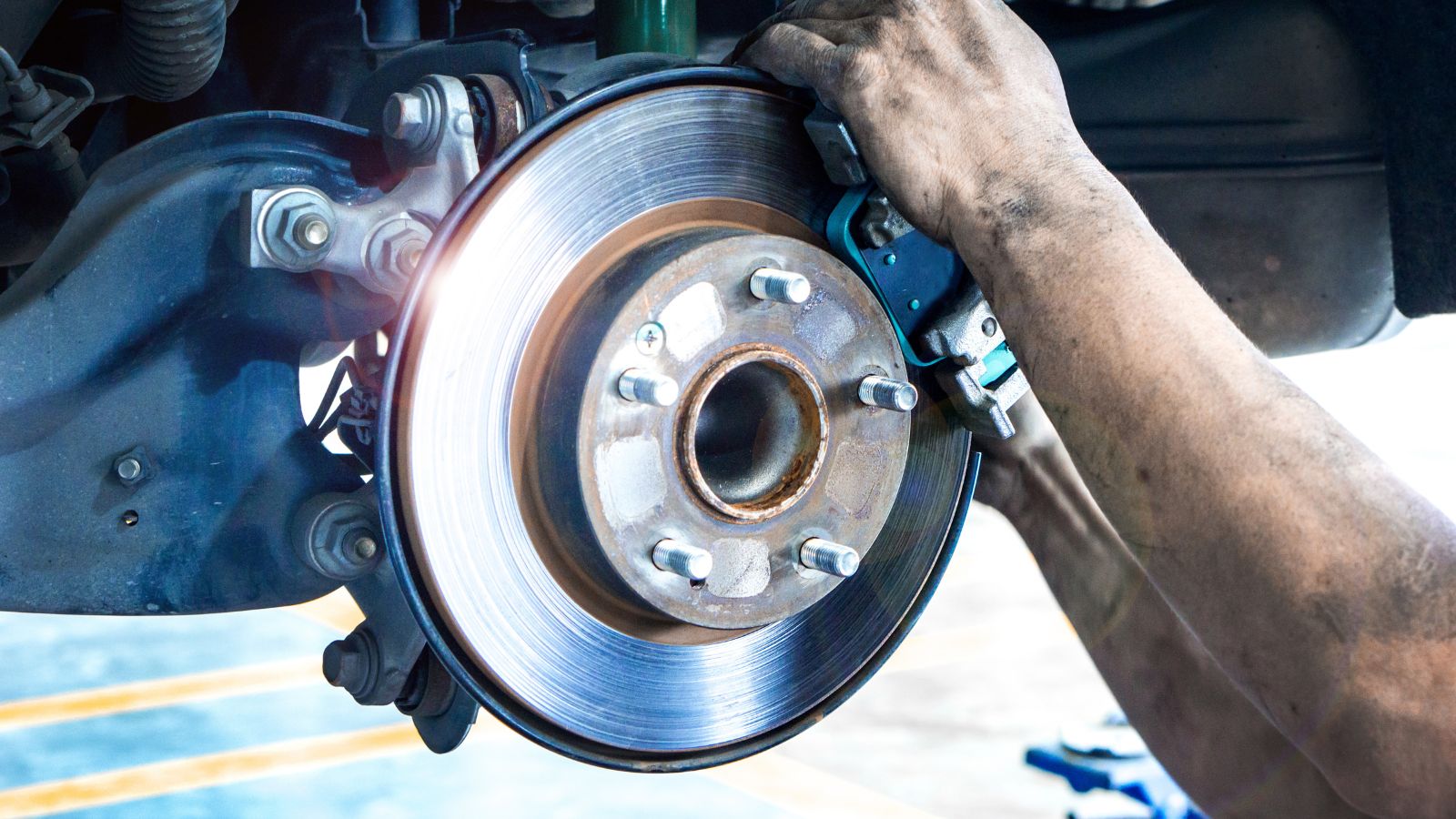
A sticking brake caliper, seized slide, internally damaged hose, misadjusted parking brake, or electronic parking-brake fault can keep a pad pressed against the rotor after the pedal is released. The engine then works against continuous friction, making acceleration feel heavy and reducing the distance the vehicle coasts. One wheel may smell hot, produce more brake dust, or become warmer than the others. In severe cases, the vehicle may pull to one side or begin producing smoke.
A manufacturer recall bulletin filed with the National Highway Traffic Safety Administration connected brake drag with poor acceleration, unintended deceleration, excessive brake heat, and premature component wear. That makes the condition more than a minor annoyance. Drivers should not touch a suspected hot wheel because brake components may cause serious burns. A vehicle that will not roll freely, emits smoke, or produces a strong burning odour should be stopped safely and inspected. Brake-temperature comparisons, hydraulic-pressure checks, and caliper testing belong in a workshop rather than being attempted after continued roadside driving.
Incorrect Octane or Poor Fuel Quality
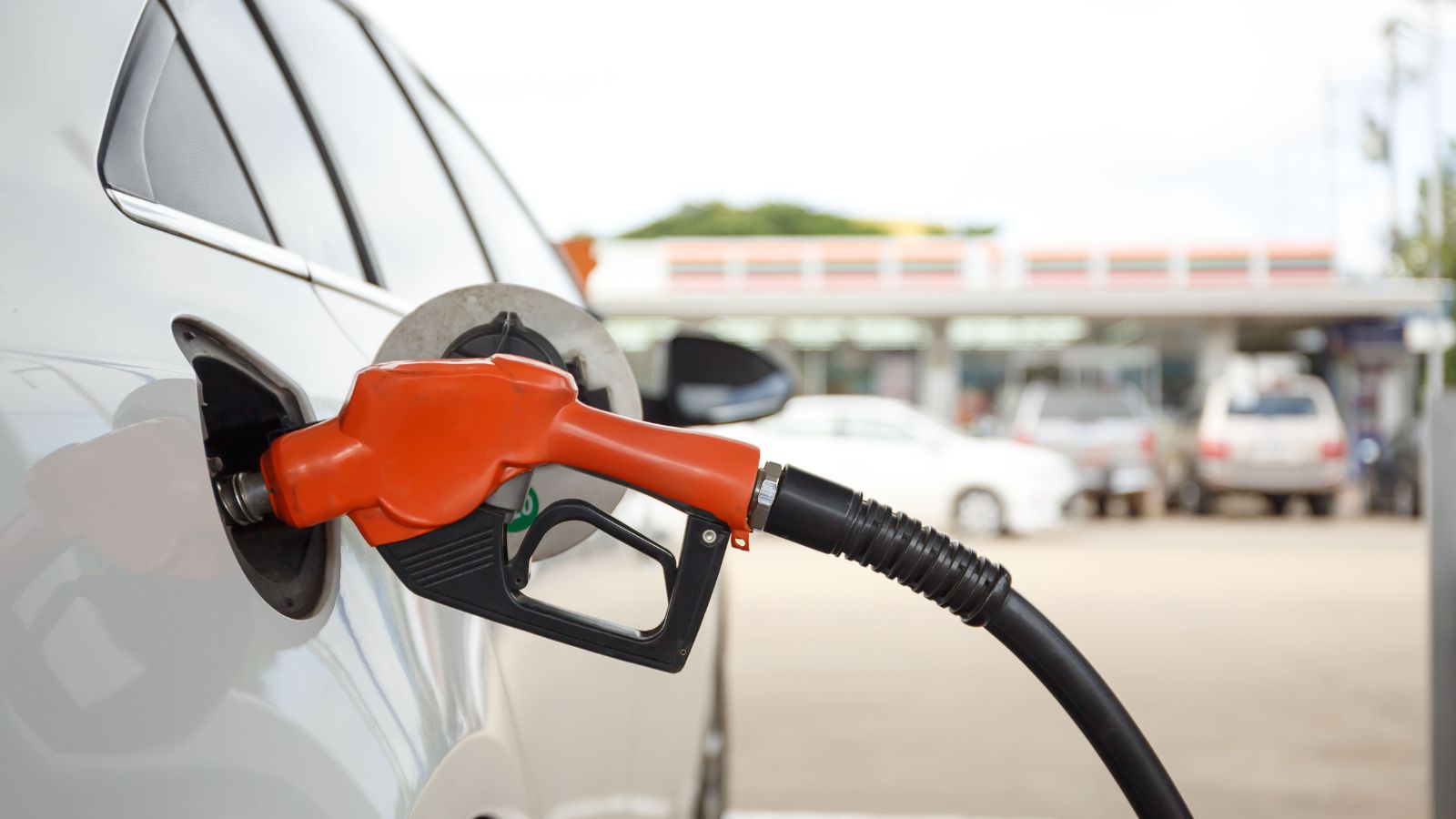
Fuel octane does not measure how much energy gasoline contains; it measures resistance to knock. In an engine designed to require or recommend higher octane, lower-octane fuel can cause the control system to retard ignition timing when knock is detected. That protective adjustment may reduce torque, especially during towing, hot weather, high load, or sustained climbing. By contrast, filling a vehicle designed for regular gasoline with premium usually does not create meaningful additional power.
AAA research explains that greater knock resistance can permit more ignition advance and higher torque or horsepower in engines calibrated to use it. AAA advises following the manufacturer’s specified grade rather than treating premium as a universal upgrade. Fuel quality and cleanliness matter separately from octane; deposits can disturb combustion or injector operation over time. When sluggishness begins immediately after refuelling, the receipt, station, selected grade, and possibility of contaminated or incorrect fuel become useful clues. Severe knocking, repeated misfiring, or a warning light calls for prompt attention rather than another hard acceleration test.
Reduced-Power Mode or Low Compression
Sometimes a vehicle feels underpowered because its control system is intentionally protecting the engine, transmission, or emissions hardware. Overheating, abnormal oil pressure, electronic-throttle faults, excessive boost, or emissions-system problems can trigger a reduced-power or “limp” strategy. Maximum speed and acceleration may be limited even though the vehicle still runs well enough to reach a safe stopping place. The warning message should be treated as an active operating condition, not merely cleared and ignored.
General Motors information states that an “Engine Power Is Reduced” message can affect acceleration and requires service, while diesel guidance notes that a plugged particulate filter can eventually produce reduced power. Mechanical wear can create a gradual version of the complaint: low compression from worn rings, cylinders, or valve sealing reduces the pressure that produces torque. SAE research links piston-ring and cylinder-liner condition with engine performance and power output. Scan data, compression or leak-down testing, and a verified repair are more reliable than guessing from accelerator feel alone.
22 Things Canadians Do to Their Cars in Spring That Mechanics Hate

Spring brings relief to many Canadian drivers after months of snow, freezing temperatures, and icy roads that put serious strain on vehicles. As temperatures rise across the country, drivers begin washing cars, switching tires, and preparing vehicles for warmer weather and upcoming road trips. However, mechanics across Canada notice the same mistakes every spring when drivers attempt to recover from winter damage. Road salt, potholes, and harsh winter driving conditions often leave vehicles with hidden problems that drivers ignore. Some spring habits even create new mechanical issues that could have been avoided with proper maintenance. Here are 22 things Canadians do to their cars in spring that mechanics hate.

Alanna Rosen is an experienced content writer that focuses on many EV and educational content. Her articles are regularly published on Get CyberTrucked and syndicated on large publications.