BMW is facing mounting pressure to reduce costs as weakening profitability forces the German luxury automaker to accelerate its restructuring efforts. The company’s automotive operating profit margin fell from 5.2% to 3.4% in the third quarter of 2026, prompting management to push ahead with organizational changes and faster reductions in management positions.
The announcement comes as BMW confronts declining sales in China, higher trade costs, and growing competition across the global automotive industry. Despite reporting more than €2 billion in quarterly earnings before taxes, the manufacturer has sharply reduced its full-year profit expectations. Its response involves cutting administrative costs, simplifying operations, and accelerating the transition toward its next generation of vehicles. The changes highlight the difficult balance between protecting profitability today and investing in the technologies that will determine BMW’s future.
BMW’s Automotive Profit Margin Falls as Earnings Come Under Pressure
BMW’s automotive division recorded an operating profit margin of 3.4% in the third quarter of 2026, down from 5.2% during the corresponding period in 2025. The 1.8-percentage-point decline reflects a substantial deterioration in profitability. Automotive operating earnings fell 39.7% to €901 million, compared with approximately €1.49 billion a year earlier. Meanwhile, revenue from the automotive business declined 6.5% to €26.67 billion, demonstrating how weakening vehicle sales and pricing pressure can significantly affect earnings even when revenue declines are relatively modest.
The broader BMW Group remained profitable, reporting €2.08 billion in earnings before taxes for the quarter, representing a 10.6% annual decline. Its financial services operations helped support the overall result, providing some stability while vehicle manufacturing faced more difficult conditions. Although the automotive margin exceeded analysts’ expectations of approximately 3.1%, the improvement over forecasts offered limited reassurance about the longer-term trend. The results suggested that BMW needed more than conventional cost controls to restore the profitability investors had previously expected from the luxury manufacturer.
Management Positions Are Being Eliminated Faster Than Originally Planned
BMW’s restructuring increasingly targets management and administrative functions rather than simply reducing manufacturing capacity. In September 2026, the company announced plans to reduce its number of divisions and associated management positions by 20% by the middle of 2027, with comparable reductions at organizational levels below. However, the November announcement confirmed that these management reductions would be implemented faster than previously planned. BMW believes that simplifying its corporate structure will accelerate decision-making, reduce overlapping responsibilities, and improve efficiency across its global operations.
For employees working in administrative offices, engineering departments, and corporate planning teams, the changes could significantly alter established responsibilities. Departments may be consolidated, reporting structures simplified, and certain management positions eliminated as the company seeks to operate with fewer organizational layers. BMW also intends to expand the use of artificial intelligence to automate processes and support faster decisions. Although the manufacturer has established a broader management-reduction target, it has not disclosed a separate revised figure for the number of management employees expected to leave under the accelerated timetable.
Thousands of Jobs Are Involved in BMW’s Wider Restructuring Programme
BMW’s management reductions form part of a larger workforce restructuring programme agreed upon with employee representatives in July 2026. Reports have indicated that approximately 8,000 positions could be eliminated across the company’s global workforce, with a substantial proportion of the reductions expected in Germany. BMW employed 154,540 people worldwide at the end of 2025. The European Restructuring Monitor identified administration, research, development, planning, and management as the primary areas affected, while factory production positions were not the principal focus of the German programme.
The company has pursued voluntary severance arrangements and natural employee turnover rather than relying on compulsory redundancies as the foundation of its workforce strategy. Nevertheless, the changes carry serious consequences for employees whose careers have developed around the manufacturer’s established organizational structure. Experienced engineers, project managers, and administrative specialists may face difficult decisions about whether to accept departure packages or remain within a changing organization. Importantly, the broader estimate of approximately 8,000 positions should not be interpreted as a separate commitment to eliminate 8,000 management jobs. The management restructuring and workforce reduction programme are closely connected but represent different elements of BMW’s cost-saving strategy.
BMW Cuts Its Full-Year Profit Forecast for the Second Time
BMW’s decision to accelerate restructuring has produced an immediate consequence for its financial outlook. On November 3, the manufacturer reduced its projected 2026 automotive operating profit margin to between negative 0.5% and positive 0.5%, compared with its previous forecast of 1% to 3%. The adjustment represents the company’s second profit warning in less than five months. BMW expects the expanded restructuring and product portfolio measures to impose a substantial accounting burden during the fourth quarter, meaning an otherwise profitable operating business could report a full-year margin close to zero.
Chief Financial Officer Walter Mertl explained that portfolio and structural measures are now expected to reduce the annual automotive margin by approximately 2.5 percentage points, double the 1.25-percentage-point impact previously anticipated. The workforce restructuring component alone is expected to account for approximately 1.25 percentage points. Excluding the combined effects of these measures, BMW still expects its full-year automotive operating margin to exceed 2%. This distinction matters because it separates the immediate costs of restructuring from the underlying performance of the vehicle business. However, those costs will still reduce reported profits for 2026.
Weakening Demand in China Is Becoming BMW’s Biggest Challenge
China remains one of the most significant sources of pressure on BMW’s financial performance. The company’s vehicle deliveries in the country declined 24.8% during the third quarter of 2026, while sales over the first nine months dropped approximately 22%. BMW reported that its quarterly decline closely matched a 24.6% contraction in the broader Chinese market. Nevertheless, the magnitude of the downturn represents a major challenge for a manufacturer that has historically relied on China as an important destination for premium vehicles.
Competition from domestic Chinese automakers has intensified as manufacturers offer increasingly sophisticated vehicles, particularly electric models, at competitive prices. Established foreign brands must balance the desire to maintain sales volumes against the risk of discounting away their profitability. BMW acknowledged that weaker Chinese sales and pricing pressure contributed heavily to its earnings decline. The company is responding by preparing additional locally tailored models, including a long-wheelbase version of the electric iX3 scheduled for introduction in China in November 2026. Whether these vehicles can reverse the sales downturn will be an important test of BMW’s strategy.
Tariffs and Additional Costs Further Squeeze BMW’s Profitability
BMW’s declining profitability cannot be explained by weaker vehicle sales alone. During the third quarter, higher import tariffs reduced its automotive operating margin by approximately 1.25 percentage points. Depreciation associated with the purchase price allocation for BMW Brilliance Automotive, its Chinese joint venture, accounted for another 1.2 percentage points. Currency movements also reduced automotive operating earnings by approximately €100 million compared with the same quarter in 2025. These pressures demonstrate how international trade costs and financial accounting effects can significantly influence the performance of a multinational manufacturer.
BMW also identified an approximately €600 million negative year-over-year earnings impact from the combined effects of vehicle volumes, product mix, and pricing. At the same time, the company benefited from a settlement involving a supplier and its Integrated Braking System warranty case, which helped offset some of the financial pressure. Without such positive effects, the quarterly result would have been weaker. The combination illustrates why BMW’s restructuring goes beyond reducing employee numbers: management is attempting to offset multiple sources of financial pressure, some of which remain outside the company’s direct control.
Growth in Europe and the United States Cannot Offset Global Sales Declines
BMW delivered 551,075 vehicles worldwide during the third quarter, representing a 6.3% decline from the 588,140 vehicles delivered during the comparable period in 2025. Across the first nine months of 2026, deliveries reached approximately 1.71 million vehicles, down 4.9% year over year. These figures encompass the BMW, MINI, and Rolls-Royce brands. The decline is particularly significant because vehicle manufacturers must spread substantial development, production, and distribution expenses across the vehicles they sell. When volumes decrease, maintaining strong profit margins becomes more difficult.
There were encouraging developments in individual regions. BMW Group deliveries increased 2.6% in Europe and 2.5% in the United States during the third quarter. The MINI brand also recorded 6.8% delivery growth over the first nine months, despite the wider group’s decline. However, these improvements were insufficient to compensate for weakness in China and other markets. BMW has consequently shifted its full-year delivery forecast from a slight decline to a moderate decrease. The regional differences reinforce the importance of maintaining a flexible product strategy instead of assuming that consumer preferences and economic conditions will develop uniformly worldwide.
BMW Accelerates Its Transition Toward the Neue Klasse
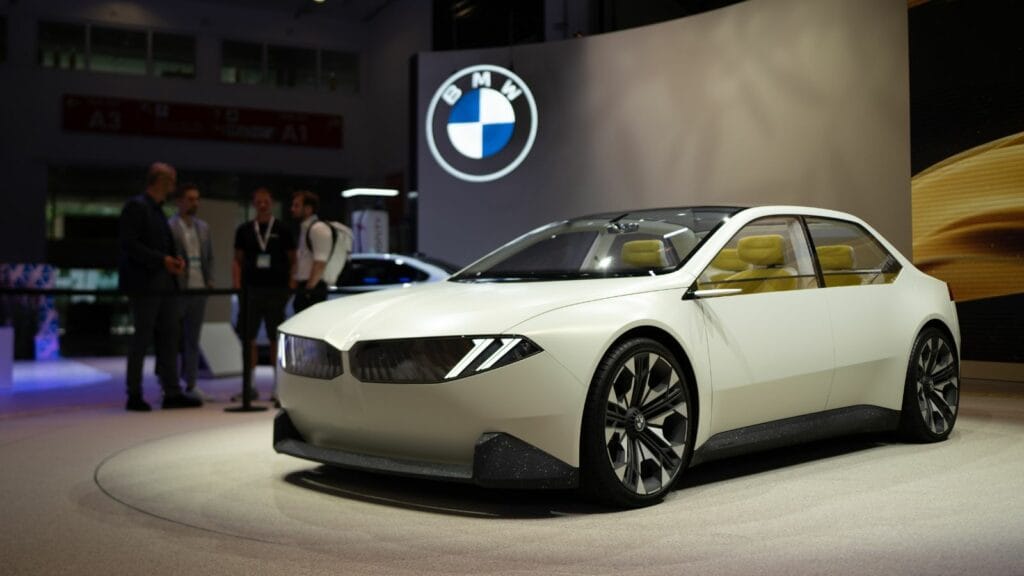
BMW’s restructuring involves more than changes to its workforce. The manufacturer is also accelerating the introduction of its Neue Klasse vehicle technologies, which form a central part of its long-term profitability strategy. Strong demand for the new generation has prompted BMW to introduce additional production shifts and bring forward the retirement of selected older vehicles and technologies. This includes certain models using the company’s fifth-generation battery technology. By accelerating the transition toward newer platforms, BMW intends to reduce product complexity, improve manufacturing efficiency, and concentrate resources on technologies expected to deliver stronger financial returns.
The strategy carries both opportunities and short-term costs. Moving away from older vehicle generations requires adjustments to production planning, component procurement, engineering resources, and inventory management. BMW believes its sixth-generation electric drivetrain technology will help reduce costs and improve efficiency as production expands. However, accelerating the retirement of existing models can also create restructuring expenses before the benefits materialize. For consumers, the transition could mean newer technologies becoming available sooner, while some older configurations disappear from the lineup earlier than originally expected.
Electric Vehicle Sales Provide Encouraging Signs Despite Financial Pressure
Despite declining overall vehicle deliveries, BMW continues to experience growth in its electric vehicle business. During the third quarter of 2026, the company delivered more than 110,000 fully electric vehicles worldwide, representing a 7.2% increase compared with the same period in 2025. Battery-electric vehicles accounted for approximately 20% of the group’s total vehicle deliveries. Including plug-in hybrids, electrified vehicles represented 27.4% of sales. The figures demonstrate that BMW’s electric vehicle transition is progressing even as its broader automotive business struggles with weaker demand and declining profit margins.
Europe has emerged as a particularly important market for BMW’s electrified vehicles. Fully electric models accounted for 34.7% of the company’s European deliveries during the third quarter, while the combined share of battery-electric and plug-in hybrid vehicles reached 46.9%. Nevertheless, growing electric vehicle sales do not automatically guarantee stronger profitability. Manufacturers must recover substantial investments in batteries, software, manufacturing systems, and vehicle development while competing on price. BMW’s challenge is to translate rising demand for electric models into sustainable earnings. The Neue Klasse programme will therefore be judged not only by sales volumes but also by its ability to improve production economics.
BMW Faces a Difficult Road Back to Its Long-Term Profitability Targets
BMW’s financial recovery will depend on whether its restructuring programme delivers lasting savings without undermining future growth. The automotive division generated €724 million in free cash flow during the first nine months of 2026, compared with approximately €2.69 billion during the same period in 2025. Third-quarter automotive free cash flow was negative €566 million. Despite these weaker results, BMW maintained its forecast for more than €2.5 billion in automotive free cash flow for the full year, expecting improvements in working capital and other cash contributions during the final quarter.
Looking further ahead, BMW has established a target automotive operating margin of 3% to 5% by 2028, followed by a return to its longer-term goal of 8% to 10% by the beginning of the next decade. Achieving those objectives will require more than eliminating management positions. The company must stabilize demand in China, manage international trade costs, improve manufacturing efficiency, and demonstrate that its newest vehicles can generate attractive returns. The accelerated restructuring represents a significant attempt to address those challenges, but whether it marks the beginning of a sustained financial recovery will become clearer as the new strategy takes effect.
