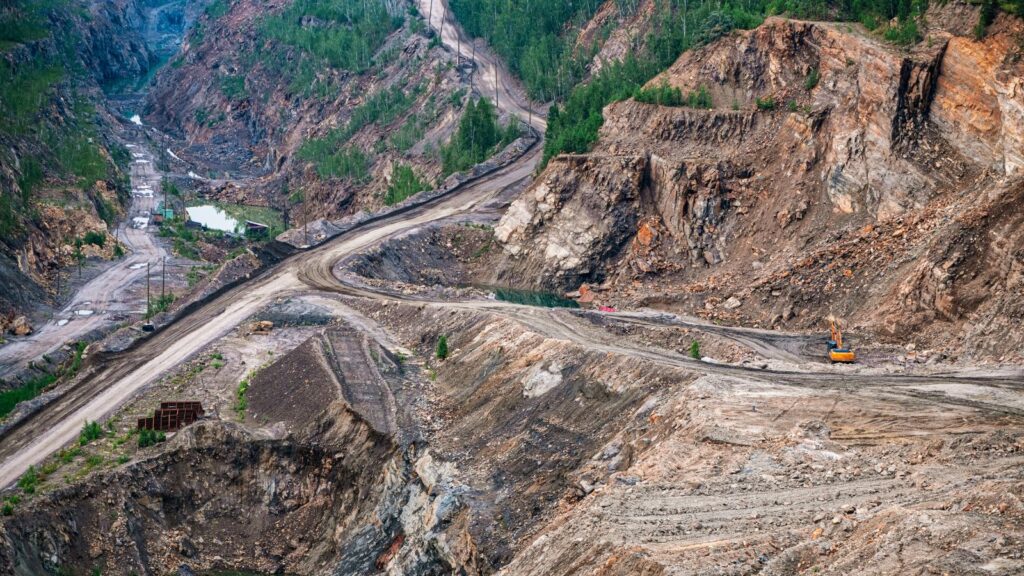
Canada’s push to build its own battery-materials supply chain is moving from funding announcements to hands-on testing. On November 26, 2026, Focus Graphite said it had begun a pilot-scale processing program with Quebec mineral-research centre COREM, using material from its Lac Knife and Lac Tetepisca graphite projects.
The plan is to process approximately 60 tonnes of graphite-bearing material and produce about six tonnes of concentrate for purification trials, product testing and potential customers. The work draws on a federal funding agreement worth up to C$14.1 million that Focus secured in 2025, not a new grant awarded this week.
For a company trying to turn mineral deposits into products manufacturers can actually use, the immediate challenge is practical: demonstrate how the graphite behaves outside a laboratory before committing to larger facilities.
Focus Graphite Begins a New Phase of Battery Materials Development
Focus Graphite’s November 26 announcement is about execution rather than another promise of public money. The company says a testing campaign is beginning with COREM, a Quebec organization specializing in mineral processing. Samples will come from two company-owned graphite properties, Lac Knife and Lac Tetepisca, giving the program a role in both near-term materials development and longer-term mine planning.
The distinction matters because discovering graphite underground is only the opening stage of building a supply chain. Manufacturers need material processed to predictable specifications, and engineers need evidence that a proposed plant can recover it efficiently. Focus intends to produce representative concentrate, measure processing performance and make samples available for evaluation. Those are meaningful development steps, but they are not commercial production. The company has announced an intended pilot campaign, not an operating mine or a signed agreement to supply a battery factory. Results will determine how persuasive the next stage becomes.
The $14.1 Million in Federal Funding Was Secured in 2025
The headline funding figure has an important timeline. Natural Resources Canada initially identified Focus Graphite’s proposed purification initiative for conditional support in late 2025. On December 8 of that year, the company announced that it had signed a non-repayable contribution agreement under the federal Global Partnerships Initiative, worth up to approximately C$14.1 million.
That agreement covers a broader program than the COREM campaign alone, including feedstock preparation, metallurgical testing, thermal purification and work on a demonstration furnace in Canada. The company has said federal contributions represent roughly 73.6% of eligible project costs, with Focus supplying its own cash and in-kind contributions. Reimbursement depends on meeting program requirements and incurring eligible expenses under the agreement, so the maximum award should not be confused with cash already received. The November 26 announcement marks further activity under funding arranged previously. It does not mean Ottawa announced another C$14.1 million commitment that morning.
The Project Aims to Turn 60 Tonnes of Material Into Six Tonnes of Graphite Concentrate
The COREM program has a concrete target: Focus expects to treat roughly 60 tonnes of graphite-bearing material from its two Quebec projects and recover about six tonnes of representative graphite concentrate. This is not six tonnes of finished battery material. Concentration separates graphite-rich material from much of the surrounding rock; additional treatment and qualification would still be needed before any product could reach demanding end markets.
According to the company’s plan, the campaign will make both coarse and fine concentrates. After drying and characterization, the material will be divided into six particle-size fractions, ranging from above 50 mesh to below 200 mesh. That division matters because graphite buyers do not all want the same product. Different industrial and battery-related uses require different characteristics. Producing representative samples gives potential customers something to test, while providing Focus with a clearer picture of which specifications its Quebec deposits might consistently meet for future commercial customers.
Quebec Research Centre COREM Takes on a Critical Testing Role
COREM brings more than a laboratory bench to the partnership. The Quebec-based mineral-processing research centre offers analyses, collaborative research and pilot-scale testing. Its work spans the steps that often determine whether a promising ore deposit can become a practical industrial operation: breaking down rock, separating valuable minerals and understanding the quality of the resulting concentrate.
For Focus, the value lies in testing its proposed approach under demanding conditions. The program includes bench-scale and continuous pilot-scale work, mineralogical analysis and five locked-cycle tests. These tests are designed to reveal how grinding and flotation perform when process streams are recycled, rather than judging performance from a single isolated pass. Engineers will examine recovery rates, reagent use, graphite liberation and differences between samples. Such measurements may sound technical, but their consequences are straightforward. Unpredictable recovery or excessive processing costs can undermine an otherwise attractive mineral deposit long before a mine reaches production.
Lac Tetepisca Holds a Large Graphite Resource, but Economic Questions Remain
Lac Tetepisca adds considerable scale to Focus Graphite’s plans, although size alone does not establish a profitable mine. An updated resource estimate effective April 30, 2026, identified approximately 120.2 million tonnes in the indicated category grading 10.27% graphitic carbon. A further 24.1 million tonnes were classified as inferred resources grading 9.88%. Those estimates used a 3.5% graphitic-carbon cutoff.
The company filed a supporting technical report in June under Canada’s NI 43-101 mineral-disclosure framework. Importantly, mineral resources are not mineral reserves and do not establish economic viability. The newly announced COREM work is intended to help close that gap in understanding. Its data will inform Lac Tetepisca’s planned preliminary economic assessment, including questions about processing methods, recovery and costs. For communities and workers considering what development might eventually mean, those questions matter more than impressive figures for graphite still underground. Its location within Pessamit Innu ancestral territory also shapes development discussions.
New Grinding Technologies Could Reduce Energy Use and Protect Valuable Graphite
One experiment within the program could have a direct bearing on operating costs: how to break the graphite-bearing rock without wasting electricity or damaging flakes. Focus plans to test an approximately five-tonne subsample using the Conjugate Anvil Hammer Mill and MonoRoll systems developed by ReThink Milling. These are alternatives to crushing and grinding approaches, but their performance on Focus’s material remains to be established.
The attraction is straightforward. Grinding consumes energy, and aggressive treatment can reduce the size of graphite flakes. Larger flakes may command higher prices in some markets, so a process that saves electricity while protecting them could improve project economics. ReThink promotes its equipment as energy-efficient, but the relevant question is how it compares under controlled conditions with the same ore. COREM’s evaluation will examine energy use and flake preservation. Any benefit still needs to survive technical testing before it can be included confidently in commercial plans.
An Advanced Flotation System Will Be Tested to Improve Graphite Recovery
The research partnership will also examine what happens after the rock has been ground into smaller particles. Focus says COREM will test Glencore Technology’s Jameson Cell in part of the fine-graphite flotation circuit. Flotation uses bubbles and differences in mineral surface properties to separate material from unwanted particles. Its performance can determine both how much graphite is recovered and how pure the concentrate becomes.
The Jameson Cell creates intense contact between air bubbles and mineral particles without the mechanical agitation used by many conventional cells. Glencore reports that the equipment is deployed in industrial mineral processing, including graphite applications. However, installations do not guarantee identical results with material from Lac Knife or Lac Tetepisca. Focus wants to establish whether the technology can improve fine-particle recovery without sacrificing concentrate quality. Even a modest improvement could matter when repeated across an operation, but that economic impact can only be judged after testing.
The Next Stage Could Produce Graphite Pure Enough for Advanced Batteries
The six-tonne concentrate target is an intermediate step, not the final product Focus hopes to sell. Natural graphite normally needs further purification, shaping and often coating before it can become active material for lithium-ion battery anodes. Research published in 2026 describes those additional stages and shows why producing a good concentrate does not, by itself, establish commercial battery-grade performance.
Focus’s broader federally supported initiative aims to demonstrate electrothermal purification capable of producing graphite above 99.95% carbon purity. The company is working with Ukraine’s Thermal & Material Engineering Center and U.S.-based American Energy Technologies Company on the technology pathway. Its stated aim is to create high-purity material for battery, defence and industrial users while avoiding conventional chemical-based purification. Whether the approach achieves its quality, operating-cost and environmental targets at demonstration scale still requires validation. For potential customers, independently tested material and repeatable performance will be more persuasive than a technical ambition.
China’s Dominance of Graphite Processing Raises the Stakes for Canada
The stakes reach well beyond one company’s properties. The International Energy Agency’s 2026 outlook identifies China as the dominant refiner of graphite, responsible for more than 90% of supply at that processing stage. It also warns that mineral-processing capacity outside the leading countries has not kept pace with plans for mines. Canada can find graphite, but turning it into qualified products at industrial scale is a different challenge.
Natural Resources Canada reports that the country produced about 12,000 tonnes of graphite in 2024, with Quebec’s Lac des Iles its only operating graphite mine. A pilot program will not change that picture overnight. Concentration does not guarantee scarcity: the IEA says announced projects could cover expected demand under a higher-production scenario. Still, automakers, battery manufacturers and other industrial buyers may value alternative suppliers capable of meeting demanding technical specifications and competing on price, reliability, and delivery schedules over the long term.
Federal Support Provides Momentum, but Commercial Success Still Needs to Be Proven
Focus has taken steps under the federal program. In March 2026, it reported sending a six-tonne sample from Lac Knife to SGS Canada in Ontario for pilot work targeting about 500 kilograms of concentrate. The larger COREM campaign is a workstream, not a claim that the same material is being processed twice.
Execution still comes with financial and commercial hurdles. Focus arranged a revolving C$2 million credit facility with CIBC in September to help bridge the time between paying eligible project expenses and receiving government reimbursements. Its federal funding agreement covers approved spending through March 31, 2028, but obtaining the maximum amount depends on program compliance. Future decisions will require testing results, a credible economic assessment, engineering, and prospective customers willing to qualify the product. The meaningful milestone is not the funding headline alone. It is whether the company can turn these experiments into repeatable production and defensible supply contracts.
