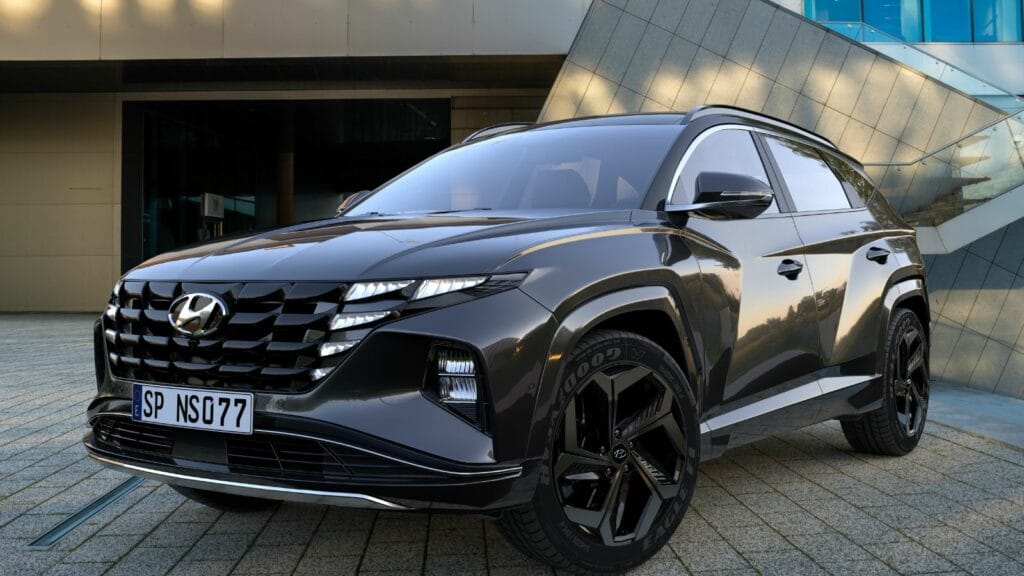
Hyundai has taken the wraps off the fifth-generation Tucson, giving one of its most important SUVs a noticeably larger footprint, a far more upright design and a substantially reworked cabin. Revealed first in South Korea, the new Tucson stretches to 4,700 mm in length and introduces Hyundai’s latest interior technology along with a tougher XRT variant.
The timing matters in Canada. Tucson was Hyundai’s best-selling Canadian model in 2025, yet Hyundai Canada is still advertising the existing 2026 lineup, with no Canadian price attached to the newly revealed generation. That leaves an important question hanging over the redesign: how much will all that extra space, technology and new styling cost when the next Tucson reaches Canadian showrooms?
This Is a Full Generation Change, Not Another Facelift
The latest Tucson represents the fifth generation of the nameplate, rather than another update to the existing NX4 model introduced globally in 2020. Hyundai first revealed the new generation in South Korea, where the company has provided an early look at its exterior, cabin and rugged XRT treatment. A broader global introduction is expected in October, when additional technical details should fill in many of the blanks left by the initial design-focused unveiling.
For Canadian shoppers, that distinction is important. The Tucson already underwent a significant mid-cycle refresh that brought a redesigned dashboard, updated technology and revised styling to the current generation. The newly revealed vehicle goes much further, changing the basic proportions and design language. Hyundai Canada has not yet detailed when the fifth-generation model will reach local dealerships. Until that happens, buyers comparing a current Tucson with the upcoming one are effectively choosing between two distinctly different generations rather than minor model-year updates.
Hyundai Has Made the Tucson Noticeably Bigger
The new Tucson measures 4,700 mm long, 1,905 mm wide and 1,685 mm tall, with a wheelbase stretching 2,785 mm. Hyundai says the fifth-generation SUV gains 60 mm in overall length, 40 mm in width and 30 mm between the axles compared with its predecessor. Those may appear to be modest numbers individually, but several centimetres of additional wheelbase and body width can make a meaningful difference in a family-oriented crossover.
The change is particularly noticeable when compared with Hyundai Canada’s specifications for the current Tucson, which measure roughly 4,640 to 4,650 mm long and 1,865 mm wide depending on configuration. In practical terms, the next Tucson continues the industry trend of compact SUVs becoming roomier without moving into a three-row format. Hyundai still positions the Tucson as a five-passenger vehicle, but its growing footprint increasingly gives it dimensions that would have looked substantial for this class only a generation ago.
Much of the Extra Size Has Gone Into Passenger Space
Hyundai is not simply using the Tucson’s increased dimensions to create a larger-looking body. The company says second-row headroom has increased by 29 mm to 1,031 mm, while the rear doors now open to 83 degrees instead of 73 degrees. A ten-degree increase may seem minor on a specification sheet, but it could be meaningful when loading a child seat, helping an older passenger into the rear or manoeuvring bulky bags through the doorway.
Hyundai is also claiming class-leading interior space for the newly revealed model, although final Canadian specifications will be necessary before that assertion can be evaluated against Canadian-market competitors. The design reinforces the family-use emphasis. The Tucson remains a two-row SUV, so Hyundai can devote its enlarged wheelbase to passenger accommodation and cargo flexibility instead of squeezing in a small third row. For households already using the current Tucson as a daily family vehicle, these are likely to be among the redesign’s most immediately noticeable changes.
The Styling Moves Away From the Current Tucson’s Curves
The outgoing Tucson became recognizable for its sharply creased bodywork and daytime running lights hidden within its geometric grille. The fifth-generation model takes another dramatic turn. Hyundai has applied its newer “Art of Steel” design philosophy, giving the SUV a squarer, more upright appearance with broad horizontal elements and more pronounced wheel arches. The overall effect is closer to a traditional rugged SUV than the sculpted crossover it replaces.
Lighting plays a major role in the transformation. The front incorporates vertical H-shaped lighting elements with a slim horizontal centre lamp, while the rear uses three-dimensional prism-style taillights and another strong horizontal light treatment. A prominent lower bumper and skid-plate theme further strengthen the tougher appearance. Hyundai has been willing to make major visual changes between generations of models such as the Santa Fe and Palisade, and the Tucson continues that strategy rather than cautiously evolving a familiar design for another six years.
The Cabin Gets a Major Digital Overhaul
Inside, the fifth-generation Tucson moves toward the cabin layout seen in Hyundai’s newest vehicles. A large centre display sits across a cleaner horizontal dashboard, while a separate slim driver information screen is mounted high in the driver’s field of view. Reports from the Korean reveal indicate that the central display runs Hyundai’s newer Pleos in-car software environment, although complete Canadian technology specifications have not yet been published.
Hyundai has also paid attention to smaller everyday conveniences. The Korean-market model includes dual wireless smartphone charging, allowing two compatible devices to charge simultaneously, along with a card holder beside the driver’s air vent and additional storage solutions. Hyundai says the dashboard arrangement was developed partly to improve visibility and reduce distraction. That approach is notable because the company has retained physical controls for several frequently used functions rather than pushing every adjustment onto the touchscreen. For everyday users, those practical decisions may matter as much as the display’s sheer size.
An XRT Version Pushes the Tucson Toward a Tougher Image
Hyundai has also shown a fifth-generation Tucson XRT, extending the rugged-themed badge further into its SUV portfolio. The treatment includes its own rectangular-pattern grille, a broader skid-plate-style front element and black wheel-arch extensions featuring a forged-carbon-inspired texture. Unique wheels, black exterior trim and model-specific rear details separate the XRT visually from the standard Tucson without turning it into a dedicated off-road truck.
The cabin receives its own patterned seats, protective floor mats and darker trim, while Hyundai has even incorporated touch-sensitive LED lighting into the tailgate area to improve usefulness during outdoor activities. What remains unknown is whether Canada will receive this exact package. The current Canadian Tucson range already includes styling-focused variants such as the XRT and N Line depending on model year and configuration, making another rugged-looking trim plausible. However, Hyundai Canada has not confirmed the new generation’s local grade structure, so the Korean XRT should not yet be treated as guaranteed Canadian equipment.
The Biggest Mechanical Questions Are Still Unanswered
Hyundai used the initial unveiling mainly to introduce the Tucson’s design, dimensions and cabin, leaving detailed platform and powertrain specifications for later. That means reports about future gasoline, hybrid or plug-in-hybrid configurations remain expectations rather than confirmed Canadian specifications. Hyundai has good reason to keep electrification central to the discussion, however, because the current Canadian Tucson already offers gasoline, hybrid and plug-in-hybrid choices across the range.
The 2026 Canadian Tucson uses a 2.5-litre gasoline engine in conventional models, while hybrid and plug-in-hybrid versions use electrified drivetrains. Hyundai Canada lists the current plug-in hybrid at 268 horsepower and says it can provide an estimated 51 kilometres of electric-only driving under its stated testing methodology. Current Canadian Tucson trims also come with all-wheel drive as standard. Whether those exact engines, outputs, transmissions and battery specifications survive the generation change remains unknown, making October’s fuller technical presentation especially important for Canadian buyers considering an electrified model.
Current Canadian Prices Show Where the New Model Is Starting From
Until Hyundai Canada publishes fifth-generation pricing, the existing 2026 lineup provides the most useful benchmark. Hyundai currently lists the gasoline Tucson with an MSRP starting at $35,499 before additional fees. The 2026 Tucson Hybrid starts at $43,399 MSRP, while the Plug-in Hybrid starts at $53,299. Hyundai’s displayed total starting figures are higher once delivery, destination and other applicable charges are incorporated.
Those numbers create a wide span for Hyundai to manage with the redesigned model. A shopper considering a conventional Tucson may be operating with a budget in the high-$30,000 range before tax, while a well-equipped electrified version can quickly move considerably higher. Added technology and a physically larger vehicle could put upward pressure on pricing, but Hyundai has not provided enough information to responsibly predict a Canadian increase. Exchange rates, equipment packaging, production sourcing and trim strategy can all influence local pricing, meaning overseas prices will not necessarily translate cleanly into Canadian dollars.
Hyundai Has Plenty at Stake in Getting the Canadian Formula Right
Tucson is not a niche product for Hyundai Canada. The company reported 41,840 Tucson sales in Canada during 2025, a roughly 40 per cent increase from the previous year. That made Tucson Hyundai’s best-selling model nationally. Hyundai itself delivered 146,184 vehicles in Canada during the year, meaning the Tucson represented a substantial portion of the brand’s Canadian volume during a record sales period.
That success gives Hyundai both an opportunity and a challenge. A redesign can attract returning owners who want additional space or technology, but dramatic styling and higher prices can also unsettle buyers who liked the previous formula. The compact-SUV category is particularly unforgiving because consumers can cross-shop numerous established alternatives. The Tucson has benefited from offering conventional gasoline, hybrid and plug-in-hybrid configurations rather than forcing every customer into the same powertrain. Preserving that broad appeal while introducing a more premium-looking and physically larger vehicle will be central to the fifth generation’s Canadian prospects.
Canadian Buyers May Need to Wait Until the Global Launch for the Full Picture
The initial reveal answers the basic design question but leaves many purchasing decisions unresolved. Hyundai has indicated that more information will accompany the Tucson’s broader global launch in October. Until then, final power outputs, fuel-consumption figures, market-specific equipment and several other technical details remain incomplete. Canadian launch timing has also not been formally announced, and Hyundai Canada’s consumer website continues to focus on the 2026 Tucson range.
That makes the next few months awkward for shoppers whose replacement timing is flexible. The existing Tucson is already available with three powertrain types, established Canadian pricing and dealer inventory, while the fifth-generation model promises more room and newer technology but currently lacks a Canadian price tag. There is no universal reason to delay a purchase solely because a redesign exists overseas. For buyers attracted specifically by the larger cabin, new interface or tougher styling, however, waiting for Hyundai Canada’s specifications and pricing will provide a far more meaningful comparison than relying on early international assumptions.
