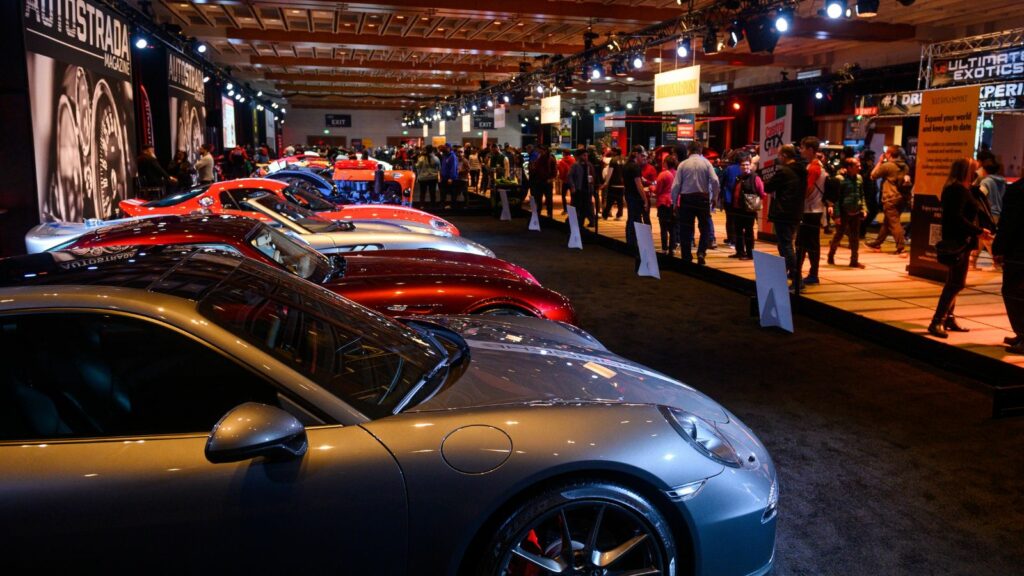
The sound of engines gives way to polished paint, exposed fabrication and carefully finished interiors in Niagara Falls today as Storm The Falls Volume 7 takes over the Niagara Falls Convention Centre. The one-day indoor show brings together tuner cars, hot rods, classics, race cars, trucks and custom builds, giving very different corners of car culture the same floor. Organizers are billing the event as Niagara’s biggest indoor car show, with more than 100,000 square feet devoted to vehicles, vendors and special displays. Running from 1 p.m. to 8 p.m. on Sunday, August 16, the event is designed around both competition and spectacle: owners have had their cars screened in advance, award categories span multiple styles, and families can attend without paying admission for children 12 and under.
Seven Hours to Take In the Entire Show
Storm The Falls Volume 7 is a one-day event, which gives today’s show a different rhythm from a multi-day auto expo. The doors are scheduled to open to the public at 1 p.m. and close at 8 p.m., leaving seven hours for spectators to move through the displays at the Niagara Falls Convention Centre on Stanley Avenue.
That compressed schedule matters because the organizer says August 16 is the only public opportunity to see this year’s edition. Vehicle roll-in was scheduled from 8 a.m. to noon, meaning the show floor had to be assembled and settled before spectators arrived. For owners, that turns months or years of work into a tightly staged public appearance. For visitors, it creates the feeling of a single-day gathering rather than a dealership-style exhibition that can be revisited later in the week. That makes timing important for anyone hoping to see every car in person.
More Than 100,000 Square Feet of Car Culture
Scale is part of the pitch. Storm The Falls says the show occupies more than 100,000 square feet and brings in hundreds of vehicles, including entries from Canada and the United States. The Niagara Falls Convention Centre itself has about 200,000 square feet of convention space, so the event is using a substantial portion of a building designed for large consumer shows and conferences.
That amount of indoor space allows vehicles from very different automotive scenes to sit side by side without one category dominating the entire experience. A restored classic can be parked near a modified import, a truck or an exotic, while competition cars bring a more functional look to the floor. The result is less about presenting one definition of car culture and more about showing how many definitions now coexist in the same enthusiast community. It gives most visitors room to slow down around individual cars.
Tuners Put Modification Work Front and Centre
Modern tuner and custom cars are a major part of the event’s identity. The organizer specifically lists tuner cars among the featured categories and says applications were evaluated partly on the quality and quantity of modifications, along with creativity and originality. That puts attention not only on the base vehicle, but on how thoroughly an owner has transformed it.
For spectators, tuner builds can reward close inspection. Wheels, suspension, bodywork, interior changes and engine-bay presentation often tell the story of a build more clearly than a spec sheet. The selection process also suggests that simply owning a modified car was not enough to guarantee floor space. Applicants had to submit vehicle details and photographs, and the event reserved the right to accept only cars meeting its showcase standards. That screening gives the modern-custom side of the show a curated rather than open-cruise character. That distinction is central to its identity.
Classics and Hot Rods Offer Two Views of the Past
Hot rods and classics provide the historical counterweight to the newer builds. Storm The Falls promotes both categories prominently, and its application criteria specifically call out restoration quality for classic vehicles. That creates room for two different approaches to older machinery: faithful preservation on one hand and heavily personalized hot-rod construction on the other.
The appeal is often in the small details. Period-correct trim, paintwork and interior materials can matter as much to a restoration as horsepower, while a hot rod may deliberately reinterpret the original car with modern running gear, altered stance or custom fabrication. Putting those approaches in the same building lets visitors see how enthusiasts treat automotive history differently. Some owners work to recover what a car once was; others use an older shape as the starting point for something entirely new. Both require patience, money and a strong eye for finish. The contrast keeps nostalgia active.
Race Cars Bring Track-Bred Hardware Indoors
Race cars and other high-performance machines add a different kind of credibility to the floor. The event’s public description specifically includes race cars, while its updated award language also references high-performance builds. Unlike a polished street car, a competition vehicle can carry visual clues shaped by function: safety equipment, aerodynamic pieces, stripped interiors or hardware chosen for track use rather than comfort.
An indoor display also gives spectators a rare chance to look at those details without the noise and distance of a live race weekend. A car that would normally flash past from behind a barrier can be examined at walking pace, making fabrication and safety choices easier to appreciate. Even when a race car is immaculate, its purpose is fundamentally different from a show-only build. That contrast is one of the event’s strengths, because it places appearance, engineering and competition history within the same automotive conversation for spectators.
Show Cars Had to Earn Their Place on the Floor
Getting a vehicle onto the Storm The Falls floor required more than buying a ticket. The organizer described the event as pre-registered and said all vehicles had to be approved before entry. Applications were reviewed for modification quality, originality and, for classics, restoration quality. By event day, registration had closed and additional applications were being placed in pending status in case space opened.
The exhibitor fee was listed at $120 and included indoor parking, two show passes and an official Volume 7 T-shirt. Accepted applicants were also expected to complete payment within 48 hours of approval. Those details help explain why the finished show can feel more deliberate than a casual parking-lot meet. The cars are not simply whoever arrived first on Sunday afternoon; they were selected, scheduled for morning roll-in and placed into a controlled indoor environment before the public entered. It rewards preparation before venue doors ever open.
Dozens of Awards Give Very Different Builds a Chance
Competition is woven into the event rather than added as an afterthought. Niagara Falls Tourism says competitors vie for top honours across dozens of classes and awards, while the organizer said the 2026 award structure was expanded and refined to recognize a wider variety of builds. The categories are intended to accommodate customs, clean street cars, classics, trucks and high-performance machines.
That breadth matters at a mixed-format show because judging a restored classic against a radical tuner on exactly the same basis would make little sense. Multiple classes give organizers more room to recognize craftsmanship within a vehicle’s own context. For owners, an award can validate countless evenings spent correcting details that many casual observers would never notice. For spectators, the competitive element encourages a second look: the car with the loudest paint may not be the one whose fabrication, restoration work or overall execution ultimately earns the strongest recognition.
Adult Tickets Are $15 and Younger Kids Get In Free
The pricing is intentionally straightforward. Storm The Falls says adult admission is $15 and children 12 and under enter free. Tickets are sold at the venue box office during the event rather than online, and the box office is scheduled to open at 12:30 p.m., half an hour before the public show begins.
The organizer says the box-office-only approach is meant to avoid online ticketing and service fees. For families, the free admission for younger children can make a meaningful difference, particularly when a day in Niagara Falls can easily involve several paid attractions. The show is also promoted as a family-friendly event rather than an enthusiasts-only gathering. That changes the atmosphere: a parent explaining an old muscle car to a child, or a teenager studying a tuner build, becomes as much a part of the floor as the owners polishing paint before judging. That affordability broadens the day’s audience.
The Indoor Venue Changes the Experience
The Niagara Falls Convention Centre gives the show an indoor setting large enough to separate it from a typical cruise night. The venue advertises roughly 200,000 square feet of convention space, while Storm The Falls says more than 100,000 square feet is being used for its display of vehicles, vendors and special features.
The building also brings practical advantages. The convention centre says three of its largest event spaces are on the ground level, with upper levels served by elevators and escalators. It lists automatic door openers, accessible washrooms, 19 accessible parking spaces and wide hallways among its accessibility features. It is also certified sensory inclusive through KultureCity, with resources such as sensory bags and designated quiet spaces. Those details matter at a crowded public event, where comfort and mobility can determine whether a family stays for twenty minutes or several hours. Indoor shelter removes weather from the viewing equation.
Indoor Cars Come With Strict Safety Rules
Putting cars inside a convention hall requires rules that are mostly invisible once the display is finished. Storm The Falls’ vehicle agreement says leaking vehicles need drip pans, engines cannot be run inside the venue and electrical systems must be disabled by disconnecting battery cables or removing the battery. Keys must remain accessible on site in a secured location.
Electric display vehicles have separate requirements. The agreement says they should be configured to bypass primary battery power when possible and use an alternative temporary power source for demonstrations. When charging is necessary, it is permitted only during occupied hours and under supervision. These controls are a reminder that an indoor car show is also a building-management exercise. Visitors see polished rows of cars; behind that presentation are fire-safety, property-protection and load-in procedures designed to make hundreds of stationary vehicles compatible with an indoor public space. Safety shapes the spectacle quietly.
Parking Is Available, but It Is Not Free
Visitors driving to the show should expect paid parking rather than a complimentary lot. The Niagara Falls Convention Centre says it has more than 800 parking spaces behind the building, with access from the Stanley Avenue area. Payment at the venue’s parking operation is by credit or debit, and rates can vary depending on the event.
The venue also lists 19 accessible parking spaces close to building entrances. For people arriving by bicycle, it is certified by the Ontario By Bike Network and provides a secure lock-up area on the west side, along with access to washrooms, change facilities and water fountains. Those practical details are easy to overlook in the excitement around the cars, but they can shape the day. A seven-hour show window is generous only if arrival, parking and entry are handled smoothly, especially during the opening rush around early afternoon. Planning ahead can reduce that friction.
The Real Attraction Is the Work Behind the Cars
Storm The Falls is ultimately built around owner effort rather than manufacturer product launches. The organizer describes the event as managed by car enthusiasts for car enthusiasts, and its screening criteria emphasize modification quality, originality and restoration work. That makes the people behind the cars central to what is being displayed, even when spectators never meet every builder.
A finished show car can hide how much repetition went into it: parts ordered twice, paint corrected, wiring redone, panels aligned again or a restoration stretched across several seasons. The event’s mixture of tuners, hot rods, classics, race cars and trucks turns those private projects into a public snapshot of contemporary car culture. For one afternoon and evening in Niagara Falls, very different automotive communities share the same roof. That cross-pollination—not just the individual trophies—is what gives a broad indoor show its character. Cars matter, but so do the stories behind them.
