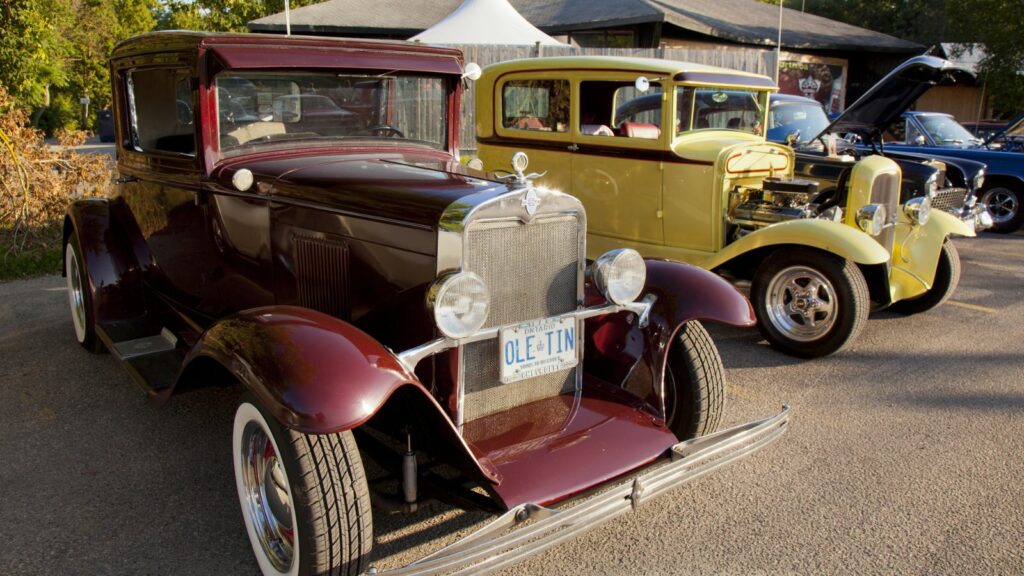
Chrome, history and community fundraising are sharing the same lawn in Sharon, Ontario, as Sharon Museum & Gardens hosts its 2026 Summerfest Car Show on August 16. The four-hour gathering pairs classic cars and hot rods with live entertainment, food and raffles, while turning every display-car entry into direct support for the historic site.
Visitors can attend without paying admission, while participating vehicle owners are asked for a $10 donation. The format gives the annual event two purposes at once: it provides an accessible summer outing for families and automobile enthusiasts while helping preserve a museum complex whose history stretches back to the early 19th century.
Summerfest Takes Over the Historic Grounds
The Summerfest Car Show runs from 11 a.m. to 3 p.m. at Sharon Museum & Gardens, located at 18974 Leslie Street in Sharon, part of East Gwillimbury. The museum describes it as an annual event organized in partnership with the Highway 11 Cruisers Car Club, bringing classic cars and hot rods onto grounds normally associated with some of Ontario’s earliest community and political history.
Spectator admission is free, removing the entrance-cost barrier that can limit attendance at larger automotive events. When the event information was checked Sunday afternoon in Ontario, Summerfest was already underway. The four-hour window makes it closer to a community gathering than an all-day commercial auto show: owners park their vehicles among the heritage surroundings, families can wander the site, and visitors who may have come primarily for the cars are also introduced to a museum with roots extending more than a century.
Every Show-Car Entry Becomes a Donation
Vehicle owners are not charged a conventional registration fee. Instead, the museum asks for a $10 donation for each show car, with the proceeds supporting Sharon Museum & Gardens. That turns participation itself into fundraising: each classic, hot rod or other display vehicle contributes financially before spectators purchase food, raffle tickets or anything else available during the day.
The model is deliberately simple. A car owner gets a place in a public community event for an amount considerably smaller than many formal show registrations, while the museum receives a stream of contributions connected directly to attendance. The institution says proceeds help support preservation of the historic property and community programming. If 100 owners participated, for example, the entry donations alone would represent $1,000 before other fundraising activities. The museum has not published a final 2026 total, so the eventual amount raised should not be estimated as an accomplished result.
The Highway 11 Cruisers Partnership Started in 2021
Summerfest is not a new experiment. Sharon Museum & Gardens says it first partnered with the Highway 11 Cruisers Car Club in 2021 to hold a classic car, truck and motorcycle show at the Sharon Temple. The relationship has since become part of the museum’s annual-events calendar, with automotive gatherings scheduled for both August 16 and September 20 in 2026.
The museum says its car shows bring hundreds of vehicles representing different makes, models and years to the property. That variety is an important part of the attraction. One row might contain a carefully restored mid-century cruiser while another could feature a later performance car or customized build. Such gatherings are often as much about stories as machinery: owners can spend years sourcing parts or rebuilding a vehicle associated with their youth. Placing those stories beside the museum’s much older heritage creates a natural bridge between personal memory and community history.
Visitors Do Not Have to Be Car Experts
The organizers have built much more than a parking lot full of polished vehicles. Summerfest includes live music, vendors, food trucks, performances, awards and raffles. A barbecue is also available for purchase, giving families reasons to spend several hours on the grounds even if nobody in the group could identify an engine from its displacement or decode a classic-car trim package.
That broader approach helps museums reach people who might never plan a traditional heritage visit. A parent may come because a child wants to see a hot rod, while another visitor may arrive for live music or lunch and end up walking past historic buildings. Raffle tables and a 50/50 draw add another fundraising component without placing a compulsory admission price on spectators. The result is a summer festival format in which cars are the main attraction, but the museum itself remains constantly visible around them.
The Money Supports More Than One Historic Building
Sharon Museum & Gardens says it is responsible for maintaining 10 heritage buildings and a collection of more than 9,500 artifacts. Those numbers help put a $10 show-car donation into context. Historic properties require continual conservation, maintenance, documentation and specialized collection care, while public programming adds another layer of staffing and operational expenses.
The museum says community support has helped it care for those buildings and artifacts while developing programs for visitors of different ages. Its fundraising options range from one-time donations and memberships to monthly giving and artifact-adoption programs. Summerfest effectively adds automotive culture to that fundraising mix. Rather than asking supporters simply to write a cheque, it creates an experience around contributing. For an owner, displaying a cherished vehicle becomes part of the donation. For a spectator, buying a raffle ticket or food can become another small way of supporting preservation while enjoying a Sunday outing.
The Sharon Temple Dates Back Nearly Two Centuries
The setting gives Summerfest a historical backdrop few conventional car shows can match. The Sharon Temple was constructed between 1825 and 1831 by the Children of Peace, a religious community that emerged from the Quaker tradition in Upper Canada. The museum describes the building as an architectural expression of the group’s ideals of peace, equality and social justice.
The Temple later became part of an early Canadian preservation effort. The York Pioneers and Historical Society acquired and restored it in 1917, and the site opened as a museum the next year. It was designated a National Historic Site in 1990 because of its historical and architectural importance. That makes the sight of 20th-century automobiles on the grounds more than an attractive photo opportunity. Summerfest temporarily places several generations of material history side by side: preserved architecture from Upper Canada alongside vehicles that represent later eras of manufacturing, design and everyday Canadian life.
The Children of Peace Left an Unusual Economic Legacy
The history preserved at Sharon goes beyond architecture. Under leader David Willson, the Children of Peace developed a cooperative economy and experimented with financial and social institutions that were unusual for early-19th-century Upper Canada. Sharon Museum & Gardens credits the group with founding Ontario’s first credit union and developing a land-sharing system in the community then known as Hope.
The museum also says the group established the Farmers’ Storehouse, an early cooperative that marketed wheat collectively and provided loans to farmers in need. Its members were involved in charitable initiatives and political reform as well. These details give the fundraising purpose of Summerfest added resonance. Money collected from vehicle owners and visitors is helping conserve a site connected with an earlier community that itself emphasized cooperation and collective support. The connection is not exact, but the modern event continues a long tradition of bringing people together around shared local institutions.
Summerfest Fits a Much Larger Events Strategy
Car shows are only one part of the museum’s public calendar. Sharon Museum & Gardens hosts several signature events designed to bring visitors onto the property throughout the year. Its 2026 schedule includes June Day, a Canada Day Community Celebration, Illumination in September and an Old Fashioned Christmas in December, in addition to the two scheduled automotive events.
That programming matters because heritage sites compete for leisure time alongside festivals, shopping, sports and entertainment. A museum that can turn its grounds into a place for music, food, family activities or classic cars has more opportunities to introduce new visitors to its historical mission. The museum says its Canada Day celebration welcomes hundreds of residents, while June Day incorporates demonstrations such as blacksmithing, woodworking and baking. Summerfest uses the same general principle but gives it an automotive theme, allowing the institution to connect preservation with a hobby that already has a strong community network.
A Second Car Show Is Already on the Calendar
Anyone unable to make the August Summerfest gathering may not have to wait until 2027. Sharon Museum & Gardens lists another car show for September 20, extending the partnership with the Highway 11 Cruisers into the early fall. That second date shows how firmly automotive programming has become embedded in the museum’s annual schedule since the partnership began in 2021.
Repeated events can also build relationships among vehicle owners, local businesses, volunteers and the historic site itself. A participant who first attends because friends belong to a car club may return later for another museum program. Similarly, families introduced to Sharon through Summerfest may begin to recognize the Temple as more than a landmark beside Leslie Street. The museum describes its car gatherings as among its biggest community events, so the value is not confined to one day’s donations. They also provide recurring visibility for a heritage organization that depends on maintaining public interest.
Cars Provide the Hook, Preservation Is the Goal
The immediate appeal of Summerfest is easy to understand. Visitors get several hours of classic vehicles, hot rods, live entertainment and food without purchasing an admission ticket. Owners get an opportunity to display vehicles they may have spent years maintaining or restoring. Raffles, prizes and awards add the familiar ingredients of a community car show.
The longer-term objective sits behind the spectacle. Sharon Museum & Gardens says proceeds from the event support preservation of the Sharon Temple and help sustain local history and community programming. The institution has been part of the community for roughly a century as a museum, while the Temple itself dates to the 1820s. Turning $10 car entries into preservation funding may seem modest compared with a major capital campaign, but community heritage is often sustained through many such contributions. Summerfest makes those contributions visible, social and connected to another form of history Canadians remain passionate about preserving.
