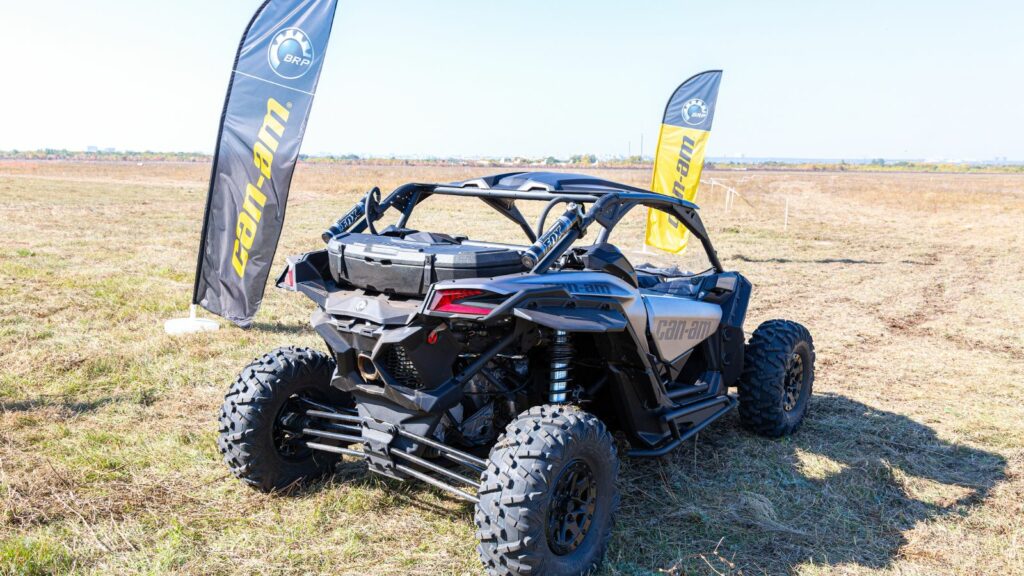
For a machine built around hauling, towing and long days away from pavement, an engine change can say a great deal about where an off-road brand is headed. Quebec-based BRP’s Can-Am has given its Defender HD10 one of its most consequential updates yet for 2027, replacing the familiar formula with a new 999 cc Rotax triple-cylinder producing 80 horsepower and pairing it with a substantially redesigned platform.
Unveiled as part of Can-Am’s 2027 off-road range on August 17, 2026, the new-generation HD10 sits alongside the more powerful HD11 and is joined by the work-focused Defender XU package. The changes extend beyond horsepower. Chassis revisions, transmission technology, work equipment and upgraded cabin displays push the Defender further toward the intersection of commercial utility vehicle and increasingly sophisticated recreational side-by-side.
The HD10 Moves to an 80-HP Triple-Cylinder
The headline change is under the rear cargo box. Can-Am’s new-generation Defender HD10 uses a 999 cc, liquid-cooled Rotax ACE three-cylinder engine rated at 80 horsepower and 65 lb-ft of torque. That gives Can-Am a triple-cylinder powerplant below the 95-hp HD11 while moving the redesigned HD10 away from the older V-twin configuration associated with previous Defender models. BRP describes the 2027 machine as a ground-up redesign rather than a modest annual update, making the new engine one part of a wider mechanical reset.
Those numbers matter differently in a utility side-by-side than they would in a sport machine. A Defender can spend much of its working life creeping beside a fence line, hauling tools between job sites or climbing uneven access roads with cargo aboard. Smooth delivery and usable torque are therefore as important as peak output. The HD10 also incorporates electronic fuel injection with Intelligent Throttle Control, giving Can-Am more control over how the engine responds across different operating situations.
The HD11 Shows Where the New Platform Came From
The HD10 does not arrive in isolation. Can-Am introduced its 999 cc triple-cylinder Defender HD11 for the 2026 model year, rating that engine at 95 horsepower and 70 lb-ft of torque. For 2027, the company is effectively extending that newer Defender architecture downward by offering the redesigned platform with an 80-hp HD10 engine as well. That gives buyers a choice between two output levels without requiring them to step back to the older-generation chassis simply because maximum horsepower is unnecessary.
The distinction is useful for the kind of customers Can-Am courts. A landowner who spends most days transporting fencing materials or checking livestock may value the new chassis and cabin but have little need for 95 horsepower. Another operator pulling heavier loads across steep terrain may prefer the HD11’s additional output. Keeping both engines within the newer family allows Can-Am to address those different workloads while sharing much of the surrounding vehicle architecture, transmission technology and equipment philosophy. It also makes the 2027 change more significant than simply adding another engine option.
A Ground-Up Redesign Extends to the Chassis
BRP says the second-generation HD10 receives an updated chassis and suspension as part of its ground-up redesign. On the Defender XT, both the new HD10 and HD11 use front and rear suspension offering 12 inches of travel, although tire size and geometry differ between the two configurations. Industry coverage of the 2027 range lists the XT HD10 with 27-inch tires and about 13 inches of ground clearance, while the HD11 version moves to 29-inch tires, arched A-arms and roughly 14 inches of clearance.
A single inch may sound minor until a machine is picking its way through deeply rutted forestry roads, frozen tracks or a field littered with exposed rock. Likewise, suspension travel is not merely a recreational specification when tools, feed or equipment are riding in the cargo box. More controlled wheel movement can help a utility vehicle maintain contact over uneven terrain and reduce the punishment transferred through the chassis. Can-Am is therefore treating the redesigned Defender as a complete working platform rather than using the new triple-cylinder engine as the sole selling point.
pDrive and QRS Put More Attention on How Power Reaches the Ground
The new Defender’s drivetrain is built around Can-Am’s pDrive primary clutch and Quick Response System continuously variable transmission. The HD10 and HD11 also feature electronic drive-belt protection, while selectable operating modes include Sport, Normal and Work. Can-Am lists CVT engine braking and a speed limiter among the driver-assistance features, equipment that can matter when a vehicle is descending a grade with cargo or being operated repeatedly around a farm, industrial property or work crew.
Traction management is another part of the package. Defender XT models use Can-Am’s Quick-4Lok system, allowing selection among Turf, two-wheel drive and four-wheel-drive settings, together with Tri-Mode Dynamic Power Steering. The technology is less glamorous than an 80-hp engine specification, but utility owners often encounter situations where precise low-speed movement matters more than outright acceleration. Maneuvering a trailer toward a shed, crossing soft ground without unnecessarily disturbing it or climbing out of a muddy section can each demand a different combination of throttle response, steering assistance and available traction.
Work Capacity Remains at the Centre of the Defender Formula
Despite the larger technology story, the Defender remains a cargo-carrying and towing machine. Independent specifications for the standard three-seat new-generation Defender XT list a 1,000-pound cargo-box rating, 1,500 pounds of total payload capacity and towing capacity of up to 2,500 pounds. Can-Am also equips XT versions with a 4,500-pound winch using synthetic cable, along with a high-molecular-weight skid plate, hard roof, front bumper, mudguards and LED lighting.
Those figures help explain why the Defender has grown into a broad family rather than a single recreational side-by-side. A 1,000-pound box rating creates room for items ranging from bags of feed and fencing supplies to maintenance equipment, while the hitch capacity makes small utility trailers part of the equation. The factory winch is equally practical in places where there may be no tow truck nearby. For an operator working kilometres from a paved road, a buried tire or a fallen obstacle can turn what looks like optional equipment in a showroom into an important piece of self-recovery hardware.
Defender XU Makes Work Equipment a Factory Package
One of the more practical additions for 2027 is the Defender XU, a factory work package that bundles equipment frequently added after purchase. BRP says the XU includes a metal headache rack, low cargo-bed wall extender, LinQ tool holders and a trailer-hitch ball mount. The company is offering the XU treatment across multiple Defender configurations, from more straightforward work models to higher trim levels and enclosed cabs, although the mud-oriented X mr is excluded from the XU range.
The idea is simple: equipment that might once have required a customer to spend time building an accessory list can arrive already integrated into the machine. On the Canadian market, Can-Am lists the Defender XU XT from C$24,999, with more expensive cab and multi-row versions available. BRP also promotes a catalogue of more than 200 compatible Defender accessories. That breadth illustrates how utility side-by-sides have evolved into configurable tools. One machine may leave the dealer destined for a farm, another for a construction property and another for hunting-country access, even though all began with essentially the same platform.
Cabin Technology Takes a Noticeable Step Forward
Utility machines increasingly have dashboards that would have looked unusually sophisticated only a few product generations ago. The redesigned Defender introduces a five-inch colour gauge, while selected premium models can be equipped with a 10.25-inch touchscreen. BRP says the larger display supports embedded BRP GO navigation, AM/FM radio, digital audio features and screen customization. It can also receive software updates through a Wi-Fi connection or mobile hotspot, bringing a capability more commonly associated with passenger vehicles into the side-by-side segment.
Higher-specification Defender cabs add another layer of comfort. Canadian-market XT CAB versions include heating, ventilation and air conditioning, a tilting windshield with a wiper, and full doors with electric-opening windows. Those features can have a very practical purpose in Canada. An enclosed, heated cabin is not merely an indulgence when a property has to be checked during freezing rain or when snow clearing begins before sunrise. The broader shift is clear: Can-Am is asking the Defender to function as a work tool without requiring occupants to accept an entirely bare-bones environment.
Canadian Pricing Stretches From Utility to Near-Luxury Territory
Can-Am’s Canadian pricing shows how wide the new-generation Defender family has become. The 2027 Defender XT HD10/HD11 is listed from C$23,999, while the enclosed Defender XT CAB starts at C$32,999. At the upper end, the Defender Limited starts at C$43,299 and adds equipment including HVAC, premium audio, the larger display and a rear camera. Six-seat MAX models widen the range again, with the MAX XT beginning at C$26,099 before cab and luxury configurations move considerably higher.
That price spread is an important part of the Defender story. Side-by-sides once occupied a comparatively simple position between ATVs and larger work vehicles, but premium cabs, infotainment, heating and increasingly powerful engines have blurred the boundaries. Can-Am is effectively allowing buyers to decide how far they want to move along that spectrum. A basic HD10 can be configured primarily around hauling and towing, while a Limited or premium MAX may spend long hours carrying several people in weather-protected comfort. The underlying task remains off-road transportation, but the expected experience has changed substantially.
Two Defender Generations Will Coexist in the 2027 Lineup
The launch of the redesigned HD10 does not mean every previous-generation Defender immediately disappears. Can-Am’s 2027 range continues to include earlier-platform Defender models, including lower-output HD7 and HD9 configurations, while the second-generation family covers the newer HD10 and HD11 choices. Industry coverage has consequently described the 2027 catalogue as a two-generation Defender lineup rather than one completely replaced family.
That approach gives Can-Am a way to preserve lower-cost entries while moving higher-volume and premium buyers onto the newer architecture. It can also make a showroom comparison more complicated. Two machines wearing similar Defender badging may differ substantially underneath, including engine layout, chassis generation and available technology. Buyers comparing specifications therefore need to look beyond the model name alone. For Can-Am, however, the strategy provides a useful bridge: value-oriented customers are not forced directly into a significantly more expensive new-generation vehicle, while those wanting the triple-cylinder platform can move to the HD10 or HD11 without waiting for the older range to disappear.
The Defender Overhaul Is Part of a Larger Can-Am Off-Road Push
The Defender changes arrive during a broader product push at Can-Am. BRP’s 2027 announcement also included updates across the Maverick and Outlander families, while the company separately said it intends to deliver major off-road product news every six months over the next four years. BRP Powersports President Sandy Scullion has framed that cadence around Can-Am’s ambition to strengthen its position in the global off-road market. In that context, an 80-hp HD10 is less an isolated model-year tweak than another step in a sustained product programme.
The scale behind the brand is substantial. BRP, headquartered in Quebec, reported annual sales of about C$8.4 billion and said its products are distributed in more than 110 countries, with close to 17,000 employees as of January 31, 2026. That makes the Defender’s evolution relevant well beyond its home province. For 2027, Can-Am is betting that a triple-cylinder engine, redesigned chassis, stronger factory work packages and increasingly car-like cabin technology can keep a utility-focused side-by-side competitive without losing the practical character that made the Defender name valuable in the first place.
