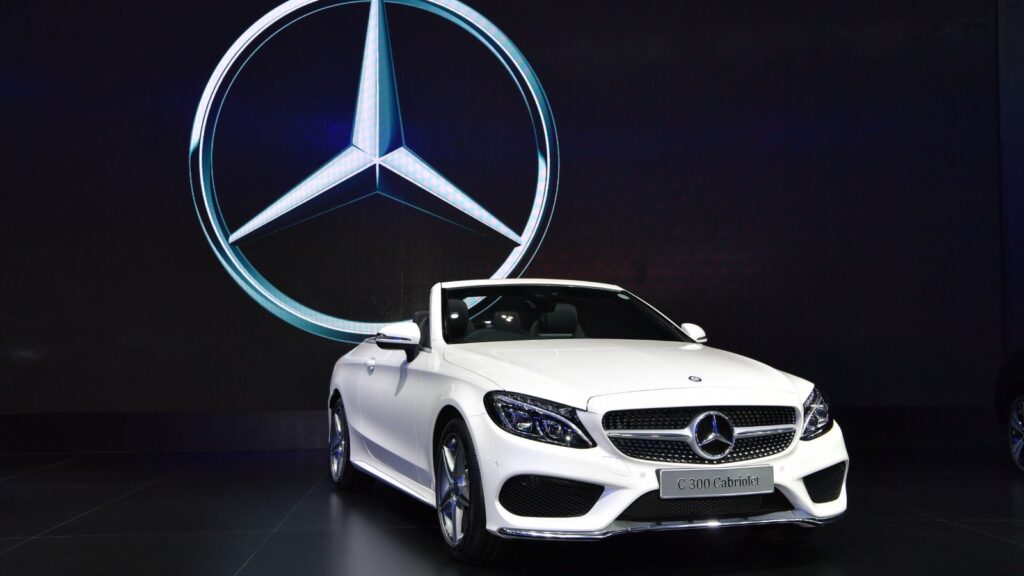
Mercedes-Benz’s new electric GLC carries a $78,400 MSRP and an advertised Canadian cash selling price of $84,491 before sales tax—a difference large enough to change the conversation in a showroom. Mercedes-Benz Canada confirmed those figures on October 20 for the 2027 GLC 400 4MATIC Electric SUV, with customer deliveries expected during October.
The $6,091 gap reflects the move from the manufacturer’s suggested retail price to its advertised cash selling price, which includes fees and levies. It gives Canadian shoppers a firmer starting point for judging a vehicle that combines luxury-SUV practicality with electric performance. The remaining questions concern what the price includes, how options affect it, and how the GLC’s range and charging promises translate into everyday use.
Where the Extra $6,091 Comes From
The difference between the two announced prices is $6,091, equivalent to about 7.8% of the $78,400 MSRP. Mercedes-Benz’s disclosure lists freight and pre-delivery inspection of up to $5,250, dealer administration charges of up to $695, and a $100 air-conditioning surcharge. Tire charges and provincial regulatory fees also appear in the disclosure. Freight and preparation account for the largest listed allowance, explaining why the gap deserves attention before a buyer starts selecting paint colours or interior upgrades.
Those figures need careful reading because several are maximum amounts that can vary by region or dealer. Adding every published maximum together does not produce an exact reconciliation of the $6,091 difference. A written, itemized quote is therefore the useful next document for a serious shopper. For a household that set an $80,000 vehicle budget, the announced selling price already exceeds that ceiling by $4,491 before sales tax. That is a material change to the purchase calculation, even with no optional equipment selected.
Sales Tax takes the Purchase Closer to $95,500 in Ontario
Mercedes-Benz describes $84,491 as an all-inclusive selling price, but its definition excludes sales tax, licensing, registration and insurance. An illustrative Ontario cash purchase shows the difference: applying the province’s 13% HST to $84,491 adds $10,983.83, producing $95,474.83. That calculation assumes the announced price, no trade-in and no discount, with licensing and other excluded costs still outstanding. This illustration shows the tax effect; an individual dealer quotation must account for the buyer’s circumstances and location.
Ontario’s advertising rules also help explain which number matters during negotiations. The provincial vehicle-sales regulator, OMVIC, says a dealer’s advertised price must include the fees and charges it intends to collect, except HST and licensing. OMVIC also explains that it does not regulate manufacturer advertising under those same requirements. A shopper moving from a national Mercedes-Benz promotion to a local dealership should therefore compare the dealer’s complete advertised price and written quotation. Keeping the same price basis makes competing offers much easier to assess.
The Starting Model Already Delivers Substantial Performance
The Canadian launch model is the GLC 400 4MATIC Electric, with two motors and standard all-wheel drive. Mercedes-Benz lists combined output of 483 horsepower and 590 lb-ft of torque, alongside a claimed 0–100 km/h time of 4.3 seconds. Buyers receive those performance figures without selecting a more expensive trim package. The company also says the front motor activates according to power or traction demands, allowing the drivetrain to respond as driving conditions change.
Comfort and handling equipment introduce another purchasing decision. Mercedes-Benz offers an optional Agility & Comfort Package that combines AIRMATIC air suspension with rear-axle steering. Those features deserve attention during a test drive because an acceleration figure says little about how a vehicle feels over broken pavement or when manoeuvring into a tight parking space. For a family using the GLC for errands and longer journeys, seat comfort, ride quality and ease of parking may ultimately matter more often than reproducing its quickest acceleration run.
The Current Canadian Range Estimate Is Up to 563 Kilometres
Mercedes-Benz’s October 20 Canadian announcement gives an estimated driving range of up to 563 kilometres. Its footnote says the estimate was determined using Natural Resources Canada-approved guidelines with a fully charged battery. That wording supports reporting a manufacturer estimate; it does not establish an independently verified road-test result. An earlier Canadian preview page still refers to preliminary range above 640 kilometres using a European test cycle. The different measurement references explain why figures circulating online need their dates and testing basis attached.
The GLC has a 94-kWh battery, identified as usable capacity in Mercedes-Benz’s environmental documentation. Capacity describes the energy available, while driving range also depends on how that energy is used. Weather, driving habits, equipment and load can affect the distance covered. For a household planning a long weekend away, the useful question is how much driving fits comfortably between dependable charging stops. The new Canadian estimate provides a more relevant planning reference, with enough reserve still needed for changing conditions, detours and the return journey.
Fast Charging Comes with An Important Voltage Distinction
The electric GLC’s 800-volt architecture supports DC charging at up to 330 kW. Mercedes-Benz’s Canadian specifications estimate a 10–80% charge in 22 minutes with suitable equipment and conditions. The same specifications list a maximum of 100 kW at a 400-volt station. That distinction matters on a highway trip: two chargers can both be compatible with the vehicle while offering substantially different charging performance. Finding a plug is only part of planning an efficient stop; the equipment behind it matters as well.
The October launch announcement also estimates that approximately 260–303 kilometres of range can be added in 15–20 minutes under optimal conditions. That suggests the potential for a useful recharge during a meal or coffee break, although the manufacturer qualifies the estimate for factors including battery temperature, starting charge and charger type. The 330-kW figure is a maximum capability, so actual sessions can be slower. Families planning several charging stops should leave room for those variations instead of building an itinerary around the fastest advertised result every time.
Charging Access Will Shape the Ownership Experience
A fast-charging specification cannot answer where the vehicle will spend most nights. Natural Resources Canada explains that Level 2 home charging uses a 208- or 240-volt supply, and its installation guidance recommends assessing a property’s electrical requirements with a qualified electrician. For a buyer with a private driveway, plugging in after work could become a simple routine. Someone with shared condominium parking may need to establish access and installation arrangements before treating home charging as part of the purchase plan.
Public charging offers another route. The GLC’s Canadian specifications list a North American Charging Standard connection for DC charging, while Mercedes-Benz’s MB.CHARGE Public service provides access to participating providers including FLO, BC Hydro and Tesla Superchargers. Compatibility, station capability and service activation still need checking for the chargers a driver expects to use. A practical comparison would map charging near home, work and regular weekend destinations, then consider the prices at those locations. That exercise gives the vehicle’s charging technology a concrete role in the household’s routine.
Canadian Winter Driving Needs Its Own Range Margin
A national range estimate cannot describe every Canadian winter journey. In February 2025, the Canadian Automobile Association’s winter testing involved 14 electric vehicles in temperatures ranging from minus 7 to minus 15 degrees Celsius. Published range results were 14–39% below official figures, demonstrating substantial differences between models under the test conditions. The new electric GLC was not part of that test, so those percentages cannot be presented as a forecast of its performance. They provide useful context for why a comfortable winter reserve matters.
CAA recommends warming an EV’s cabin while it remains plugged in before departure and using sheltered parking where possible. Those habits can make the ownership routine more practical during colder months. Consider a family leaving early for a ski trip: the planning question includes charging availability on the return route and enough reserve for delays. Mercedes-Benz’s published estimate is a starting point for that calculation. Experience with the vehicle on familiar winter routes would provide the more personal picture of how far a particular household can comfortably travel.
Standard Equipment Covers More than the Headline Screens
The base electric GLC includes heated front seats, a heated steering wheel, a fixed panoramic glass roof and wireless phone charging. Mercedes-Benz also lists a 10.3-inch digital instrument display and a 14-inch central media screen as standard. Those details help establish what the announced price actually buys before the configurator introduces upgrades. They also make the standard vehicle worth evaluating on its own merits: everyday conveniences are already present, including several features that could become especially welcome during a cold morning commute.
Navigation is another part of that everyday package. Mercedes-Benz says its Electric Intelligence system factors in traffic, terrain, temperature and charging needs when calculating routes. The Canadian model page lists seven years of the navigation service as standard, with account activation requirements and the possibility of renewal fees afterward. For an owner learning an unfamiliar charging network, that route-planning assistance could be more useful than the size of the display itself. Demonstrating navigation, charging-stop selection and common controls during a dealership visit would help show how comfortably the technology fits into ordinary driving.
Optional Packages Can Move the Price Beyond $92,000
Mercedes-Benz’s latest Canadian announcement lists three optional packages: Exclusive at $2,500, Pinnacle at $5,800 and Pinnacle Plus at $8,500, with taxes extra. Exclusive includes features such as an illuminated grille panel, a front-passenger display and SKY CONTROL panoramic-roof technology. Pinnacle adds equipment including Burmester 3D audio and upgraded lighting. The available 39.1-inch MBUX Hyperscreen is included in Pinnacle Plus, alongside further comfort and entertainment upgrades. Its presence in promotional imagery should therefore be read alongside the equipment list for the specific vehicle being priced.
Adding the $8,500 Pinnacle Plus package to the announced $84,491 selling price produces an illustrative $92,991 before sales tax, assuming the same fees and no other changes. That package also includes heated rear seats, front-seat massage, ventilated front seats and Burmester high-end 4D sound. These are meaningful choices for someone who frequently carries passengers or spends long hours driving, but their value depends on the household. Pricing a preferred configuration before discussing monthly payments makes the decision clearer: the buyer can see exactly how much additional comfort and display technology contribute to the overall purchase.
Practical Space Gives the New GLC a Showroom Test
Beyond the pricing and display technology, the electric GLC remains a five-seat SUV intended to carry people and their belongings. Mercedes-Benz’s Canadian specifications list 570 litres of rear luggage space and a separate 128-litre front compartment. The rear seats fold in a 40/20/40 split, giving owners flexibility when carrying longer items. A front compartment could also keep charging equipment separate from shopping bags or holiday luggage. For parents, physically trying a stroller in the load area may answer more useful questions than another photograph of the dashboard.
Mercedes-Benz says Canadian ordering is open, with customer deliveries expected during October 2026. That brings the discussion toward actual vehicles, dealer quotations and test drives. Buyers can check rear-seat access, the height of the luggage opening, visibility and the fit of items they regularly carry, while confirming the timing and specification of a particular order. At an announced $84,491 before sales tax, the GLC faces a practical test alongside its technological one: whether its space, comfort and charging arrangements fit the life of the person paying for it.
