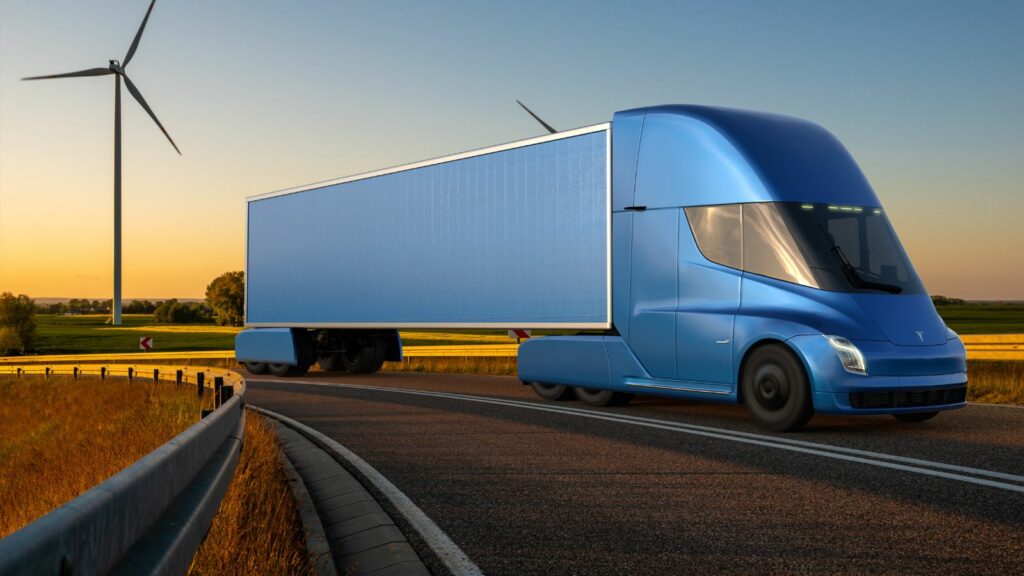
A Class 8 electric truck working through Greater Toronto traffic is producing a result that diesel operators cannot easily ignore. Fuel Transport says the vehicle used on a dedicated route for Kenvue Canada has delivered a 44.7% fuel-cost saving compared with diesel. The truck is part of a year-long pilot called Electric Loop, or eLoop, built around short-haul, multi-stop deliveries in urban and winter conditions. The early figure is promising, but it represents only one part of the business case. Purchase price, charger installation, route design, maintenance, downtime and electricity rates will ultimately determine whether the experiment can scale beyond one carefully selected lane.
A Live Route, Not a Laboratory Test
The eLoop project began in January 2026 with an electric Class 8 truck assigned to a short-haul route across the Greater Toronto Area. Fuel Transport operates the vehicle for Kenvue Canada, whose brands include Tylenol, Aveeno, Listerine and Neutrogena. The truck is moving commercial goods through a working supply chain rather than completing demonstration laps. Its schedule includes multiple stops, congestion and delivery windows that still have to be met.
That distinction matters because fleet electrification often succeeds or fails on operational details. A truck may have enough advertised range yet struggle if charging is unreliable, dispatchers leave too little reserve or delays prevent a timely return to the depot. Fuel says the pilot will continue through December, giving the company a full year of data. The real test is not whether the truck can pull a trailer once, but whether it can repeat the job without weakening customer service.
What the 44.7% Figure Really Means
Fuel Transport vice-president Peter Perrella said the electric truck produced a 44.7% saving compared with diesel on the Toronto test route. That is the clearest financial result released so far and the basis for the claim that the vehicle costs nearly 45% less to fuel. It remains a company-reported result from one route, not a universal estimate for every electric semi in Canada. Public reports have not disclosed the route distance, electricity consumption, diesel baseline or dollar saving.
The missing detail does not make the result meaningless, but it limits how broadly the percentage can be applied. Electricity prices vary by utility, charging time and demand charge, while diesel consumption changes with payload, traffic, idling, weather and driving style. A fleet with depot charging and predictable downtime may reproduce strong savings; one relying on costly public charging may not. Fuel is therefore also examining charging, utilization, maintenance and reliability.
Urban Stop-and-Go Plays to Electric Strengths
Dense urban delivery is a logical place to test a battery-electric tractor. Distances are more predictable than in long-haul work, the truck can return to the same depot, and frequent braking creates opportunities to recover energy through regenerative braking. Instead of losing the vehicle’s motion as heat, the drivetrain can return part of that energy to the battery. A diesel tractor receives no comparable energy credit whenever traffic slows on a crowded arterial road.
The route still has to be built around the truck rather than assuming it can replace any diesel unit without adjustment. Charging time must fit into the schedule, payload must remain practical and dispatchers need enough range reserve for weather, congestion and extra stops. North American Council for Freight Efficiency modelling identifies regional return-to-base and drayage operations as electric candidates because they combine high utilization with predictable depot charging. Fuel’s GTA route follows that logic today.
Canadian Trial Data Supports the Efficiency Case
Fuel’s result is not the only evidence pointing to lower energy use. FPInnovations, with Transport Canada and two fleets in the Montreal region, monitored battery-electric Class 8 trucks for more than 200,000 kilometres. The project found that the trucks consumed more than 60% less energy than diesel vehicles and produced at least 80% fewer greenhouse-gas emissions. They performed strongly under load, showing that electric tractors can handle freight when routes and charging plans fit the technology.
The study also showed why a low energy bill does not settle the purchase decision. Its economic analysis found that, with support for vehicles and charging infrastructure, an electric truck would need to travel about 74,000 kilometres per year to reach cost parity with diesel in six years. Without incentives, the threshold rose to roughly 182,000 kilometres annually. Utilization is crucial: an expensive truck that sits idle cannot recover its premium.
Winter Remains the Hardest Test
A Toronto pilot is useful because Canadian cold exposes weaknesses hidden in milder climates. Batteries require more energy in winter, while the cab, windows and battery pack need heating. FPInnovations found that its electric trucks typically covered about 150 to 200 kilometres per day, roughly half their advertised range. Researchers linked the gap to charging limitations, uncertainty around route length, loads and terrain, and seasonal swings in energy consumption.
Drivers in the Montreal-area trial described the trade-off in human terms. Some reduced cabin heat and wore winter jackets to preserve battery range, turning thermal management into part of the workday. Regenerative braking was also used less because drivers were cautious about traction. Those experiences do not prove electric trucks are unsuitable for cold weather, but they show why annual testing matters. A truck that looks economical in May must still meet its schedule during a severe Canadian February cold snap.
Drivers Often Prefer the Electric Experience
The people behind the wheel may become a strong selling point. FPInnovations interviewed 12 drivers with experience ranging from two to 40 years, and most preferred the electric trucks. Drivers praised the quieter cab, smooth power delivery and performance on steep grades. Lower vibration and less engine noise can make a shift feel less punishing, especially on urban routes where repeated acceleration, braking and idling create background noise in a diesel tractor.
The enthusiasm came with practical frustrations. Problems occurred when a previous driver failed to connect the charger correctly; the next driver would find the truck unavailable and switch to diesel. That anecdote captures an important lesson. Electric trucking depends on procedures as much as hardware. Drivers, dispatchers and maintenance teams need to understand charging, range and regenerative braking. When those pieces work, the vehicle can be easier and more comfortable to operate. When one fails, diesel remains the backup.
Charging Can Erase Part of the Savings
The cheapest electric kilometre requires affordable, dependable power. Commercial charging is far more demanding than a household wall plug. A Pembina Institute study estimated that an on-site 50-kilowatt overnight charger could cost about $65,000 to install, while a one-megawatt fast-charging installation for multiple vehicles could reach $1 million. Site preparation, utility upgrades, permitting and demand charges can raise the total.
Those costs are difficult for small carriers. Pembina reported that 40% of Canadian trucking fleets operate one truck and 90% have fewer than 10. It also cited a federal survey in which 79% of fleets identified the lack of public charging as a major reason for not considering electric vehicles. Large logistics companies can spread infrastructure expenses across several trucks and plan depot charging years ahead. A one-truck owner-operator cannot do that easily, making shared charging, financing and faster utility connections important for wider adoption.
Fuel Savings Are Not Total Cost of Ownership
A 44.7% fueling advantage matters because energy is a major operating expense, but fleets buy trucks on total cost of ownership. It includes the purchase price, financing, charging equipment, utility work, maintenance, repairs, insurance, residual value and lost revenue during downtime. Electric trucks may bring lower energy and maintenance costs, yet their higher upfront price and specialized infrastructure can offset part of those savings when mileage is low.
NACFE says there is no universal break-even point because each fleet has different routes, electricity rates, vehicle prices and utilization. Its 2026 modelling projects that battery-electric trucks will improve faster than other powertrains and could have a 12% cost advantage over diesel in regional return-to-base work by 2035. That is a forecast, not a guarantee for Fuel’s truck today. The pilot will be more persuasive if results show reliable service and enough annual mileage to fully recover the capital invested.
Why This Pilot Matters Beyond One Truck
Fuel Transport says the lessons from Toronto could inform electric deployments in other markets, including the United States, where similar route structures make sense. That gives the project significance beyond Kenvue’s deliveries. Instead of asking whether electric semis can replace every diesel truck, the pilot asks a narrower and more useful question: which lanes can be electrified now without weakening service? Urban, multi-stop, return-to-base work may prove to be the first large commercial opening.
The environmental stakes are substantial. Transportation produced 22% of Canada’s greenhouse-gas emissions in 2024, while emissions from freight heavy-duty trucks were 87% higher than in 1990. One electric tractor will not reverse that trend, but fleets operate through repetition. A route that works every day can be copied across terminals, customers and cities. Fuel’s 44.7% claim is viewed as an encouraging early result. The stronger conclusion will come after a full year of winter-to-summer operation.

Alanna Rosen is an experienced content writer that focuses on many EV and educational content. Her articles are regularly published on Get CyberTrucked and syndicated on large publications.